Showing posts with label John Coltrane. Show all posts

Monday, May 16, 2016

Philip Larkin Picks His Favorite Jazz Albums of the Year (1960s)

Philip Larkin
During the 1960s, the English poet Philip Larkin, who also wrote jazz criticism of high caliber for Daily Telegraph, particpitaed in the game of picking the best records of the year.

For someone who thought Charlie Parker was the beginning of the end for jazz, and everything worth saying (and playing) was already exhausted by Louis Armstrong, the 60s must have been a difficult time to go to a record shop and come out satisfied.

Yet, Larkin, never hiding his conservative taste in jazz, comes out with a few delightful surprises (Miles, Mingus, and God forbid, Ornette!)

His annual entry for Telegraph mainly features a longer list of reissues than brief mentioning of what's new. I've only mentioned the "new" albums. But even the "new" ones indicate how sluggishly jazz records were distributed in the UK. There is usually a year or two time gap between the initial US release and the arrival of the record in British market.

There are two remarkable anthologies edited from his jazz criticism both of which highly recommended: All What Jazz and Reference Back. (The full list of his favorite records of the year can be found as the penultimate chapter of the latter book.) These two books feature some of the most memorable, beautiful use of metaphor and poetic language in jazz after Whitney Balliett.

Without further due, these are the albums that excited Philip Larkin:

Saturday, August 24, 2013

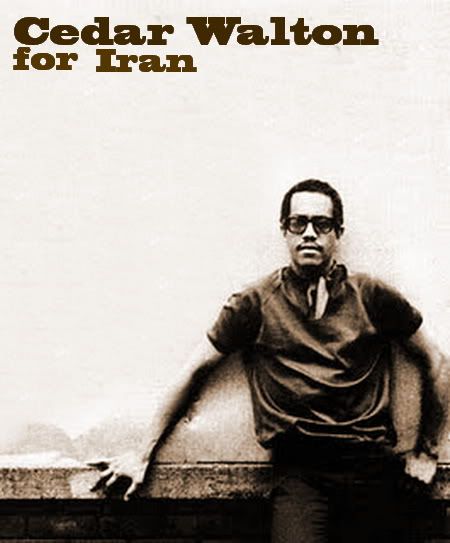
Radio Hawkins#8: Cedar Walton Sideman Years [repost]

برنامۀ هشتم
سيدار والتُن
برنامه‌اي از آثار والتُنِ پيانيستِ همراهي كنندۀ گروه ها و موزيسين هايي از 1959 تا 1979
شامل: ابي لينكُلن، آرت بليكي، آرت فارمر، جان كُلترين، لي مورگان، لاكي تامسُن، ري براون و بسياري از اساتيد ساكسوفن و ترومپت سال‌هاي پنجاه و شصت ميلادي
براي شنيدن اين برنامه كمي معلومات جمع كردن دربارۀ موسيقي هاردباپ ضرري ندارد و در اين‌جا فراهم است و آمادۀ خوانده 
شدن


با كيفيت متناسب با سرعت اينترنت ايران و تكه شده به دو قسمت براي تسهيل دانلود


Wednesday, February 27, 2013

Jonathan Rosenbaum Takes the "A" Train

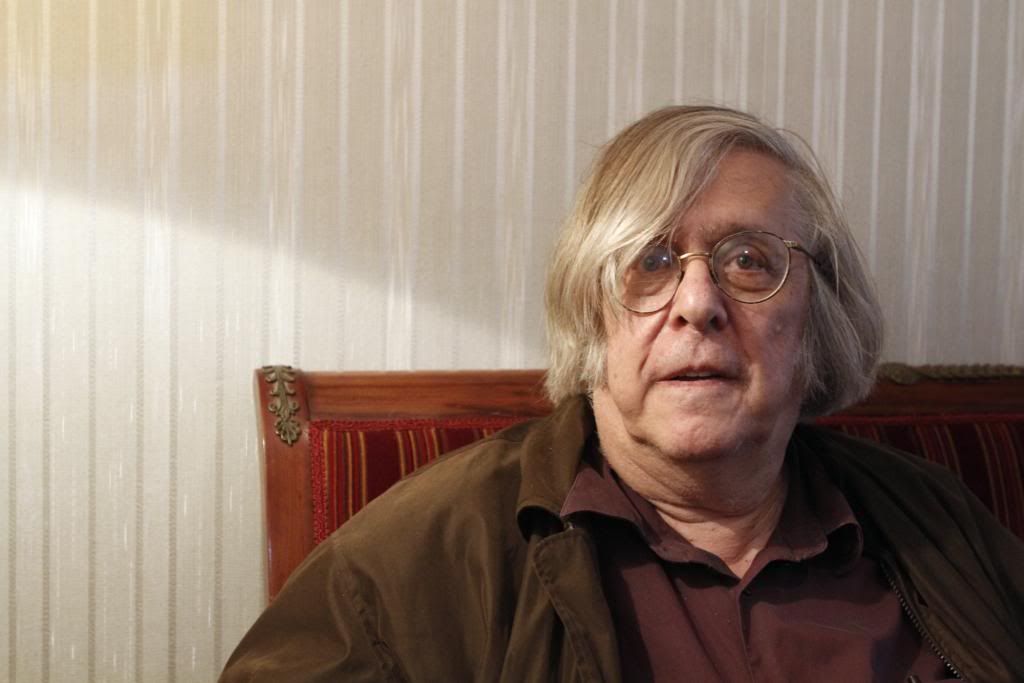
Jonathan Rosenbaum [image courtesy of San Sebastián Film Festival]

As a part of Jonathan Rosenbaum's 70th birthday posts on my jazz and film blogs, I asked him to compile a playlist of his favorite jazz tunes and he kindly provided me with the music that has inspired him, moved him and has stayed with him through the years. (the slideshow includes the cover of the albums used in the playlist) He shares details of his jazz life with us in the interview published on Keyframe. And if you want to catch up with some of his writings on jazz and film, or jazz in general, please visit this index that I posted yesterday.


The discographical information is given below the player. If this particular player isn't compatible with your system, there a simpler one, if you just scroll down the page, where, alternatively, you can download it and listen to it offline.


Even on his birthday, it is Jonathan who gives us presents.

Friday, May 25, 2012

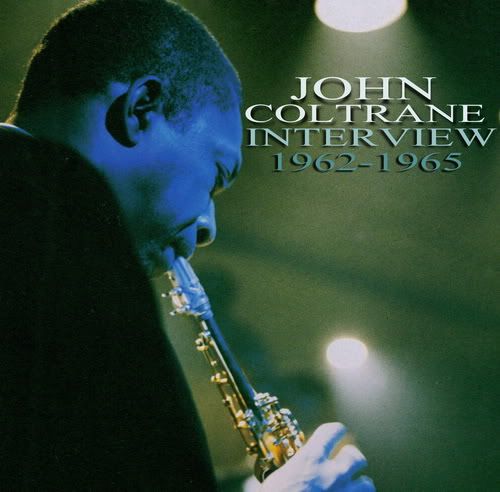
John Coltrane Interviews, Part II: 1962-65

Michiel de Ruyter Interviews John Coltrane on October 26, 1963 and July 27, 1965. Some segments, mostly Ruyter's comments, are in Dutch. For the first part of the interview go here.

Friday, April 13, 2012

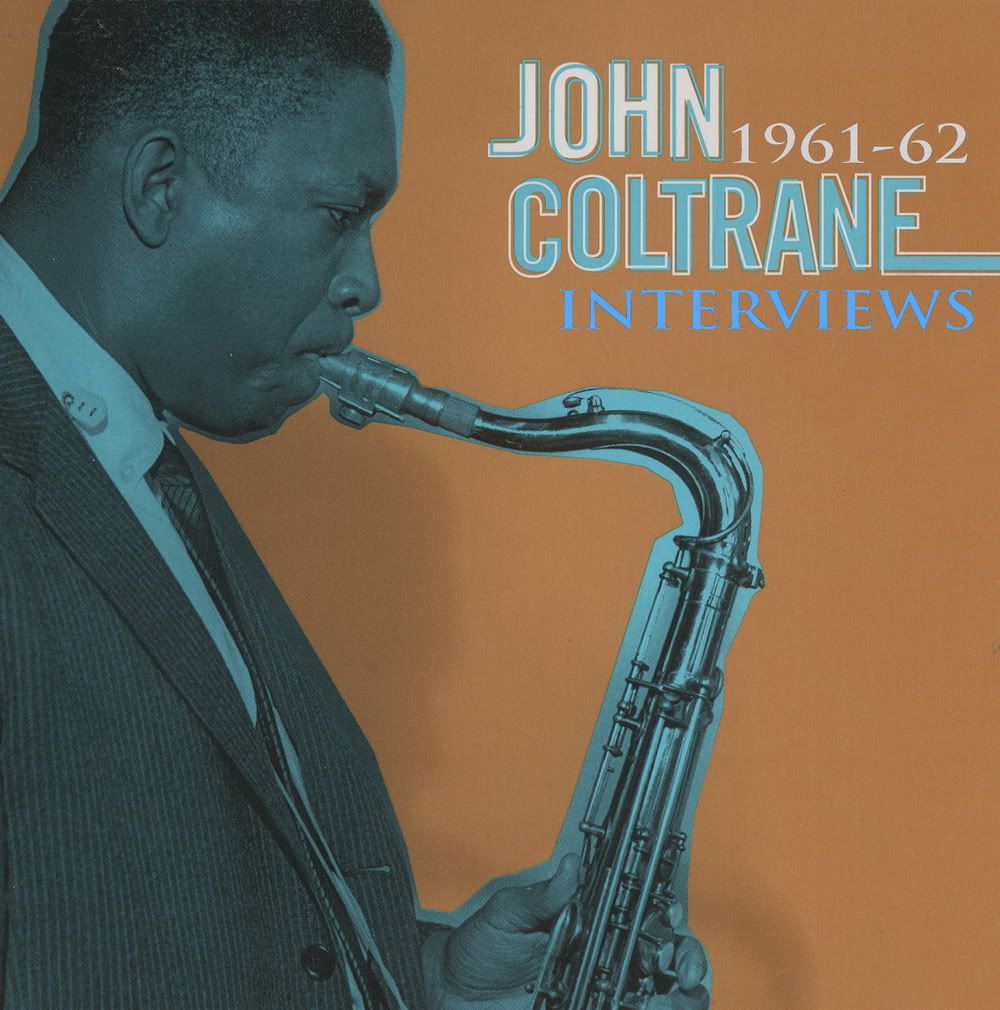
John Coltrane Interviews, Part I: 1961-62

Michiel de Ruyter Interviews John Coltrane on November 19, 1961, and later, December 1, 1962. Parts of his comments and his introduction is in Dutch.

Sunday, October 2, 2011

Musicians on Musicians#2: Kevin McMahon and 5 tenor


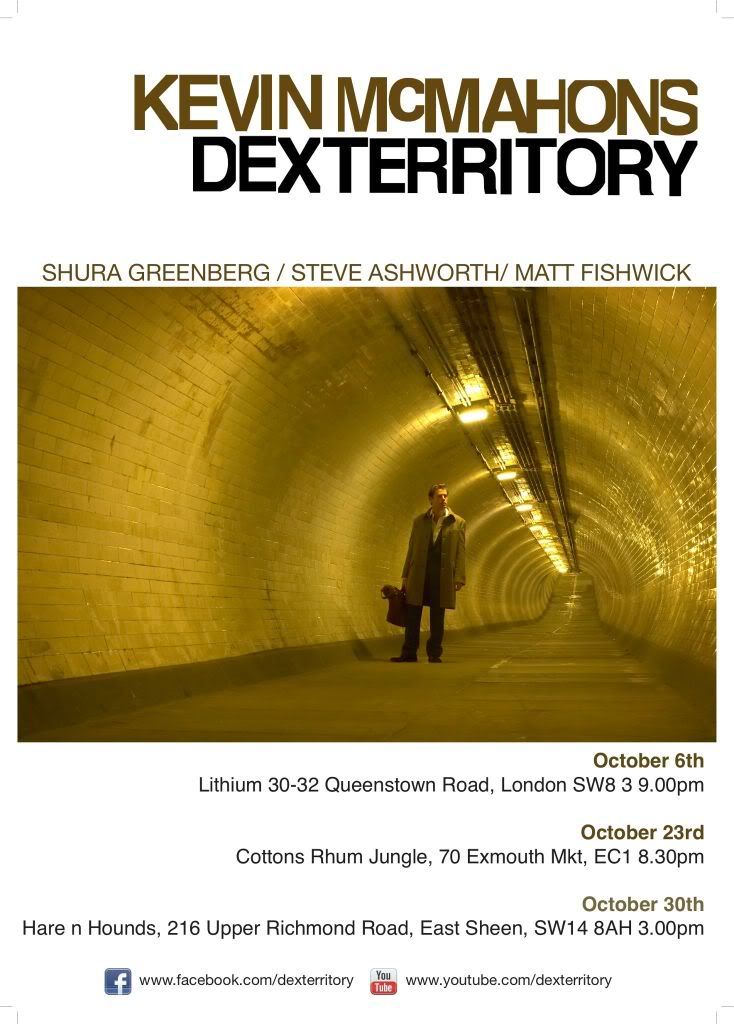
I met Kevin McMahon, an Irish tenor saxophonist, last winter. His is capable of executing beautiful, and slow-talking phrases on his instrument. He can do mournful treatments of ballads, and at the same time he can be aggressive, when playing bop standards is concerned. He is developing a huge and edgy sound and love to play with chord sequences that can move listeners, instantly. No need to say, he was heavily influenced by his idol, Mr Dexter Gordon, and he was calling his project of playing Dexter's composition with his quartet, "Dexterritory".

His quartet was consists of Shura Greenberg, an inspiring bass player, Steve Ashworth, a pianist who loves Cedar Walton, and Matt Fishwick on drums (though drummer's chair has been owned by a number of other musicians since then). In a tiny band stand of Oliver's at Greenwich London these cats had their own way of saying thank you to Dexter Gordon. They showed a good taste in returning to Dexter Gordon's Blue Note years and finding some of the best tunes ever written in the idiom of hardbop and rearranging them for a contemporary quartet. The list includes pieces like Hanky Panky, Ernie's Tune, Society Red, Second Balcony Jump and Cheese Cake, and the focus was on solid, bluesy, marching beat of this tunes.

Recently I asked him about the tenormen who have inspired him. Of course, top of the list belongs to Dex, and after that come these names:

Dexter Gordon: I bought the Ballads album when I was twenty-two and listening one afternoon I recall saying to myself this is why I want to play saxophone, funny that its nearly twenty years later that my band "Dexterritory" are working on presenting some of his Music. His Importance is gigantic, a tenor bridge between the swing and bob players of his generation. His contribution to hard swinging Bop unsurpassed, not to mention his coolness and manner, a sophisticated Giant indeed.
I'm a fool to want you

Stan Getz: Serenity was the first album I really checked out and I still get mileage from it, actually was just listening I Remember You from the live album. As Coltrane remarked "we'd all sound like Stan if we could". His sound and lyrical quality are simply outstanding. Stan is old Blue Eyes for me on Tenor. 
 
Sunday

Joe Henderson: I was lucky enough to meet Joe twice both briefly, he was a gentleman. His playing like all of the greats was stamped with a instantly recognizable sound...and what a sound. I do prefer the later recordings particularly the records he made playing the music of Jobim and Miles. Go Joe....
Recorda Me

John Coltrane: Could not be omitted from my top Five. My favourite albums are Lush Life and the record he made with baritone Johnny Hartman. Trane was the endless searcher for truth and an inspiration to any man.
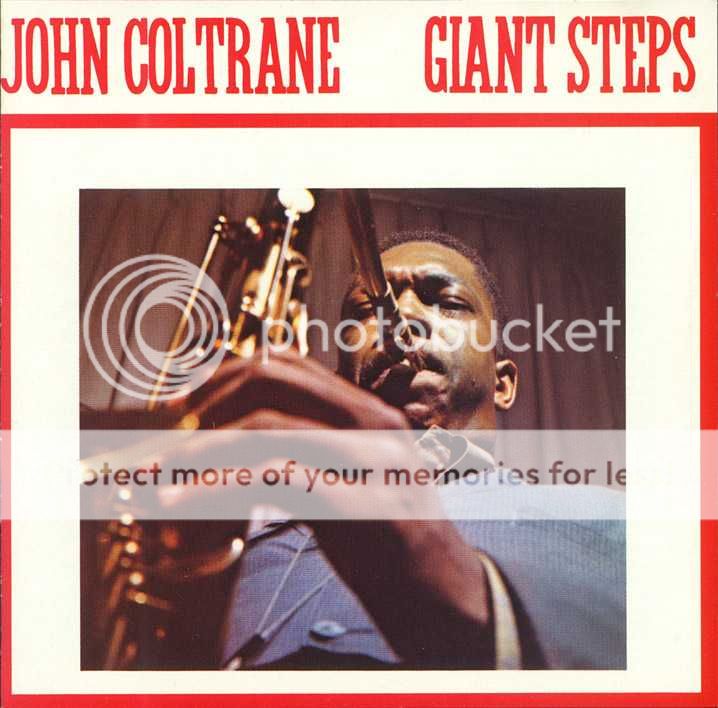
Giant Steps

Richie Buckley: Richie is  from a big musical family in Dublin, be sure to check him out if your over there. He is an amazing saxophone player and has been a factor in my wanting to play. Has all the qualities of a master musician. He made a record a few years back called Your Love Is Here

Friday, August 19, 2011

Radio Hawkins#2


اين هم از دومين بخش برنامۀ شبه راديويي ما دربارۀ موسيقي جاز. در اين قسمت قطعاتي از سيدني بشه، لويي آرمسترانگ، چارلي مينگوس، جان كولترين، اكهارد وولك، نت كول، استن تريسي، سام هاپكينز و ويكتور ديكنسون خواهيد شنيد. دربارۀ بيشتر اين موزيسين‌ها مقاله‌هايي به فارسي يا انگليسي در همين وبلاگ وجود دارد و كافي است روي «تگ» نام آن‌ها در انتهاي همين پست كليك كنيد.
اين كار بسيار براي من وقت‌گير و فرساينده است و تنها اميدم اين است كه آدم‌هاي بيشتري آن را بشنوند و به اين وسيله زبان شگفت‌انگيز، انساني و فاخر اين موسيقي جايي دربين آن‌چه در ايران شنيده مي‌شود باز كند و به گوش‌هاي بيشتري برسد. در نتيجه از به اشتراك گذاشتن اين فايل صوتي، يا اين پستِ وبلاگ دريغ نكنيد كه تنها اميد ما به گسترش فرهنگ، خودمان هستيم و در اين اوضاع از هيچ‌كس جز خود ما انتظار نمي‌رود كه مشعل را روشن نگاه داريم.  


Friday, September 17, 2010

Giant Steps (John Coltrane, 1959)


Nat Hentoff's Original Liner Notes: John Coltrane's Giant Steps, 1959

Along with Sonny Rollins, John Coltrane has become the most influential and controversial tenor saxophonist in modern jazz. He is becoming, in fact, more controversial and possibly more influential than Rollins. While it's true that to musicians especially, Coltrane's fiercely adventurous harmonic imagination is the most absorbing aspect of his developing style, the more basic point is that for many non-musician listeners, Coltrane at his best has an unusually striking emotional impact. There is such intensity in his playing that the string of adjectives employed by French critic Gerard Bremond in a Jazz-Hot article on Coltrane hardly seems at all exaggerated. Bremond called his playing "exuberant, furious, impassioned, thundering."

There is also, however, an extraordinary amount of sensitivity in Coltrane's work. Part of the fury in much of his playing is the fury of the search, the obsession Coltrane has to play all he can hear or would like to hear -- often all at once -- and yet at the same time make his music, as he puts it, "more presentable." He said recently, "I'm worried that sometimes what I'm doing sounds like just academic exercises, and I'm trying more and more to make it sound prettier." It
seems to me he already succeeds often in accomplishing both his aims, as sections of this album demonstrate.

This is the first set composed entirely of Coltrane originals. John has been writing since 1948. He was born in Hamlet, North Carolina, September 23, 1926. His father played several instruments, and interested his son in music. At 15, John learned E-flat alto horn and clarinet, and in high school, he switched to tenor. He studied. in Philadelphia at the Granoff Studios and the Ornstein School of Music, became a professional at 19, and played in a Navy band based in Hawaii from 1945-46. From 1947-49, he worked with Joe Webb (Big Maybelle was in the same entourage), King Kolax, Eddie Vinson and Howard McGhee. Charlie Parker had become a dominant influence on his playing.

He was on alto with the Dizzy Gillespie band in 1949, and after Dizzy disbanded, John returned to Philadelphia, discouraged and trying to find his own way in music. From 1952-53, he was with Earl Bostic, and then played with Johnny Hodges, Jimmy Smith, and Bud Powell.
He first joined Miles Davis from 1955-56. Miles regards Coltrane and Rollins as the two major modern tenors. "I always liked Coltrane." Miles said recently. "When he was with me the first time, people used to tell me to fire him. They said he wasn't playing anything. They also used to tell me to get rid of Philly Joe Jones. l know what I want though. I also .don't understand this talk of Coltrane being difficult to understand. What he does, for example, is to play five notes of a chord and then keep changing it around, trying to see how many different ways it can sound. It's like explaining something five different ways. And that sound of his is connected with what he's doing with the chords at any given time."


Miles encouraged Coltrane and also stimulated his harmonic thinking. In terms of writing as well, John feels he's learned from Miles to make sure that a song "is in the right tempo to be its most effective. He also made me go further into trying different modes in my writing." After two years with Miles? there was a period in 1957 with Thelonious Monk that Coltrane found unusually challenging. "I always had to be alert with Monk," he once said, "because if you didn't keep aware all the time of what was going on, you'd suddenly feel as if you'd stepped into an empty elevator shaft."

Coltrane worked briefly with a Red Garland quintet, then rejoined Miles, and has been with him ever since. He has nothing of his own in the Davis book at present, but he has devoted more and more of his time to composing. He is mostly self-taught as a writer, and generally starts his work at the piano. "I sit there and run over chord progressions and sequences, and eventually, I usually get a song -- or songs -- out of each little musical problem. After I've worked it out on the piano, I then develop the song further on tenor, trying to extend it harmonically." Coltrane tries to explain what drives him to keep stretching the harmonic possibilities of improvisation by saying, "I feel like I can't hear but so much in the ordinary chords we usually have going in the accompaniment. I just have to have more of a blueprint. It may be that sometimes I've been trying to force all those extra progressions into a structure where they don't fit, but this is all something I have to keep working on. I think too that my rhythmic approach has changed unconsciously during all this, and in time, it too should get as flexible as I'm trying to make my harmonic thinking."

In her analysis of Coltrane's style in the November and December, 1959, issues of The Jazz Review, pianist Zita Carno pointed out that Coltrane's range "is something to marvel at: a full three octaves upward from the lowest note obtainable on the horn (concert A-flat)...There are a good many tenor players who have an extensive range, but what sets Coltrane apart from the rest of them is the equality of strength in all registers, which he has been able to obtain through long, hard practice. His sound is just as clear, full and unforced in the topmost notes as it is down in the bottom." She describes his tone as "a result of the particular combination of mouthpiece and reed he uses plus an extremely tight embouchure" and calls it "an incredibly powerful, resonant and sharply penetrating sound with a spine-chilling quality."

Of the tunes, Coltrane says of Giant Steps that it gets its name from the fact that "the bass line is kind of a loping one. It goes from minor thirds to fourths, kind of a lopsided pattern in contrast to moving strictly in fourths or in half-steps." Tommy Flanagan's relatively spare solo and the way it uses space as part of its structure is an effective contrast to Coltrane 's intensely crowded choruses.

Cousin Mary is named for a cousin of Coltrane who is indeed called Mary. The song is an attempt to describe her. "She's a very earthy, folksy, swinging person. The figure is riff-like and although the changes are not conventional blues progressions, I tried to retain the flavor of the blues."

Countdown's changes are based in large part on Tune Up, but against that, Coltrane uses essentially the same sequence of minor thirds to fourths that characterizes Giant Steps. His solo here, and in the others as well, illustrates Zita Carno's point that Coltrane, for all he's trying to express in any given solo, has a remarkable sense of form.

Syeeda 's Song Flute has a particularly attractive line and is named for Coltrane's 10-year-old daughter. "When I ran across it on the piano," he says, "It reminded me of her because it sounded like a happy, child's song."

The tender Naima -- an Arabic name -- is also the name of John's wife. "The tune is built," Coltrane notes, "on suspended chords over an Eb pedal tone on the outside. On the inside-- the channel -- the chords are suspended over a Bb pedal tone." Here again is demonstrated Coltrane's more than ordinary melodic imagination as a composer and the deeply emotional strength of all his work, writing and playing.


There is a "cry" -- not at all necessarily a despairing one -- in the work of the best of the jazz players. It represents a man's being in thorough contact with his feelings, and being able to let them out, and that "cry" Coltrane certainly has.

Mr. P.C. is Paul Chambers who provides excellent support and thoughtful solos on the record as a whole and whom Coltrane regards as "one of the greatest bass players in jazz. His playing is beyond what I could say about it. The bass is such an important instrument, and has so much to do with how a group and a soloist can best function that I feel very fortunate to have had him on this date and to have been able to work with him in Miles' band so long." Tom Dowd's engineering, incidentally, has caught Paul's sound as well as it's ever been heard on records, and for an insight into the importance of the bass's function, it might be valuable to go through the record once, paying attention primarily to Paul. Also worth noting is the steady, generally discreet drumming of Arthur Taylor and Jimmy Cobb throughout.

What makes Coltrane one of the most interesting jazz players is that he's not apt to ever stop looking for ways to perfect what he's already developed and also to go beyond what he knows he can do. He is thoroughly involved with plunging as far into himself and the expressive possibilities of his horn as he can. As Zita Carno wrote, "the only thing to expect from John Coltrane is the unexpected." I'd qualify that dictum by adding that one quality that can always be expected from Coltrane is intensity. He asks so much of himself that he can thereby bring a great deal to the listener who is also willing to try relatively unexplored territory with him.


-- NAT HENTOFF
co-editor, The Jazz Review, 1960


Nat Hentoff's latest book, At the Jazz Band Ball: Sixty Years on the Jazz Scene, can be found here.
Giant Steps CD is available from Amazon.

Wednesday, June 16, 2010

Blindfold Test: John Coltrane


The conception of Downbeat’s blindfold test was putting some records on in front of a jazz artist (without telling the interviewee which record it is) and investigating his knowledge of jazz history and the way his colleagues are playing, and getting into his understanding of other jazz musicians’ styles and the way they interpret the familiar tunes. Most of the time the results of this testing is very moving. Beside the point of guessing the recorded artist and the musicians, the way here Coltrane or anybody else unveil their thoughts about jazz when they are listening to the tune is exactly like being inside the jazzman’s head. It’s a tense oral history that is creating in moments, while somebody’s blowing a horn or swinging on a keyboard. I remember one of the best Blindfold tests was Coleman Hawkins’s, when they play one of his own records from Fletcher Henderson days and he said something like this: “Shit man! Is that me playing this awful thing? I can’t bear it. Turn it off man!”

Blindfold Test: John Coltrane

1. Woody Herman. Crazy Rhythm (Everest Stereo). Paul Quinichette, tenor saxophone; Ralph Burns, arranger.

J. C.: Well, I would give it three stars on the merit of the arrangement, which I thought was good. The solos were good, and the band played good. As to who it was, I don’t know…The tenor sounded like Paul Quinichette, and I liked that because I like the melodic way he plays. The sound of the recording was very good. I’d like to make a guess about that arrangement—it sounded like the kind of writing Hefti does—maybe it was Basie’s band.

2. Art Farmer Quintet. Mox Nix (United Artists). Benny Golson, tenor; Farmer, trumpet, composer, arranger; Bill Evans, piano; Addison Farmer, bass; Dave Bailey, drums.

J. C.: That’s a pretty lively sound. That tenor man could have been Benny Golson, and the trumpeter, I don’t know…It sounded like Art Farmer a little bit. I enjoyed the rhythm section—they got a nice feeling, but I don’t know who they were. The composition was a minor blues—which is always good. The figures on it were pretty good, too. I would give it three-and-a-half.

3. Horace Silver Quintet. Soulville (Blue Note). Silver, piano, composer; Hank Mobley, tenor; Art Farmer, trumpet.

J. C.: Horace…Is that Soulville? I’ve heard that—I think I have the record. Horace gave me that piece of music some time ago…I asked him to give me some things that I might like to record and that was one of them. I’ve never got around to recording it yet, though. I like the piece tremendously—the composition is great. It has more in it than just "play the figure and then we all blow." It has a lot of imgination. The solos are all good…I think it’s Hank Mobley and Art Farmer. I’ll give that four-and-a-half stars.

4. Coleman Hawkins. Chant (Riverside). Idrees Sulieman, trumpet; J.J. Johnson, trombone; Hank Jones, piano; Oscar Pettiford, bass.

J. C.: Well, the record had a genuine jazz feeling. It sounded like Coleman Hawkins…I think it was Clark Terry on trumpet, but I don’t know. The ‘bone was good, but I don’t know who it was. I think the piano was very good…I’ll venture one guess: Hank Jones. It sounded like Oscar Pettiford and was a very good bass solo. And Bean—he’s one of the kind of guys—he played well, but I wanted to hear some more from him…I was expecting some more. When I first started listening to jazz, I heard Lester Young before I heard Bean. When I did hear Hawkins, I appreciated him, but I didn’t hear him as much as I did Lester…Maybe it was because all we were getting then was the Basie band. I went through Lester Young and on to Charlie Parker, but after that I started listening to others—I listened to Bean and realized what a great influence he was on the people I’d been listening to. Three and a half.

5. Ben Webster–Art Tatum Quartet. Have You Met Miss Jones? (Verve).

J. C.: That must be Ben Webster, and the piano, I don’t know. I thought it was Art Tatum…I don’t know anybody else who plays like that, but still I was waiting for that thunderous thing from him, and it didn’t come. Maybe he just didn’t feel like it then The sound of that tenor…I wish he’d show me how to make a sound like that. I’ve got to call him up and talk to him! I’ll give that four stars…I like the atmosphere of the record—the whole thing I got from it. What they do for the song is artistic, and it’s a good tune.

6. Toshiko Akiyoshi. Broadway (Metrojazz). Bobby Jaspar, tenor; Rene Thomas, guitar.

J. C.: You’ve got me guessing all the way down on this one, but it’s a good swinging side and lively. I thought at first the tenor was Zoot, and then I thought, no. If it isn’t Zoot, I don’t know who it could be. All the solos were good…The guitar player was pretty good. I’d give the record three stars on it liveliness and for the solos.

7. Chet Baker. Fair Weather (Riverside). Johnny Griffin, tenor; Benny Golson, composer.

J. C.: That was Johnny Griffin, and I didn’t recognize anybody else. The writing sounded something like Benny Golson…I like the figure and that melody. The solos were good, but I don’t know…Sometimes it’s hard to interpret changes. I don’t know whether it was taken from another song or if it was a song itself. Maybe the guys could have worked it over a little longer and interpreted it a little truer. What I heard on the line as it was written, I didn’t hear after the solos started…It was good, though—I would give it three stars, on the strength of the composer mostly, and the solos secondly…I didn’t recognize the trumpeter.

Tuesday, November 10, 2009

Bags & Trane (Milt Jackson & John Coltrane, 1959)


Vibraphonist Milt Jackson and tenor saxophonist John Coltrane join together on this 1959 studio session for Atlantic. The perfect rhythm section consists of pianist Hank Jones, bassist Paul Chambers, and drummer Connie Kay. Tunes include two of Jackson's originals ("The Late Late Blues" and "Bags & Trane") and three standards: a romping "Three Little Words," "The Night We Called It a Day," and "Be-Bop." The new CD has two more bonus tracks from the session.


میلت جکسون نوازنده ویبرافون با جان کولترین نوازنده ساکسفون تنور در ضبطی از 1959 برای کمپانی آتلانتیک. یکی از بهترین آلبوم های کولترین قبل از دورۀ آوانگارد و اسپریچوال او. بخش ریتم عبارت است از: هنک جونز (پیانو)، پل چیمبرز (بس) و کانی کی (درامز). [لینک در کامنت]