Showing posts with label Hard Bop. Show all posts

Sunday, January 8, 2017

MyCoy Tyner's The Real McCoy | Liner notes by Nat Hentoff

Republished with permission.


And beyond that authority, which comes from thorough musicianship, is an incisive individuality of expression. As for Tyner, Coltrane's remark about the clearness of his ideas is so well taken that anyone - whether he knows one chord or one time signature from another - ought to have no problem following the way Tyner's solo here is inexorably built.

"After writing the melody of 'Search for Peace,'" Tyner says, "I chose this title because the song has a tranquil feeling. Tranquil and personal. It's very difficult to verbalize about music; the important thing is what the listener himself gets from the act of listening. But insofar as I can verbalize about this piece, it has to do with a man's submission to God, with the giving over of the self to the universe."

Saturday, August 24, 2013

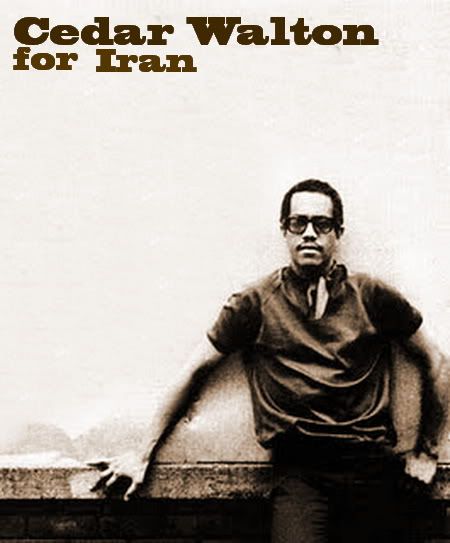
Radio Hawkins#8: Cedar Walton Sideman Years [repost]

برنامۀ هشتم
سيدار والتُن
برنامه‌اي از آثار والتُنِ پيانيستِ همراهي كنندۀ گروه ها و موزيسين هايي از 1959 تا 1979
شامل: ابي لينكُلن، آرت بليكي، آرت فارمر، جان كُلترين، لي مورگان، لاكي تامسُن، ري براون و بسياري از اساتيد ساكسوفن و ترومپت سال‌هاي پنجاه و شصت ميلادي
براي شنيدن اين برنامه كمي معلومات جمع كردن دربارۀ موسيقي هاردباپ ضرري ندارد و در اين‌جا فراهم است و آمادۀ خوانده 
شدن


با كيفيت متناسب با سرعت اينترنت ايران و تكه شده به دو قسمت براي تسهيل دانلود


Sunday, December 23, 2012

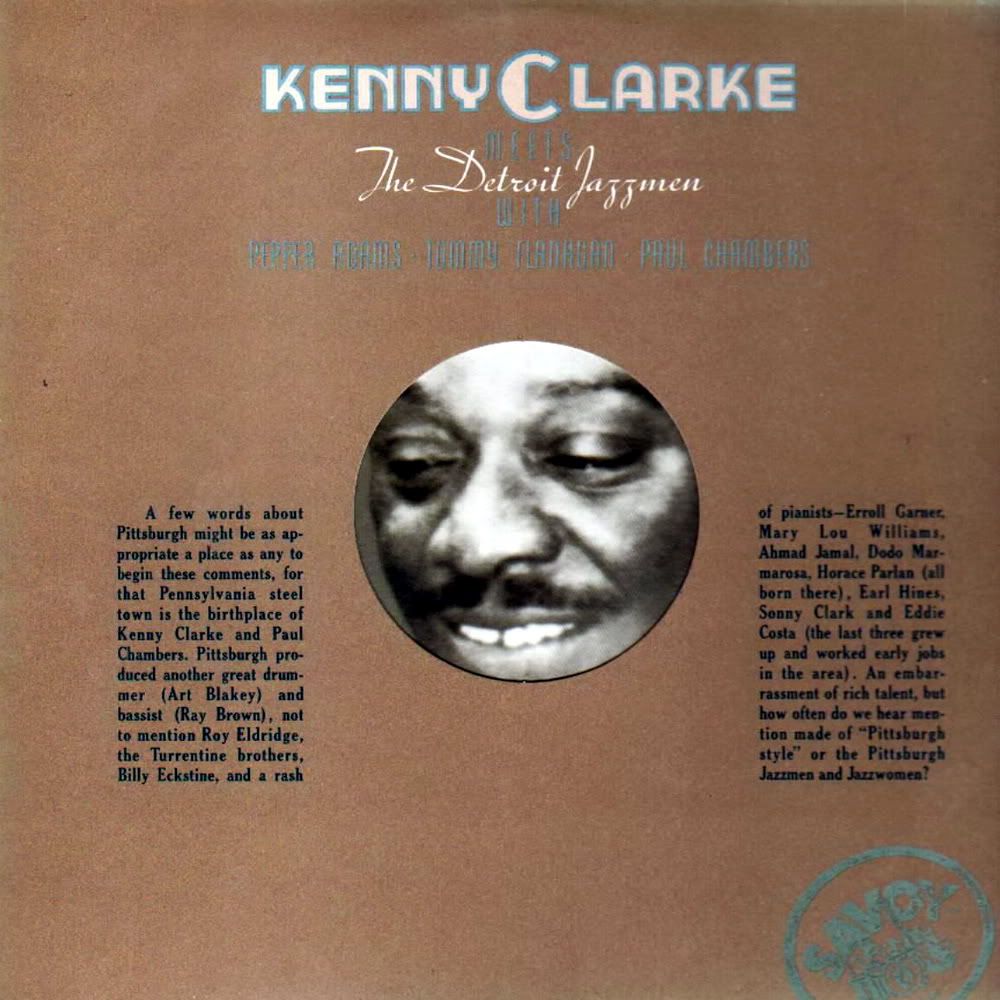
Klook Meets the Detroit Jazzmen


Kenny "Klook" Clarke's job as a drummer was, more or less, "establishing a pulse that both band and listener could feel as well as hear," (Joop Visser) and in the first half of the 1950s that pulse became the driving force of many Savoy recordings. Like that legendary rhythm section of Red Garland/Paul Chambers/Philly Joe Jones, the master drummer of bebop, Kenny Clarke, formed a super unit of the first rate musicians for the Savoy label, mostly consisted of Hank Jones on piano and Wendell Marshall on bass. Aside from their accompanying job, the classic Hank Jones Trio LP was an output of the auspicious collaboration. Other groups benefited from the Savoy rhythmic section were Eddie Bert Quartet, Nat Adderley Quintet, Joe Wilder Quartet and Milt Jackson Quintet; all classics of the post-bop era. Also It happened many times that Jones or Marshall were not available, so Klook teamed up with other rhythm suppliers, some of them as good as the absent gentlemen.

Occasionally, between endless sessions which sometimes lasted for 20 hours per day, Klook found time to record albums under his own name. His leadership materialized the famous LP, Bohemia After Dark and some other Savoy outputs. His last date for Savoy, as leader, was composed of, if in not Detroit-born, but the Detroit-raised musicians of extremely high caliber which was named KC Meets the Detroit Jazzmen.

Friday, June 3, 2011

Ray Bryant (1931-2011) R.I.P


Ray Bryant died at 80; the news is always as simple as this. But we all know that behind these numbers that sadly reflect the passing of time, years and years of music, joy of pure humanity and deep belief in art is hidden. The ending is always so sad for me, but let's not forget about the "sound" and the "joy" that always has existed, and is here to stay!

with Ike Isaac (b) Specs Wright (d). April 5, 1957. Prestige  
Blues Changes (composed by Bryant) from the album, Ray Bryant Trio  
 

He was a hard-bopper, in the same category with Sonny Clark, Kenny Drew, Tommy Flanagan, Elmo Hope, Wynton Kelly, or Randy Weston. But he had a delicate touch, like Red Garland and Jimmy Rowles. He was doing magic in small groups (mostly trios - listen to Good Morning Heartache here), and even when he was all alone (dig Alone With The Blues LP!). But also he could accompany the giants in the best way one can imagine. [listen to La Rosita here]

with Charlie Shavers (tp) Coleman Hawkins (ts) Tiny Grimes (g) George Duvivier (b) Osie Johnson (d). April 3, 1959. Prestige.  
La Rosita from Hawk Eyes   
 

Mr Richard Cook summarizes his long career:
Many premier musicians have come out of Philadelphia and Ray Bryant might head the list. He was the regular piano man at the city’s Blue Note club from 1953, where he accompanied all the visiting giants and later in the 50s he performed a similar role at Prestige, taking the piano seat on such sessions as Worktime (Sonny Rollins) and several in the great sequence of discs which Colman Hawkins recorded there. In 1959, though, he settled in New York, establishing his own trio although he never shied away from playing on his own and – unlike such contemporaries as Red Garland – he has set down a distinctive body of solo work on record. He recorded prolifically for Cadet and Colombia in the 60s (although the latter label wasted his time with pop material) and for Pablo in the 70s but he saved many of his finest hours for an outstanding sequence of records for Emarcy in the late 80s and early 90s, which have been too quickly deleted and are too little appreciated. Outgoing and capacious in his style, with a great feel for gospel currents and a gracious touch with blues, Ray is perhaps only fully appreciated in Japan, where he has always had a large and loyal following. His brother Tommy (1930-82) was a bassist.  
with George Duvivier (b), Grady Tate (d). January 10 or 12, 1976. Pablo 
Good Morning Heartache from Here's Ray Bryant


I don't remember any pianist using this much of two hands, and use it so beautifully. R.I.P Ray!
.

Friday, September 17, 2010

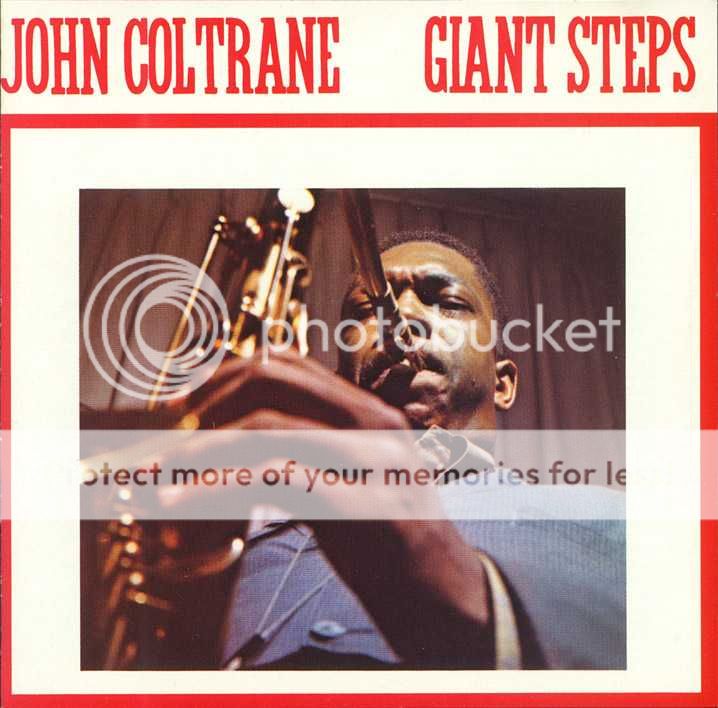
Giant Steps (John Coltrane, 1959)


Nat Hentoff's Original Liner Notes: John Coltrane's Giant Steps, 1959

Along with Sonny Rollins, John Coltrane has become the most influential and controversial tenor saxophonist in modern jazz. He is becoming, in fact, more controversial and possibly more influential than Rollins. While it's true that to musicians especially, Coltrane's fiercely adventurous harmonic imagination is the most absorbing aspect of his developing style, the more basic point is that for many non-musician listeners, Coltrane at his best has an unusually striking emotional impact. There is such intensity in his playing that the string of adjectives employed by French critic Gerard Bremond in a Jazz-Hot article on Coltrane hardly seems at all exaggerated. Bremond called his playing "exuberant, furious, impassioned, thundering."

There is also, however, an extraordinary amount of sensitivity in Coltrane's work. Part of the fury in much of his playing is the fury of the search, the obsession Coltrane has to play all he can hear or would like to hear -- often all at once -- and yet at the same time make his music, as he puts it, "more presentable." He said recently, "I'm worried that sometimes what I'm doing sounds like just academic exercises, and I'm trying more and more to make it sound prettier." It
seems to me he already succeeds often in accomplishing both his aims, as sections of this album demonstrate.

This is the first set composed entirely of Coltrane originals. John has been writing since 1948. He was born in Hamlet, North Carolina, September 23, 1926. His father played several instruments, and interested his son in music. At 15, John learned E-flat alto horn and clarinet, and in high school, he switched to tenor. He studied. in Philadelphia at the Granoff Studios and the Ornstein School of Music, became a professional at 19, and played in a Navy band based in Hawaii from 1945-46. From 1947-49, he worked with Joe Webb (Big Maybelle was in the same entourage), King Kolax, Eddie Vinson and Howard McGhee. Charlie Parker had become a dominant influence on his playing.

He was on alto with the Dizzy Gillespie band in 1949, and after Dizzy disbanded, John returned to Philadelphia, discouraged and trying to find his own way in music. From 1952-53, he was with Earl Bostic, and then played with Johnny Hodges, Jimmy Smith, and Bud Powell.
He first joined Miles Davis from 1955-56. Miles regards Coltrane and Rollins as the two major modern tenors. "I always liked Coltrane." Miles said recently. "When he was with me the first time, people used to tell me to fire him. They said he wasn't playing anything. They also used to tell me to get rid of Philly Joe Jones. l know what I want though. I also .don't understand this talk of Coltrane being difficult to understand. What he does, for example, is to play five notes of a chord and then keep changing it around, trying to see how many different ways it can sound. It's like explaining something five different ways. And that sound of his is connected with what he's doing with the chords at any given time."


Miles encouraged Coltrane and also stimulated his harmonic thinking. In terms of writing as well, John feels he's learned from Miles to make sure that a song "is in the right tempo to be its most effective. He also made me go further into trying different modes in my writing." After two years with Miles? there was a period in 1957 with Thelonious Monk that Coltrane found unusually challenging. "I always had to be alert with Monk," he once said, "because if you didn't keep aware all the time of what was going on, you'd suddenly feel as if you'd stepped into an empty elevator shaft."

Coltrane worked briefly with a Red Garland quintet, then rejoined Miles, and has been with him ever since. He has nothing of his own in the Davis book at present, but he has devoted more and more of his time to composing. He is mostly self-taught as a writer, and generally starts his work at the piano. "I sit there and run over chord progressions and sequences, and eventually, I usually get a song -- or songs -- out of each little musical problem. After I've worked it out on the piano, I then develop the song further on tenor, trying to extend it harmonically." Coltrane tries to explain what drives him to keep stretching the harmonic possibilities of improvisation by saying, "I feel like I can't hear but so much in the ordinary chords we usually have going in the accompaniment. I just have to have more of a blueprint. It may be that sometimes I've been trying to force all those extra progressions into a structure where they don't fit, but this is all something I have to keep working on. I think too that my rhythmic approach has changed unconsciously during all this, and in time, it too should get as flexible as I'm trying to make my harmonic thinking."

In her analysis of Coltrane's style in the November and December, 1959, issues of The Jazz Review, pianist Zita Carno pointed out that Coltrane's range "is something to marvel at: a full three octaves upward from the lowest note obtainable on the horn (concert A-flat)...There are a good many tenor players who have an extensive range, but what sets Coltrane apart from the rest of them is the equality of strength in all registers, which he has been able to obtain through long, hard practice. His sound is just as clear, full and unforced in the topmost notes as it is down in the bottom." She describes his tone as "a result of the particular combination of mouthpiece and reed he uses plus an extremely tight embouchure" and calls it "an incredibly powerful, resonant and sharply penetrating sound with a spine-chilling quality."

Of the tunes, Coltrane says of Giant Steps that it gets its name from the fact that "the bass line is kind of a loping one. It goes from minor thirds to fourths, kind of a lopsided pattern in contrast to moving strictly in fourths or in half-steps." Tommy Flanagan's relatively spare solo and the way it uses space as part of its structure is an effective contrast to Coltrane 's intensely crowded choruses.

Cousin Mary is named for a cousin of Coltrane who is indeed called Mary. The song is an attempt to describe her. "She's a very earthy, folksy, swinging person. The figure is riff-like and although the changes are not conventional blues progressions, I tried to retain the flavor of the blues."

Countdown's changes are based in large part on Tune Up, but against that, Coltrane uses essentially the same sequence of minor thirds to fourths that characterizes Giant Steps. His solo here, and in the others as well, illustrates Zita Carno's point that Coltrane, for all he's trying to express in any given solo, has a remarkable sense of form.

Syeeda 's Song Flute has a particularly attractive line and is named for Coltrane's 10-year-old daughter. "When I ran across it on the piano," he says, "It reminded me of her because it sounded like a happy, child's song."

The tender Naima -- an Arabic name -- is also the name of John's wife. "The tune is built," Coltrane notes, "on suspended chords over an Eb pedal tone on the outside. On the inside-- the channel -- the chords are suspended over a Bb pedal tone." Here again is demonstrated Coltrane's more than ordinary melodic imagination as a composer and the deeply emotional strength of all his work, writing and playing.


There is a "cry" -- not at all necessarily a despairing one -- in the work of the best of the jazz players. It represents a man's being in thorough contact with his feelings, and being able to let them out, and that "cry" Coltrane certainly has.

Mr. P.C. is Paul Chambers who provides excellent support and thoughtful solos on the record as a whole and whom Coltrane regards as "one of the greatest bass players in jazz. His playing is beyond what I could say about it. The bass is such an important instrument, and has so much to do with how a group and a soloist can best function that I feel very fortunate to have had him on this date and to have been able to work with him in Miles' band so long." Tom Dowd's engineering, incidentally, has caught Paul's sound as well as it's ever been heard on records, and for an insight into the importance of the bass's function, it might be valuable to go through the record once, paying attention primarily to Paul. Also worth noting is the steady, generally discreet drumming of Arthur Taylor and Jimmy Cobb throughout.

What makes Coltrane one of the most interesting jazz players is that he's not apt to ever stop looking for ways to perfect what he's already developed and also to go beyond what he knows he can do. He is thoroughly involved with plunging as far into himself and the expressive possibilities of his horn as he can. As Zita Carno wrote, "the only thing to expect from John Coltrane is the unexpected." I'd qualify that dictum by adding that one quality that can always be expected from Coltrane is intensity. He asks so much of himself that he can thereby bring a great deal to the listener who is also willing to try relatively unexplored territory with him.


-- NAT HENTOFF
co-editor, The Jazz Review, 1960


Nat Hentoff's latest book, At the Jazz Band Ball: Sixty Years on the Jazz Scene, can be found here.
Giant Steps CD is available from Amazon.

Wednesday, February 17, 2010

History of Jazz: Hardbop


تاریخ موسیقی جاز، بخش ششم
هـاردبـاپ
هاردباپ در اواسط دهه 1950 پا به عرصه وجود گذاشت و در دوره‌اي، يعني سال‌هاي 1955 تا 1970، شنونده‌هاي زيادي داشت. اين موسيقي ريشه‌هايي محكم در نهضت بي‌باپ داشت و در عين حال بسيار متأثر از موسيقي بلوز و گاسپل بود. موزيسين‌هاي هاردباپ ترانه‌هاي عامه‌پسند روز را به عنوان نقطه آغازين بداهه نوازي‌هاي پرشورشان، با تمپوهاي بالا، به‌كار مي‌بردند و در عين‌حال خود نيز به ساختن تصنيفاتي بكر و بديع توفيق حاصل كردند. به‌نسبت بي‌باپ، در هاردباپ ملودي‌ها اغلب ساده‌تر و پر احساس‌ترند و بخش ريتم فرصت بيشتري براي نمايش توانايي‌هاي خود دارد. تفاوت بين آن‌دو را نيز بايد در واقع يك‌جور تكامل منطقي به حساب آورد و حتي مي‌توان گفت كه هاردباپ در واقع بي‌باپ دهه 50 و 60 است. از طرف ديگر تاثير انجيل در اين موسيقي قابل ملاحظه است و اين‌طور به نظر مي‌رسد كه نوازندگان ساكسفون و پيانو كاملاً با فرم‌هاي اوليه بلوز و ريتم آن‌ها مانوس هستند. 
نوازندگاني مانند جان كولترين، جي جي جانسون، ساني راولينز و مايلز ديويس از تجارب گذشته‌شان در بي‌باپ براي اعتلاي هاردباپ به‌خوبي بهره گرفتند . نوازندگان ديگري مانند چارلي مينگوس، هورِيس سيلور و يا جيمي اسميت از موسيقي حزن انگيز انجيلي ري چارلز يا بانوي گاسپل، ماهليا جكسون، تاثير پذيرفتند. آرت بليكي و مكس روچ، دو طبال سرنوشت‌ساز موسيقي هاردباپ ريتم‌هاي موسيقي سنتي آفريقايي‌ها را به عنوان يكي از مؤلفه‌هاي هاردباپ مورد استفاده قراردادند. اگرچه هاردباپ با ضرب تندش بيشتر صحنه‌اي براي هنرنمايي سازهاي بادي، به‌خصوص ساكسفون تنور و ترومپت بود اما هم‌زمان يك سري تريوهاي درخشان (پيانو، باس، طبل) هم به‌وجود آمدند كه همان كوبندگي و انرژي لاينقطع گروه‌هاي بزرگ تر و همراه سازهاي بادي را داشتند. بهترين نمونه‌هاي اين دسته گروه‌هاي اسكار پيترسون و احمد جمال بودند.
در برخورد و تضاد با موسيقي كول، يعني موسيقي سفيدپوستان غرب آمريكا ژانر هاردباپ در ميان موزيسين‌هاي آفريقائي–امريكائي گسترش و تكامل پيدا كرد و در حقيقت به نوعي انعكاس تجارب سياه‌پوستان در شهرهاي شرقي آمريكا مانند نيويورك، فيلادلفيا و ديترويت بود.


كم‌كم از دل هاردباپ سبك ديگري بنام پست باپ بيرون آمد كه ضمن پذيرفتن بعضي از مشخصه‌هاي هاردباپ، تفحص در موسيقي آوان‌گارد را نيز در دستور خود گنجانده بود. چارلي مينگوس، همراه با اريك دالفي، با درهم آميختن معجوني از هاردباپ و بلوز، همراه با بداهه نوازي‌هاي آوان‌گارد، از رهروان واقعي پست باپ بودند.
هاردباپ با به حراج گذاشته شدن كمپاني بلونت (كه مهم‌ترين شركت مخصوص ضبط آثار هاردباپ بود) در انتهاي دهه 1960، مثل هرچيز ديگري، به انتهاي خط رسيد.


Monday, January 18, 2010

The Sidewinder (Lee Morgan, 1963)


یکی از مشهورترین، محبوب ترین و پرفروش ترین صفحه های تاریخ موسیقی جاز که تلفیق درخشانی از موسیقی ریتم و بلوز، موسیقی لاتین و هاردباپ توسط ترومپتیست فیلادلفیایی لی مورگان است. نمونه ای از رویکردهای تازه کمپانی صفحه پرکنی بلونُت برای کشاندن موسیقی جاز به مسیرهای تازه و پر مخاطب. بقیه همراهان لی عبارتند از: بری هریس (پیانو)، باب کرن شاو (باس)، بیلی هیگینز (درام). آلبوم این جاست.


Monday, January 11, 2010

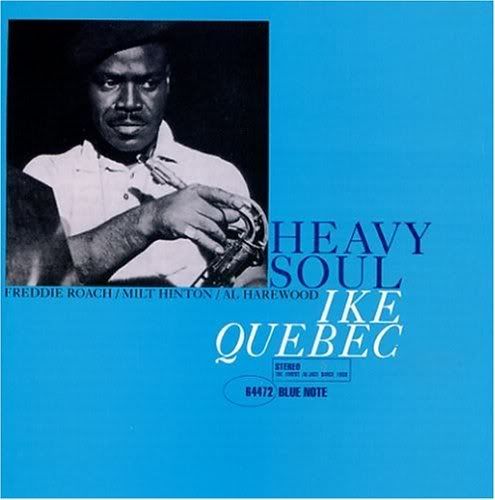
Heavy Soul (Ike Quebec, 1961)


آیک کیوبِک این روزها دوباره ما را گرفتار کرده است. همیشه نیمه اول زمستان زمان خوبی برای گوش دادن به کوارتت ها و کوئینتت های جاز همراه با ارگ هاموند است. ارگ هاموند صدای تمام زمستان هاست و چه بهتر اگر نوازنده ای مثل فردی روچ پشت این ساز نشسته باشد. آیک کبک متولد نیوجرسی و یکی از ادامه دهندگان مکتب کولمن هاوکینز بود، در واقع می شود گفت کولمن روحش را در جسم این جوان خوش صدا و با استعداد دمیده، اما از آن طرف شیطان هم معامله خودش را با آیک داشت. برای همین اعتیاد به مواد مخدر او را یک دهه (سال های 1950) از صحنه موسیقی دور نگه داشت. آن زمانی که همه خودی نشان دادند و در دنیای جاز جایشان را معلوم کردند آیک غایب بود و دیگر امیدی به بازگشتش نمی رفت، اما ناگهان از آغاز دهه 1960 به میدان بازگشت و چند آلبوم برای کمپانی Blue Note ضبط کرد که آلبوم دوشنبه امروز (Heavy Soul) یکی از آنهاست. این دوران درخشان فقط سه سال دوام آورد و در 1963 سرطان گرفت و بعد از مدتی کوتاه مرد، چنان که گویی هرگز نبوده است. امروز صدای آیک کیوبک در این جا می پیچد و روحش باز می گردد تا لذتی که خودش در این دنیای مصیبت زده نبرد را به ما ارزانی بدارد.
از میان نُه قطعه ای که در این آلبوم (و این جا) خواهید شنید، Brother, Can You Spare A Dime? برق از سر من پراند. ببینید با شما چه می کند.
مشخصات آلبوم: آیک کیوبک (ساکسفون تنور)، فردی روچ (ارگ)، میلت هینتون (باس)، ال هیروود (درامز). ضبط شده در 26 نوامبر 1961 در استودیوهای بلونُت.
*

Tuesday, October 20, 2009

Mexican Green (Tubby Hayes, 1967)


Last week’s great discovery was a top-notch record from the British jazz scene – still an unknown territory to most of jazz fans – that reminds me of how beauty can be found when and where you’re not expecting it.

The artist is Tubby Hayes and the record, Mexican Green from 1968 (Recorded in February and March 1967 and released in the following year), a post-Coltrane hard blowing session with an endless energy from the British master of the tenor sax (and other instruments as well), released by Fontana label.

Tubby Hayes was a multi-istrumentalist and probably Britain’s most important figure in modern jazz history. Looking back at the Melody Maker’s poll for best musicians of the year (British version of the Down Beat’s poll) you may find Hayes name at the top rank of every field. In Melody Maker Jazz Poll from 23 January, 1960, he was chosen as the 6th top musician of the year, 7th greatest small combo leader of the year, best tenor player of the year, second best flute player and among top ten composers of the British jazz scene.

In next year’s poll he jumped to the first rank as the best combo leader, best tenor player, and also as the best musician of the year, next to Johnny Dankworth. He also entered to the top ten list of the best alto, baritone and vibe player and big band leader and even arranger of the year.
Until 1969 he held his position as the best British musician of the year and from then his poor health forced him to work less and finally an early death, in June 1973, brought to a close the most remarkable chapter in the history of British jazz.

It’s a pity that among those great jazzmen of the isles, a real cat like Tubby never was invited aboard to the all-star sessions by major American labels. While in the late 1960 – and maybe on behalf of British rock music – such average guys like Dave Holland or a bragging guitarist like John McLaughlin became stars of the day, Tubby made only one New York recording.

“I never dreamed that I would fulfill a few ambitions, the biggest being to work in the States. Right from the start, when I was inspired by American jazz musicians, I never thought I’d get the opportunity of actually working in their company.” said Tubby in an interview from 1969. He also shared the demons of his idols by drinking hard, and later addiction to drugs.

But during his short lifetime he had a chance to play with giants like Roland Kirk, Clark Terry, James Moody, Charles Mingus, Benny Golson, Paul Gonsalves, Eddie Costa, Walter Bishop, Jr., Sam Jones, Louis Hayes, Victor Feldman, Cedar Walton, George Shearing, Kenny Clarke and Francy Boland and thank heavens that some of these dates are waxed as the great documents from the musical life of a fierce player.

***

The Mexican Green came out in early 1968, when Hayes' personal life was in tatters. Already a sick man, he ignored warnings to slow down and ravaged by drugs and drink, and disgusted with his playing, he turned reclusive and spoke to no one for nearly three months. He was sorting himself out when he was arrested and charged with narcotics offences.

In Melody Maker jazz poll of March 1969, Mexican Green was voted only second place in the LP of the year category, behind the ten year old reissue of Stan‘s Little Klunk. And being on the Fontana label means his records has been issued in the States, too.

He was always in agony of not having good rhythm section musician in England, especially after constant trips to U. S. and working with some of the fine drummers and bassists of the day. But in Mexican Green one can here a rhythm section as good as prestige or Blue note rhythm masters of the 60s, consist of Mike Pyne (piano), Ron Matthewson (bass) and Tony Levin on drums. While the influence of Coltrane quartet, especially on pianist Mike Pyne, is apparent.

All songs are composed by Hayes. “Whether I’m writing for the quintet, or for strings, or for a big band, I would rather arrange standards or my own themes than copy things off records or take down, shall we say, American compositions and adapt them,” says Hayes about his conceptions in writing music.

One of my recent exhilarating jazz experiences was with Hand to hand, a LP made by George Adams and Danny Richmond (ex-Mingusian cats) and their theme song on that record, The Cloocker. For more than a month I was listening to this terrific, fast tempo piece and when last week I heard Dear Johnny B. , the opening track from Mexican Green, I understood where it was coming from. Yes, is an ancestor to Cloocker and one of the most original pieces from European musicians with adequate amount of attack and intensity. “There are times when I will not use those fast runs and things—and there are times when I will. Sometimes I do it out of sheer exuberance—and get carried away with myself and get things going.” It’s a good explanation for the existence of tracks like Dear Johnny B, that you’ll hear many of them in Hayes’ records. By the way this song is dedicated to Hayes’ late drummer Johnny Butts who tragically died in a car accident in his twenties.

“It is not just a question of the speed at which this track is performed nor even the dexterity of Hayes’ performance but it is as though on this number at least, Hayes appears to take the tenor through the sound barrier normally restricting that instrument. He pushes the tenor so far and in such a fluid way that the timbre of the sax melts so that it begins to sound like another instrument entirely. Hayes transforms his saxophone into something approaching the sound of an accordion played at very high speed. His lightning bravura playing never waivers for a second and is always on the button.” Says Roger Farbey in his review of the album [All about jazz]

My other favorite tunes in the album are:
Off the Wagon, is a joyous hard bop piece that could belong to Sonny Rollins’ repertoire.
Trenton Place that starts with a relaxing introduction by rhythm section and then Hayes shows his mastery in flute. It’s like My favorite things that McCoy Tyner stole the set from master John Coltrane in his mid-section piano solo.
Suddenly mood changes and we back to an unstoppable high speed tune that is named second city stomper.
The title track, Mexican Green, appears at the end of the album with a mournful sax introduction and enough disquietness from the rhythm section.

Among all those giants of tenor saxophones and heavy weights of the instruments, story of this little fat boy from Britain is something you’ll never forget. And if only one record could have such a clear and present impact on the listener, that would be Mexican Green.

--Ehsan Khoshbakht
Monday, October 12, 2009

Roots & Herbs (Art Blakey,1961)


آرت بلیکی یکی از پدران درام (Drum) در جاز مدرن است. با آن که می توان از سال های 1940 و از اوج دوران بی باپ رد او را در گروه های مختلف، چه باپ و چه ارکسترهای بزرگ فلچرهندرسون و مری لو ویلیامز دید، اما نیم قرن آثار ضبط شدۀ او از موزیسینی انعطاف پذیر خبر می دهند که نه فقط در 1942 بلکه در هر زمان دیگری می تواند موزیسینی مدرن باشد، من جمله در این ضبط عالی و هیجان انگیز 1961.

این نشست که به دلایل نامعلوم توسط آلفرد لاین (مؤسس و صاحب کمپانی بلونت) تا 1970 منتشر نشد، بلیکی و گروه "جَز مسنجرز" او را با اجرای شش قطعۀ بسیار عالی "هاردباپ" از وین شورتر نشان می دهد. نمونه ای عالی از حفظ ضربی دقیق و کشاندن شنونده در این پینگ پونگ صوتی هیجان انگیز به دنبال خود (حتی اسم یکی از قطعات پینگ پونگ است و حرکت یک توپ پینگ پونگ توسط بخش ریتم دنبال می شود).

اگر اشتباه نکنم این اولین آلبومی بود که از آرت بلیکی شنیدم و هنوز گمان می کنم شروع مناسبی برای آشنا شدن با موسیقی بلیکی و دو نوازندۀ بزرگ او لی مورگان (ترومپت) و وین شورتر (ساکسفون تنور) باشد.(باقی قضایا در بخش کامنت ها)


Lee Morgan Trumpet
Wayne Shorter Sax (Tenor)
Bobby Timmons Piano
Walter Davis, Jr. Piano
Jymie Merritt Bass
Art Blakey Drums


Tuesday, September 29, 2009

Blue Gene (Gene Ammons, 1958)


Blue Gene
Gene Ammons

Recorded: New York, May 2, 1958
(According to Jazz discography project recorded in Rudy Van Gelder Studio, Hackensack, NJ. That simply couldn't be true, because after all it's a Prestige session, not Blue Note. My LP liner notes say New York City is correct.)

Label: Prestige LP 7146 or Original Jazz Classics OJCCD 192-2

Musicians:
Idrees Sulieman (tp)/Pepper Adams (Barsax)/Mal Waldron (p)/Doug Watkins (b)/Art Taylor (d)/Ray Barretto (perc)

Tracks:
1-Blue Gene (13:54)
2-Scamperin’ (8:39)
3-Blue Greens and Beans (9:00)
4-Hip Tip (8:58)
Totall Time 40:31

All tracks composed by Mal Waldron.
(According to AMG some tracks are composed by Ammons himself and track three by a guy named Green (!), this is not true. Once again repulsive monopoly of AMG on music scene becomes clear, I’m tired of these worthless so-called reviews and ratings and misinformation)

Issues & reissues:
LP - Blue Gene; Blue Greens And Beans, Pt. 1&2; Biggest Soul Hits.
CD - Blue Gene; Greatest Hits: The 50s.

Session Details:
1509 Blue Greens and Beans Prestige 45-140, PRLP 7146; Fantasy OJCCD 6013-2
1510 Hip Tip Prestige PRLP 7146
1511 Scamperin' -
1512 Blue Gene Prestige PRLP 7146, PRLP 7306

We read about this album At AMG’s entry: "The final of Ammons’s series of jam sessions for Prestige features an excellent septet". First, it's not (and never intend to be) a jam session in true sense of the word, It's more a hard bop blowin' session with lots of energy but restricted in the field of the composed pieces by Mal Waldron. Second, this is not "the last" of anything because Ammons has other sessions for Prestige, after this one.
Let's forget about Scott Yanow of the AMG and dig this very good round up of two great saxophonists. This a great example of Chicago school of tenor sax by master Ammons.

See a previous post about Ammons.
See another post on Pepper Adams.

.