Showing posts with label Paul Chambers. Show all posts

Wednesday, September 18, 2013

Crash Course on Bud Powell


"Bud was totally immersed in music -- his one constant reality. Even when there was no instrument available, he could hear the sounds. Once when a friend visited him in hospital, Bud sketched piano keys on the wall. 'Listen, what do you think of these chords,' he asked while he banged his fingers against the drawing."

This anecdote which is narrated by the deep voice of David W. Niven is the essence of Bud Powell, the subject of this new post. And also this post happens to be the 400th on Take the "A" Train, so in a sense you may call it a celebration too.

The plan is to study Bud Powell though the tapes of archivist David Niven. Please note that a few seconds of silence exists between the end of side A of each tape and the beginning of side B. The side reversal happens automatically for each tape.

I've already posted Bud-related materials here, including a note on a Danish film about the pianist, and a handful of interviews. For completion sake, be aware of the seminal Bud Powell book, Wail: The Life of Bud Powell by Peter Pullman which is described by its author as an "unsentimental biography—not hagiography—of a major jazz artist." Pullman continues: "It’s based as much on an exhaustive look at the public record and press on Powell, as it is on eyewitness accounts of his live performances and on personal opinions of his private life—in addition to subjective assessments of his studio recordings. The book treats all of these accounts as so many pathways to understanding the central paradox of the musically explosive yet emotionally impassive Powell: How could he have played with such rhythmic euphoria (and romantic feeling!) and, yet, seldom if ever have allowed anyone to see the physical and psychic pain that he was often enduring?"

For ordering the paper edition of Bud Powell book, email the author directly at pullman_peter[at]yahoo.com.

This crash course features some 500 minutes of Powell's romantic agony (i.e. music), and as it has been the case with great art, his pain will be your incalculable pleasure.

Saturday, August 24, 2013

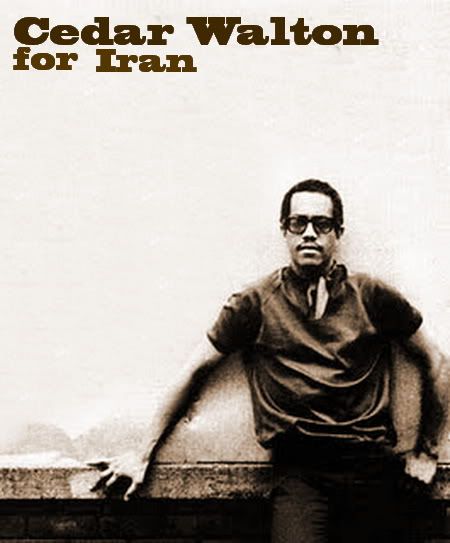
Radio Hawkins#8: Cedar Walton Sideman Years [repost]

برنامۀ هشتم
سيدار والتُن
برنامه‌اي از آثار والتُنِ پيانيستِ همراهي كنندۀ گروه ها و موزيسين هايي از 1959 تا 1979
شامل: ابي لينكُلن، آرت بليكي، آرت فارمر، جان كُلترين، لي مورگان، لاكي تامسُن، ري براون و بسياري از اساتيد ساكسوفن و ترومپت سال‌هاي پنجاه و شصت ميلادي
براي شنيدن اين برنامه كمي معلومات جمع كردن دربارۀ موسيقي هاردباپ ضرري ندارد و در اين‌جا فراهم است و آمادۀ خوانده 
شدن


با كيفيت متناسب با سرعت اينترنت ايران و تكه شده به دو قسمت براي تسهيل دانلود


Sunday, December 23, 2012

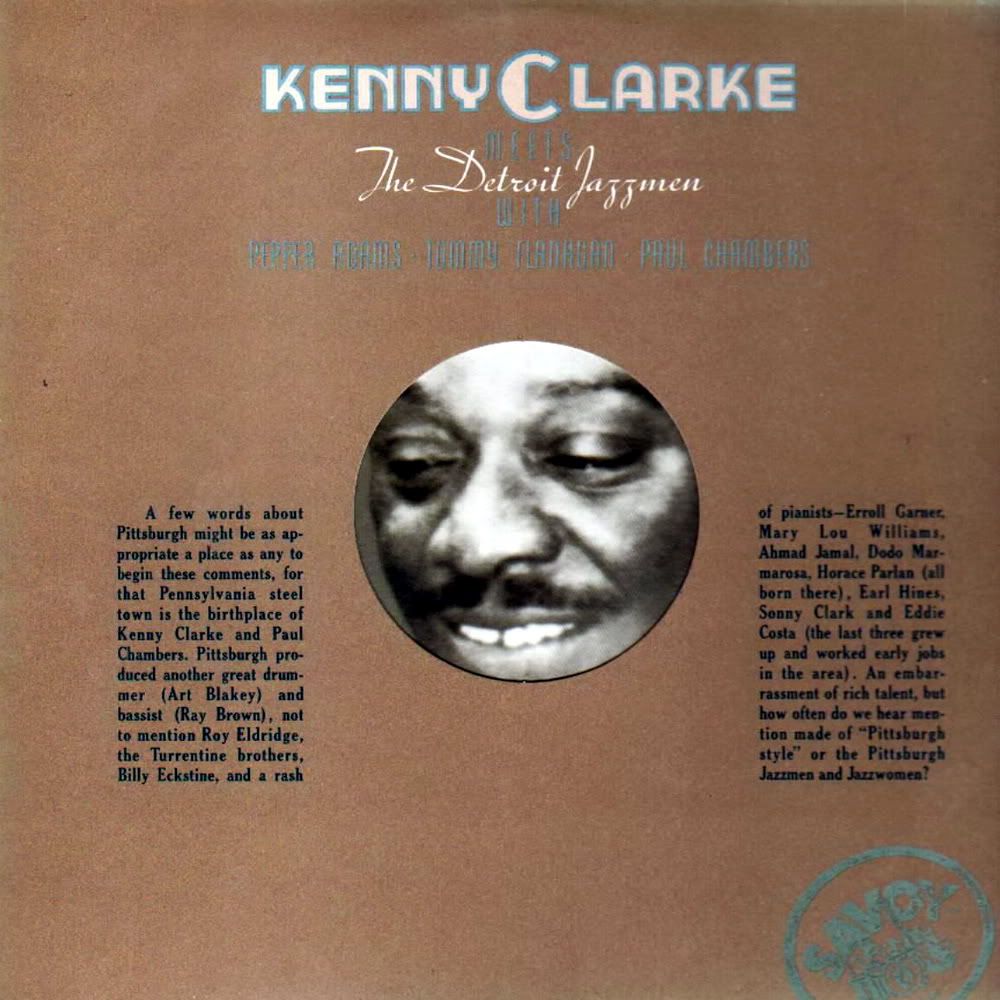
Klook Meets the Detroit Jazzmen


Kenny "Klook" Clarke's job as a drummer was, more or less, "establishing a pulse that both band and listener could feel as well as hear," (Joop Visser) and in the first half of the 1950s that pulse became the driving force of many Savoy recordings. Like that legendary rhythm section of Red Garland/Paul Chambers/Philly Joe Jones, the master drummer of bebop, Kenny Clarke, formed a super unit of the first rate musicians for the Savoy label, mostly consisted of Hank Jones on piano and Wendell Marshall on bass. Aside from their accompanying job, the classic Hank Jones Trio LP was an output of the auspicious collaboration. Other groups benefited from the Savoy rhythmic section were Eddie Bert Quartet, Nat Adderley Quintet, Joe Wilder Quartet and Milt Jackson Quintet; all classics of the post-bop era. Also It happened many times that Jones or Marshall were not available, so Klook teamed up with other rhythm suppliers, some of them as good as the absent gentlemen.

Occasionally, between endless sessions which sometimes lasted for 20 hours per day, Klook found time to record albums under his own name. His leadership materialized the famous LP, Bohemia After Dark and some other Savoy outputs. His last date for Savoy, as leader, was composed of, if in not Detroit-born, but the Detroit-raised musicians of extremely high caliber which was named KC Meets the Detroit Jazzmen.

Friday, September 9, 2011

Musicians on Musicians#1: Shura Greenberg and his 5 bassists

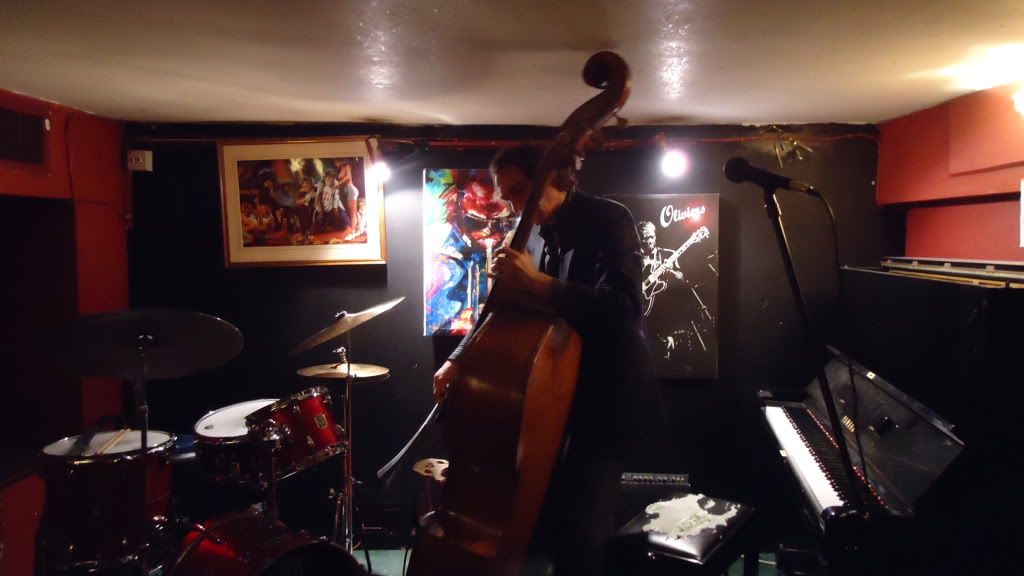
Greenberg at Oliver's, Greenwich, London. May 2011.


Shura Greenberg is a freelance musican from London. He rides an old horse (a Volvo from 1980s), spacous enough to carry his acoustic bass around the metropolis. When you're a bassist, and you're gigging in Richmond, and next day you have to be in the northeast of town, you need a good horse like that.

Shura is capable of traveling around, participating in various groups (trios to bigger formats and jam sessions), and also leading and directing some of these sessions. I had the privilege of accompanying him in some of his gigs, among them, his arrangements of Bitches Brew materials for a sextet (performed monthly in a crazy club in Hackney), and also a project named Dexterritory, apparently a tribute to Dexter Gordon by playing tenorman's compositions with a quartet at Greenwich.

He is a graduate of Guildhall School Of Music in London, and as a result of academic background and his own passion, he has spent some time on studying classical music and the techniques of composing. His principal bass teachers have been LSO co-principle Colin Paris and freelance classical bassist Beverley Jones (both of whom taught him bow technique). In jazz Shura has benefited from studying with Steve Watts and the late Jeff Clyne (both highly considered on the London jazz scene). He also spent some significant time and circumstance with the American bassist Curtis Lundy (widely recorded U.S bass player and band leader). And yet Shura is in many respects a self-taught musician especially in regards to jazz. His interests in music range from the cantatas of J. S. Bach to the serial works of Arnold Schoenberg. In jazz Shura is just as likely to be listening to the recorded music of Albert Ayler as he is to Thelonious Monk, Miles Davis or Duke Ellington. The emotionality of music is ultimately what interests and inspires him. And that elusive quality we call 'SWING'.

I asked him about his five favorite bassists...

"This list is highly personal and only reflects the way I feel today. Tomorrow I might come up with a totally different list! This is important because it stresses the way in which our tastes and influences change. The many great bassists I have omitted are endless: Charles Mingus, Percy Heath, Wilbur Ware, Buster Williams, Scott La Faro, Gary Peacock, Charlie Haden, Dave Holland. The list just goes on and on.... Perhaps in way of explanation I could say that these listed bassists cover the art of playing within the rhythm section as much as they do soloing. Not to say that the bass solo is without merit. But principally the bass is a functional, supportive instrument and operates in tandem with the drums to propel the music rhythmically and harmonically forward. In this respect these 5 bass players, in their different ways, are acknowledged masters of their instrument"

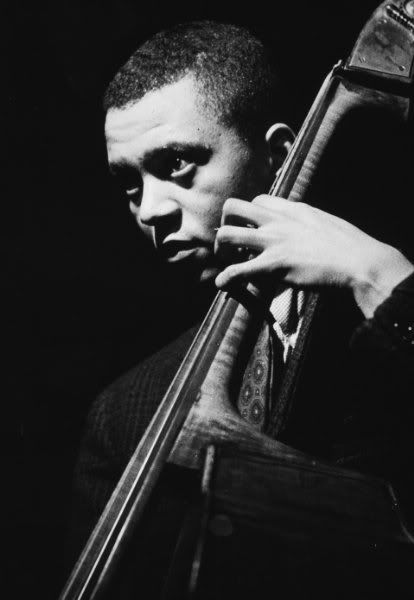
Paul Chambers. An immense player from his work as a teenager with Miles Davis in the mid-50's through to his death in 1969. His sense of swing phrasing at all tempos is unsurpassible. In fact he so clearly, in my opinion, defined bop bass playing through this era that every subsequent bop bass player is indebted to him to some degree or other. His solo work with the bow was also significant and showed great facility. Some have commented that Paul spent more time working on his solo concepts than he did the art of accompaniment. To some degree this is true. He was a monster soloist who could go on chorus after chorus. But his playing within the rhythm section is not to be underestimated. His work alongside drummer Philly Joe Jones as example is one of the highlights of late 50's jazz. To sum him up: He was a great team player who could also solo alongside the likes of Miles Davis and John Coltrane with distinction. His playing had enormous warmth and swang like crazy!


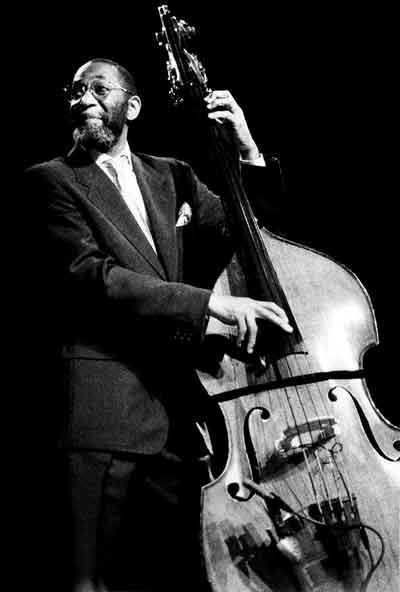
Ron Carter. This was the player who replaced Paul Chambers in the Miles Davis group. At his best in the 1960's Davis Quintet his work displayed an astonshing control of pure sound on the bass (this length of tone is pretty much his signature sound). Add to this his ability to manipulate rhythmic time and superimpose harmonic variations within a piece of music and you get what I'd call a 'Scientist of the bass'. His work circa '63-69 is an encyclopedia of bass techniques within a small group. Ron had an almost atomic and molecular understanding of the nature of bass sound. In this respect he is unparalled. A player less well known for his solo work. His great legacy is his playing within the rhythm section. In this respect his playing displays the function of the bass in its traditional sense i.e being in a supportive role. In this area he is quite superb and highly influential.


Reggie Workman. This bassist brings a emotionally consistent quality to all the work he has laid down since coming on the scene in the early 60's with John Coltrane and Art Blakey. Beautifully poised even when the heat really turns up in the music. His playing maintains discipline and yet is highly imaginative at the same time. His strengths range from the avant garde to the mainstream. And yet in all styles and situations he is unmistakeably himself. There is a certain dark richness to his tone which distinguishes him from, say, Ron Carter (whose tone is lighter and more airbound). With Reggie the element I hear most strongly is 'Earth'. Also has developed a highly original concept of tone on the bass (his use of vibrato and portamento on the bass is very distinct). His ability and love of more adventurous musical playing (avant garde) has also developed the imaginative side of his playing to great effect. Even in more straightahead situations he still retains a freedom of expression with respect to rhythmic daring and melodic invention. Altogether a  highly developed musician. And deeply expressive.


Larry Gales. I have a particular appreciation of bass players who enjoy expressing themselves within the rhythm section rather than as front line soloists. Well, this guy could do both but its principally his hard-swinging within the Thelonious Monk group for several years that really gets my attention. The principal job of the jazz bassist in mainstream jazz is to produce a walking bass line that underpins the top line or solo. Larry Gales could do this song after song, night after night, year after year with the Monk group. And at all times swinging the band into orbit! Someone once calculated that a certain bassist played several hundred unadorned crotchets while playing with Monk. Well they could have been talking bout Larry. This commitment to straightforward no nonsense hard swinging is a hallmark of his work. But in fact its this very simplicity that often makes it go un-noticed and less considered. There's nothing flashy here. Just swing plain and simple, but with a buoyancy that lifts the music into another dimension. Well that gets my vote every time! Still if you thought that was all this guy could do just check out some of his solo work with the high priest. You'll hear both lyrical and bop sides to his soloing that are also deeply impressive. Monk had the habit of often totally laying out for large parts of horn solos and generally also for the bass solo. This places a particular requirement for the bassist to really lay it down and be rock-solid. Well Larry Gales was the man for the job.


Ray Brown. Really in some ways this gentleman should be at the top of the list. If out of respect for his pre-eminence amongst jazz bassists if nothing else. For over half a century his playing defined the totality of mainstream bass playing in jazz. With Ray you get the perfect combination of virtuoisity and supportive play. Listen to any of the classic Oscar Peterson recordings and you'll hear it. Even a simple walking line with Ray gets transformed into a skipping, dancing counterpoint to the solo line. The hallmarks of his work are a sophistication, subtlety and elegance. Ray was a musician equally at home playing at a White House function for royalty as he was playing a small jazz club in NYC. This total command of the language of jazz (and the bass in particular) allowed him to continue to play at the highest level right up till his passing. Perhaps one aspect I would highlight of his work would be his ability to play the blues. More than any other bassist mentioned in this list, Ray had that quality of blue sensibility throughout his playing. And its this which links him to the very earliest exponents of the art of jazz. Like all the great masters of the form you truly feel the ancient and the modern in his work. One might rightly call him the father of contemporary jazz bass. Ray, because I feel of his supreme virtuoisity, was more at home in a trio setting where his solo expertise and ability to interplay was more showcased than it would be in a quartet/quintet. All the bassists listed above owed him much in terms of inspiration and direction.