
Stan Getz and the Oscar Peterson Trio (Verve 8251)
Stan Getz (ts), Oscar Peterson (p), Herb Ellis (g), Ray Brown (b)
Capitol Studios, Los Angeles, CA, October 10, 1957

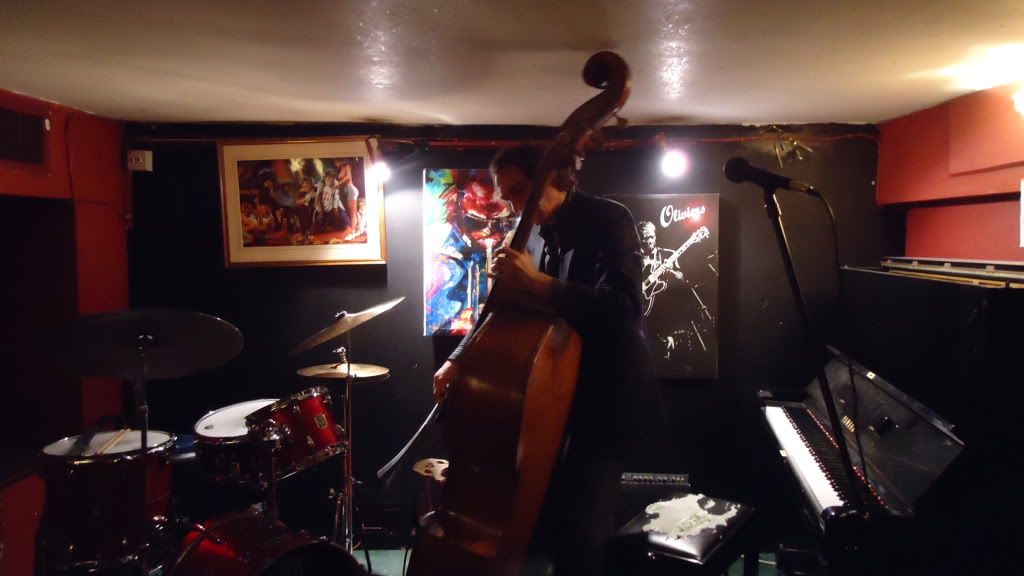 |
| Greenberg at Oliver's, Greenwich, London. May 2011. |
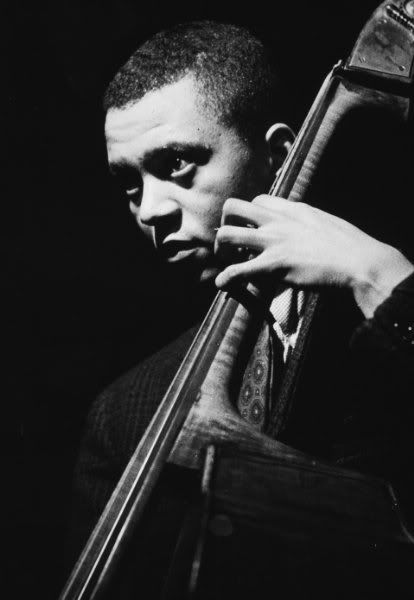 Paul Chambers. An immense player from his work as a teenager with Miles Davis in the mid-50's through to his death in 1969. His sense of swing phrasing at all tempos is unsurpassible. In fact he so clearly, in my opinion, defined bop bass playing through this era that every subsequent bop bass player is indebted to him to some degree or other. His solo work with the bow was also significant and showed great facility. Some have commented that Paul spent more time working on his solo concepts than he did the art of accompaniment. To some degree this is true. He was a monster soloist who could go on chorus after chorus. But his playing within the rhythm section is not to be underestimated. His work alongside drummer Philly Joe Jones as example is one of the highlights of late 50's jazz. To sum him up: He was a great team player who could also solo alongside the likes of Miles Davis and John Coltrane with distinction. His playing had enormous warmth and swang like crazy!
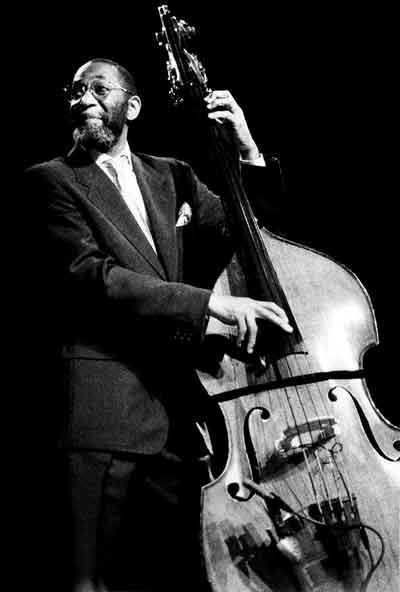 Ron Carter. This was the player who replaced Paul Chambers in the Miles Davis group. At his best in the 1960's Davis Quintet his work displayed an astonshing control of pure sound on the bass (this length of tone is pretty much his signature sound). Add to this his ability to manipulate rhythmic time and superimpose harmonic variations within a piece of music and you get what I'd call a 'Scientist of the bass'. His work circa '63-69 is an encyclopedia of bass techniques within a small group. Ron had an almost atomic and molecular understanding of the nature of bass sound. In this respect he is unparalled. A player less well known for his solo work. His great legacy is his playing within the rhythm section. In this respect his playing displays the function of the bass in its traditional sense i.e being in a supportive role. In this area he is quite superb and highly influential.
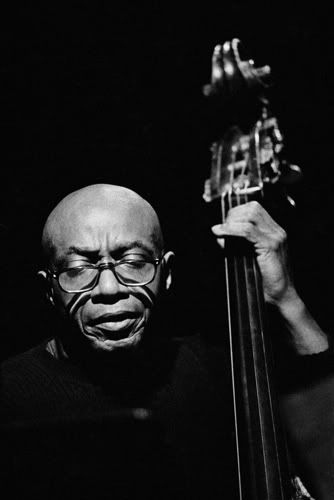 Reggie Workman. This bassist brings a emotionally consistent quality to all the work he has laid down since coming on the scene in the early 60's with John Coltrane and Art Blakey. Beautifully poised even when the heat really turns up in the music. His playing maintains discipline and yet is highly imaginative at the same time. His strengths range from the avant garde to the mainstream. And yet in all styles and situations he is unmistakeably himself. There is a certain dark richness to his tone which distinguishes him from, say, Ron Carter (whose tone is lighter and more airbound). With Reggie the element I hear most strongly is 'Earth'. Also has developed a highly original concept of tone on the bass (his use of vibrato and portamento on the bass is very distinct). His ability and love of more adventurous musical playing (avant garde) has also developed the imaginative side of his playing to great effect. Even in more straightahead situations he still retains a freedom of expression with respect to rhythmic daring and melodic invention. Altogether a highly developed musician. And deeply expressive.
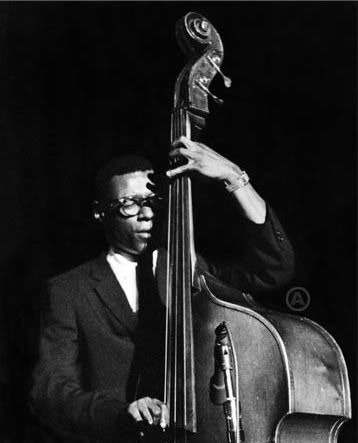 Larry Gales. I have a particular appreciation of bass players who enjoy expressing themselves within the rhythm section rather than as front line soloists. Well, this guy could do both but its principally his hard-swinging within the Thelonious Monk group for several years that really gets my attention. The principal job of the jazz bassist in mainstream jazz is to produce a walking bass line that underpins the top line or solo. Larry Gales could do this song after song, night after night, year after year with the Monk group. And at all times swinging the band into orbit! Someone once calculated that a certain bassist played several hundred unadorned crotchets while playing with Monk. Well they could have been talking bout Larry. This commitment to straightforward no nonsense hard swinging is a hallmark of his work. But in fact its this very simplicity that often makes it go un-noticed and less considered. There's nothing flashy here. Just swing plain and simple, but with a buoyancy that lifts the music into another dimension. Well that gets my vote every time! Still if you thought that was all this guy could do just check out some of his solo work with the high priest. You'll hear both lyrical and bop sides to his soloing that are also deeply impressive. Monk had the habit of often totally laying out for large parts of horn solos and generally also for the bass solo. This places a particular requirement for the bassist to really lay it down and be rock-solid. Well Larry Gales was the man for the job.
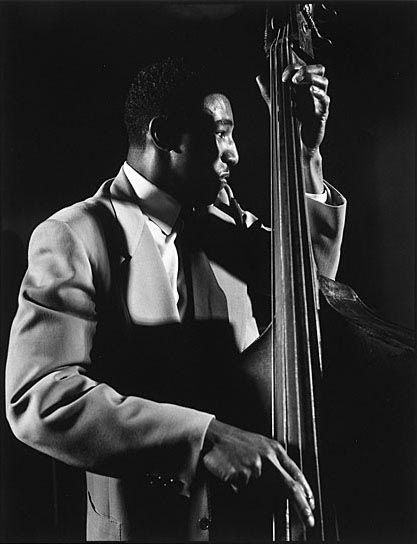 Ray Brown. Really in some ways this gentleman should be at the top of the list. If out of respect for his pre-eminence amongst jazz bassists if nothing else. For over half a century his playing defined the totality of mainstream bass playing in jazz. With Ray you get the perfect combination of virtuoisity and supportive play. Listen to any of the classic Oscar Peterson recordings and you'll hear it. Even a simple walking line with Ray gets transformed into a skipping, dancing counterpoint to the solo line. The hallmarks of his work are a sophistication, subtlety and elegance. Ray was a musician equally at home playing at a White House function for royalty as he was playing a small jazz club in NYC. This total command of the language of jazz (and the bass in particular) allowed him to continue to play at the highest level right up till his passing. Perhaps one aspect I would highlight of his work would be his ability to play the blues. More than any other bassist mentioned in this list, Ray had that quality of blue sensibility throughout his playing. And its this which links him to the very earliest exponents of the art of jazz. Like all the great masters of the form you truly feel the ancient and the modern in his work. One might rightly call him the father of contemporary jazz bass. Ray, because I feel of his supreme virtuoisity, was more at home in a trio setting where his solo expertise and ability to interplay was more showcased than it would be in a quartet/quintet. All the bassists listed above owed him much in terms of inspiration and direction.