Showing posts with label Interviews. Show all posts

Tuesday, August 2, 2016

Charlie Parker, The Boston Radio Interviews


Bird speaks! Posted online recently as an episode from the Birdmaniac Birdflight show on New York's WKCR, the jazz historian and DJ Phil Schaap presented one of the very few surviving Charlie Parker's interviews in good audio quality, accompanied by Mr. Schaap's commentary and a wealth of information about the historic interview.

At the time of the interview, Parker, fresh from a triumphant concert in Toronto's Massey Hall, was engaged at Boston's Hi-Hat Club. On June 13, 1953, after a prior discussion, he showed up at the Boston radio station to be interviewed by John Fitch who was known on air as John McLellan.

During the course of the interview, McLellan tried to encourage, even unsuccessfully provoke Parker to talk more. (Listen to McLellan's biting remark about Dixieland music to which Parker remains indifferent if not defensive.) No matter how much articulation and encouragement is poured into the interview on McLellan's end, Parker, 32 at the time, remains detached if amiable. He seems to be only interested in "good music", having issues with categorizations and ranking fellow artists:

"Oh, I'd like to differ, I beg to differ, in fact. There's always room for musicians, you know. There's no such thing as the middle of the road, it will be one thing or the other -- good music or otherwise, you know. And it doesn't make any difference which idiom it might be in -- swing, bebop, as you might want to call it, or Dixieland -- if it's good it will be heard."
Parker, maintaining his calm and friendly attitude throughout the course of an interview which doesn't always go in right direction, gives insight into his world by some typically short, poetic statements:

"Most people fail to realize that most of the things they hear coming out of a man's horn, ad lib, or else things that are written, original things, they're just experiences, the way he feels -- the beauty of the weather, the nice look of a mountain, or maybe a nice fresh cool breath of air, I mean all those things."
Parker's knowledge of jazz history and his pedagogic precision in emphasizing the dates -- even if they are not exactly correct -- and his reluctance to talk ill of his colleagues and contemporaries are touching.

Wednesday, March 9, 2016

Jacques Derrida Interviews Ornette Coleman


"Repetition [in music] is as natural as the fact that the earth rotates." -- Ornette Coleman


In 1997, Ornette Coleman was in Paris for a concert when French deconstructionist philosopher Jacques Derrida invited him to an interview. They met and tackled on subjects as diverse as language, improvisation, repetition, and Afro-American life. There were even some biographical anecdotes, shared by Coleman, for instance, the one about his ill-fated Town Hall concert whose spate of mishaps seems as extraordinary as the music:

"When I arrived in New York, I was more or less treated like someone from the South who didn't know music, who couldn't read or write, but I never tried to protest that. Then I decided that I was going to try to develop my own conception, without anybody's help. I rented the Town Hall on 21 December 1962, that cost me $600,I hired a rhythm and blues group, a classical group and a trio. The evening of the concert there was a snowstorm, a newspaper strike, a doctors' strike and a subway strike, and the only people who came were those who had to leave their hotel and come to the city hall. I had asked someone to record my concert and he committed suicide, but someone else recorded it, founded his record company with it, and I never saw him again."
Speaking to someone who's intensely into sign processes and making-meaning, Coleman has his semi-semiotic stories to tell:

Monday, August 3, 2015

Bud Powell: Two French Interviews


This post presents a transcribed interview (along with the original audio clip) of Bud Powell, conducted in France where he was recuperating from tuberculosis at the Boullemont Sanatorium.

I heard it the first time as the last track from an exceptional CD, Inner Fires, which featured Bud’s trio with Charlie Mingus and Roy Haynes at Club Kavakos, Washington D. C from April 5, 1953.

Interestingly, the album came out as a part Bill Potts collection, a Washingtonian pianist who accompanied Lester Young in his legendary Washington concerts, released in five volumes.

Although Bud Powell was very sick at the time, his comments lend insight into his not so accessible musical universe.


First Interview: January 15, 1963

You may already know that Bud is suffering from tuberculosis and is now recuperating in a sanatorium near Paris. We went to see him there and tried to interview him. I say 'tried' because Bud is extremely weak now, and it was necessary to ask him the same question several times before he was able to respond. It was also technically difficult to conduct this interview, but I think that despite all this we were able to assemble enough good material for you to hear.

Q: Bud, you told me that you’ve written a new tune since your arrival at the hospital. Would you please tell me its name and give me an idea of how it goes?

A: I wrote In the Mood for a Classic. [Bud sings]

Q: Bud, for whom did you compose this piece?

A: I composed it for France in general.

Q: Who are your favorite players?

Friday, December 5, 2014

Cecil Taylor - The Poetry of Sound

Cecil Taylor illustration by Naiel Ibarrola
I've always been fascinated by the idea of how Body and one's physique can play a major role in creating art. The movement of Jackson Pollack's body, his sway, and an almost choreographed movement over canvas had a direct impact on the finished work. In John Cassavetes films, too, there is always a great deal of physical tension: running, escaping, fighting, strolling and colliding. In these films, being scarred by any extreme emotion, such as love, is manifested in being hurt, falling down and standing up again. I find the same qualities in the music of Cecil Taylor that to me is the perfect marriage of painting and cinema, of a two-dimensional representation of an actual idea sent into a three-dimensional space. Once even I screened Marcel L'Herbier's L'Inhumaine while playing Taylor's music on the images. The result was stunning. Taylor is like an iris shot in a silent film, starting from one single note and from there opening in all directions. The result is something like a dome of sound.

This 1986 audio file that I've shared here features Cecil Taylor in conversation with Marian McPartland on her famous jazz piano show, where Taylor explains some of the ideas behind his music. Two pianists are sitting side by side in the studio, having conversations about a wide range of subjects and playing some wonderful music.

Thursday, July 31, 2014

Hank Jones on Al Haig

Henry "Hank" Jones (July 31, 1918 – May 16, 2010)


Hank Jones remembers his early Bop influences after leaving the Detroit area. He put a stress on the role of Al Haig in finding his own musical voice which was not a total departure from the Teddy Wilson tradition, but it was more a modern variation of that:

"When I first got to New York, one of the first groups I heard was the Dizzy Gillespie-Charlie Parker group. Al Haig was the pianist at the time: Now I understand that he and Bud Powell alternated with the group, as did Max Roach and Stan Levey on drums. But during the initial period when I first came to New York, Al Haig was the pianist.

Friday, March 21, 2014

Oscar Peterson in Interview

image courtesy of Pablo Records

Much of his soloing is preoccupied with building pyramid-like structures, deftly reaching the top and then releasing the energy by gliding through a series of brilliantly raging notes which always sound light and afloat. Oscar Peterson is a giant of piano (this is known as "stating the obvious"), both metaphorically and figuratively. His physical dominance over the instrument and the brain which is capable of producing huge melodic units has given us one of the most extraordinary musicians ever.

Found in my collection of jazz interview tapes, this CBC interview (no date mentioned on the cassette) is very enjoyable to listen to and highly illuminating, especially towards the end, when the usual mask of the gentle giant falls off and some of his anger over what seems to be the Canadian issues of the time are revealed.

Tuesday, February 4, 2014

A Certain Finesse: Chattin' With Trumpet Masters

From left: Harry Edison, Joe Wilder, Clark Terry
They feel slightly old. They know who's the boss. The music they play is not too bizarre or too personal or too difficult. Of course, it is difficult to deliver with such precision and groove, but never difficult to enjoy. That's more or less how an informal assembly of three trumpet legends feel.

Watch a Swiss TV interview with Clark Terry, Harry "Sweets" Edison and Joe Wilder from 1997.

Thursday, November 21, 2013

The Hawk Talks


Two interviews with Coleman Hawkins, posted on the occasion of his 109th birthday anniversary.

The English Interview:

Coleman Hawkins, in London (circa 1960), talks about tenor saxophone, Fletcher Henderson, Fats Waller (bringing him his 'breakfast' which was a glass full of scotch), Body & Soul (recorded in "just one take...Boom!!") and some other things.


Saturday, August 24, 2013

Oh Lady Was Good: 6 Favorite Marian McPartland Piano Interviews


Marian McPartland, the first English lady of jazz piano from Windsor, died earlier this week at 95.

In the 1970s she hosted a show for NPR called Piano Jazz for which she interviewed and played along many musicians (mostly pianists, but not always' dominantly jazz, but also some notable pop instrumentalists). The format of the programme was an hour-long chat and piano playing, whether as solo or duet, and reminiscing about the musical life of each interviewee. Needless to say, thanks to a Marian's long and fruitful career in the States, many of the subjects had prior professional encounters with her. So she knew what she was talking about.

Here is my six favorite moments from those shows.

Wednesday, January 9, 2013

Ekkehard Wölk Trio Live in Delhi


I'm back in 2013 with another post about one of my favorite contemporary European jazz pianists (which automatically means endorsing the great trio he is leading), Ekkehard Wölk whose classical background, his deep admiration for silent cinema and his rich musical language proves that how cultural diversity can give new, unexpected and utterly exciting faces to good old jazz.

In April 2011, The Ekkehard Wölk Trio performed a concert for 5000 Indian jazz fans in New Delhi. The occasion was used as a platform to introduce newly composed/arranged songs of The Berlin Album which I reviewed here. Thanks to Ekkehard, and the Seher Jazz Festival, you can watch the concert from that hot April evening on my blog.

I asked Ekkehard to share his impressions of India with me and he responded enthusiastically:

Friday, May 25, 2012

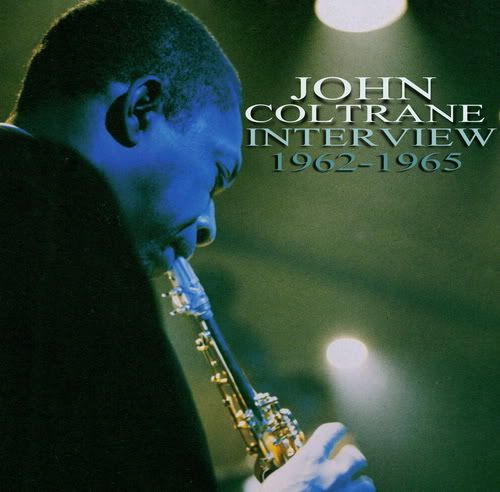
John Coltrane Interviews, Part II: 1962-65

Michiel de Ruyter Interviews John Coltrane on October 26, 1963 and July 27, 1965. Some segments, mostly Ruyter's comments, are in Dutch. For the first part of the interview go here.

Friday, April 13, 2012

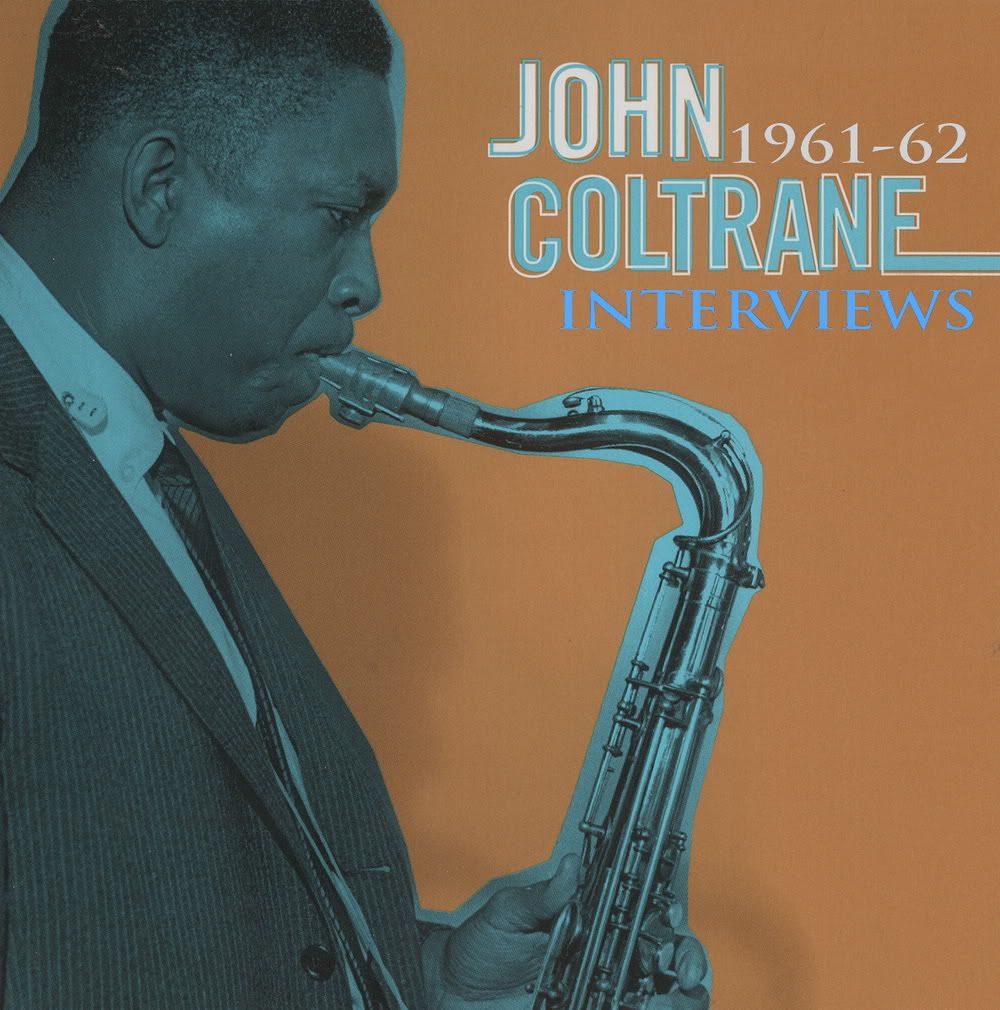
John Coltrane Interviews, Part I: 1961-62

Michiel de Ruyter Interviews John Coltrane on November 19, 1961, and later, December 1, 1962. Parts of his comments and his introduction is in Dutch.

Sunday, January 29, 2012

Interview with Jutta Hipp


After a reminiscing of Rex Stewart's recordings in Berlin which had an amazing 500 hits and turned out to be one of the most read posts of this blog, and also considering a chat with Berliner pianist/composer Ekkehard Wölk, now's the time for another story of jazz in Germany.

"At 11 A.M. on November 18, 1955, a nervous figure stepped off the gangplank of the S.S. New York at Pier 88 in Manhattan and gazed around with myopic eyes at the unfamiliar landscape of a strange new country. Jutta Hipp had arrived in America," remembers Leonard Feather of the arrival of the person whose life and jazz recordings is the subject of this post.

Before Miss Jutta Hipp's arrival in New York, she was a professional painter and musician in Germany. Born in February 4, 1925 in Leipzig, she started playing jazz in the war years, and not long after the war, she was leading her own combos. Feather discovered her "in the crowded cellar club in Duisberg," and invited her to go to US.

Jutta moved to New York City in 1955, and her first recordings were live at the Hickory House albums, now out-of-print and copies on the web, too expensive to afford. In July of the same year, she went to the studio with Zoot Sims to record probably her most famous LP, in a quintet format. 1956 was also marked by her appearance in Newport Jazz Festival.


We have to wait for the publishing of the first English language book about her (will come out soon) to explain why she suddenly stopped playing jazz and apparently became a seamstress! But some say, she was always nervous of playing with American jazz musicians, in a male dominated environment.

Hipp's American experience was shortly ended up in obscurity, and she returned to her first interest, painting. Though she stayed in New York, and died there in 2003.

This audio file is a radio programme, with interviews and music clips, in German. Anyone interested in transcribing/translating it, is more than welcome.

The last thing I have to say: I won't forgive Richard Cook for not including Hipp in his Jazz Encyclopedia.


Friday, January 27, 2012

Musicians on Musicians#4: Ekkehard Wölk on Pianists


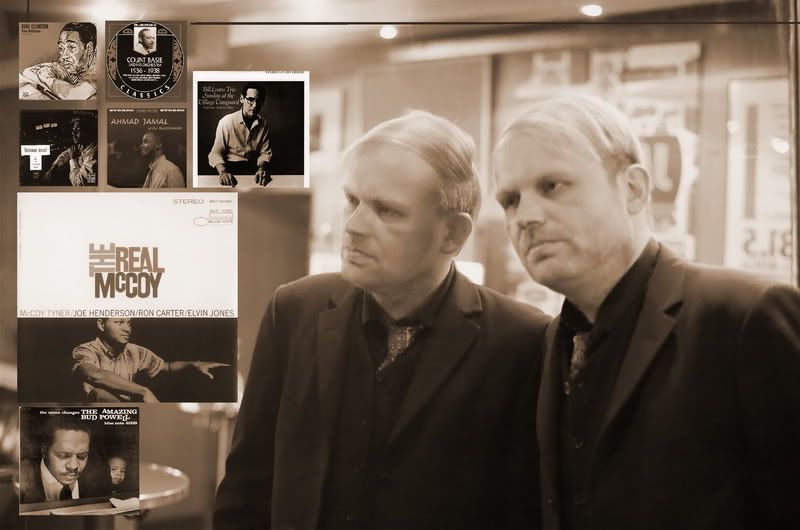
Ekkehard Wölk is a pianist, composer, arranger, and in my opinion, a genuine expert of silent and classical cinema of Germany and Hollywood. This Berliner's list of contributions to the various fields of art can be read at Wikipedia. He has released a new jazz album named after his city of residence, The Berlin Album. Next week I'm going to write about that, till then, we have another post on Ekkehard and his profound understanding of jazz and its history. In this interview, he discuss pianists and albums that have inspired him.

*  *  *

In early days I used to listen a lot to Count Basie's Kansas City Five recordings from the mid 30s with the singular Lester Young on tenor, and I was also swept away by the vigour and powerful swing of his celebrated big bands from that time.

Nevertheless, when I am being 'nailed down' to express personal preference, I would have to give the musical 'Palme D'Or' to Duke Ellington, considering his overwhelming importance as a composer, arranger, band leader and also as, in my opinion, a strongly underrated pianist in his own right.

One of my favorite piano trio recordings of all time is Piano Reflections done by Ellington in 1953 for Capitol Records. I strongly believe that an artist like Thelonious Monk could not have developed his singular way of 'dealing with' the piano if he had not inhaled and carefully studied the refined pianistic styles of Duke Ellington and Fats Waller, himself later developing a reduced, somehow 'Dadaistic' skeleton version of these masters' music! Undoubtedly, Monk is a true giant in the musical history of the 20th century. In the field of art, he seems to represent a very rare phenomenon with his career, in that sense that is one of the very few examples of a totally uncompromising artist who finally - after yearlong total neglection and disdain by the public - gains the overall and worldwide recognition and embraces by the mainstream culture without ever changing his stubborn musical path or losing his unique vision of dark sounds! Especially I love his solo piano recordings, like Monk alone In San Francisco or Thelonious Himself from the fifties, much better than his famous quartets or trios, because as a soloist, Monk is free to explore his eccentric ideas of form, sound and time relations in a totally pure and ascetically beautiful manner.

Montevideo from Piano Reflections by Ellington, 1953 - Wendell Marshall is on bass, and Dave Black on drums. Ralph Colier, congas.

My top pantheon of jazz pianists would be centered around the triptychon of Bud Powell, Bill Evans and McCoy Tyner. For me, these three influential artists represent the pinnacle of what is creatively possible within the wide range of jazz piano music. But of course, I also feel great respect for the achievements of Art Tatum in the 30s and 40s which may be - in absolute pianistic terms - forever unsurpassable in brilliance by younger pianists!

I already have mentioned the much - neglected importance and the merits of Duke Ellington as a pianist. From the more contemporary generation of remarkable jazz piano- players, I would cite the works of Herbie Hancock, Ahmad Jamal, Fred Hersch and some of Keith Jarrett's trio recordings. Of the old masters of stride and swing piano from the 20s and 30s, I should at least name the great Earl ‘Fatha’ Hines and Teddy Wilson, to complete the acoustic picture!

Sunday, November 27, 2011

Roy Haynes Talks and Dances!


I was always looking for a jazz event like this. An event that gives me the feeling of observing an overflowing volcano of creativity and force, standings on the crater and watching the fire and ash clouds coming out. Seeing history been made, and in the meantime feeling good and relaxed. I couldn't imagine that one day the drummer of Charlie Parker with Strings (in live recordings from 1950 with Mr. Al Haig on piano) will gratify this wish of mine. I couldn't dream of seeing an 85 year-old man who has played with Lester Young or Thelonious Monk, in 2011, and the very same person in the very same date shows me that fire and explosion, that fun and charisma in jazz which is extremely rare now. Yes, Roy Haynes was in town for the London Jazz Festival, and he performed one the most magical sets in the two weeks of unstoppable concerts and events. What an auspicious night! His gig was about music, history, comedy, improvised jazz and improvised gags, and a lesson in how keep the pulse of every single audience in the Queen Elizabeth Hall.

Before the 7:30 PM gig with Fountain of Youth Band (Jaleel Shaw on alto sax, Martin Bejerano on piano and  David Wong on bass), he appeared on stage for a short interview with BBC3. I used my mobile camera to film a part of the conversation. The camera is far from stage. I've used maximum zoom and a big head in front of me blocks the view. These issues have resulted a poor quality in this video, though it is still listenable and watchable, especially if you want to see the man tap-dancing at 85!

same band, one year earlier

Sunday, October 9, 2011

Musicians on Musicians#3: Jennifer Anderson and 5 tenor

Jennifer Anderson is a saxophone player from Glenview, Illinois, and currently based in L.A. In addition to being a musician and painter, Mrs Anderson is a grade school music teacher. She is still doing her "big band thing," as well as working in the recording studios. I interviewed her via email, and here she talks about her influences and tenor saxophonists who have inspired her through the years. Like other interviewees, it was impossible for her to just stick to five names, and at one point she quoted from a friend, Chuck Johnson, to point how different players feel close to different sounds and musical personalities. "The attraction to Dexter Gordon for me is immediate because of his sound…big, robust, clear and warm," Jennifer quoted Chuck Johnson, "he has the ability to place every note he plays clearly and distinctly no matter the tempo of the tune.  But delve beyond his sound and you find a musician with a fertile aptitude to create improvisations that build logically, melodically and with intensity, chorus after chorus after chorus. And he masterfully and cleverly injects song quotes within any song he is performing. Dexter was also able to synthesize the cool, lyricism and storytelling of Lester Young with the harmonic advancement and fluidity of Charlie Parker and create his own personality." Well, not only we learn from people we love, but also we learn from the way people love other people. That's the main point of these interviews.

◘  ◘  ◘

Sonny Rollins: One of my first jazz music lessons actually came from a Sonny Rollins record. My first saxophone was a tenor. I didn't know much about the saxophone or sax players at the time, so I went to the local record store and picked up some records with pictures of guys with a saxophones one the front. One of them way Sonny Rollins' Way Out West with drummer Shelly Manne and bass player Ray Brown. I loved the cover--he looked so bad-ass slinging the sax and wearing a ten gallon hat out in the desert. When I heard I'm an Old Cowhand I realized the song was him! Never mind that it was a hokey old song. The music sounded as serious as it was fun--and swung like crazy! You could transcribe Sonny's solo and study it in a college classroom, but I really heard his personality coming through. That really got my imagination because Sonny made me see potential and possibility. Throughout his career, he has really dug into that potential and possibility and amazed us all with his interesting use of harmony, fluidity, spontaneity, and wit. There probably are people out there jamming on his tunes right now as well as studying him in college classrooms!

Ben Webster: Like Duke Ellington said said "I've always had a yen for Ben". The distinctive sound of Ben Webster is one that you can recognize is a few notes. Whether he is playing sweet or growly sexy, you could never confuse his sound with anyone else. That sound always seems to go right to my gut somehow. He was a big sensation in the Duke Ellington band in the 40's. Many musicians have paid tribute to him by playing his Cottontail solo, which was a big hit for the Ellington band. My recomendation would be Poutin'!

Coleman Hawkins: I know that historically Coleman Hawkins is a very important innovator. He took an instrument that was more of a novelty and band instrument before the 30's and really wowed the world with his playing. This drew lots of attention to the sax and made it a much more popular as a "legitimate" instrument. But even so, I feel like he would be awesome during any time period, and he was! His career was amazing even through the bop era. His beautiful, strong, colorful, lyrical sound is one I could never tire of. I love how his lines are seamless and ornamental at the same time. What a brain he must have had. Maybe that's why his nickname was Bean.

Lester Young: Lester Young was one of the first people to inspire me to play the saxophone. What I heard made so much sense to me. He seemed to speak in complete musical sentences. I loved his light sound. The problem was that he influenced me so much that I was always playing too laid back, and not in a good way! I finally realized it and stopped trying to be Lester Young. There definitely was only one of him. He is also famous for playing and and recording with his friend Billy Holiday.

Stan Getz: He is probably most known for his work with Antonio Carlos Jobim, which created the Bossa Nova craze in the 60's. But during his career he played it all--big band, cool jazz, bop and more. I heard that he was inspired by Lester Young. He has always been a huge inspiration to me because of the pure magic he created with his sound. When I first heard The Girl From Ipenema I was absolutely spellbound. His magical sound hooked me. I am currently enjoying his recordings that he made with guitarist Johnny Smith.

Sunday, October 2, 2011

Musicians on Musicians#2: Kevin McMahon and 5 tenor


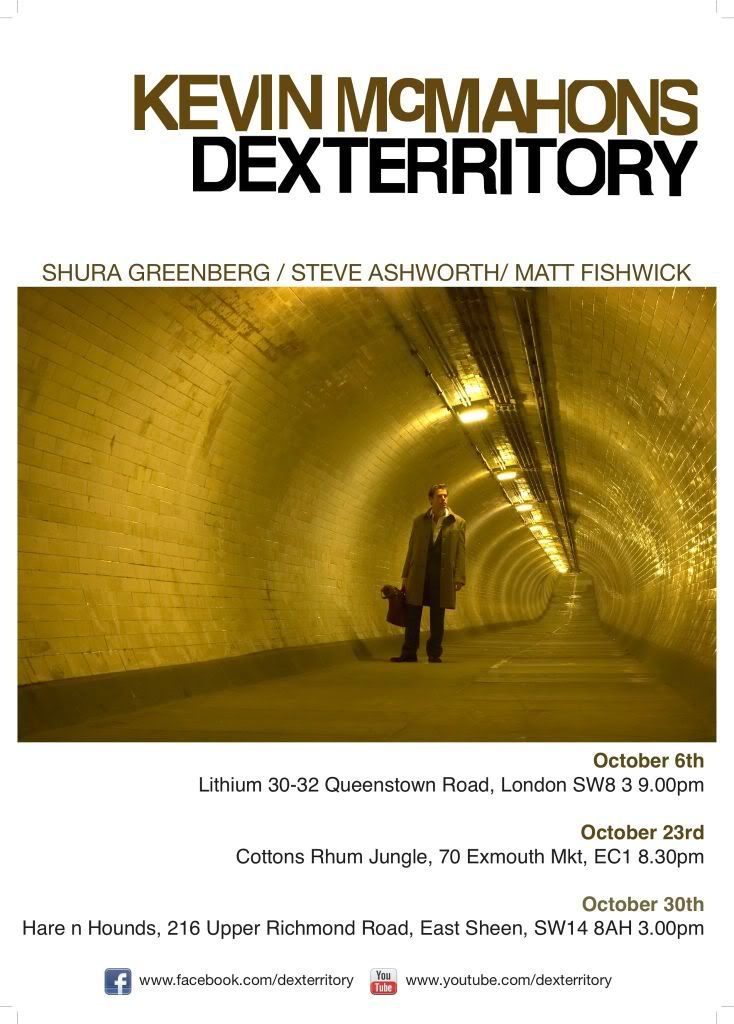
I met Kevin McMahon, an Irish tenor saxophonist, last winter. His is capable of executing beautiful, and slow-talking phrases on his instrument. He can do mournful treatments of ballads, and at the same time he can be aggressive, when playing bop standards is concerned. He is developing a huge and edgy sound and love to play with chord sequences that can move listeners, instantly. No need to say, he was heavily influenced by his idol, Mr Dexter Gordon, and he was calling his project of playing Dexter's composition with his quartet, "Dexterritory".

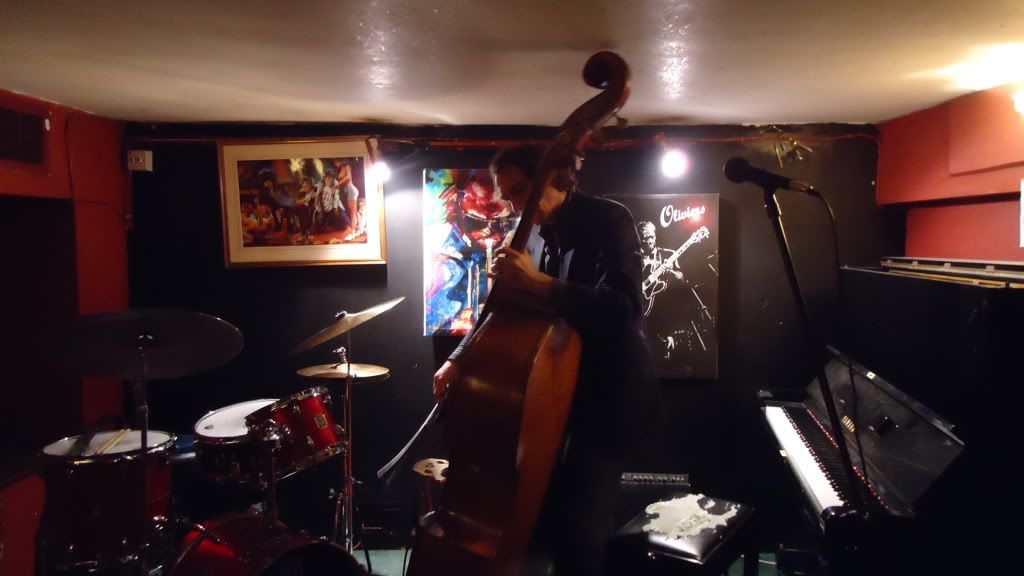
His quartet was consists of Shura Greenberg, an inspiring bass player, Steve Ashworth, a pianist who loves Cedar Walton, and Matt Fishwick on drums (though drummer's chair has been owned by a number of other musicians since then). In a tiny band stand of Oliver's at Greenwich London these cats had their own way of saying thank you to Dexter Gordon. They showed a good taste in returning to Dexter Gordon's Blue Note years and finding some of the best tunes ever written in the idiom of hardbop and rearranging them for a contemporary quartet. The list includes pieces like Hanky Panky, Ernie's Tune, Society Red, Second Balcony Jump and Cheese Cake, and the focus was on solid, bluesy, marching beat of this tunes.

Recently I asked him about the tenormen who have inspired him. Of course, top of the list belongs to Dex, and after that come these names:

Dexter Gordon: I bought the Ballads album when I was twenty-two and listening one afternoon I recall saying to myself this is why I want to play saxophone, funny that its nearly twenty years later that my band "Dexterritory" are working on presenting some of his Music. His Importance is gigantic, a tenor bridge between the swing and bob players of his generation. His contribution to hard swinging Bop unsurpassed, not to mention his coolness and manner, a sophisticated Giant indeed.
I'm a fool to want you

Stan Getz: Serenity was the first album I really checked out and I still get mileage from it, actually was just listening I Remember You from the live album. As Coltrane remarked "we'd all sound like Stan if we could". His sound and lyrical quality are simply outstanding. Stan is old Blue Eyes for me on Tenor. 
 
Sunday

Joe Henderson: I was lucky enough to meet Joe twice both briefly, he was a gentleman. His playing like all of the greats was stamped with a instantly recognizable sound...and what a sound. I do prefer the later recordings particularly the records he made playing the music of Jobim and Miles. Go Joe....
Recorda Me

John Coltrane: Could not be omitted from my top Five. My favourite albums are Lush Life and the record he made with baritone Johnny Hartman. Trane was the endless searcher for truth and an inspiration to any man.
Giant Steps

Richie Buckley: Richie is  from a big musical family in Dublin, be sure to check him out if your over there. He is an amazing saxophone player and has been a factor in my wanting to play. Has all the qualities of a master musician. He made a record a few years back called Your Love Is Here. 

Friday, September 9, 2011

Musicians on Musicians#1: Shura Greenberg and his 5 bassists

Greenberg at Oliver's, Greenwich, London. May 2011.


Shura Greenberg is a freelance musican from London. He rides an old horse (a Volvo from 1980s), spacous enough to carry his acoustic bass around the metropolis. When you're a bassist, and you're gigging in Richmond, and next day you have to be in the northeast of town, you need a good horse like that.

Shura is capable of traveling around, participating in various groups (trios to bigger formats and jam sessions), and also leading and directing some of these sessions. I had the privilege of accompanying him in some of his gigs, among them, his arrangements of Bitches Brew materials for a sextet (performed monthly in a crazy club in Hackney), and also a project named Dexterritory, apparently a tribute to Dexter Gordon by playing tenorman's compositions with a quartet at Greenwich.

He is a graduate of Guildhall School Of Music in London, and as a result of academic background and his own passion, he has spent some time on studying classical music and the techniques of composing. His principal bass teachers have been LSO co-principle Colin Paris and freelance classical bassist Beverley Jones (both of whom taught him bow technique). In jazz Shura has benefited from studying with Steve Watts and the late Jeff Clyne (both highly considered on the London jazz scene). He also spent some significant time and circumstance with the American bassist Curtis Lundy (widely recorded U.S bass player and band leader). And yet Shura is in many respects a self-taught musician especially in regards to jazz. His interests in music range from the cantatas of J. S. Bach to the serial works of Arnold Schoenberg. In jazz Shura is just as likely to be listening to the recorded music of Albert Ayler as he is to Thelonious Monk, Miles Davis or Duke Ellington. The emotionality of music is ultimately what interests and inspires him. And that elusive quality we call 'SWING'.

I asked him about his five favorite bassists...

"This list is highly personal and only reflects the way I feel today. Tomorrow I might come up with a totally different list! This is important because it stresses the way in which our tastes and influences change. The many great bassists I have omitted are endless: Charles Mingus, Percy Heath, Wilbur Ware, Buster Williams, Scott La Faro, Gary Peacock, Charlie Haden, Dave Holland. The list just goes on and on.... Perhaps in way of explanation I could say that these listed bassists cover the art of playing within the rhythm section as much as they do soloing. Not to say that the bass solo is without merit. But principally the bass is a functional, supportive instrument and operates in tandem with the drums to propel the music rhythmically and harmonically forward. In this respect these 5 bass players, in their different ways, are acknowledged masters of their instrument"

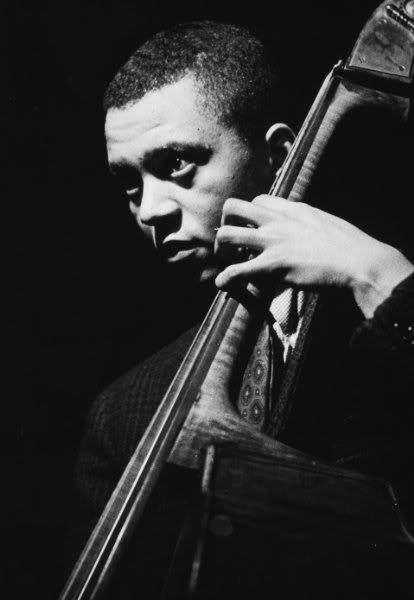
Paul Chambers. An immense player from his work as a teenager with Miles Davis in the mid-50's through to his death in 1969. His sense of swing phrasing at all tempos is unsurpassible. In fact he so clearly, in my opinion, defined bop bass playing through this era that every subsequent bop bass player is indebted to him to some degree or other. His solo work with the bow was also significant and showed great facility. Some have commented that Paul spent more time working on his solo concepts than he did the art of accompaniment. To some degree this is true. He was a monster soloist who could go on chorus after chorus. But his playing within the rhythm section is not to be underestimated. His work alongside drummer Philly Joe Jones as example is one of the highlights of late 50's jazz. To sum him up: He was a great team player who could also solo alongside the likes of Miles Davis and John Coltrane with distinction. His playing had enormous warmth and swang like crazy!


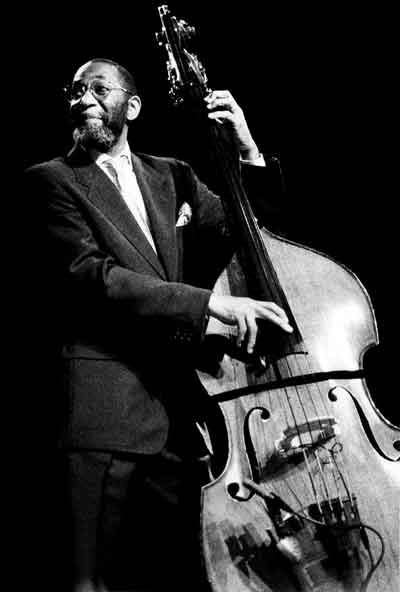
Ron Carter. This was the player who replaced Paul Chambers in the Miles Davis group. At his best in the 1960's Davis Quintet his work displayed an astonshing control of pure sound on the bass (this length of tone is pretty much his signature sound). Add to this his ability to manipulate rhythmic time and superimpose harmonic variations within a piece of music and you get what I'd call a 'Scientist of the bass'. His work circa '63-69 is an encyclopedia of bass techniques within a small group. Ron had an almost atomic and molecular understanding of the nature of bass sound. In this respect he is unparalled. A player less well known for his solo work. His great legacy is his playing within the rhythm section. In this respect his playing displays the function of the bass in its traditional sense i.e being in a supportive role. In this area he is quite superb and highly influential.


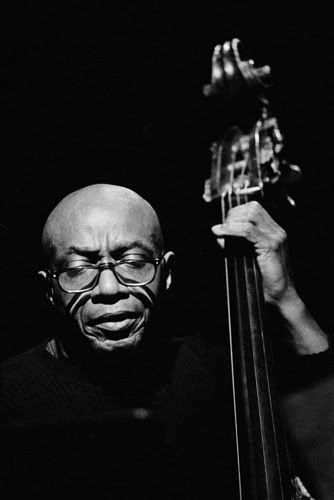
Reggie Workman. This bassist brings a emotionally consistent quality to all the work he has laid down since coming on the scene in the early 60's with John Coltrane and Art Blakey. Beautifully poised even when the heat really turns up in the music. His playing maintains discipline and yet is highly imaginative at the same time. His strengths range from the avant garde to the mainstream. And yet in all styles and situations he is unmistakeably himself. There is a certain dark richness to his tone which distinguishes him from, say, Ron Carter (whose tone is lighter and more airbound). With Reggie the element I hear most strongly is 'Earth'. Also has developed a highly original concept of tone on the bass (his use of vibrato and portamento on the bass is very distinct). His ability and love of more adventurous musical playing (avant garde) has also developed the imaginative side of his playing to great effect. Even in more straightahead situations he still retains a freedom of expression with respect to rhythmic daring and melodic invention. Altogether a  highly developed musician. And deeply expressive.


Larry Gales. I have a particular appreciation of bass players who enjoy expressing themselves within the rhythm section rather than as front line soloists. Well, this guy could do both but its principally his hard-swinging within the Thelonious Monk group for several years that really gets my attention. The principal job of the jazz bassist in mainstream jazz is to produce a walking bass line that underpins the top line or solo. Larry Gales could do this song after song, night after night, year after year with the Monk group. And at all times swinging the band into orbit! Someone once calculated that a certain bassist played several hundred unadorned crotchets while playing with Monk. Well they could have been talking bout Larry. This commitment to straightforward no nonsense hard swinging is a hallmark of his work. But in fact its this very simplicity that often makes it go un-noticed and less considered. There's nothing flashy here. Just swing plain and simple, but with a buoyancy that lifts the music into another dimension. Well that gets my vote every time! Still if you thought that was all this guy could do just check out some of his solo work with the high priest. You'll hear both lyrical and bop sides to his soloing that are also deeply impressive. Monk had the habit of often totally laying out for large parts of horn solos and generally also for the bass solo. This places a particular requirement for the bassist to really lay it down and be rock-solid. Well Larry Gales was the man for the job.


Ray Brown. Really in some ways this gentleman should be at the top of the list. If out of respect for his pre-eminence amongst jazz bassists if nothing else. For over half a century his playing defined the totality of mainstream bass playing in jazz. With Ray you get the perfect combination of virtuoisity and supportive play. Listen to any of the classic Oscar Peterson recordings and you'll hear it. Even a simple walking line with Ray gets transformed into a skipping, dancing counterpoint to the solo line. The hallmarks of his work are a sophistication, subtlety and elegance. Ray was a musician equally at home playing at a White House function for royalty as he was playing a small jazz club in NYC. This total command of the language of jazz (and the bass in particular) allowed him to continue to play at the highest level right up till his passing. Perhaps one aspect I would highlight of his work would be his ability to play the blues. More than any other bassist mentioned in this list, Ray had that quality of blue sensibility throughout his playing. And its this which links him to the very earliest exponents of the art of jazz. Like all the great masters of the form you truly feel the ancient and the modern in his work. One might rightly call him the father of contemporary jazz bass. Ray, because I feel of his supreme virtuoisity, was more at home in a trio setting where his solo expertise and ability to interplay was more showcased than it would be in a quartet/quintet. All the bassists listed above owed him much in terms of inspiration and direction.

Saturday, March 12, 2011

Charles Mingus Interviewed by Nesuhi Ertegun


His legacy is complex, yet universal. His passion for the jazz past of Ellington and Jelly Roll Morton prefigured the revivalism of today, even though he might have sneered at it; his insistence on instrumental excellence is reflected in the high standards of execution that have become the norm among young players. His berating of inattentive audiences anticipates a time when jazz is respected as art music, yet the noisy, turbulent feel of all his bands invites listeners to participate in a communal, unstuffy exhilaration. He is Charles Mingus, as described by Richard Cook in his prominent Jazz Encyclopedia.

This interview must be from 1963, as it discusses the “recent release” of Charles Mingus Plays Piano.


Wednesday, November 3, 2010

Good Morning Blues#2: With Chet in the Mornings


I began this rather cold morning with a butter sandwich, Chet Baker Quartet, a cup of tea, and an inescapable mournful empathy for pianist Dick Twardzik. Before begining the day's task, which is writing a 1800-word piece on cities and movies for 24 Monthly, I ran into this very atmospheric Köln concert of Chet Baker Quartet. Butter and tea were finished after the first tune, and I left alone with Chet's interpretation of Imagination.

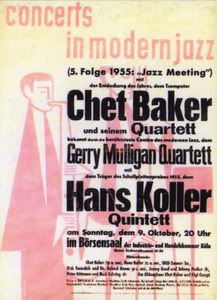
The Köln gig was a part of 1955 European tour of the newly formed Chet Baker Quartet. Chet's recording career had started just three years before and now he was a big name in jazz. Musically, he became widely known thanks to the discs he had made with baritone saxophonist Gerry Mulligan as part of a provocative and unusual pianoless quartet (trumpet, baritone sax, bass and drums). Half an hour later, I went for a second cup of tea and found this interview with Chet, from Jazz Podium magazine, 1978. Interviewer is Gudrun Endress:


When did all of these troubles start, in the '60s or in the '50s?
  • No, in 1957. I was 27 years old. And all the musicians that I thought were the greatest musicians were into that, you know. And I never messed with it for a long lime. All the time I was with Gerry Mulligan, I was clean, but people thought I was doing something.
I always thought it happened alter the death of Dick Twardzik.
  • It did. That's when it happened, in 1957, when I went back to New York after he died. That 's when I started it and I kept that pretty strong for about 13 years and then a judge in Califonia was very kind to me. He could have given me five years like poor Art Pepper, who got sent twice to San Quentin or some crazy place like that, but the judge sent me to a sort of guidance-center where they test you, psychological and every way possible, to decide what to do with you. And when I went back to court with the results of the testing, he let me go. He put me back on the street again.
Is that the only way that you can cure yourself?
  • That's the only way. And I did. I got on the methadone program. I was on it 7 years. I started out at 8 milligrams, and little by little I had to take the dosage down and down until I came to Europe with just enough for two months and I made it last for four and a half months. And I just tapered out to nothing and stopped.
That means you are thinking a lot about why you use this. Is it because you can't bear the environment around you, all the bullshit?
  • Yes, the people I had to deal with were a drag, the stuff that I got was never any good. You know, you put all of that energy into the wrong direction. So I decided almost too late to cut it loose. Just to see if I could make it again after everything. Kind of a challenge in a way, because after so much bad publicity it's hard to get people to believe you.
But the bad publicity is publicity, don't forget that.
  • Yes, I know, but everybody reads that and you'd be surprised how many people believe it - what they read. Not people like you, people with some sophistication.
But all these people who are judges or judge these persons, they are maybe drinking a lot of schnapps or beer everyday and they don' t think about that.
  • Oh, but that 's all right. Drugs are something out of the norm, that is really to be feared, I guess. And there are a lot of people, friends of mine, that didn't make it, who couldn't handle it and it killed them. So it comes to a point where you really have to say, do you want to live or do you want to die and then you make that choice and that's it.
And what's the reason why you want to live, to play music?
  • That's about the only thing I'm good for, I guess.
***
Chet looking at Dick Twardzik

But who was Dick Twardzik? Born in Danvers, Boston, on April 3D, 1931, the gifted Twardzik studied classical music before discovering jazz. He began playing clubs in 1946 and by 1954 he was clearly one of the most promising young musicians in Boston. In 1955, when pianist Russ Freeman decided not to travel to Europe with Chet's quartet, the trumpeter found in Dick Twardzik a natural choice. But just like Chet and Littman, Dick was addicted to heroin. Freeman remembered many years later: "Chet was addicted , his drummer was addicted, and there is always a division between musicians who are clean and those who are using. Addicts hang with other addicts."

Chet and Dick's musical relationship would be one of the most interesting albeit tragic experiences in the history of jazz. Beginning the tour in Holland in September 1955, the Chet Baker Quartet played many concerts in Europe and on October 9 they performed at the Köln Börsensaal , in Germany. That tour was his first and his last, because he died from a heroin overdose in his Paris hotel room on October 2 1, 1955. He was only 24 years old.

Now let's go back to another cold day, 55 years ago, in October 9, 1955, only twelve days before Dick Twardzik's death. The setting is Köln Börsensaal. I have it on a CD called The Lost 1955 Concert (RLP Records 88618). The tune is Imagination, with Chet Baker (trumpet), Dick Twardzik (piano), Jimmy Bond (bass), Peter Littman (drums).