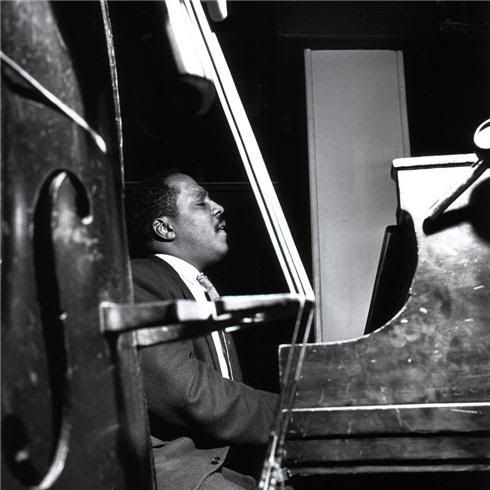
In 1963, a short experimental film was made about Bud Powell. Half a century later, some musings on that Danish film and on Bud himself.
Bud means the wind if you are a Farsi speaker. Thus, for me, the name defines the music. Although he is one of my favorite pianists in jazz—whom I discovered through the Bud Plays Bird LP—he is never as fiery as one would expect from the wind. He is a bipolar giant. When playing I Remember Clifford at the Golden Circle club in Sweden, it seems the music might stop at any second. The melody blurs. The harmonies become foggy. The beat tends to get lost, and then, a moment later, found again. The seemingly dying music continues for nearly nine minutes. Through Clifford Brown's memory, Bud is lamenting himself, his very existence.
The Infinity of Lists, by Umberto Eco, is among the titles on my to-read list, though even before opening the book, and judging from the cover, I can catch the point and apply it to this list of my favorite studio recording of American jazz musicians in Paris.
The relationship between Paris and musicians has been mostly a love affair, started from the early years of jazz and continued to this day, with the post war years as the peak of interest, visits and involvement in Parisian scene. The curiosity about jazz, similar to that of African artwork revival in the early 20th century Paris, was expanding in various directions in the years between early 1950s and late 1960s. Jazz appeared in or influenced French literature and cinema, while I'm sure, the connection between this American art and France goes beyond these two primary examples.
With a long history of hosting American jazz musicians and giving them the space to play and record, the Paris-recorded albums are too important to remain unlisted. This is one attempt to pay a closer listen to the Parisian jazz records.
These are recordings I have listened to and mostly loved over the years, knowing that there are still hundreds of recordings there, waiting to be rediscovered. Probably you will notice the absence of more contemporary albums on the list, but that can be explained in regard to the current international status of jazz and the blurred concepts of nationality and borders in the 21th century jazz scene. Now, appearing in a Parisian studio or a concert hall is nothing unusual or unique for any internationally recognized artist. But I reckon, back in the 1950s, it must have been a rare experience being present and recording in Paris for someone like Gerald Wiggins. This uniqueness is derived from, among many other things, the status of Afro-Americans in France and the fact that they have been cherished as artists and seen as heroes of the Existentialist and Anti-colonial movements of the post war period. Many of these notions remained a romantic and flawed reading of jazz history, but the recorded documents tell of a joy and sense of exploration which was bestowed to the musicians because of the place of recording.
This list was initiated as a part of my short-lived jazz program, targeted for Iranian listeners, which ran between 2011 and early 2012. The episodes 22 to 24 were titled Jazz In Paris, and during three sessions I played many tracks from the albums I've listed here. They are available here, here and here.
This post presents a transcribed interview (along with the original audio clip) of Bud Powell, conducted in France where he was recuperating from tuberculosis at the Boullemont Sanatorium.
I heard it the first time as the last track from an exceptional CD, Inner Fires, which featured Bud’s trio with Charlie Mingus and Roy Haynes at Club Kavakos, Washington D. C from April 5, 1953.
Interestingly, the album came out as a part Bill Potts collection, a Washingtonian pianist who accompanied Lester Young in his legendary Washington concerts, released in five volumes.
Although Bud Powell was very sick at the time, his comments lend insight into his not so accessible musical universe.
First Interview: January 15, 1963
You may already know that Bud is suffering from tuberculosis and is now recuperating in a sanatorium near Paris. We went to see him there and tried to interview him. I say 'tried' because Bud is extremely weak now, and it was necessary to ask him the same question several times before he was able to respond. It was also technically difficult to conduct this interview, but I think that despite all this we were able to assemble enough good material for you to hear.
Q: Bud, you told me that you’ve written a new tune since your arrival at the hospital. Would you please tell me its name and give me an idea of how it goes?
Hank Jones remembers his early Bop influences after leaving the Detroit area. He put a stress on the role of Al Haig in finding his own musical voice which was not a total departure from the Teddy Wilson tradition, but it was more a modern variation of that:
"When I first got to New York, one of the first groups I heard was the Dizzy Gillespie-Charlie Parker group. Al Haig was the pianist at the time: Now I understand that he and Bud Powell alternated with the group, as did Max Roach and Stan Levey on drums. But during the initial period when I first came to New York, Al Haig was the pianist.
"Bud was totally immersed in music -- his one constant reality. Even when there was no instrument available, he could hear the sounds. Once when a friend visited him in hospital, Bud sketched piano keys on the wall. 'Listen, what do you think of these chords,' he asked while he banged his fingers against the drawing."
This anecdote which is narrated by the deep voice of David W. Niven is the essence of Bud Powell, the subject of this new post. And also this post happens to be the 400th on Take the "A" Train, so in a sense you may call it a celebration too.
The plan is to study Bud Powell though the tapes of archivist David Niven. Please note that a few seconds of silence exists between the end of side A of each tape
and the beginning of side B. The side reversal happens automatically for
each tape.
I've already posted Bud-related materials here, including a note on a Danish film about the pianist, and a handful of interviews. For completion sake, be aware of the seminal Bud Powell book, Wail: The Life of Bud Powell by Peter Pullman which is described by its author as an "unsentimental biography—not hagiography—of a major jazz artist." Pullman continues: "It’s based as much on an exhaustive look at the public record and press on Powell, as it is on eyewitness accounts of his live performances and on personal opinions of his private life—in addition to subjective assessments of his studio recordings. The book treats all of these accounts as so many pathways to understanding the central paradox of the musically explosive yet emotionally impassive Powell: How could he have played with such rhythmic euphoria (and romantic feeling!) and, yet, seldom if ever have allowed anyone to see the physical and psychic pain that he was often enduring?"
For ordering the paper edition of Bud Powell book, email the author directly at pullman_peter[at]yahoo.com.
This crash course features some 500 minutes of Powell's romantic agony (i.e. music), and as it has been the case with great art, his pain will be your incalculable pleasure.
Sidney Bechet and His Orchestra On the Sunny Side of the Street
Gérard Bayol (tp), Benny Vasseur (tb), Sidney Bechet (ss), Eddie Bernard (p), Jean-Pierre Sasson (g), Guy De Fatto (b), André Jourdan (dm)
16 May 1949
Oscar Peterson-Stephane Grappelli Quartet Autumn Leaves
Stephane Grappelli (vln) Oscar Peterson (p) Niels-Henning Orsted Pedersen (b) Kenny Clarke (d)
22 or 23 February 1973
Bud Powell Idaho
Johnny Griffin (ts), Bud Powell (p)
14 February 1960
Stan Getz Quartet Manha de Carnaval (Morning of the Carnival)
Stan Getz (ts), Gary Burton (vib), Steve Swallow (b), Roy Haynes (d)
13 November 1966
Marlene Dietrich & Freddy Johnson
Wo Ist der Mann?
Arthur Briggs (t), Peter Duconge (cl), Freddy Johnson (p), Huan Fernandez (b), Billy Taylor (d), Peter Kreuder (arr, ldr), Marlene Dietrich (voc)
8 July 1933
Blossom Dearie April in Paris
Blossom Dearie (p), Herman Garst (b), Bernard Planchenault (d)
1955
Dizzy Gillespie Quartet And The Double Six Of Paris Con Alma
Dizzy Gillespie (tp), Bud Powell (p), Pierre Michelot (b), Kenny Clarke (d), Claudine Barge, Jean-Claude Briodin, Christiane Legrand, Eddy Louiss, Mimi Perrin, Robert Smart, Ward Swingle (vo)
8 July 1963
Lucky Thompson Lucky Strikes
Lucky Thompson (ts), Jean-Pierre Sasson (g), Paul Rovére (b), Gérard 'Dave' Pochonet (d)
27 March 1956
Duke Ellington & His Orchestra Paris Stairs
Ray Nance, c; Bill Berry, Roy Burrowes, Eddie Mullens, t; Lawrence Brown, Leon Cox, tb; Chuck Connors, btb; Jimmy Hamilton, cl, ts; Johnny Hodges, as; Russell Procope, as, cl; Paul Gonsalves, ts; Harry Carney, bs; Duke Ellington, p; Aaron Bell, b; Sonny Greer, d.
New York City, 29 March 1962
Lester Young Back Home Again in Idiana
Lester Young (ts), Rene Urtreger (p), Jimmy Gourley (g), Jamil Nasser (b), Kenny Clarke (d)
4 March 1959
Joe Albany Lush Life
Joe Albany (p, cov)
1977
Louis Armstrong with Sy Oliver Orchestra La Vie en Rose
Cy Oliver (arr), Louis Armstrong (t, voc), Melvin Solomon (t), Bernie Parivin (t), Paul Webster (t), Morton Bullman (tb), Hymie Schertzer (as), Milt Yaner (as), Art Drelinger (ts), Bill Holcomb (ts), Earl Hines (p), Everett Barksdale (g), George Duvivier (b), Johnny Blowers (d)
New York City, 26 June 1950
Charles Mingus Sophisticated Lady
Jaki Byard (p), Charles Mingus (b)
18 April 1964
Bill Coleman Afromotive in Blue
Bill Coleman (tp), Quentin Jackson (tr), Budd Johnson (tsax), Les Spann (g), Patti Bown (p), Buddy Catlett (b), Joe Harris (d)21 or 22 January 1960
Al Haig Round About Midnight
Al Haig (p), Pierre Michelot (b)
23 September 1977
آلبوم دوشنبه این هفته به جای کاری سولو، یک Jam Session تمام عیار است در سالن کارنگی هال نیویورک با حضور غول های بی باپ.
کنسرت با تریوی باد پاول (با مکس روچ به عنوان طبال) آغاز می شود. بعد مایلز دیویس، بنی گرین (ترومبون)، سانی استیت (آلتو) و سرژ چالوف (باریتون) هم برای اجرای سه قطعه دیگر به آنها ملحق می شوند.
برای اجرای بعدی یک گروه تازه روی صحنه می آید که از استن گتز (تنور)، کای ویندینگ (ترومبون)، ال هیگ (پیانو) و تامی پاتر (باس) و روی هینز (طبل) تشکیل شده است.
ترکیب بعدی گروه شش تایی لنی تریستانو – پیانیست سفیدپوست نابینای نیویورکی – با لی کانتیز – آلتویست نامدار – است. و در انتها دایناسورها روی صحنه می آیند: چارلی پارکر و رد رادنی برای اجرای پنج قطعه.
تاریخ این کنسرت روزهای 24 و 25 دسامبر 1949است و می توانید امروز این کنسرت تاریخی را در شصت سالگی اش بشنوید که هنوز تازه است. حال و هوای کریسمسی آن، به اضافۀ روحیۀ جمعی اش هم چیزی است کاملاً مناسب امروز و این روزها.
Classics 827 Cootie Williams & His Orchestra 1941-1944 Release Date: 1995
Rating: A
Other notable musicians in this CD:
-->Johnny Guarnieri, Jo Jones, Eddie “Lockjaw” Davis, Bud Powell. label(s): Okeh, Hit, Columbia, CBS
Number of sessions: 6
Unissued materials: Yes (two rejected tracks from Okeh label)
Track Highlights: Blue Garden Blues, Sweet Lorraine, 'Round Midnight, Fly Right, West End Blues. Other Ratings:Allmusic4 1/2 (from 5), Penguin Guide3 1/2 (from 4)
Other issue or reissues: 1941-1944 (Jazz Archives, 1996) Echoes of Harlem (Pearl, 1996)
About the period: Sometime around 1940 Cootie Williams left Duke Ellington's band and this gave a cat like Raymond Scott to write a tune by the name of “when cootie left duke”. This was the impact of cootie’s style and personality as far as the horn was concerned. He worked for a year with the Benny Goodman band and then decided to establish his own big band unit. This was financially a fluff but musically it was a band that apart from having the master himself had name trumpeters like Emmett Perry who worked with Dizz and George Treadwell and Eddie Vinson and Sam Taylor. All in all it was a marvelous band and laterwards introduced people like Bud Powell and Eddie “Lockjaw” Davis to the jazz world. Cootie’s talent-scouting went further with the experimental work with the compositions of a cat like Monk, who was utterly unknown back in the mid-forties. Downbeat writer, Frank Stacy, wrote back in February 1944 about “the astounding trumpet section” and the solo work of the Sam “the man” Taylor. Cootie was crowned as the king of them all trumpet players of the time with “the most solid tone, phrasing, unique ideas and what not”. There’s the very famous number, written by Duke for Cootie back in 1936, that was originally carrying the name of “concerto for cootie”. At the end of 1946 it had become a matter of financial burden for master Williams to keep on going with the idea of having a band of his own. He was forced to cut it to a combo format. He almost disappeared in coming years from the actual jazz scene to return to Ellington orchestra around early sixties. The three Cootie Williams sets from the “Classics” series were my first introduction to the label. It was “love at the first note” and the beginning of my long obsession with Cootie’s sound. And when recently a friend asked me if I be compelled to pick one, and only one, jazz musician for the rest of my life; who would it be? I answered him without a moment of uncertainty: Cootie Williams.
The Album: The Classics compilations do not include material recorded under any other leader, so the tracks with Lionel Hampton's band or Barney Bigard's Jazzopators (previously available on Topaz compilation -- see other issues section) are not included.
As so often in this valuable and clearly documented series, one is apt to be distracted from the leader's achievement by early sightings of soon-to-be-important players. Bud Powell's appearance with the Cootie Williams Orchestra marked an important phase in his career, and the band also made the first recordings of two Thelonious Monk compositions, 'Fly Rifgt' (AKA Epistrophy) and 'Round Midnight,' the latter from the August date. Cootie's own contribuatin go their growling, alternately chipper and sombre, way.
Details:
May 7th, 1941 New York
Cootie Williams; Lou McGarity (t)/ Les Robinson(asax); Skippy Martin(barsax) / Johnny Guarnieri(p) / Artie Bernstein(b) / Jo Jones (d)
West End Blues (King Oliver, Williams)
Ain't Misbehavin' (Brooks, Razaf, Waller)
Blues in My Condition (Williams)
G-Men (Williams)
April 1st, 1942 Chicago
Cootie Williams; Milton Fraser; Joe Guy(t)/ Louis Bacon(t, Voc Track: 6) / Jonas Walker; Robert Horton; Sandy Williams (tb) / Charley Holmes(as)/Eddie “Cleanhead” Vinson(as, Voc Track: 7)/ Bob Dorsey; Greely Walton(ts)/John Williams(Barsax) / Kenny Kersey(P) / Norman Keenan(B) /George “Butch” Ballard (d)
Sleepy Valley (Unknown)
Marcheta (Unknown)
When My Baby Left Me (Vinson, Williams)
Fly Right (Epistrophy) (Clarke, Monk)
January 4th, 1944 New York
Cootie Williams(t)/ Eddie “Cleanhead” Vinson(as)/ Eddie "Lockjaw" Davis(ts)/Bud Powell(P) / Norman Keenan(B) /Sylvester Payne (d)
You Talk a Little Trash (Williams)
Floogie Boo (Vinson, Williams)
I Don't Know (Vinson, Williams)
Do Some War Work, Baby (Williams) Cootie sings in this track!
January 6th, 1944 New York
Cootie Williams(t)/ Eddie “Cleanhead” Vinson(as)/ Eddie "Lockjaw" Davis(ts)/Bud Powell(P) / Norman Keenan(B) /Sylvester Payne (d)
My Old Flame (Coslow, Johnston)
Sweet Lorraine (Burwell, Parish)
Echoes of Harlem (Ellington)
Honeysuckle Rose (Razaf, Waller)
January 6th, 1944 New York
Cootie Williams; Ermit V. Perry; Harold Money Johnson (t)/ Robert Horton; Ed Burke;George Stevenson (tb) /Eddie “Cleanhead” Vinson; Charles Holmes(as)/ Eddie "Lockjaw" Davis; Lee Pope (ts)/Eddie de Verteuill (bars)/Bud Powell(P) / Norman Keenan(B) /Sylvester Payne (d)/Pearl Bailey (voc- trcks 17 & 18)
Now I Know (Arlen, Koehler)
Tess's Torch Song (I Had a Man) (Arlen, Koehler)
Cherry Red Blues (Haggart)
Things Ain't What They Used to Be (Ellington, Persons)
August 22nd, 1944 New York
Cootie Williams; Ermit V. Perry; George Treadwell; Lamar Wright; Tommy Stevenson (t)/ Robert Horton; Ed Burke;Ed Glover (tb) /Eddie “Cleanhead” Vinson; Frank Powell(as)/Leroy "Sam the Man" Taylor; Lee Pope (ts)/Eddie de Verteuill (bars)/Bud Powell(P) /Leroy Kirkland (g)/ Carl Pruitt(B) /Sylvester Payne (d)
Is You Is or Is You Ain't My Baby? (Austin, Jordan) Vocal: Eddie Vinson
Somebody's Gotta Go (Haggart) Vocal: Eddie Vinson
'Round Midnight (Hanighen, Monk, Williams)
Blue Garden Blues (Royal Garden Blues) (Williams)
All recordings under the title of "Cootie Williams and His Orchestra."Total Time: 72:44
دان مورگنسترن در یادداشت های پشت جلد این آلبوم می گوید «در دنیا هیچ کس شایسته تر از باد پاول برای ترسیم پرترۀ موسیقیایی تلانیوس اسفیر مانک وجود ندارد.» باد دوست نزدیک تلانیوس از روزهای مینتون بود و این مانک بود که به خاطر باد، مجوز اجرای زنده در کلوب های نیویورک را برای مدت قابل توجهی از دست داد. وقتی کوتی ویلیامز اولین ضبط رسمی و تجاری از یکی از تصنیفات مانک، «حوالی نیمه شب» [round midnight] را در دهۀ 1940 انجام داد پیانیست ارکستر اعلای او کسی نبود جز باد پاول. در واقع باد اولین پیانیستی بود که «نیمه شب» مانک را برای هزاران شنوندۀ جاز اجراء کرد.
در 1961 باد پاول در روزهایی دشوار از زندگی اش بود. افسردگی و تنهایی او در پاریس انتهایی نداشت. از همان روزی که باتوم مبارک پلیس های آمریکایی بر سرش وارد شده بود، زندگی اش زیر و رو شد. برای مدتی گم شد و برای چند سال غیبش زد. «پرترۀ تلانیوس مانک» به نوعی آخرین آلبوم بزرگ او بود. پس از این تنها چند ضبط بسیار درخشان در کافۀ گلدن سیرکِل استکهلم از او داریم و سپس بازگشتش به آمریکا که در یک آلبوم زنده در "بردلند" و آلبومی با نام «بازگشت باد پاول» ثبت شده است.
آلبوم در 17 دسامبر 1961 در پاریس ضبط شد. این نشست بدون وجود درامر بزرگ باپ، کنی کلارک و نوازندۀ بزرگ باس از فرانسه، پیر میشلو هرگز شاهکاری چنین سترگ نمی بود.
شروع با قطعه ای است به نام Off Minor؛ شنیدن آن درست مثل این است که دوباره متولد شده باشید و برای بار اول چشم به جهان باز کنید. سپس باد، There Will Never Be Another You را انتخاب می کند که شاید متواضعانه ترین ستایش یک غول موسیقی از همکار و دوست خودش باشد. تمام قطعات آلبوم کارهای نوشته شده توسط مانک نیست و به جز سه قطعۀ دیگر (از مجموع هشت آهنگ آلبوم) بقیه را آهنگسازان دیگری نوشته اند و باد آن ها بهانه ای برای ستایش نبوغ مانک و نمایش نبوغ خودش قرار داده است. با شنیدن این آلبوم است که می فهمید "تند نواختن" یعنی چه و این که چگونه بی باپ سریع تر از سرعت صوت خود را به گوش شما می رساند.
Track List: 1 Off Minor (Composed by Monk) 2 There Will Never Be Another You (Composed by Gordon, Warren) 3 Ruby, My Dear (Composed by Monk) 4 No Name Blues (Composed by Bostic) 5 Thelonious (Composed by Monk) 6 Monk's Mood (Composed by Monk) 7 I Ain't Foolin' (Composed by Albertine) 8 Squatty (Composed by Fahey) 9 Squatty [Unissued Alternate]