Showing posts with label Charles Mingus. Show all posts

Monday, May 16, 2016

Philip Larkin Picks His Favorite Jazz Albums of the Year (1960s)

Philip Larkin
During the 1960s, the English poet Philip Larkin, who also wrote jazz criticism of high caliber for Daily Telegraph, particpitaed in the game of picking the best records of the year.

For someone who thought Charlie Parker was the beginning of the end for jazz, and everything worth saying (and playing) was already exhausted by Louis Armstrong, the 60s must have been a difficult time to go to a record shop and come out satisfied.

Yet, Larkin, never hiding his conservative taste in jazz, comes out with a few delightful surprises (Miles, Mingus, and God forbid, Ornette!)

His annual entry for Telegraph mainly features a longer list of reissues than brief mentioning of what's new. I've only mentioned the "new" albums. But even the "new" ones indicate how sluggishly jazz records were distributed in the UK. There is usually a year or two time gap between the initial US release and the arrival of the record in British market.

There are two remarkable anthologies edited from his jazz criticism both of which highly recommended: All What Jazz and Reference Back. (The full list of his favorite records of the year can be found as the penultimate chapter of the latter book.) These two books feature some of the most memorable, beautiful use of metaphor and poetic language in jazz after Whitney Balliett.

Without further due, these are the albums that excited Philip Larkin:

Thursday, January 29, 2015

Charles Mingus' Epitaph - Live in Berlin

poster of the 1991 Berlin Jazz Festival
This is a long excerpt (25 mins) from the Charles Mingus Epitaph concert in Berlin, as conducted by Gunther Schuller.

The concert was held during the Berlin Jazz Festival in October 1991, nearly two years after Epitaph's New York premiere.

I found this invaluable footage, an off-air recording, on one of my old VHS tapes. Alas, the first piece on this video, Better Git In Your Soul (which is obviously not the first piece from the actual concert) is incomplete and starts from the middle. Like Mr. Schuller, I'm beginning to believe this ambitious piece of orchestral jazz is jinxed:

"There were many times in the many-months-long preparation for the issuance of Epitaph when I felt that what many of us consider a jinx under which this great work has stood—the first expression of which was the disastrous attempt to record Epitaph in I962—was continuing to exercise its evil curse. Recording equipment breaking down, gremlins in computerized mixing consoles, tapes being inadvertently locked up in temporarily inaccessible offices, unavailability of mixing and editing studies when needed, enormous scheduling conflicts, and so on." 
I hope someone comes up with the complete video of Berlin concert. Until then, enjoy this great 25 minutes of Mingus' music. 
Gunther Schuller

Monday, October 6, 2014

Monday, July 28, 2014

Charles Mingus Quintet Meets Cat Anderson


In 1972, Charles Mingus undertook a European tour. It started in July, shortly after participating in Newport In New York Jazz Festival which put Mingus and Cat Anderson on the same stage together.

The Mingus Quintet for the first round of the European tour were Jon Faddis (tp) Charles McPherson (as) Bobby Jones (ts) John Foster (p) Charles Mingus (b) and Roy Brooks (d). They can be heard here, from a concert in the Netherlands.

The band in Nice, France, with guest star Dizzy Gillespie

After a series of concerts, which lasted until August, Jon Faddis and Charles McPherson left the band and Mingus had to form a new group for the second round of the European concerts, starting towards the end of the year in Germany, Poland and Spain. Gene Santoro (Myself when I am real: the life and music of Charles Mingus) reflects on Mingus's choices for his new quintet:

"He kept thinking about updating Harry Carney's baritone sound, the deep-toned Ellingtonian mix he'd always loved. A young baritone man recommended by Paul Jeffrey, Hamiet Bluiett, came down to the club and got the nod, along with trumpeter Joe Gardner. And Cat Anderson, Ellington's last high-note trumpeter, took a break from his intense schedule of studio work to hit the road. Bluiett doubled on clarinet, and could do the raucous, old-timey pieces Mingus always loved to play with loving parody, as living history tableaux. An avant-gardist with leanings toward blues and free form, Bluiett also felt the exuberant pull of traditional jazz from early New Orleans, like other free-jazz artists. Mingus was their avatar, overtly straddling jazz history from before Duke to after himself."

Saturday, May 24, 2014

Earl Hines and Charles Mingus: A Brief Encounter


The music presented here is resulted from, by all means, a surprise session. An ad-hoc band with a line up that even a wild imagination can not conceive. First and most, it features the father of jazz piano Earl Hines and the most revolutionary figure of modern jazz, Charles Mingus. Still, there is more to this 67 years old wine.

Toward the end of the 40s, the size and the success of Earl Hines Orchestra, like most other big bands of that era, drastically shrank, and in 1947, when these sides were cut, it broke up for good. Shortly after, Hines joined Louis Armstrong All Stars and probably earned more money as a "sideman" than what he was gaining as the leader of the most adventures big band of the 40s.

In a cold day in Chicago, on December 31, 1947, Hines borrowed a "cast" from Lionel Hampton's big band that happened to be in town for a national tour and whose second bass player happened to be Mr Charlie Mingus. During the date, Hines and the Hampton men recorded four sides on 78rpm records.

For a rather predictable version of The Sheik of Araby, which opens with Hines on piano, Morris Lane was shortly yet brilliantly featured. Lane had a huge sound, like a crossover between Ben Webster and Coleman Hawkins, and readers of this blog probably know him better for being a member of Bebop Boys, a recording group of Savoy artists, including Sonny Stitt, Fats Navarro, Bud Powell and Kenny Clarke.

Wednesday, April 23, 2014

Cassavetes, Hadi and Mingus

John Cassavetes and Shafi Hadi
Cinephilia and Beyond has published a story on recording the soundtrack of John Cassavettes' debut film Shadows with Charles Mingus and Shafi Hadi. Read it here.


Wednesday, September 18, 2013

Crash Course on Bud Powell


"Bud was totally immersed in music -- his one constant reality. Even when there was no instrument available, he could hear the sounds. Once when a friend visited him in hospital, Bud sketched piano keys on the wall. 'Listen, what do you think of these chords,' he asked while he banged his fingers against the drawing."

This anecdote which is narrated by the deep voice of David W. Niven is the essence of Bud Powell, the subject of this new post. And also this post happens to be the 400th on Take the "A" Train, so in a sense you may call it a celebration too.

The plan is to study Bud Powell though the tapes of archivist David Niven. Please note that a few seconds of silence exists between the end of side A of each tape and the beginning of side B. The side reversal happens automatically for each tape.

I've already posted Bud-related materials here, including a note on a Danish film about the pianist, and a handful of interviews. For completion sake, be aware of the seminal Bud Powell book, Wail: The Life of Bud Powell by Peter Pullman which is described by its author as an "unsentimental biography—not hagiography—of a major jazz artist." Pullman continues: "It’s based as much on an exhaustive look at the public record and press on Powell, as it is on eyewitness accounts of his live performances and on personal opinions of his private life—in addition to subjective assessments of his studio recordings. The book treats all of these accounts as so many pathways to understanding the central paradox of the musically explosive yet emotionally impassive Powell: How could he have played with such rhythmic euphoria (and romantic feeling!) and, yet, seldom if ever have allowed anyone to see the physical and psychic pain that he was often enduring?"

For ordering the paper edition of Bud Powell book, email the author directly at pullman_peter[at]yahoo.com.

This crash course features some 500 minutes of Powell's romantic agony (i.e. music), and as it has been the case with great art, his pain will be your incalculable pleasure.

Wednesday, February 27, 2013

Jonathan Rosenbaum Takes the "A" Train

Jonathan Rosenbaum [image courtesy of San Sebastián Film Festival]

As a part of Jonathan Rosenbaum's 70th birthday posts on my jazz and film blogs, I asked him to compile a playlist of his favorite jazz tunes and he kindly provided me with the music that has inspired him, moved him and has stayed with him through the years. (the slideshow includes the cover of the albums used in the playlist) He shares details of his jazz life with us in the interview published on Keyframe. And if you want to catch up with some of his writings on jazz and film, or jazz in general, please visit this index that I posted yesterday.


The discographical information is given below the player. If this particular player isn't compatible with your system, there a simpler one, if you just scroll down the page, where, alternatively, you can download it and listen to it offline.


Even on his birthday, it is Jonathan who gives us presents.

Tuesday, October 23, 2012

10 Songs For Duke

drawing by Naiel Ibarolla

"The worst thing about Duke Ellington's death," lamented Whitney Balliett "was that he, of all people, turned out to be mortal." Now it may sounds a cliche of I state that his music, forty years after his death, continues to live. No, that's somehow too obvious and not so dukish.

Another way of proving that the "profound, ageless, ongoing joyousness and originality of his music" doesn't seem to be retired is listening to the countless number of tribute albums and songs, recreations of his work, and tracing the influence he left on people who came after him and also his contemporaries. (He even awed musicians before him too - listen to what Willie The Lion Smith says, as my fifth choice.)

For that purpose, let's start with a list of ten tribute songs to this "brilliant eccentric," Duke Ellington. The list can expand in every imaginable direction and I hope some of you dear readers name your favorite "for Duke" songs at the end of this post.

Duke loved telling stories, so let's have one for the end. When Ben Webster (one of the guests of this tribute playlist) - who was playing with Teddy Wilson and dreaming to be a part of Duke Ellington Orchestra - received a message from Duke to go and see him, he felt twenty years younger: "I was drunk at the time, but the news sobered me up in a second. I went to see Ellington in the dressing room of the theatre he was playing at the time. He said, ‘Why don’t you come to the rehearsal tomorrow morning?’ Then I realised I had to tell Teddy Wilson that I was leaving him. To be able to do that, I had to get drunk all over again."

This anecdote tells something about Duke's music that can make you emotionally drunk, and then few minutes later, leave you totally sober. This is the feeling evident in the homages I've gathered here: they all alter between ecstasy and calculated movements. Or both are the same? 


Sunday, January 29, 2012

Radio Hawkins#23: Americans in Paris II

 راديو هاوكينز: جاز براي ايران
اپيزود 23
آمريكايي ها در پاريس
بخش دوم

اين جا بشنويد


فهرست قطعات

All recorded in Paris, France, unless noted.


Sidney Bechet and His Orchestra
On the Sunny Side of the Street
Gérard Bayol (tp), Benny Vasseur (tb), Sidney Bechet (ss), Eddie Bernard (p), Jean-Pierre Sasson (g), Guy De Fatto (b), André Jourdan (dm)
16 May 1949

Oscar Peterson-Stephane Grappelli Quartet
Autumn Leaves
Stephane Grappelli (vln) Oscar Peterson (p) Niels-Henning Orsted Pedersen (b) Kenny Clarke (d)
22 or 23 February 1973

Bud Powell
Idaho
Johnny Griffin (ts), Bud Powell (p)
14 February 1960

Stan Getz Quartet
Manha de Carnaval (Morning of the Carnival)
Stan Getz (ts), Gary Burton (vib), Steve Swallow (b), Roy Haynes (d)
13 November 1966

Marlene Dietrich & Freddy Johnson
Wo Ist der Mann?
Arthur Briggs (t), Peter Duconge (cl), Freddy Johnson (p), Huan Fernandez (b), Billy Taylor (d), Peter Kreuder (arr, ldr), Marlene Dietrich (voc)
8 July 1933

Blossom Dearie
April in Paris
Blossom Dearie (p), Herman Garst (b), Bernard Planchenault (d)
1955

Dizzy Gillespie Quartet And The Double Six Of Paris
Con Alma
Dizzy Gillespie (tp), Bud Powell (p), Pierre Michelot (b), Kenny Clarke (d), Claudine Barge, Jean-Claude Briodin, Christiane Legrand, Eddy Louiss, Mimi Perrin, Robert Smart, Ward Swingle (vo)
8 July 1963

Lucky Thompson
Lucky Strikes
Lucky Thompson (ts), Jean-Pierre Sasson (g), Paul Rovére (b), Gérard 'Dave' Pochonet (d)
27 March 1956

Duke Ellington & His Orchestra
Paris Stairs
Ray Nance, c; Bill Berry, Roy Burrowes, Eddie Mullens, t; Lawrence Brown, Leon Cox, tb; Chuck Connors, btb; Jimmy Hamilton, cl, ts; Johnny Hodges, as; Russell Procope, as, cl; Paul Gonsalves, ts; Harry Carney, bs; Duke Ellington, p; Aaron Bell, b; Sonny Greer, d.
New York City, 29 March 1962

Lester Young
Back Home Again in Idiana
Lester Young (ts), Rene Urtreger (p), Jimmy Gourley (g), Jamil Nasser (b), Kenny Clarke (d)
4 March 1959

Joe Albany
Lush Life
Joe Albany (p, cov)
1977

Louis Armstrong with Sy Oliver Orchestra
La Vie en Rose
Cy Oliver (arr), Louis Armstrong (t, voc), Melvin Solomon (t), Bernie Parivin (t), Paul Webster (t), Morton Bullman (tb), Hymie Schertzer (as), Milt Yaner (as), Art Drelinger (ts), Bill Holcomb (ts), Earl Hines (p), Everett Barksdale (g), George Duvivier (b), Johnny Blowers (d)
New York City, 26 June 1950

Charles Mingus
Sophisticated Lady
Jaki Byard (p), Charles Mingus (b)
18 April 1964

Bill Coleman
Afromotive in Blue
Bill Coleman (tp), Quentin Jackson (tr), Budd Johnson (tsax), Les Spann (g), Patti Bown (p), Buddy Catlett (b), Joe Harris (d)21 or 22 January 1960

Al Haig
Round About Midnight
Al Haig (p), Pierre Michelot (b)
23 September 1977

Friday, August 19, 2011

Radio Hawkins#2


اين هم از دومين بخش برنامۀ شبه راديويي ما دربارۀ موسيقي جاز. در اين قسمت قطعاتي از سيدني بشه، لويي آرمسترانگ، چارلي مينگوس، جان كولترين، اكهارد وولك، نت كول، استن تريسي، سام هاپكينز و ويكتور ديكنسون خواهيد شنيد. دربارۀ بيشتر اين موزيسين‌ها مقاله‌هايي به فارسي يا انگليسي در همين وبلاگ وجود دارد و كافي است روي «تگ» نام آن‌ها در انتهاي همين پست كليك كنيد.
اين كار بسيار براي من وقت‌گير و فرساينده است و تنها اميدم اين است كه آدم‌هاي بيشتري آن را بشنوند و به اين وسيله زبان شگفت‌انگيز، انساني و فاخر اين موسيقي جايي دربين آن‌چه در ايران شنيده مي‌شود باز كند و به گوش‌هاي بيشتري برسد. در نتيجه از به اشتراك گذاشتن اين فايل صوتي، يا اين پستِ وبلاگ دريغ نكنيد كه تنها اميد ما به گسترش فرهنگ، خودمان هستيم و در اين اوضاع از هيچ‌كس جز خود ما انتظار نمي‌رود كه مشعل را روشن نگاه داريم.  


Friday, August 12, 2011

Radio Hawkins#1

Tamar Kander: Blue in Green

راديو هاوكينز – بخش اول

اين آخرين راه حلي است كه براي ايجاد گفتگويي بين ما دربارۀ موسيقي جاز به ذهنم رسيد. در شرايطي كه دسترسي به اين موسيقي و منابع صوتي در ايران دشوار و حتي غيرممكن است چه چيز بهتر از شنيدن اين قطعات و نغمه‌ها، به جاي حرف زدن و نوشتن دربارۀ آن.
براي خالي نبودن عريضه من توضيحاتي را در ابتداي هر قطعه‌اي كه پخش مي‌كنم مي‌دهم. اين برنامۀ اول كوتاه است (كم‌تر از چهل دقيقه)، و كيفيتش نه چندان مطلوب. مي‌توانيد حدس بزنيد يا بشنويد كه همين طور دور اتاق راه مي‌روم و شطحياتي به هم مي‌بافم. اما اصل قضيه موسيقي است كه حي و حاضر است و نگران بقيه نباشيد.
دو فايل اينجا مي‌بينيد، اولي با كيفيت متناسب با سرعت اينترنت ايران و دومي با كيفيت صوتي بالاتر، حجم بالاتر و بالطبع مناسب براي شنيدن با سرعتي خوب.


Tuesday, June 28, 2011

A Guide to Best Jazz Scores for Cinema#3

15 
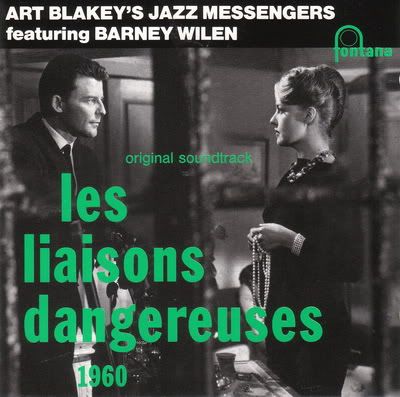
Art Blakey and Barney Wilen
Les Liaisons Dangereuses 1960
1959
Roger Vadim

Musicians: Lee Morgan, trumpet; Barney Wilen, tenor sax, soprano sax; Bobby Timmons, Duke Jordan, piano; Jymie Merritt, bass; Art Blakey, drums; John Rodriguez, bongos; Tommy Lopez, Willie Rodriguez, congas. In party sequence: Charlie Rouse, Barney Wilen, tenor sax; Thelonious Monk, piano; Sam Jones, bass; Art Taylor, drums. Appearing as themselves: Kenny Dorham, trumpet; Barney Wilen, tenor sax; Duke Jordan, piano; Paul Rovere, bass; Kenny Clarke, drums.

Listen to No Problem, composed by Duke Jordan, from the soundtrack:


14
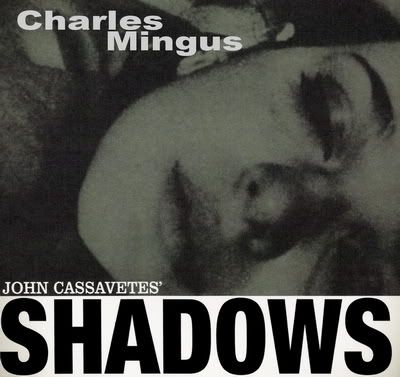
Charles Mingus and Shafi Hadi
Shadows
1958
John Cassavetes

Musicians: Shafi Hadi (Curtis Porter), sax solos; (possibly) Anthony Ortega, reeds; Jimmy Knepper, trombone; Phineas Newborn Jr., Horace Parlan, piano; Charles Mingus, bass; Dannie Richmond, drums.


13 
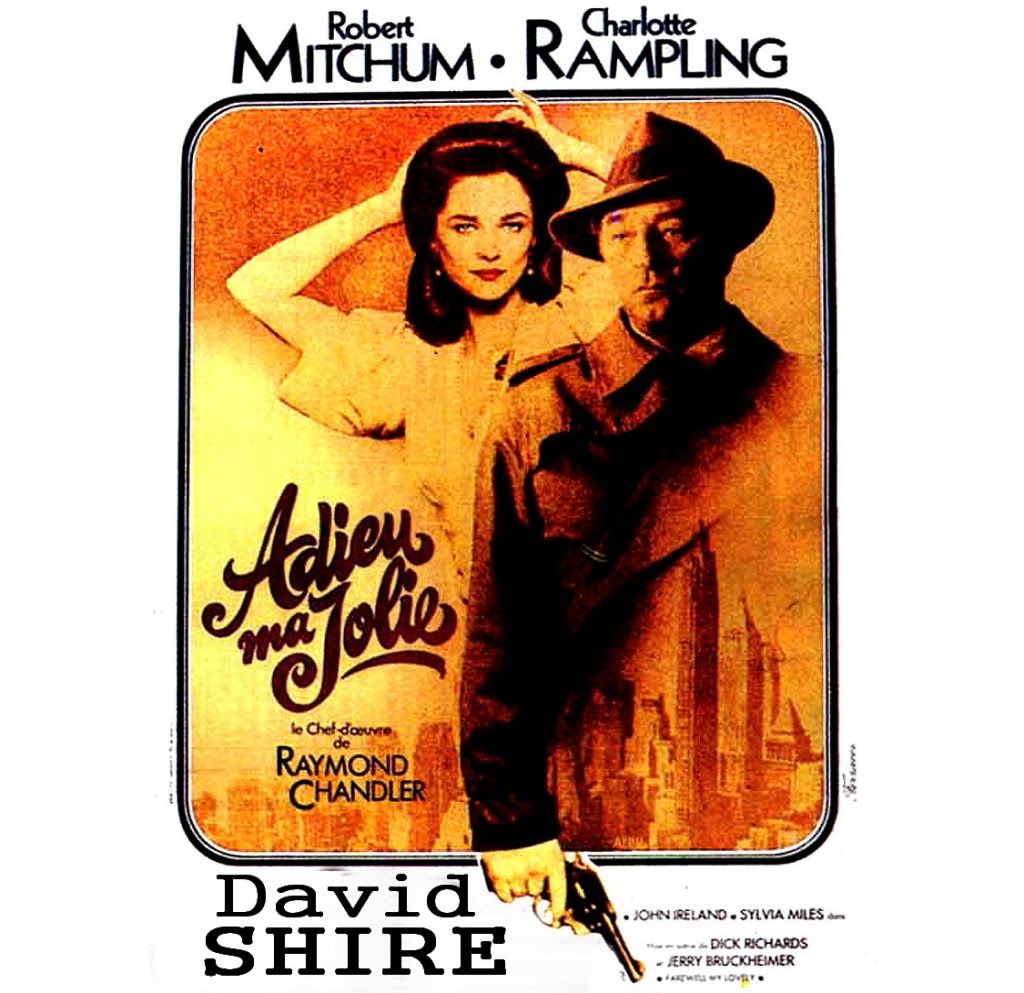
David Shire
Farewell My Lovely
1975
Dick Richards

Musicians:Cappy Lewis, trumpet; Dick Nash, trombone; Ronnie Lang, alto sax; Justin Gordon, clarinet, tenor sax; Don Menza, soprano sax; Artie Kane, piano; Al Hendrickson, Tommy Tedesco, guitar; Chuck Domanico, bass; Larry Bunker, drums; Emil Richards, percussion.

Main title music, aka the Marlow theme:


12
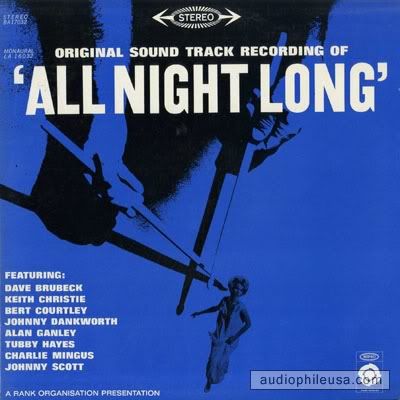
Philip Green
All Night Long
1962
Basil Dearden

Musicians: Bert Courtley, trumpet; Keith Christie, trombone; John Dankworth, alto sax; Johnny Scott, alto sax, clarinet, flute; Tubby Hayes, tenor sax, vibraphone; Colin Purbrook, Dave Brubeck, piano; Ray Dempsey, guitar; Kenny Napper, Charles Mingus, bass; Allan Ganley, drums; Barry Morgan, bongos, timbales.Allan Ganley coached and ghosted drum routines for actor Patrick McGoohan.

From the soundtrack, Brubeck plays It's a Raggy Waltz:

11 
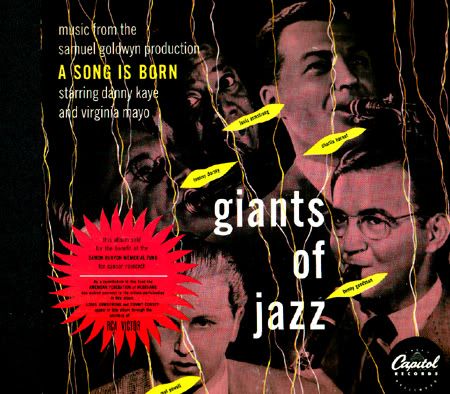
Emil Newman/Hugo Friedhofer
A Song Is Born 
1947
Howard Hawks

Music Orchestrated by Sonny Burke and Neal Hefti. 
Musicians: The Charlie Barnet Orchestra including Jimmy Salko, Jimmy Campbell, Everett McDonald, Chico Alvarez, trumpet; Freddie Zito, Phil Washburn, Herbie Harper, trombone; Charlie Barnet, Bob Dawes, Jack Henerson, George Weidler, Warner Weidler, Frank Pappalardo, reeds; Bob Bain, grt; Don Tosti, bass; Dick Shanahan, drums.
Lionel Hampton and his Orchestra, including Jimmy Nottingham, Kenny Dorham, trumpet; Britt Woodman, trombone; Bobby Plater, Charlie Fowlkes, reeds; Milt Buckner, piano; Billy Mackel, guitar; Joe Comfort, bass; Earl Walker, drums.
Tommy Dorsey Orchestra , including Charlie Shavers, Ziggy Elman, trumpet; Corky Corcoran, Marty Berman, reeds; Tony Rizzi, guitar; Louie Bellson, drums.
Encyclopedia combo including Benny Goodman Benny Goodman, clarinet; Lionel Hampton, vibraphone;
Mel Powell, piano; Al Hendrickson, guitar; Harry Babasin, bass; Louie Bellson, drums. 
Louis Armstrong and Lionel Hampton Band including Vic Dickenson, trombone; Barney Bigard, clarinet; Benny Carter, alto sax; Phil Moore, piano; Lionel Hampton, vibraphone; Laurindo Almeida, guitar; Charlie Drayton, bass; Zutty Singleton, drums.


Return to Part 2                                                      Go to Part 4

Saturday, March 12, 2011

Charles Mingus Interviewed by Nesuhi Ertegun


His legacy is complex, yet universal. His passion for the jazz past of Ellington and Jelly Roll Morton prefigured the revivalism of today, even though he might have sneered at it; his insistence on instrumental excellence is reflected in the high standards of execution that have become the norm among young players. His berating of inattentive audiences anticipates a time when jazz is respected as art music, yet the noisy, turbulent feel of all his bands invites listeners to participate in a communal, unstuffy exhilaration. He is Charles Mingus, as described by Richard Cook in his prominent Jazz Encyclopedia.

This interview must be from 1963, as it discusses the “recent release” of Charles Mingus Plays Piano.


Tuesday, April 6, 2010

Charles Mingus: Triumph of the Underdog (1998)

Charles Mingus: Triumph of the Underdog (1998)
B&W-Color/78 min/U.S.A
Directed by: Don McGlynn.

Songs: "Epitaph", "Started melody", "Peggy's blue skylight", "Celia", "Meditations on integration", "Pithecanthropus erectus", "This subdues my passion", "Better git it in your soul",
"Weird nightmare", "The clown", "Sue's changes", "Something like a bird", "Chair in the
sky" by Charles Mingus.

With: Numerous TV clips of Charles Mingus in performance and in interview over the years plus clips from the documentary "Mingus" (1968)(q.v.). Also interviews with Gunther Schuller, Wynton Marsalis, John Handy, Sue Mingus, Celia Mingus, Jerome Richardson, Randy Brecker, Brian Priestley, Britt Woodman, Snooky Young, Eddie Bert, Andrew Homzy, Lew Soloff, Jimmy Knepper, Don Butterfield, George Adams, Jack Walrath, Dorian Mingus. Also film clips of the Duke Ellington and the Lionel Hampton bands and Dannie Richmond.

Sunday, April 4, 2010

Mingus (1968)


Mingus (1968)
b&w/58 min/Inlet Films (U.S.A)
Directed by: Thomas Reichman.

Songs: "All the things you are" by Oscar Hammerstein II, Jerome Kern; "Secret love" by Paul Francis Webster, Sammy Fain; "Take the ‘A'train" by Billy Strayhorn; "Freedom", "Don't let it happen here", "Portrait", "Peggy's blue skylight", "Half mast inhibition" by Charles Mingus.

With: Charles Mingus, acoustic double bass, piano, in interview and in performance at Lennie's-on-the-Turnpike, with Lonnie Hillyer, trumpet; Charles McPherson, alto sax; John Gilmore, tenor sax; Walter Bishop, piano; Dannie Richmond, drums.

Filmed in November 1966 in various locations around New York City.

See also: Notes on cinema.

Wednesday, March 10, 2010

The Roots of Charles Mingus


"Imagine a circle surrounding each beat—each guy can play his notes anywhere in that circle, and it gives him the feeling he has more space . . . the pulse is inside you."

—Charles Mingus, Beneath the Underdog


Bass before Mingus

Until the start of the 1940s, the double bass had played a subordinate role in large and small jazz groups, its part often being restricted to playing simple fundamentals on the first and third beat of each measure, just as tubas had done on early recordings. In the late 1930s, this all began to change. Walter Page in Count Basie's band began to play smooth arpeggios (figures based on the first, third, and fifth of a chord) that blended forcefully with guitar and drums, and Israel Crosby in small groups with Roy Eldridge and Teddy Wilson began to play repeated patterns, or ostinatos, behind soloists. Milt Hinton in Cab Calloway's orchestra, who had trained as a violinist, played elegant bowed solos in pieces like Ebony Silhouette, his improvised lines sounding more like those of a saxophone than most people's idea of a double bass. All these innovations came together in the short but bright career of Jimmy Blanton, who played briefly in Duke Ellington's orchestra before his early death from tuberculosis in 1942.
Blanton provided a way forward for bassists, an approach to the instrument as a full-fledged improvising member of a jazz group that underpinned many of the innovations of the modern jazz of the 1940s. Oscar Pettiford, one of the players to follow in Blanton's footsteps with Ellington, showed how mobile and flexible bass lines could combine with the more fluid drum style of players like Max Roach and Kenny Clarke and Ray Brown developed the style with both Charlie Parker and Dizzy Gillespie.

The Arrival

Mingus appeared on the scene just at the right moment to combine all these innovations with his own musical personality. Those who recognized Charles Mingus's musical gifts realized immediately that he was outstandingly talented. Trombonist Britt Woodman and the reed player Buddy Collette were both childhood friends who encouraged him, even after he was humiliated for being unable to read music speedily enough to play cello in the local youth orchestra. It was Collette who started Mingus playing bass, and who then introduced him to Red Callender, a prominent bassist in Los Angeles who had worked with many high-profile musicians. Callender became a teacher and mentor for Mingus, who in due course ended up playing in Armstrong's big band himself.

The contradictions in Mingus's life carried over into his work. The world of African-American entertainment rubbed off on him from playing with Armstrong and other veterans like Kid Ory and Barney Bigard, but, like many musicians of his generation, he rejected the mugging stage persona of such older entertainers. Nevertheless, he simultaneously acquired a knowledge of and respect for the sounds they made; "our" music, as he called it.


Norvo/Ellington experience

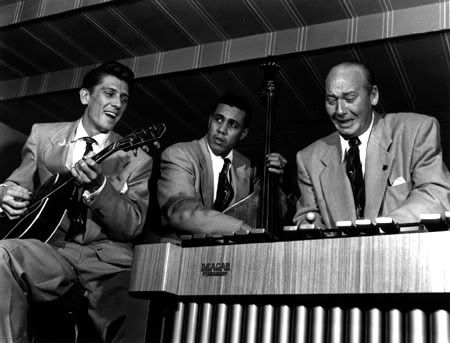
He was fortunate to become part of a group that was designed to show off the bass. Before 1950 he had mainly worked in big bands, including Lionel Hampton's, or on miscellaneous record sessions; but when he joined a trio with guitarist Tal Farlow and vibraphonist Red Norvo, their light, open sound was the perfect setting for his playing. He was with the group only until 1951, but in that short time they were well placed in jazz polls. They also recorded quite extensively, bringing to a wide public Mingus's virtuoso bass playing and some of his unorthodox ideas, including his high-note solos, while Farlow accompanied him with bass lines on the guitar.
After leaving Norvo, Mingus settled in New York City, where his reputation as an innovative and versatile bassist brought him work with several high-profile musicians, including Bud Powell, Billy Taylor and even Duke Ellington, before he get fired by his idol after of a fight with Tizol, the trombone player of the orchestra.

Debut

Mingus and drummer Max Roach with the help of Mingus's wife Celia, formed a record company together, called Debut, which preserved much of Mingus's work from this period, including his first attempts at a jazz workshop—a collective that explored composition and improvisation. This was to be his preferred method of evolving his compositions over the years that followed, and he liked to sing or dictate the parts each musician was to play so that they heard rather than read the music. In this way he turned one of his own early shortcomings, the inability to read music well, into a positive approach, even if his regular pianist, Jaki Byard, surreptitiously jotted down the parts so the band could remember them later. As he composed, Mingus increasingly used the piano, and in due course incorporated playing piano into his live performances, interspersed with or instead of his bass playing.
The majority of his groups in the later 1950s into the 1960s used drummer Dannie Richmond, with whom Mingus developed a flexible rhythmic platform for his soloists. Bass and drums moved the beat around, made abrupt transitions into double or triple time, and sometimes dropped out altogether, leaving the brass and reeds to play with just handclaps or shouts for accompaniment.


Workshops, Compostions, Ideas

At the core of the workshop approach to his music, Mingus established two constants: a set of related pieces that changed gradually from performance to performance, and a pool of players who specialized in interpreting his ideas. So, a composition like Fables of Faubus, first written in 1959 and reworked in 1964, developed into Original Faubus Fables in 1960, and New Fables in 1964.
As John Lewis did with the Modern Jazz Quartet, and Horace Silver, Mingus conceived much of his music with the accomplishments of the big bands as a guide to small ensemble music. Then in mid-career he began to re-record earlier works with medium and large groups. Haitian Fight Song, for one, gains much in clarity of line and precision as re-done for eleven instrumentalists and redded II B.S. But the earlier version has stunning bass work which the latter does not, and on Haitian Fight Song the surging, penetrating energy emanating from the leader and his instrument leads some listeners to call II B.S. slick by comparison. He had the kind of ambitions to produce "long" works which date back to the ragtime era, evident in the "stride" men—particularly in James P. Johnson—and which became the basis of real accomplishment in Ellington.
In Mingus, it seems that such efforts did not quite express the man's music. The truest moments in Mingus's Revelations, for instance, are not those in which the large ensemble executes the concert-hall-inspired passages but the turbulent, polyphonic "extended form" passages improvised by the jazzmen. In the same way as Ellington had done, Mingus created music to exploit the musical personalities of his musicians: the jagged saxophone and bass clarinet of Eric Dolphy, the sparring saxes of John Handy and Booker Ervin, the gospel-tinged saxophones and flute of Roland Kirk, the rounded trombones of Jimmy Knepper and Britt Woodman, and the witty, eclectic piano of Jaki Byard.
As the 1960s began, Mingus entered his greatest period of creativity with a series of outstanding compositions. At the same time he took on the establishment by setting up rival concerts to the Newport Jazz Festival, launching a new independent record label, and organizing events that were an uncomfortable mix of rehearsal and performance. The 1962 New York Town Hall event—which is not to be confused with a highly successful event two years later—is generally regarded as a spectacularly disastrous example of these performances, where chaotic organization, a lack of rehearsal, and Mingus's highly charged personality prevented much music from being made.


Mingus the outsider

By the mid-1960s, as a consequence of his volatile behavior, clubs refused to employ him. Mingus was facing financial ruin, and he was also suffering from unstable mental health. Mingus's career was put on hold until 1969, when he once more began to tour and perform. Soon afterward, he was awarded a Guggenheim fellowship, which gave him a degree of stability and public recognition. Until the onset of his final illness—amyotrophic lateral sclerosis (Lou Gehrig's disease), a form of muscular paralysis—he toured and recorded quite regularly with his
quintet and collaborated with singer Joni Mitchell (a forgettable record is the result of Joni's slack musical flirtation with Charlie) He also established a big band, for which he reworked many of his earlier compositions.


Mingus Today

He is a standard for modern jazz, and those charismatic musicians who were prominent in mythmaking, as well as making spontaneous music. But the problem is that he is unfairly underrated as a composer, underrated as a fighter and politically conscious American (and now we miss this part so badly!) and underrated as one of the greatest modern interpreters of classic and early jazz. Now these tasks should be taking care of very carefully. In Bird's words, NOW'S THE TIME!

===============
References:
Alyn Shipton, Jazz Makers.
Martin Williams, Jazz Tradition.

*

Monday, February 22, 2010

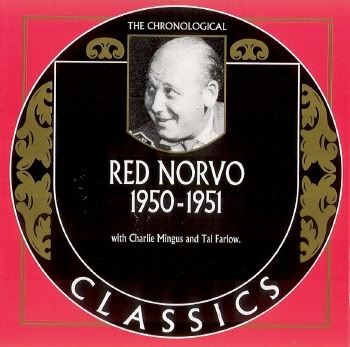
Classics 1422: Red Norvo Trio 1950-51


Classics 1422
Red Norvo
1950-1951
Release Date: 2006
Rating: A

Other notable musicians in this CD: Charles Mingus, Tal Farlow.

label(s): Savoy, Discovery
Number of sessions: 3
Unissued materials: None
Track Highlights: I've Got You Under My Skin, I Can't Believe That You're in Love with Me, Move, Godchild.


Other issue or reissues:
The Red Norvo Trio (Savoy SJL 2212)
Red Norvo Trio, Vol. 2 (Discovery DL 3018)
Red Norvo - Move! (Savoy MG 12088)
I also hold a copy of a LP in my collection called Rare Transcription which includes 29 tracks from the same period.


About the period: Throughout the '40s and well into the '50s, Norvo seemed willing and eager to grow with the brisk and somewhat challenging patterns of the new music. Some of these rapid-fire bop lines might evoke the unprecedented velocities attainable on newly constructed highways, or maybe even convey a taste of Benzedrine.


music from almost the same period,  1950-52

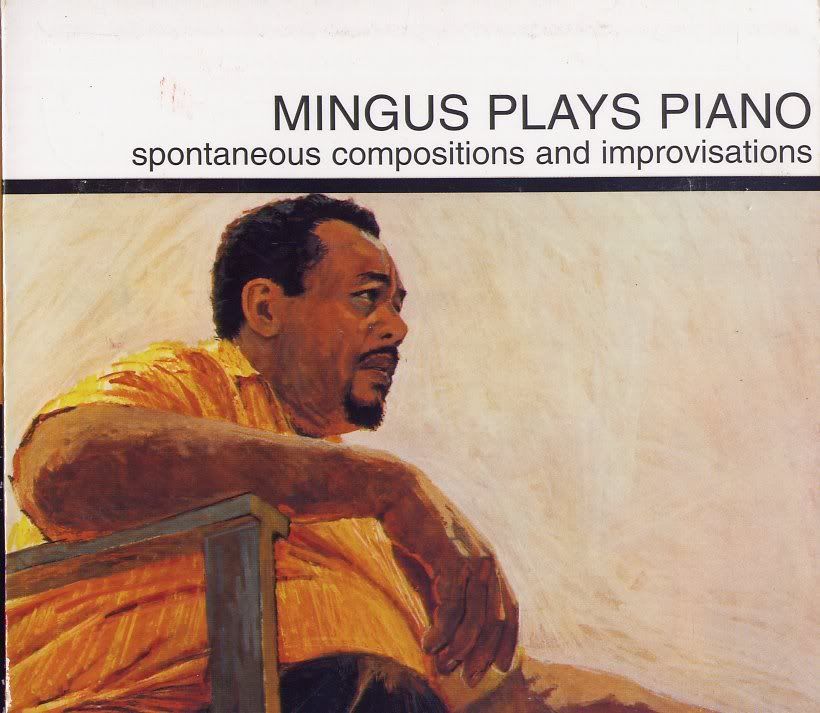
Charles Mingus Plays Piano (1963)


سی‌ام جولای 1963 چارلی مینگوس به استودیو رفت، اما این بار تنها و بدون کیف غول آسای کنترباسش؛ دست در جیب و ایده‌های بی‌شمار در سر برای ضبط کاری متفاوت و پاسخ به وسوسه‌ای قدیمی که احتمالاً از زمان اولین برخوردش با دوک الینگتون به ذهنش خطور کرده بود: ضبط آلبومی به عنوان پیانیست و هم چون همیشه درآمیخته با جاه طلبی‌های هنرمندانه مینگوس، ضبط یک آلبوم سولوی پیانو!
او در آین آلبوم، که نامش به سادگی شد "مینگوس پیانو می زند"، طوری با این ساز برخورد کرده که انگار دستانش دارند سیم‌های قطور باس را به لرزه در می‌آورند. اگر کسی به دنبال مینگوس و موسیقی اوست شنیدن این آلبوم مثل شنیدن گفته‌های خصوصی چارلی درباره کارهایی است که همیشه آرزوی انجام دادن‌شان را داشته و به بهترین شکل در تور 1964 اروپا خودش را نشان داد.
آلبوم با Myself when I’m real شروع می‌شود، بداهه‌نوازی باشکوهی که بیانیه بسیار شخصی مینگوس درباره لحظه خلوت او با خویشتن است. بعد از اجرای دو استاندارد او به نوازنده نابینای چندسازه جاز، رونالد کرک، ادای دین می‌کند و مشابه پیغام‌هایی که برای دوک الینگتون و لستر یانگ و جلی رول مورتون فرستاده، پیامی هم برای کرک می فرستد. بعد از یک استاندارد دیگر، مینگوس دوباره به قلمروی فولکلور، ادای دین‌ها، بداهه نوازی‌ها و گسترش زبان پیانو با رویکردی اساساً ریتمیک بازمی‌گردد.
این آلبوم که همین‌جا قابل شنیدن است، یکی از محبوب‌ترین سولوهای پیانوی دوران جوانی من بود که خوب این نکته آخر اهمیتی در نشان دادن اهمیت آلبوم ندارد.

Monday, February 8, 2010

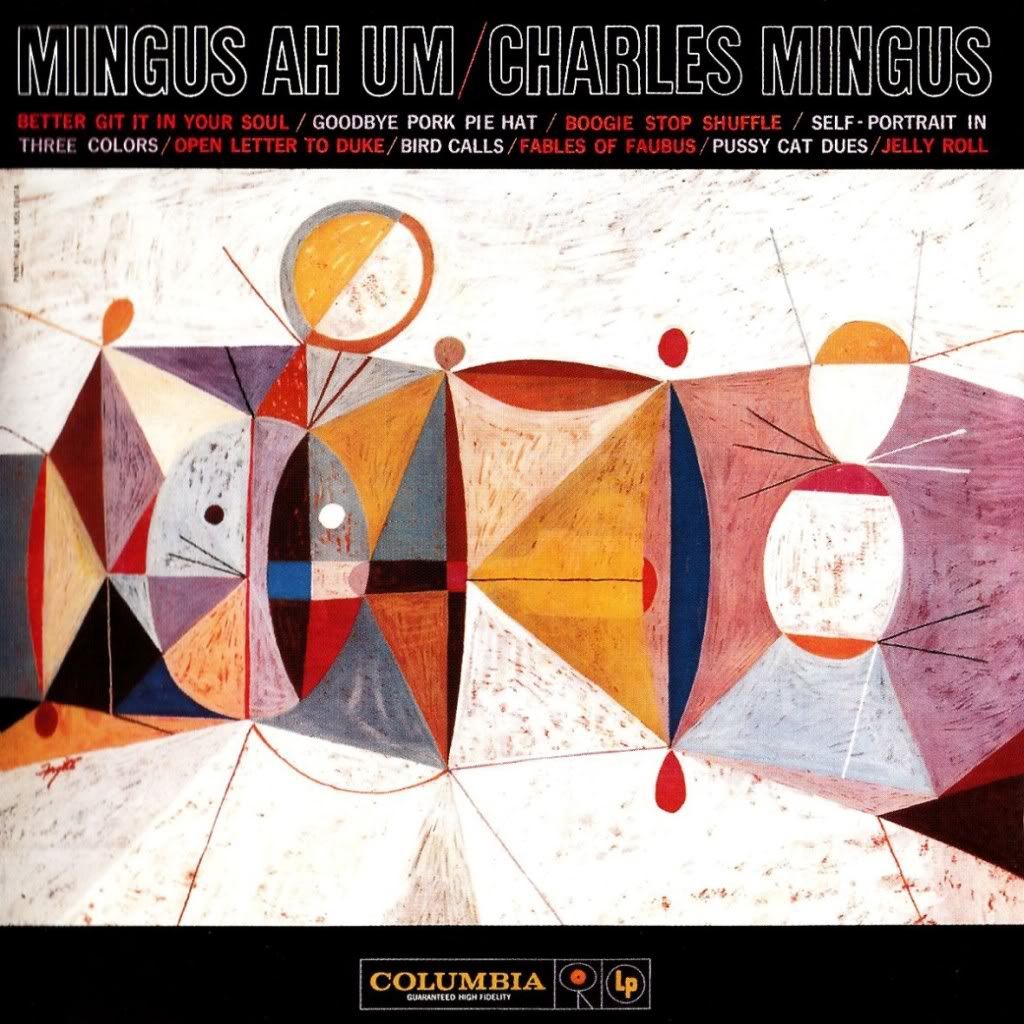
Mingus Ah Um (Charles Mingus, 1959)


چارلز مینگوس: باس
بوکر اروین: ساکسفون تنور
جان هَندی: ساکسفون آلتو و تنور و کلارینت
شفیع هادی: ساکسفون آلتو و تنور
جیمی نِپِـر: ترومبون
ویلی دنیس: ترومبون
هورِیس پارلان: پیانو
دنی ریچموند: درامز (طبل)
ضبط شده در تاریخ 5 و 12 می 1959 در استودیوهای کلمبیا، نیویورک.
اولین آلبومی که مینگوس برای کمپانی کلمبیا ضبط کرد و آغاز دوره‌ای که به نظر من منتهی به خلق بهترین آثار او شده است. گرچه مینگوس هرگز واقعاً با کلمبیا کنار نیامد و بر سر آمار واقعی فروش همین آلبوم با آن‌ها درگیر بود.
آلبوم در این‌جا قابل شنیدن است. [برای باز کردن فایل Rar به رمزی احتیاج دارید که در قسمت کامنت‌های همین پست گذاشته شده است]