Showing posts with label Bill Evans. Show all posts

Saturday, June 13, 2020

Chris Marker Picks His Favourite Bill Evans Songs

Chris Marker in Telluride, 1987. Courtesy of Tom Luddy.

Until midnight music is a job, until four o’clock it’s a pleasure, and after that it’s a rite.” – Chris Marker

There are only indirect hints as to what Chris Marker liked and did beyond his films. In studying the world of this elusive director, every sign invites us to scrutinize it carefully. Marker appears in small details, such as the mix CD which one day arrived on my doorstep. If the address on the parcel hadn’t confirmed the sender as Tom Luddy, co-director of Telluride Film Festival and a close friend of Marker’s, I could have taken it to be Marker’s personal gift from the beyond.

The CD cover gave little away: Sandwiching a photo of pianist Bill Evans was his name and the words "joue pour Guillaume" [plays for Guillaume], along with an illustrated image of the Markerian animal familiar Guillaume, a wise if mischievous-looking cat, holding sheet music. A lyrical filmmaker, who could also compose and play the piano, had compiled his favorite tunes performed by the lyrical jazz pianist and composer Evans (1929-80). The fascination with compilation is also evident in the films. Marker would often juxtapose material from various sources—news footage, computer games, photographs and songs—to remarkable effect.

Tom Luddy recalls conversations about jazz with the filmmaker, who used to tune in to KJAZ whenever he was in the Bay Area. One of his favorite satellite TV channels was Mezzo, playing classical and jazz around the clock. While the genre didn't feature much in his films, one could argue that jazz for Marker, like cinema, was something both personal and political. His jazz-related writings for Esprit (“Du Jazz considere comme une prophetie”) and Le Journal des Allumés du Jazz seem to bear this out. Marker even made a small contribution to jazz literature by writing the narration for a documentary about Django Reinhardt directed by Paul Paviot, who'd previously produced Marker’s Sunday in Peking.

Sunday, June 15, 2014

Songs For Our Fathers


This playlist contains a bunch of songs played on my latest jazz radio programme for Iran [October 23, 2011], dedicated to our fathers. The theme of "father" will be explored throughout the history of jazz, from Cozy Cole to George Coleman.


Friday, December 6, 2013

Blues for an African Friend

In Memoriam: Nelson Mandela (1918-2003)

Tony Scott Quartet: Sung Heroes (Sunnyside SSC 1015)
Tony Scott (cl) Bill Evans (p) Scott LaFaro (b) Paul Motian (d)
NYC, October 28, 1959

Blues For An African Friend

Saturday, August 24, 2013

Oh Lady Was Good: 6 Favorite Marian McPartland Piano Interviews


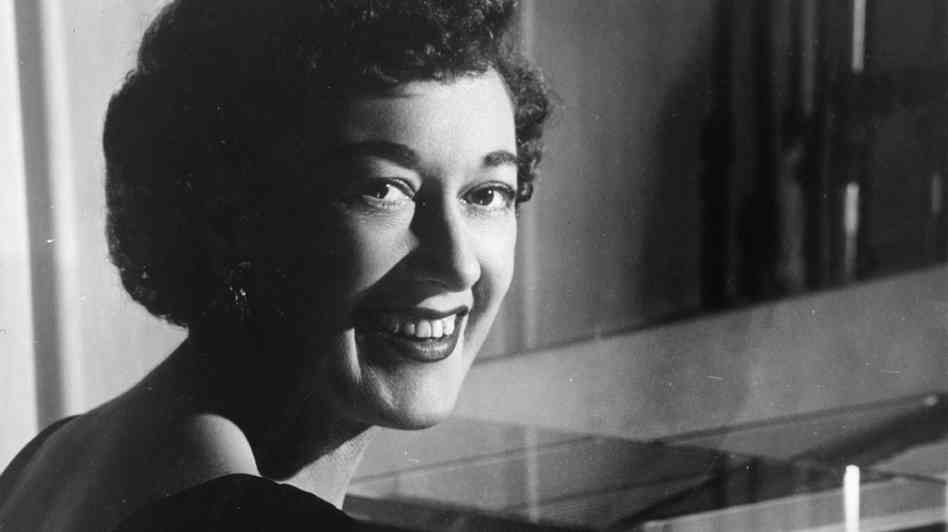
Marian McPartland, the first English lady of jazz piano from Windsor, died earlier this week at 95.

In the 1970s she hosted a show for NPR called Piano Jazz for which she interviewed and played along many musicians (mostly pianists, but not always' dominantly jazz, but also some notable pop instrumentalists). The format of the programme was an hour-long chat and piano playing, whether as solo or duet, and reminiscing about the musical life of each interviewee. Needless to say, thanks to a Marian's long and fruitful career in the States, many of the subjects had prior professional encounters with her. So she knew what she was talking about.

Here is my six favorite moments from those shows.

Monday, December 3, 2012

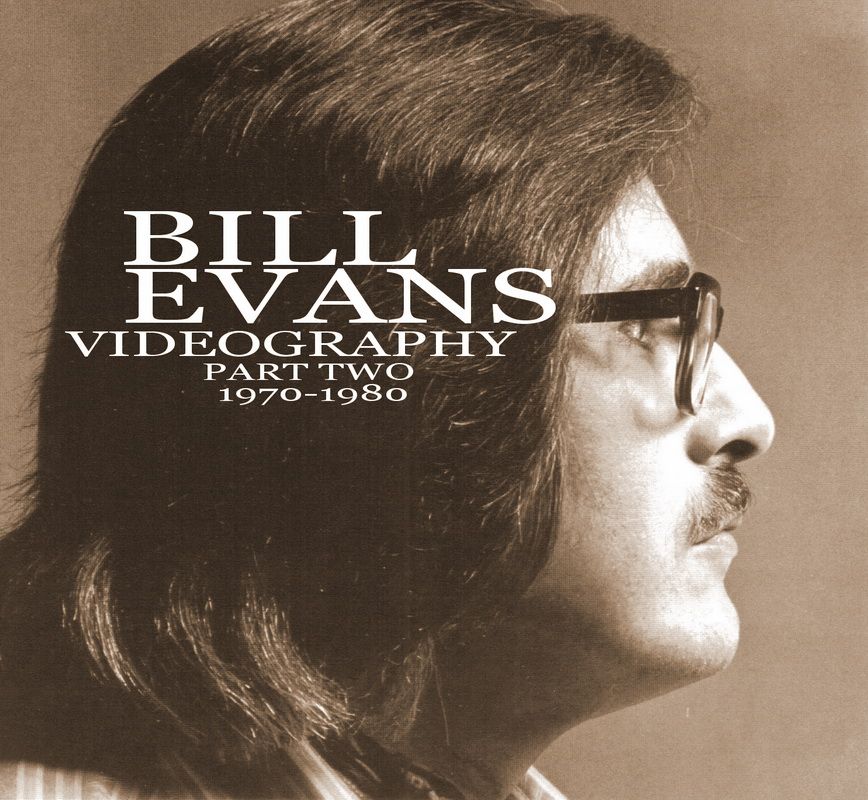
Bill Evans Videography (1970-1980)


BILL EVANS VIDEOGRAPHY: Part Two (1970-1980)
For the first part (1957-1969) go here.


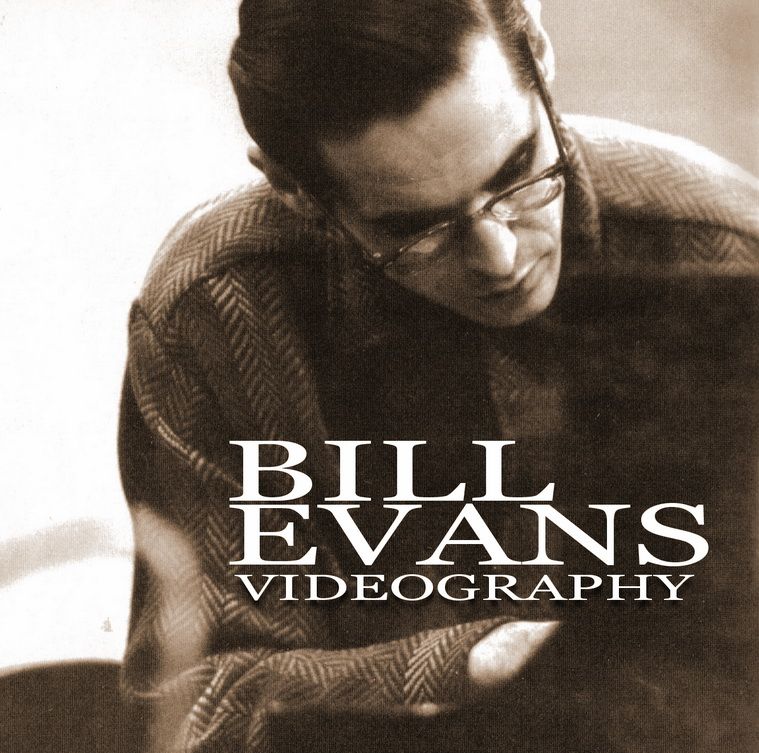
Bill Evans Videography (1957-1969)


BILL EVANS VIDEOGRAPHY: A CHRONOLOGICAL LIST OF THE ARTIST ON VIDEO

This is the second videography of this blog, a listing of the available Bill Evans video materials on the web, after one I did earlier for the Hawk, Coleman Hawkins.

To compile this videography, I have heavily relied on the works of David Meeker (Jazz on Screen), and also the Bill Evans book by Peter Pettinger, beautifully titled How My Heart Sings. Without Jazz Discography Project life would have been more difficult for most of us, though the Bill Evans entry on JDP suffers from mistakes and lack of proper and up-to-date revision. It was then that I learned about so far the most complete discography of Bill Evans by Peter H. Larsen, posted by Italian folks, here.

Speaking of Italians, I must confess that what really inspired me to start this online listing of Bill Evans's performances was reading Enrico Pieranunzi's hugely illuminating 2001 book Bill Evans: Ritratto D'Artista Con Pianoforte which hit me hard. The Pianist as an Artist (which is its English title) is a small and humble book, but never shallow in reaching the spirit of Bill Evans's art. Also from technical standpoint, it is the most analytical since it has been written, or more likely lived, by a pianist, as superb and as Evansian as Pieranunzi.

Back to this videography, each performance is sorted chronologically and by sequence of the songs performed (which doesn't mean is always right). Then details about the session comes, and finally videos of the concert, if they have been available online in December 2012.

Sunday, January 15, 2012

Radio Hawkins#22: Americans in Paris I

راديو هاوكينز: جاز براي ايران
اپيزود 22
آمريكايي ها در پاريس
بخش اول

اين جا بشنويد


فهرست قطعات

All recorded in Paris, with exception of the first track, recorded in New York City.

Coleman Hawkins & Manny Albam Orchestra
I Love Paris
Chauncey Welsch (tr), Romeo Penque (t), Ray Beckienstein (f, sax), Al Epstein (f, sax), Coleman Hawkins (ts), Marty Wilson (vibe), Barry Galbraith (g), Hank Jones (p), Arnold Fishkin (b), Osie Johnson (d)
July 9, 1956

Sonny Criss
Don't Get Around Much Anymore
Sonny Criss (alto sax), Georges Arvanitas (org), Rene Thomas (g), Pierre Michelot (b), Philippe Combelle (d)
April 22 or 25, 1963

Dizzy Gillespie
Serenity
Dizzy Gillespie (tp), Kenny Drew (p) Niels-Henning Orsted Pedersen (b) Kenny Clarke (d)
April 13, 1973

Ben Webster
Johnny Come Lately
Ben Webster (ts), Georges Arvanitas (p), Jacky Samson (b) , Charles Saudrais (d)
June 5, 1972

Dexter Gordon
Broadway
Dexter Gordon (t), Bud Powell (p), Pierre Michelot (b), Kenny Clarke (d)
May 23, 1963

Chet Baker
Oh You Crazy Moon
Chet Baker (t), Phil Markowitz (p), Jean-Francois Jenny Clark (b), Jeff Brillinger (d)
Dec 28, 1978

Cannonball Adderley Quintet
Walk Tall
Nat Adderley (t), Cannonball Adderley (alto sax), Joe Zawinul (p), Sam Jones (b), Louis Hayes (d)
March 27, 1969

Joe Newman Quintet
Lover Man
Joe Newman (t), Frank Wess (ts), Maurice Vander (p), Eddie Jones (b), Sonny Payne (d)
October 8, 1956

Cootie Williams
Mood Indigo
Cootie Williams (t), George Clarke (ts), Arnold Jarvis (org), Larry Dale (g), Lester Jenkins (d)
January 31, 1959

Bill Evans Trio
What are you doing the rest of your life?
Bill Evans (p), Eddie Gomez (b), Marty Morrell (d)
February 6, 1972

Ahmad Jamal
Bellows
Ahmad Jamal (p), Joe Kennedy Jr. (violin), Calvin Keys (g), Jeff Chambers (b), Yoron Israel (d), Manolo Badrena (percussion)
October 26, 1996

Saturday, December 17, 2011

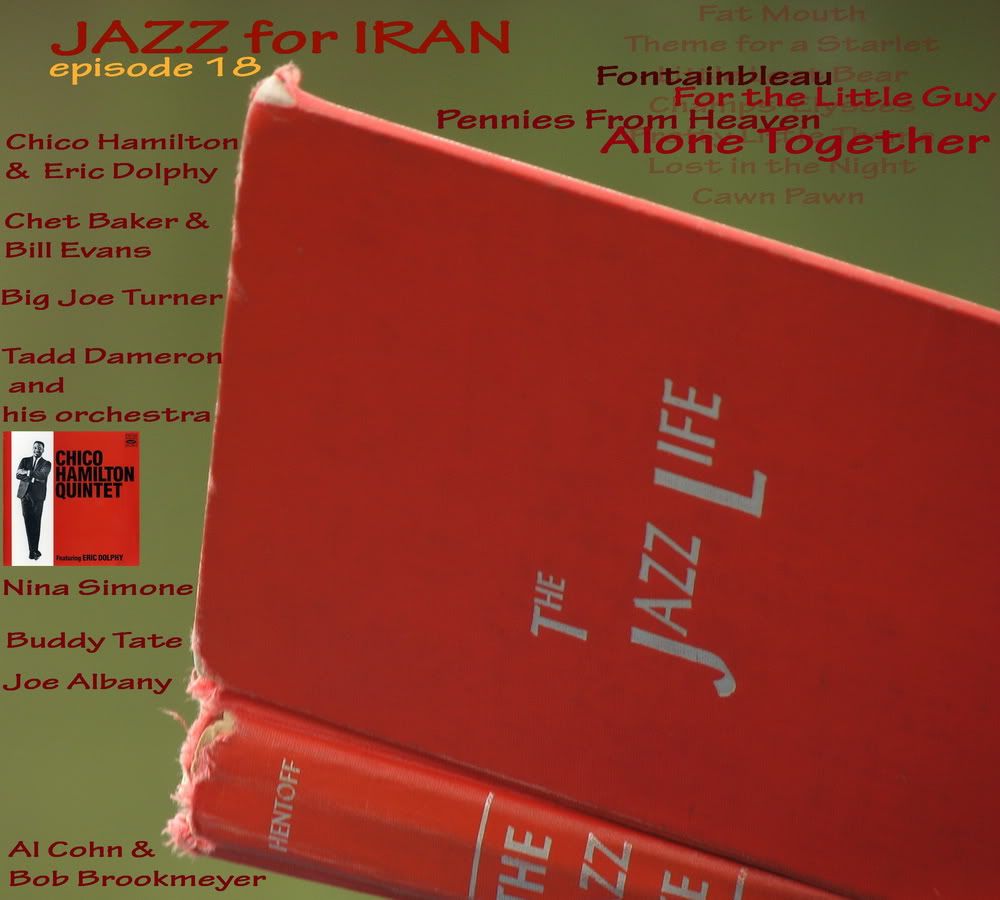
Radio Hawkins#18

عكس زمينه از رضا حكيمي

اپيزود هجدهم
راديو هاوكينز: جاز براي ايران
برنامه اين هفته به پخش آلبومي كامل ار چيكو هميلتن كوينتت (با اريك دالفي) از سال 1959 اختصاص دارد و سپس آثاري از
بيگ جو ترنر، جو آلباني، نينا سيمونه، بادي تيت، تد دامرن، ال كان و باب بروك ماير، بيل اونز و چت بيكر

به برنامه در اين جا گوش كنيد


برنامه را در اين جا دانلود كنيد

فهرست قطعات و موزيسين هاي برنامه هجدهم به ترتيب پخش

Fat Mouth
Theme for a Starlet
Little Lost Bear
Champs-Elysées
Pretty Little Theme
Lost in the Night
Cawn Pawn
Lullaby for Dreamers
Opening
Lady E
Truth

Chico Hamilton Quintet
Eric Dolphy (reeds), Dennis Budimir(guitar), Nathan Gershman (cello), Wyatt Ruther or Ralph Peña (bass), Chico Hamilton (drums)
19 & 20/5/1959  Chico Hamilton Quintet feat. Eric Dolphy

Pennies From Heaven
Big Joe Turner
Bob Smith (alto sax), J.D. Nicholson (piano), Herman Bennett (guitar), Pee Wee Crayton (guitar), Winston McGregor (bass), Charles Randall (drums), Big Joe Turner (vocal)
10/3/1976 In the Evening

For the Little Guy
Joe Albany
Joe Albany (piano), Al Gafa (guitar), George Duvivier (bass), Charlie Persip (drums)
1982 Portrait of an Artist

Fontainbleau
Tadd Dameron and his orchestra
Henry Coker (trombone), Kenny Dorham (trumpet), Cecil Payne (baritone sax), Joe Alaxander (tenor sax), Sahib Shihab (alto sax), Tadd Dameron (piano), John Simmons (bass), Shadow Wilson (drums)
9/3/1956 Fontainbleau

Alone Together
Chet Baker
Chet Baker (trumpet), Herbie Mann (flute), Pepper Adams (baritone sax), Bill Evans (piano), Paul Chambers (bass), Connie Kay or Philly Joe Jones (drums)
30/12/1958 Complete Legendary Sessions

Goduka Mfundi (Going Home)
Buddy Tate
Buddy Tate (tenor sax), Cecil McBee (bass), Roy Brooks (drums)
25/8/1977 Buddy Tate Meets Abdullah Ibrahim

Don't Smoke in Bed
Nina Simone
Nina Simone (piano, vocal)
12/1957 Little Girl Blue


Winter
Al Cohn Quintet
Bob Brookmeyer (trombone), Al Cohn (tenor sax), Mose Allison (piano), Teddy Kotick (bass), Nick Stabulas (drums).
4/12/1956 Al Cohn Quintet feat. Bob Brookmeyer

Summertime
Big Joe Turner
Bob Smith (alto sax), J.D. Nicholson (piano), Herman Bennett (guitar), Pee Wee Crayton (guitar), Winston McGregor (bass), Charles Randall (drums), Big Joe Turner (vocal)
10/3/1976 In the Evening

Sunday, October 23, 2011

Radio Hawkins#10: Songs for Our Fathers

 IN ENGLISH

برنامۀ دهم
موسيقي جاز به ياد و احترام پدران


مجموعه قطعاتي از 1938 تا 1987 با مضمون پدر
شامل آثاري از لويي آرمسترانگ، بيل اونز، كوزي كول، جرج كلمن، كلمن هاوكينز، چارلز تاليور، هوريس سيلور،  باني بريگان، نينا سيمونه،  سيسيل پين، وودي هرمان و جيمز مودي
 براي فهرست كامل قطعات و اسامي موزيسين ها و تاريخ ضبط به اين لينك مراجعه كنيد


دانلود با كيفيت بالا در اين جا

دانلود به حجم پايين تر براي اينترنت هاي با سرعت پايين، در اين جا

Sunday, August 28, 2011

Saturday, August 27, 2011

An introduction to the music of Bill Evans


بيل اونز

بيل اونز (1980- 1929) در نيوجرسي متولد شد و رشد كرد. در نوجواني بورسيه دانشگاه جنوب شرقي لوئيزينا در رشته فلوت شد و در همان‌جا بود كه تئوري موسيقي را به نحو احسن فرا گرفت و در دسته موزيكي كه براي رژه‌روندگان مي‌نواختند شركت كرد. او در سال 1950 در رشته پيانو فارق التحصيل شد و به‌اتفاق گروه هربي فيلدز توري را آغاز كرد، اما به زودي براي خدمت زير پرچم احضار شد و به دسته موزيك ارتش پنجم در شيكاگو منتقل شد. بعد از سه سال خدمت نظام در سال 1954 به نيويورك آمد و در گروه چهار نفري توني اسكات به نواختن پرداخت. هم‌زمان در كالج مانز به تحصيلات موسيقي خود ادامه داد و همان‌جا بود كه با آهنگ‌ساز معروف، جورج راسل، و تئوري جاز مودال او آشنا شد و دو سال بعد اولين آلبومش را با كمپاني ريورسايد ضبط كرد.               
وقتي كه هنوز در دنياي موسيقي جاز بي‌باپ دوستداران فراواني داشت، بيل اونز راه ديگري درپيش گرفته بود كه تبلور آن را در همكاري‌اش با مايلز ديويس مي‌توان ديد. اونز در بهار سال 1958 اجراي يك برنامه 8 ماهه را با گروه شش نفري مايلز آغاز كرد و توانست تأثيري بسيار قوي در رهبر يك‌دنده و در عين حال هميشه جستجوگر آن بگذارد. آلبوم مشهور حاصل اين نشست كه با نام Kind of Blue شناخته مي‌شود، پرفروش‌ترين آلبوم جاز تاريخ موسيقي است.

بيل اوانز در سال 1958 مجدداً با آلبومي به صحنه برگشت به نام «همه قدر بيل اونز را مي‌دانند» كه روي جلدش جملات ستايش‌آميزي از زبان موزيسين‌هاي بزرگ نقل شده بود و همه اعلام كرده بودند كه چرا قدر اين نابغۀ تازه پيانو را مي‌دانند.
بيل براي تريوهايش مشهور است، و اولين تريوي او با مشاركت اسكات لافارو و پل موتيان تشكيل شد. با اين گروه بيل اونز به يك ستاره بدل شد ولي متأسفانه ده روز بعد از يك اجراي زنده در ويليج ونگارد نيويورك، كه آلبومي افسانه‌اي از آن به جا مانده، لافارو در جريان حادثه تصادف اتومبيل كشته شد و بيل اونزِ افسرده به انزوايي پناه برد كه يك‌سال به طول انجاميد. 
همان تريوي معروف (نشسته ها) با لافارو و موتيان

بهار سال بعد مجدداً با چاك ازرييل، نوازندۀ باس به صحنه برگشت و كارهايي هم با جيم هال، نوازندۀ گيتار ضبط كرد. در سال 1962 با كمپاني Verve قراردادي امضا كرد و مديران اين كمپاني بودند كه او را تشويق كردند به ضبط آلبوم‌هايي متنوع در فرم‌هايي كه قبلاً نيازموده يا كم‌تر آزموده بود. مثلاً اركسترهاي بزرگ كلاسيك و پيانوي جاز، همراهي با سازهاي بادي (ساكسفون تنور، آلتو، فلوت)، كارهاي تك‌نوازي و همين‌طور كار پشت كار.
با گذر زمان بيل اونز خود به صورت مكتبي براي ديگر نوازندگان پيانو و شيفتگان موسيقي او درآمد و امروز مي‌توان گفت كم‌تر كسي به اندازۀ او توانسته نوازندگان جوان پيانو را به خود جلب كند، به خصوص آن‌ها كه مايلند دنياي جاز را در كنار دنياي موسيقي كلاسيك داشته باشند. امروز از تأثير او بر پيانيست‌هاي مشهوري مانند هربي هنكاك، كيت جرت و چيك كوريا حرف مي‌زنند، اما اين فهرست مي‌تواند بسيار گسترده‌تر از اين‌ها باشد.
بيل اونز مردي بود عينكي، خجول، حساس و بسيار خوش‌بيان، چنان‌كه مي‌توانيد در مستندي كه اين جا وجود دارد ببينيد. اما هيچ‌كدام از اين خصوصيات مناسبِ بازار آشفته و پردست‌انداز موسيقي نبود و شايد به همين علت براي اين‌كه بتواند سپري براي خود در مقابل دنياي خارج ايجاد كند به مواد مخدر پناه برد؛ ابتدا هروئين و بعدها كوكائين كه بي‌شك در كوتاه كردن عمرش مؤثر بود. در مصاحبه‌ها به نظر مي‌رسيد كه كاملاً بر تمام جوانب موسيقي مسلط است و به خوبي مي‌داند چه مي‌كند. همكارانش از شوخ‌طبعي آميخته با شيطنت و احياناً شرارت او سخن مي گويند كه كم‌تر كسي به آن اشاره كرده، يا در موسيقي‌اش رد آن را يافته است.  
در سال‌هاي آخر، كه پيرتر از سن واقعي‌اش به نظر مي‌رسيد اعتياد به كوكائين از او موجودي عصبي ساخته بود، با اين وجود ضبط‌هاي آخرين ماه‌هاي زندگي‌اش هنوز سرشار از شور و سرزندگي است. حتي ضبط مجموعه مفصل «آخرين والس» - در هشت سي دي - كه يك هفته قبل از مرگش به علت ابتلا به ذات‌الريه، خون‌ريزي زخم بواسير و برونشيت اتفاق افتاد، هيچ نشانه‌اي از ضعف و سستي در نواختن مشاهده نمي‌شود. بعد از مرگ او سيلي از كارهاي ضبط شده او چه از طرف كمپاني‌هاي تجاري صفحه پركني و چه بخش خصوصي كه قبلاً انتشار نيافته بود، به بازار عرضه شد و اين امر در افزايش علاقه فوق‌العاده مشتاقان او كاملاً مؤثر افتاد. او بدون ترديد يكي از مهم‌ترين پيانيست‌هايي است كه جاز مدرن در قرن بيستم به خود ديده است.
او با اقتباس از موسيقي‌دانان و موسيقي‌سازاني مثل راول، دبوسي و ديگر آهنگ‌سازان مكتب امپرسيونيست فرانسه توانست به موسيقي جاز بعدي تغزلي و درون‌گرا بدهد كه تا پيش از او كم‌تر شنيده شده بود. او در مصاحبه‌هايش مرتباً تأكيد مي‌كرد كه پيانيست‌هاي جوان بايد تكنيك و هارموني را بطور كامل و دقيق فرا بگيرند تا امكان بهره‌وري از منابع الهامشان فراهم گردد و چون خودش هر دوي اين ابزار را به نحو احسن در اختيار داشت سخت‌كوشانه روي ريزه‌كاري‌هائي كار مي‌كرد تا بتواند آن لحن دل‌خواه و ايده‌آل را از پيانو بيرون بكشد. 
سبك كار او به طور كلي بيان‌گر شخصيت باطني و معنوي خود او بود و شايد هم به همين دليل بود كه آن‌قدر دوستداران و شنوندگان بي‌شمارش را تحت تاثير قرار مي‌داد. در حقيقت عشاق سينه چاك صفحه‌هاي بيل اونز آن‌قدر زياد هستند كه توجيه كننده وجود شش مجموعۀ حجيم و گران قيمت آثار او روي سي دي باشند.
امروز مي‌بينيم و مي‌شنويم كه مو لاي درز موسيقي او نمي‌رود و احساسي كه در كارهايش نهفته است، وراي تصوري و انتظار رايج از تريوهاي جاز است، اما زماني او را متهم مي‌كردند كه سويينگ ندارد و يا به علت دور بودن از آن ضرب‌هاي آفريقائي كه در خون موزيسين‌هاي سياه است و حتي بيگانه بودن از اين منابع، برخورد او را با موسيقي جاز سطحي مي‌دانستند و مورد تمسخر قرار مي‌دادند، كه اگر كسي چنين گفته و چنين كرده، نشان حماقت است. كافي است به حرف‌هاي مايلز ديويسِ سياه‌پوست دربارۀ او گوش كنيد، و يا برويد سراغ آلبوم‌هاي او، به خصوص كارهاي اوليه‌اش، تا تسلط بي‌چون و چراي او را چه در نواختن سوئينگ و چه در انواع ديگر جاز بشنويد؛ منتهي راهي كه او برگزيده بود با ديگران تفاوت داشت. و متفاوت بودن واقعي، دشوارتر از هرچيزي است.


برنامه اي تلويزيوني كه در آن بيل اونز - در گفتگو با برادر بزرگتر و موسيقي دانش - از تكنيك هاي پيانوي جاز سخن مي گويد

Thursday, November 25, 2010

Good Morning Blues#3: Autumn Leaves


I've been assigned to write an article about Yves Montand for an Iranian film journal. Naturally the main focus is on Montand's career as an actor rather than his immense popularity and controversy as a singer and left activist. (for that other persona, how about revisiting Chris Marker's The Lonliness of the Long-distance Singer, made in 1974?)

No portrait of Montand is complete without pointing to the historical moment in French popular culture in which he sang Les feuilles mortes in his second acting experience in Marcel Carne's Les Portes de la Nuit, of course with persuasions of his then lover, Edith Piaf. In this 1946 and rather late entry to the Poetic realist cinema, Montand performed the harmonies and melodies written by Joseph Kosma and lyrics of the renowned poet Jacques Prévert.

Montand's lover and mentor made it a huge hit later:

Edith Piaf version

Later, in 1947, songwriter Johnny Mercer wrote English lyrics and Jo Stafford was among the first to perform the English version. Soon the Autumn Leaves became a jazz standard, and only in my personal catalog I own nearly 200 different interpretations of the song by artists such as Jack Teagarden/Earl Hines, Johnny Smith, Jimmy Smith, Zoot Sims, Artie Shaw, Coleman Hawkins/Roy Eldridge, Gene Ammons/Sonny Stitt, Arnette Cobb/Joe Henderson, Stan Kenton, Wynton Kelly, Bill Evans, Chet Baker, Art Pepper, Jimmy Forest, Toots Thielmans/Joe Pass, Charlie Rouse/Julius Watkins, Stan Getz, Dizzy Gillespie, Chick Corea, Jack McDuff, Erroll Garner, George Shearing, Ben Webster, Buddy De Franco, Sonny Stitt/Hank Jones, Joe Diorio, Booker Ervin/Larry Young, James Moody, Oscar Peterson. Even very recently Eric Clapton did a pop version of it for his new album of standard. And there are still more takes:

Of course, one of the most famous interpretations comes from Cannonball Adderley, Miles Davis and Hank Jones in Blue Note 1595.
Miles Davis (t), Cannonball Adderley (as), Hank Jones (p), Sam Jones (b), Art Blakey (d), 1958

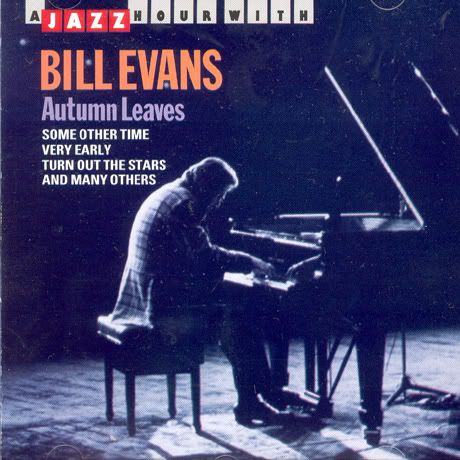
Bill Evans recorded the song many times, with his trio (and occasionally a quartet). From 1959 to 1969 he almost played it every year and re-recorded it for various albums. Again, at the end of 1970s, and in his last years, he began playing the tune. Even a compilation album of his was named Autumn Leaves.

I heard a beautiful take on the song, from Mary Lou Williams in a compilation LP, The First Lady of the Piano. Dizzy and Bobby Hackett accompanied her.
Zoot Sims played it in his Either Way (1961) LP. I strongly believe he has created a very strong, and like anything else he has recorded, deeply emotional recreation. Check him here, in the 1980s, returning to the song for a trio:
In 1974 Chet Baker recorded a version (She Was Too Good To Me, CTI 6050 S1) with a improvisational solo which has acknowledged as one of the best examples of Chet's fluency and harmonic genius. Ironically, Chet recorded it in concert F minor and adds a six bar tag of F minor at the end of every chorus.
Probably the most surprising Autumn Leaves belongs to Duke Ellington. During a dance date in California, 1958. When for a break, he asks singer Ozzie Bailey and Ray Nance (on Violin) to play three tender choruses on Autumn leaves. Bailey even sings the first on French! Stanley Dance remembers when Duke did it with French lyrics in France, audience didn't approve of Bailey's singing. The version below is not the same, but carries many virtues of the mentioned date.

Russell Procope, Bill Graham, Jimmy Hamilton, Paul Gonsalves, Harry Carney, Clark Terry,Rary Nance, Quintin Jackson, Britt Woodman, John Sanders, Duke, Jimmy Woode, Sam Woodyard, Ozzie Bailey, March 4th, 1958, Travis air force base, California.

My favorite among all ? Ahmad Jamal! A 12 minutes long masterpiece, live in Olympia, Paris, with George Coleman on tenor saxophone. Ahmad starts it with an uptempo introduction that takes a minute or two to even French audience recognize the tune. Coleman creeps in slyly from off-mic and then they takes off and you should hear the rest yourself! The version presented here is very close to what I heard on Olympia date, but slightly different and I'd say lighter.

Sunday, January 24, 2010

Martin Williams on Bill Evans


"I think Evans was the most important and influential white jazz musician after Bix Beiderbecke, and that statement is no reflection on the contribution or the importance of Bunny Berigan, Benny Goodman, Jack Teagarden, Dave Tough, Pee Wee Russell, Stan Getz — does Django Reinhardt belong on such a list? — or any other. Partly my statement seems valid to me because of Evans's intrinsic merit, and partly because his effect on the music has been so general—technically, in ways I have commented on, and emotionally in its uncompromising lyricism. At the same time, I think that in the future his work may come to seem somewhat isolated from the mainstream — as Bix's now does — but no less valuable and no less authentic and no less beautiful.

Bill Evans's contributions included, as I say, an abiding lyricism. Such a remark is an observation and a description; it also may seem a limitation. But would one complain that Lester Young was always playful? Coleman Hawkins dramatic? Or, for that matter, Beethoven humorless?

No, it would be as foolish to deny that lyricism pervades all aspects of Evans's work as to deny the element of privacy in some of it. There were times when I heard Bill Evans and thought that this music—so exposed and so vulnerable emotionally,so unprotected by the spirited ironies of the blues, so naked in its feeling—if you took it into the real world, that world would crush it and crush the man who made it. Perhaps after all that is what happened." -- Martin Williams

Tuesday, December 1, 2009

Good Morning Blues#1: With Bill in the Mornings


Good Morning Blues
will be my early morning notepad. It is the result of the time I spend in a bus to get to my office. This time is long enough for listening to usually a jazz record (to be exact from 6:25 AM to 7:10 AM) and shape my thoughts about the tunes and artists while I'm looking at the window and dig the first efforts of people for getting out of beds and being back on the streets.

This morning iPod was playing "New jazz conceptions", Bill Evans's first record under his own name. A collection of songs for trio and occasionally solo instrumentation.

In the bus, when the day hasn’t arrived completely and darkness is fading from east section of town, and spent colors of autumn mixed with hazy colors of early morning winters, listening to Bill's first record is exactly like observing a morning rises from darkness and thick mist of a long cold night.

He was in the same age as I, when he went to Riverside studios to cut 11 songs for his new conceptions. Yet the music isn't mature enough, but the spirit is complete. Even one can hear Waltz for Debby in the album but without that spontaneous swing of his latter ground-breaking performance.

I'm in the hardest days of my life, but I think I can go on with Bill in the mornings and Hawk at nights.

Monday, November 30, 2009

On Green Dolphin Street (Bill Evans, 1959)


صبح یکشنبه هوا سردتر از شنبه بود و زیرپوستم داغی رخوت آوری احساس می کردم که معنایش رفتن به سمت یک سرماخوردگی قریب الوقوع بود. سه شبانه روز تمام با موسیقی سروکله زده بودم و تمام انرژی و هوشیاری ام همراه با نت ها به آسمان رفته و در دود سفید غلیظ برگ سوزان آخر پاییز دره گلستان قاطی و گم شده بود. این داستان ادامه داشت تا دست بر قضا دستم روی آلبوم «در خیابان گرین دلفین» بیل اونز رفت و آن رخوت بیماری را از وجودم بیرون کشید. در حال حاضر نشانی از بیماری نیست چرا که وقتی تریوی بیل اونز با پل چیمبرز و فیلی جو جونز چنین لحظات تغزلی را از بعدظهرهای سرد آخر پاییز با صوت تصویر می کنند، دیگر زمانی برای درد فیزیکی باقی نمی ماند.

آلبوم در اواسط ژانویه 1959 ضبط شد اما به دلایل نامعلومی در قفسه های انباری استودیوی مایلستون خاک خورد تا در دهه 1970 بیل اونز آن را منتشر کرد، آن هم به انگیزه نشان دادن استادی مسلم پل چیمبرز در ساز باس، اندکی بعد از مرگ او.

آلبوم با «تو و شب و موسیقی» آغاز می شود. چه کسی می تواند بگوید که اونز یکی از بزرگ ترین مردان موسیقی در اجرای استانداردها نبوده است؟ چه کسی می تواند لغزیدن خرامانه نت ها، یکی پس از دیگری، را در اجراهای اونز انکار کند. این لحظات استعلایی در «قلبم ایستاد» ادامه پیدا کرده و در قطعه ای که نام آلبوم هم از آن آمده، یعنی «در خیابان گرین دلفین»، به اوج می رسد. آلبوم در روی دوم صفحه (هر روی صفحه 33 دور چیزی حدود 20 دقیقه جا می گیرد) به سمت اجراهایی اونزوار از قطعات بی باپ می رود و با یکی از تصنیفات بیل اونز Loose Bloose به پایان می رسد. دیالوگ های بین بیل (پیانو) و جونز (درامز) در این آلبوم یکی از بی نقص ترین نمونه های گفتگوی بخش ریتم با پیانو در یک تریوست.

اگر در CD این آلبوم تریوی دیگری (با ران کارتر، اسکات لافارو و پل موشن) و ساکسفون زوت سیمز را هم شنیدید، تعجب نکنید. این ها اضافات نسخه تازه آلبوم است که از اجرایی در کافه ویلیج ونگارد (1961) به ته آلبوم اصلی چسبانده شده است و البته این چند قطعه هم کارهایی بی نظیرند و خدا را شکر که آنها هم در این جا حضور دارند.

آلبوم را در این جا بشنوید و چنانچه از شما "رمز عبور" خواست آن را در قسمت "کامنت" همین یادداشت جستجو کنید و مواظب باشید که سرما نخورید چون هوا دارد سرد می شود یا این که حسابی شده است.


Bill Evans
On Green Dolphin Street


Recording Date: Jan 19, 1959
Label: Milestone Records
Time: 41:40

Tracks:
1. You and the Night and the Music
2. My Heart Stood Still
3. On Green Dolphin Street
4. How Am I to Know?
5. Woody 'N You [take 1]
6. Wood 'N You [take 2]
7. Loose Bloose

Line Up:
Bill Evans - piano
Paul Chambers - bass
Philly Joe Jones - drums
&
Ron Carter - bass
Jim Hall - guitar
Zoot Sims - sax
Paul Motian - drums
Scott LaFaro - bass