Showing posts with label Ekkehard Wölk. Show all posts

Monday, November 23, 2020

Record Review: The Invisible Child by Andrea Marcelli (2019)


The Invisible Child, an album of unreleased and live recordings by Italian jazz drummer Andrea Marcelli arrived at the right moment: listened to during the second lockdown, it's an album about spaces and distances, about solitude and togetherness.

Distances, a track in the album, offers some explanation, both in the choice of title and the story it tells of our lives during the time of physical distancing. It acknowledges the gloom but remains hopeful, moves forward and adds colour to the grey moments.

The "invisible child" in Marcelli hasn't ceased to wonder since he became the first Italian to record a solo album for the Verve back in 1989. (The resulted LP, Silent Will, featuring Wayne Shorter, was successful enough to lead to a second recording and Marcelli's subsequent move to the US where he lived for 12 years before moving back to Europe and this time settling in Berlin.) The album covers the last two decades of his musical life, confirming that it has been worthwhile in every sense.

The majority of compositions are by Marcelli or written in collaboration with his band-mates. Yet, those which are not his (Bach, Verdi and Duke Ellington) should tell as much about Marcelli as the originals.

In spite of a certain air of solitude that the album established with its opening track, the elegantly melancholic Siciliano in which Marcelli plays a lilting clarinet, the album is a victory against "distances" in its internationalist nature as musicians of at least seven different nationalities are involved.

Friday, October 30, 2020

Record Review: Pictures in Sounds by Ekkehard Wölk Trio (2020)


An album of jazz compositions performed by the Berlin-based Ekkehard Wölk Trio, Pictures in Sounds is played like a collection of short stories told in the language of music in which the 17th century Italian minstrels are followed by the 19th century American drifters, each song depicting a scene in the history of western culture.

Ekkehard Wölk's musical adventures take him to places. At the end he returns where he has started first. Home? Maybe. It's a place only he knows. No wonder the opening track is called Circulus Vitiosus which is a piece in Thelonious Monk's spirit: spiral and downward whose bipolar bop sounds emotionally restrained. Nonetheless, like the best of Monk, repetition leads to a liberation of emotions.

Recorded in May 2019, Wölk brings together thirteen of his composition from the past two decades, tunes which explain and define where he is standing now, musically and artistically. The album is also a documentation of search for new possibilities in improvisation. It draws influences from literary sources; searches the vast heritage of fine arts and even includes the seventh art which the album's composer passionately loves. (Wölk  lives a parallel life as a silent film accompanist and has acquired an encyclopedic knowledge of German and American cinemas.)

Monday, February 20, 2017

Lutheriana: Martin Luther in Jazz

Photo © Falk Kulawik

If, like me, you didn't know that Martin Luther (1483-1546), the founder of Protestant Church, had a role in the advancement of western music, then the concert Lutheriana, held at the Church of Jesus Christ in Berlin, would have a revelation, not only for its historical and musical lessons, but because of learning it the most cheerful way: the jazz way.


On February 11, in a bitterly cold Berlin evening, I skipped a Berlinale screening at the Potsdamer Platz and instead headed off to the quiet neighborhood of Dahlem to catch a concert by my friend Ekkehard Wölk who has contributed to this blog since it was started.

Ekkehard Wölk (Photo by Ehsan Khoshbakht)


The occasion for the concert was the 500th anniversary of Reformation, when Luther, the rebellious monk from Thüringen in East Germany, nailed down his famous 95 Theses on the door of the Schloßkirche in the town of Wittenberg, condemning the oppressive practices of his times. That was not only the inception of, if I may borrow from John Coltrane, a "new thing", but also the beginning of many battles and bloodshed between the two major Europeans branches of Christianity. If these facts we all know, what we probably don't know about is Luther as the musician.

Tuesday, January 5, 2016

In Memoriam: Michael Clifton (1956-2015)


Text, music, and photographs © Ekkehard Wölk. Can not be reproduced without the permission of the author.


THE SPIRIT OF THE JUGGLER: 
REMEMBERING MICHAEL CLIFTON (1956-2015)
By Ekkehard Wölk


The Berlin music scene mourns over the recent death of one of its best-known, musically distinguished jazz drummers of the past three decades: Mr. Michael Clifton who passed away on the 11th of December, 2015.

Born in Denver, Colorado in 1956, Michael left his home country in the late 1970s and settled in Berlin at the time when the city was still divided. He loved Berlin and to him Berlin was "home".

From the time of his arrival in Berlin for so many years to follow, Michael, always incredibly energetic, was an undeniable presence in Berlin's music scene who enriched countless recording sessions, concerts and entertainment shows with his inimitable powerful style of drumming that was firmly rooted in the great tradition of jazz playing by such giants like Art Blakey, Kenny Clarke and Max Roach.

Wednesday, January 9, 2013

Ekkehard Wölk Trio Live in Delhi


I'm back in 2013 with another post about one of my favorite contemporary European jazz pianists (which automatically means endorsing the great trio he is leading), Ekkehard Wölk whose classical background, his deep admiration for silent cinema and his rich musical language proves that how cultural diversity can give new, unexpected and utterly exciting faces to good old jazz.

In April 2011, The Ekkehard Wölk Trio performed a concert for 5000 Indian jazz fans in New Delhi. The occasion was used as a platform to introduce newly composed/arranged songs of The Berlin Album which I reviewed here. Thanks to Ekkehard, and the Seher Jazz Festival, you can watch the concert from that hot April evening on my blog.

I asked Ekkehard to share his impressions of India with me and he responded enthusiastically:

Monday, July 2, 2012

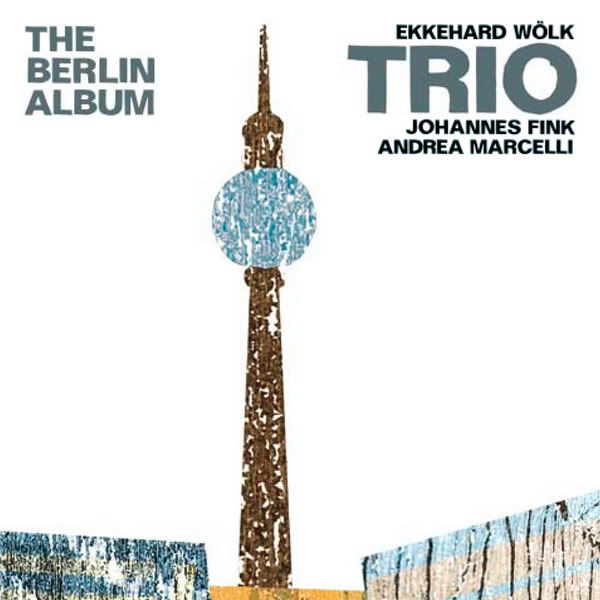
The Berlin Album by Ekkehard Wölk Trio


"Berlin, Berlin, the city is a sin – you never go out the way you walked in!"

After some good years of productive collaboration between Ekkehard Wölk, Johannes Fink, and Andrea Marcelli, Ekkehard has driven them into a new concept which primarily consists of excitingly fresh interpretations of well-known musical standards related to the city of Berlin. The Ekkehard Wölk's new album is simply called The Berlin Album.

In terms of structure, the work is based on the legendary 1929 silent film Menschen Am Sonntag made collectively by Robert and Curt Siodmak, Billy Wilder, Edgar Ulmer, and Fred Zinnemann which describes the course of a single Sunday in the lives of four young people in Berlin.

"It seems to me that we have created not only a multifaceted musical kaleidoscope of jazz," says Ekkehard, "but we have also managed to forge an individual and playful reverence for our adopted hometown Berlin."

Ekkehard has incorporated some of Berlin’s most prominent composers from the past whose pieces have made a permanent contribution to the musical iconography of the city.

Friday, January 27, 2012

Musicians on Musicians#4: Ekkehard Wölk on Pianists


Ekkehard Wölk is a pianist, composer, arranger, and in my opinion, a genuine expert of silent and classical cinema of Germany and Hollywood. This Berliner's list of contributions to the various fields of art can be read at Wikipedia. He has released a new jazz album named after his city of residence, The Berlin Album. Next week I'm going to write about that, till then, we have another post on Ekkehard and his profound understanding of jazz and its history. In this interview, he discuss pianists and albums that have inspired him.

*  *  *

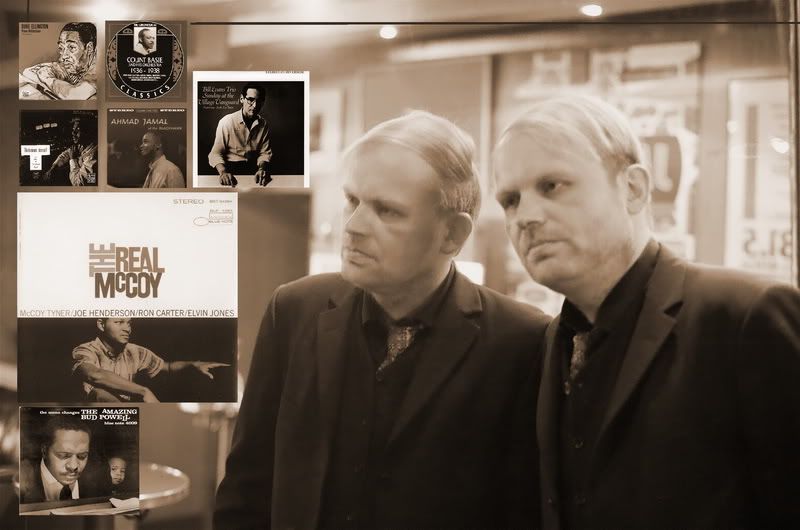
In early days I used to listen a lot to Count Basie's Kansas City Five recordings from the mid 30s with the singular Lester Young on tenor, and I was also swept away by the vigour and powerful swing of his celebrated big bands from that time.

Nevertheless, when I am being 'nailed down' to express personal preference, I would have to give the musical 'Palme D'Or' to Duke Ellington, considering his overwhelming importance as a composer, arranger, band leader and also as, in my opinion, a strongly underrated pianist in his own right.

One of my favorite piano trio recordings of all time is Piano Reflections done by Ellington in 1953 for Capitol Records. I strongly believe that an artist like Thelonious Monk could not have developed his singular way of 'dealing with' the piano if he had not inhaled and carefully studied the refined pianistic styles of Duke Ellington and Fats Waller, himself later developing a reduced, somehow 'Dadaistic' skeleton version of these masters' music! Undoubtedly, Monk is a true giant in the musical history of the 20th century. In the field of art, he seems to represent a very rare phenomenon with his career, in that sense that is one of the very few examples of a totally uncompromising artist who finally - after yearlong total neglection and disdain by the public - gains the overall and worldwide recognition and embraces by the mainstream culture without ever changing his stubborn musical path or losing his unique vision of dark sounds! Especially I love his solo piano recordings, like Monk alone In San Francisco or Thelonious Himself from the fifties, much better than his famous quartets or trios, because as a soloist, Monk is free to explore his eccentric ideas of form, sound and time relations in a totally pure and ascetically beautiful manner.

Montevideo from Piano Reflections by Ellington, 1953 - Wendell Marshall is on bass, and Dave Black on drums. Ralph Colier, congas.

My top pantheon of jazz pianists would be centered around the triptychon of Bud Powell, Bill Evans and McCoy Tyner. For me, these three influential artists represent the pinnacle of what is creatively possible within the wide range of jazz piano music. But of course, I also feel great respect for the achievements of Art Tatum in the 30s and 40s which may be - in absolute pianistic terms - forever unsurpassable in brilliance by younger pianists!

I already have mentioned the much - neglected importance and the merits of Duke Ellington as a pianist. From the more contemporary generation of remarkable jazz piano- players, I would cite the works of Herbie Hancock, Ahmad Jamal, Fred Hersch and some of Keith Jarrett's trio recordings. Of the old masters of stride and swing piano from the 20s and 30s, I should at least name the great Earl ‘Fatha’ Hines and Teddy Wilson, to complete the acoustic picture!

Friday, August 19, 2011

Radio Hawkins#2


اين هم از دومين بخش برنامۀ شبه راديويي ما دربارۀ موسيقي جاز. در اين قسمت قطعاتي از سيدني بشه، لويي آرمسترانگ، چارلي مينگوس، جان كولترين، اكهارد وولك، نت كول، استن تريسي، سام هاپكينز و ويكتور ديكنسون خواهيد شنيد. دربارۀ بيشتر اين موزيسين‌ها مقاله‌هايي به فارسي يا انگليسي در همين وبلاگ وجود دارد و كافي است روي «تگ» نام آن‌ها در انتهاي همين پست كليك كنيد.
اين كار بسيار براي من وقت‌گير و فرساينده است و تنها اميدم اين است كه آدم‌هاي بيشتري آن را بشنوند و به اين وسيله زبان شگفت‌انگيز، انساني و فاخر اين موسيقي جايي دربين آن‌چه در ايران شنيده مي‌شود باز كند و به گوش‌هاي بيشتري برسد. در نتيجه از به اشتراك گذاشتن اين فايل صوتي، يا اين پستِ وبلاگ دريغ نكنيد كه تنها اميد ما به گسترش فرهنگ، خودمان هستيم و در اين اوضاع از هيچ‌كس جز خود ما انتظار نمي‌رود كه مشعل را روشن نگاه داريم.