Showing posts with label Big Band. Show all posts
Showing posts with label Big Band. Show all posts
Thursday, May 7, 2020

Saturday, April 11, 2020
4 Photographs of Jimmie Lunceford in the 1930s

Courtesy of University of North Texas, four raw negative scans of photographs by Byrd Moore, taken of Jimmy Lunceford and his orchestra in Fort Worth, Texas, possibly in the 1930s.
Wednesday, April 19, 2017
Bob Mintzer Big Band in Berlin
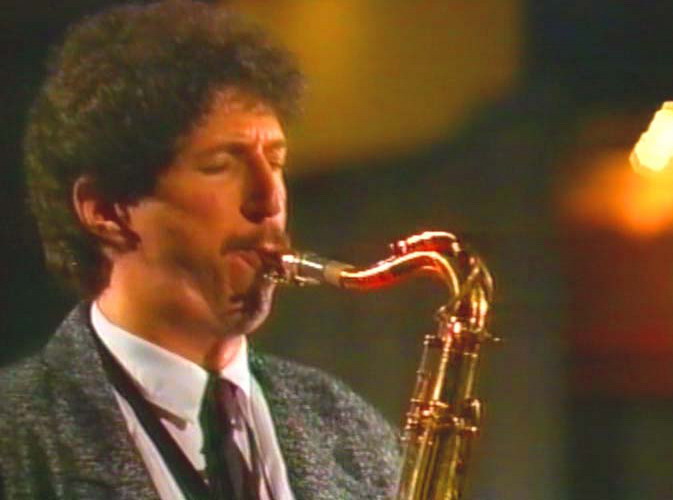
Some truly great moments of solo expression against the backdrop of a big band can be heard on this superb concert video from Berlin, 1987. Arranged and conducted by tenor saxophonist Bob Mintzer, and loaded with excitement and wit, it is the perfect homage to the tradition of big bands in whose last days Mintzer, as an alumni of Thad Jones-Mel Lewis and Buddy Rich big bands, lived an active life.
One of the tenor saxophonists who emerged from the school of New York players in the 70's, Mintzer was not only the member of the Grammy award winning Yellowjackets, but also led his own BB, touring the world, of which this concert from November 1987 was filmed and broadcast.
A teacher and lecturer, and the writer of over 200 big band arrangements, Mintzer perfected his instrument in working with various musicians and bands, from Art Blakey to Gil Evans, and from Randy Brecker (also featured on this video) to The New York Philharmonic.
Monday, April 11, 2016
Lionel Hampton Big Band in Nice, 1978
 |
| Lionel Hampton [photo source: MTV] |
Now, thanks to Hoffmannjazz YouTube channel, I am able to see a filmed footage of the orchestra in Nice, France, playing M Squad Theme a week before they took the North Sea stage.
This is an absolutely stellar line-up with solos given to Ray Bryant, Joe Newman (A few choruses are off-mike), Kai Winding, Charles MacPherson, Pepper Adams, Cobb, Cat Anderson, and Billy Mackel.
Monday, October 19, 2015
Rudy Can't Fail
 |
| "Red" Rudy Williams |
Who's playing the alto saxophone on this one?
The musician playing alto on the 1948 track you heard which was recorded under Tadd Dameron's name is "Red" Rudy Williams, a musician Charlie Parker used to dig intensely, almost religiously, during his first visit to New York City.
Member of a hard swinging band, Al Cooper's Savoy Sultan, he was usually featured on radio broadcasts some ten years before the above recording was waxed. (Other musicians featured on the piece you heard are Fats Navarro, Allen Eager, Curly Russell, and Kenny Clarke.)
In 1939, Williams was enjoying the success of this hit song, Little Sally Water, in which his name is called by Savoy Sultan's before he moves to front for a solo:
Wednesday, July 15, 2015
Cab Calloway's Hi-De-Ho (1934)

CAB CALLOWAY'S HI-DE-HO
USA, 1934 Regia: Fred Waller
Scen.: Milton Hockey, Fred Rath. F.: William O. Steiner. Int.: Cab Calloway, Edwin Swayzee, Lammar Wright, Doc Cheatham, Al Morgan, Leroy Maxey, Harry White, Eddie Barefield, Andrew Brown, Arville Harris. Prod.: Paramount Pictures
 |
| Cab Calloway in Cotton Club |
Cab Calloway is deep in sleep on a night train from Chicago when a telegram arrives from Irving Mills, asking him to change the opening number of the next day’s performance at New York’s Cotton Club. The leader wakes up the band and a jam session in pyjamas kicks off, with the band members recreating the sound of a train in motion. Upon arriving in New York, Calloway recommends to the coach attendant that he buy a radio, to keep his wife “entertained” while he is at work. When the attendant acquires the radio which promises to “bring the leading radio artists into your home”, to his dismay it literally brings a seducing Cab Calloway into his home, but only when he is away and she feels lonesome!
Subversive and erotic, this early jazz short is head and shoulders above many 1930s musical shorts in the way the storyline is developed and how it incorporates hit songs, such as the drug-charged ‘Minnie the Moocher’. A commentary on the medium of radio and the Cotton Club broadcasts, which exposed many Americans to live jazz, the film moves from reality to fantasy, with jazz making the leap smooth and fun. (Ehsan Khoshbakht)
Saturday, May 23, 2015
McCoy Tyner Big Band
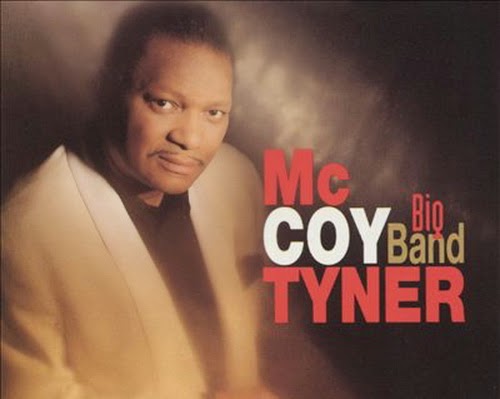
JazzFest Berlin, Philharmonie
November 3, 1990
Fly With the Wind (M. Tyner)
Trumpets: Virgil Jones, Kamau Adilifu, Earl Gardner; French Horn: John Clark; Trombones: Frank Lacy, Clark Gayton; Tuba: Howard Johnson; Saxes/Flute: Joe Ford, Doug Harris; Tenor Sax: John Stubblefield; Piano: McCoy Tyner; Bass: Avery Sharpe; Drums: Aaron Scott.
Thursday, January 29, 2015
Charles Mingus' Epitaph - Live in Berlin
 |
| poster of the 1991 Berlin Jazz Festival |
The concert was held during the Berlin Jazz Festival in October 1991, nearly two years after Epitaph's New York premiere.
I found this invaluable footage, an off-air recording, on one of my old VHS tapes. Alas, the first piece on this video, Better Git In Your Soul (which is obviously not the first piece from the actual concert) is incomplete and starts from the middle. Like Mr. Schuller, I'm beginning to believe this ambitious piece of orchestral jazz is jinxed:
"There were many times in the many-months-long preparation for the issuance of Epitaph when I felt that what many of us consider a jinx under which this great work has stood—the first expression of which was the disastrous attempt to record Epitaph in I962—was continuing to exercise its evil curse. Recording equipment breaking down, gremlins in computerized mixing consoles, tapes being inadvertently locked up in temporarily inaccessible offices, unavailability of mixing and editing studies when needed, enormous scheduling conflicts, and so on."I hope someone comes up with the complete video of Berlin concert. Until then, enjoy this great 25 minutes of Mingus' music.
 |
| Gunther Schuller |
Sunday, October 5, 2014
Clark Terry: The Ellington Years And Beyond (1952-60)
 |
| Clark Terry. Photo courtesy of Riverside |
"Nobody ever says a bad word about Clark Terry." -- Richard Cook
I just saw the documentary Keep On Keepin' On (2014), about Clark Terry and his messianic belief in jazz education, thus I'm in the mood for nothing but CT. (Hopefully, soon I will be writing a note on the film for this blog.) Here, what I've got to offer is a compilation of various solos CT played during his decade-long stint with Duke Ellington and His Orchestra.
"Duke was endowed with a supernatural magic," remembers Clark Terry, "he could cuss you out and rarely use a cuss word. He'd chastise you from the piano by hitting a discord and everybody knew what was going on. A frequent utterance of his was simply 'Aaaaaahhhhh!' It might mean something like, 'You're not paying attention! You're not listening!' Or it might mean that what you played was beautiful to him."
With exception of one track, everything you'll hear is recorded live in concert, mostly with non-professional tools and less than skillful engineers. As Clark Terry would say, these tracks are surveying a life on the road: "East coast to west coast and all in between - clubs, ballrooms, and theaters. The Beehive, Blackhawk, Blue Note, DeLisa, Regal, Apollo, Trianon, Savoy, and many others."
There are various takes on How High the Moon which was Terry's solo feature throughout a good part of the 1950s. And then there is a surprisingly bop-ish arrangement of that tune from a Birdland session in November, 1952.
Perdido is another tune with which Terry was featured in Ellington's band. They are by far the most exciting takes of this old tune on Ellington's recorded catalog. It's like "magic" to see how Ellington manages to bring a new musical angle to the same song played over the course of the years. For that matter, one only has to go back, or forward, to compare other interpretation of the same song and see how the master tailor is re-fitting the old suit to Clark Terry's sound and musical (or even personal) character.
The voice heard on this tape is of course of Mr David W. Niven's, giving some useful information about Terry. He is responsible for this compilation. However, be aware that not all the dates and facts given are accurate. For a more reliable discography of the sessions see below.
All sessions are under Duke Ellington's leadership unless noted.
Tuesday, September 16, 2014

Tuesday, August 26, 2014
Bird and Herd

In 1951, Charlie Parker was in trouble. He had been in trouble for long before and quite a while after that particular date, but 1951 saw a shift in the way drug scene was exposed in the press and also in the way it was handled by the FBI. Though Parker wasn't unfamiliar with the word "trouble", this time a nation-wide prosecution of celebrity drug addicts had made things tough for him. In the summer, Parker had played at Birdland with Machito, a gig which happened to be his last New York performance in nearly 15 months. Soon after, for some obscure drug charges, his "cabaret license" (license for performing music in the premises in which alcohol is served) was revoked. He was jobless.
 |
| Charlie Parker's saxophone case |
His manager, trying to keep him busy, send Parker on the road, where he could still play without a license. Being on the road meant that he needed to be part of an already touring group. That's when Bird was united with Woody Herman's Big Band - the Third Herd edition.
Tuesday, July 22, 2014
Count Basie at the Organ

I think it was John Hammond who once complained about one of the most stylish jazz pianists of all time being too shy to play piano. Of course, he was talking about Count Basie, the master of minimal (dubbed as economical) piano in the big band era. Still, I must say, comparing to Basie's organ recordings - which is the subject of this post- his piano work can be considered superabundant. Basie and organ is a beautiful but rare pairing.
Here, I'm trying to showcase his mastery at the organ from six 1952 sessions.
Before anything, I must return to some facts: Basie learned organ from Fats Waller and had a short career as the silent film accompanist. His first known recording at the organ dates back to 1939, when he accompanied Jimmy Rushing on Nobody Knows.
"Basie economized Fats' style," argues Geoff Alexander, "[he] had a sparse and 'jumping' feel to his playing, and I think influenced later organ players such as Wild Bill Davis, Milt Buckner, and Jackie Davis as much with the sound of his band as his playing."
From the early 1950s, when due to financial issues, the size of Basie orchestra drastically shrank, the small group became a favorite format. For these small group recordings, thanks to Norman Granz, Basie revisited organ almost a decade before it turned into a best-selling instrument. (In that regard think of Jimmy Smith, Jack McDuff and many others who came to prominence in the 60s.)
 |
In 1952, Basie took the organ seat on various occasions, some under his own name as leader, and with Oscar Peterson appointed as the piano man, and at least one session under Illinois Jacquet's name, when Basie was simply minding his own (glorious) business on the organ.
These sessions, at some point released by Verve as Basie at the Organ, are examples of Basie's "cool rage", if one borrows from the Jacquet's tune that Basie plays on the side B of the LP. By "cool rage" I mean, tense but flowing; conveying a wide range of emotions but always remaining in absolute control of itself.
The eleven tracks reissued on the VLP 9074 can be heard here:
Saturday, May 24, 2014
Earl Hines and Charles Mingus: A Brief Encounter

The music presented here is resulted from, by all means, a surprise session. An ad-hoc band with a line up that even a wild imagination can not conceive. First and most, it features the father of jazz piano Earl Hines and the most revolutionary figure of modern jazz, Charles Mingus. Still, there is more to this 67 years old wine.
Toward the end of the 40s, the size and the success of Earl Hines Orchestra, like most other big bands of that era, drastically shrank, and in 1947, when these sides were cut, it broke up for good. Shortly after, Hines joined Louis Armstrong All Stars and probably earned more money as a "sideman" than what he was gaining as the leader of the most adventures big band of the 40s.
In a cold day in Chicago, on December 31, 1947, Hines borrowed a "cast" from Lionel Hampton's big band that happened to be in town for a national tour and whose second bass player happened to be Mr Charlie Mingus. During the date, Hines and the Hampton men recorded four sides on 78rpm records.
For a rather predictable version of The Sheik of Araby, which opens with Hines on piano, Morris Lane was shortly yet brilliantly featured. Lane had a huge sound, like a crossover between Ben Webster and Coleman Hawkins, and readers of this blog probably know him better for being a member of Bebop Boys, a recording group of Savoy artists, including Sonny Stitt, Fats Navarro, Bud Powell and Kenny Clarke.
Tuesday, January 14, 2014
The Swiss Jazz School Big Band feat. Bobby Shew
The Swiss Jazz School is the first independent jazz school in Europe which was founded in 1967. In this video from 1997 the school's big band enjoys a 30th anniversary concert at the local Bern Jazz Festival.
The first solo, on trumpet, is beautifully played by the American trumpeter Bobby Shew. The second soloist is the Swiss George Robert on alto saxophone. I don't know the name of the rest of the musicians in the band. Any Swiss jazz expert out there to give us some names?
January 15 update: Bobby Shew Remembers
Friday, December 13, 2013
No Man's Band: For the 20th Anniversary of Diva

"The most dramatic, indeed thrilling, evidence of the emancipation of women in jazz is the big band Diva," wrote critic Nat Hentoff. "These girls can play — and I mean play," said another critic, Geoff Burdett, while confessing to "being very surprised by the sheer power and spirit of the band, quite apart from the very high level of musical ability on display."
The Diva Jazz Orchestra, formed by drummer Sherrie Maricle, started giving concerts in 1993 which makes this post a kind of their 20th anniversary celebration, as a part of ongoing series Women in Jazz.
According to Diva's leader, Sherrie Maricle, the band is nothing less than an international jazz institution for those women who can play. "The women in Diva are from all over the world," Maricle says, "[and] we are carrying on the tradition initiated by the legendary big bands of the past. We are dedicated to the cause of keeping big band music alive and swinging because we all have a passion for that music."
Wednesday, November 27, 2013
The Illinois Jacquet Big Band feat. Clark Terry

This post features the third and last part of the Illinois Jacquet Big Band in Bern, Switzerland. The first two parts can be accessed here and here.
For the final number, One O'Clock Jump, Clark Terry joins the stage whose asociation with Jacquet goes back to the late 1940s. Later, in various occasions, they were also both hired by Norman Granz for the legendary jam session concerts. On record, they both play in Newport in New York 1972, and then two decades later as members of George Wein And The Newport All Stars. Finally, in 2004, when Jacquet passed away, CT paid his last tribute to the old time collaborator by playing in his memorial service.
Now the music:
One O'Clock Jump (soloists: Richard Wyands, Clark Terry, Wyands, Jacquet, trombone?, Arthur Daniels, Terry, Fred Hunter, Winston Byrd)
Friday, November 15, 2013
The Illinois Jacquet Big Band, Part II

This is the second part of the Illinois Jacquet Big Band video I posted in late October (here). I haven't been able to identify the members of the trombone section yet. In addition to that, the set is still incomplete and one last part which features a fantastic finale is on the way. The pieces performed are listed below with the name of those soloists I was aware of.
00:00 Doggin' Around (soloists: Joey "G-Clef" Cavaseno, Jacquet, James Zollar, Winston Byrd, Tom Olin, Richard Wyands, Cavaseno, Mike Grey?, 2nd trombone?, 3nd trombone?, Fred Hunter)
09:40 The Sunny Side of the Street (sax solo, vocal and dance: Jacquet)
16:46 Flying Home (soloists: Cavaseno, Jacquet)
Thursday, October 31, 2013
The Illinois Jacquet Big Band, Part I
 |
| © photography by William Ellis |
Naturally, the concert in its entirety serves as an overview of his career and inclusion of each song in the repertoire reflects a stage of Illinois' career, starting from the smashing hit Flying Home with the Lionel Hampton Orchestra to the standards of the Count Basie songbook.
As for the man himself and his stimulating sound, he is praised as the primary example of the Texas sound, or as Richard Cook observes, permanently saddled "with the largely meaningless 'Texas tenor' tag," which is basically "big, blues tone, edged with a kind of desperate loneliness that somehow underlines Jacquet's permanent status a guest star." Still, a better definition is given by Brian Priestley:
Monday, May 27, 2013
Jazz Mirrors Iran#2: Persian Rug
Last week, I began a ten-week series exploring jazz that reflects a part of Iran, both as an actual place on the map and as a pure creation of art. This is Iran according to American and European artists of the 20th century. It is also the same country that makes daily headlines in the news, yet it is music that brings it a far greater truth than any pundit on a TV screen. In the second installment of this ten-week series exploring Iran through the world of jazz, let's gaze our eyes down to the magnificent floor coverings that inspired the classic jazz standard tune.
Iran as a country has long been a contested commodity in the modern era, its politics so pervasive, hardly a piece of artwork makes it abroad without some sort of oppositional branding -- the mere fact that it comes from Iran automatically makes it a piece of creative dissidence. The one medium that manages to evade any type of political baggage is not the artwork we hang on our walls, but the adorned canvas we lay out on our floors --Persia’s rugs. Like Iran’s version of Wall Street, these carpets, often called an Iranian’s stock or share, are more than a hypnosis of vivid colors and mesmerizing patterns: they’re a woven record of a country and civilization dating back over 2,500 years, and for most Iranians, a first encounter with the visual blueprints that we come to associate as art.
Three versions of Persian Rug which I'm going to discuss later
Wednesday, November 14, 2012
London Jazz Festival: Celebrating Friedrich Gulda
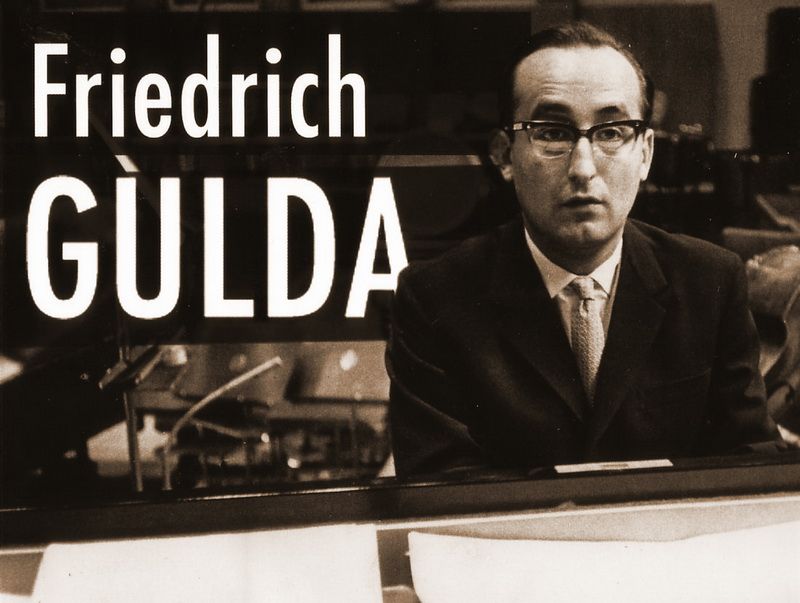
What is the definition of good music? There are thousands of answers to that. Mine, at this moment, is a simple or even primitive one: when you leave the venue, whether a tiny, basement club or a 2000-seat concert hall, you still have the beat, the vibe and the mood. So the actual concert is only the beginning of a longer personal association with that piece of music.
Last night, after the first set with the BBC Concert Orchestra playing Fredrich Gulda was finished, and when an interval of 20 minutes began in anticipation for the next set with Shabaka Hutchings, me, standing on the terrace of Queen Elizabeth Hall and its magisterial view to the Thames, and smoking the life away in hand-rolled cigarettes, felt that music of the first set was still physically present inside my - growing in me. What moved me so profoundly and brought the joy so easily was Fredrich Gulda's cello concerto, conducted by Mark Lockhart and soloed by Benjamin Hughes whose sensitivity as a great player was mixed with authority and preciseness. What could easily get into your system was a joyous "mish mash" (Lockhart's words) of the Viennese swing and marches, flickering sounds of woodwinds on the background which elaborate the tense presence of cello. It was good enough to literally overshadow what was followed in the concert.
Subscribe to:
Posts (Atom)