Wednesday, February 1, 2012

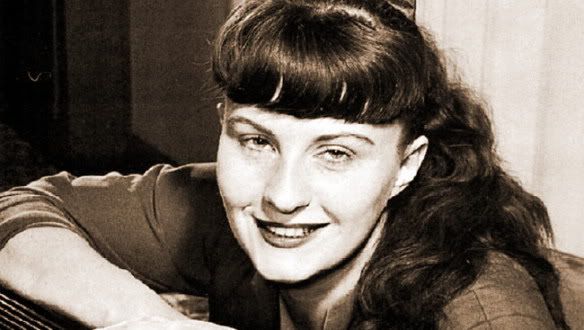
Lloyd Miller, A Sufi of Jazz

Lloyd Miller with Oud (known in Farsi as Barbat)

In 1957, a family of wealthy Americans, after leaving Los Angeles for Japan, and traveling through Far East countries, finally landed in Tehran. The father was an educated man, and a professional musician, and one of his main reasons for bringing his nineteen year-old son to this trip was to keep away this young jazz aficionado from problems with police which apparently were caused by "drug habits" of his fellow musicians. This young cat, named Lloyd, was searching for something beyond the values and frames of mind of his upper class family of southern California. He was looking for a new musical language that he had found partially in traditional jazz, and also the modern movement known as Bop, but still those were not adequate responses to his spiritual quest.

When Lloyd out of curiosity, in his hotel room in Tehran, turned the radio on and heard someone playing a Tar (a skin-covered Persian instrument that is a combination of a guitar and lute), he understood that he has find what he was looking for; an indescribable pleasure that he hadn't experienced in the jazz clubs of L.A.

This small incident was the beginning of his life-long association with Persian music and Persian culture that led him to one of the first fusions of jazz with Middle Eastern music.

From California to Tehran

"It is all the same musical system. For me to pick up an instrument in a teahouse in Herat, or play in an Indo-Afghan jam session in Kabul, or jam in a music shop on the Black Sea in Turkey, was almost the same as jamming in the Red Feather or Purple Onion during the 1950s, back in Los Angeles. The same spirit, the same feeling. the same notes and some of the same melodic patterns and repetitive and mirroring phrases." -- Lloyd Miller

Born in 1938, Glendale, California, Lloyd started to learn various instruments and immersing himself in New Orleans jazz, through teachings of his father, who was a professional clarinet player. Miller was imitating the style of George Lewis, Johnny Dodds and Jimmy Giuffre and cut his first Dixieland jazz 78 rpm record in 1950. He learned to play various instruments, including cornet, trombone, accordion, banjo, clarinet, bass and saxophones.

In 1957 his father, a professor at the University of Southern California, was invited to Iran, in order to oversee the creation of a school of  business at the University of Tehran.

After the trip to Iran and the mentioned "incident", he stayed in that country for a year and that helped him to learn a few Persian instruments. His restless soul forced him to leave Iran for Germany, where he performed at Domicile du Jazz in Frankfurt with Peter Trunk and Albert Mangelsdorf. "One night at the jazz keller in Mainz (Germany) in 1958 where I was the house pianist," remembers Lloyd, "Don Ellis and Eddie Harris with a Turkish trumpet man called Maffy Falay dropped in with other members of the US army Jazz Three band. After the jam, Don and Eddie read through some of my Eastern inspired charts and Don affirmed that he would continue along that line in his jazz career."


After Germany, Lloyd went to Switzerland and then Stockholm where in 1960 he worked with Sweden’s top jazz musicians, including Bernt Rosengren, Lars Färnlöf, and Lennart Jansson. The next stop was Paris, where he played at the Camillion with Jef Gilson band and occasionally visiting Blue Note cafe, where Miller would be asked by jazz legend Bud Powell to sit in a set or two with drummer Kenny Clark.

Lloyd had many other recorded or unrecorded sessions in Europe, among them playing along with sadly forgotten saxophone player Jaques Pelzer (who has some very fine recordings with Chet Baker), and later on, with an adventurous musician like himself, Mr Tony Scott.
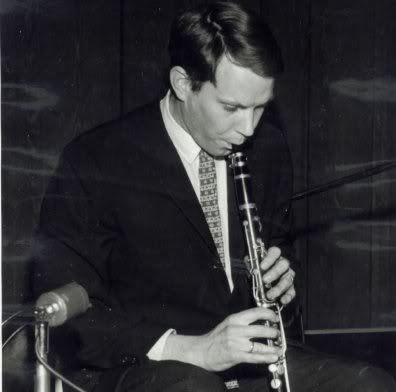
Being a Mormon, on his way back to US, Lloyd entered the Brigham Young University. In his first year, for participating in a jazz contest, Lloyd gave the idea of fusing jazz with Eastern music to his fellow musicians in the university. Under Lloyd's supervision they made a harmonically daring blend of Persian  instruments with a cool-jazz oriented sound, and Lloyd, always a visionary, called that Oriental Jazz. The name later appeared as the title of his first LP. 

Unlike anything else presented at the jazz festival, the Oriental Jazz Quartet (Lloyd and Preston Kies on piano) took the first prize, and their recording turned out to be one of the most impressive takes on West-meets-East concepts in music. 

Oriental Jazz LP (a combination of the Oriental Jazz Quartet, or the Press Keys Quartet, and Miller's own trio) opens with haunting piece called Gol-e Gandom, which in Farsi means "flower of the wheat." Francis Gooding writes about this particular recording: "with its mesmeric combination of Miller's shimmering santur [a Persian instrument], Kies's deftly driving piano solo and the rock-solid responsive swing of the bass and drums, by Don West and Dick Beeson respectively, is an unforgettable piece of music that sweeps the listener along in its wake."

Gol-e Gandom broadcast by KBYU, 1965, with Preston Keys on piano

Managers thought that Lloyd's "bizarre" sound would be something provocative for the taste of new hippies, and their interest in the Eastern music, so in 1969 they invited Lloyd to play at now legendary Woodstock music festival. It wasn't Lloyd's taghdir [destiny]. Due to the weather conditions and the impossiblity of flying down there he missed the chance of playing his Oriental Jazz at the Woodstock, though he was paid a $ 150 check in spite of cancellation! Joni Mitchell couldn't get to the festival area, too, but she was clever enough to go back to her apartment in New York City and write down the Woodstock song which became the anthem of the festival. Lloyd, following the teachings of Daravish, went to a totally different direction, and headed for Iran again.

In 1969, Lloyd was awarded a Fulbright scholarship through the University of Utah Middle East Center to do a research on Persian and related music in the Middle East. So with a clear plan in mind he returned to Iran, and during the ensuing 7 years, Miller traveled throughout the Middle East from Afghanistan and Pakistan to Lebanon and Turkey spending most of his time in Tehran. Lloyd mastered Persian music as well as Iranian folk music genres under the supervision of masters Dr. Daryush Safvat and Mahmoud Karimi. Later, as his doctoral thesis, Lloyd wrote a book on Persian music, called Music and Song in Persia: The Art of Avaz. During that seven-year period, Lloyd performed at traditional music festivals, visited sacred shrines, attended wild Sufi ceremonies, and met many people from different ethnic groups in one of the world's most multicultural countries.

Lloyd with then Queen of Iran (left), Farah.
In Iran, Miller became a key art writer for the English publications in Tehran and Beirut. He was even lucky to be given the chance to run his own TV show at Iranian National TV. In the 1970s Lloyd became a well-known TV personality under the Persian pseudonym Kourosh Ali Khan, hosting his own prime-time weekly jazz and ethnic music show entitled Kourosh Ali Khan and friends. Incredibly, his show ran for seven years. He also produced and directed a weekly documentary series on history of jazz, as well as a special program in English focusing on Persian arts and culture. 

Lloyd in Tehran, playing Autumn Leaves with bassist Roger Hererra in 1975. The clip continues with a 2003 take on the same tune, in Utah.

In 1977 Miller returned to Utah. Gooding points that during the 1970s, a decade which saw sustained Western interest in the music and religions of the East, Miller was not only ahead of that particular curve, but had left it behind entirely. Lloyd resumed his teachings that had been started since mid 1960s. Soon he was invited to countless events to perform Eastern music or jazz of various styles. Lloyd Miller's life, since then, is been dedicated to keeping the flame of traditional jazz burning, as well as introducing the music of the East. Recently he has helped Utah Symphony conductor Chris Wilkins for transcription and reconstruction arrangements of Bunk Johnson, Joe King Oliver and Bix Beidebecke to be played by Utah Symphony. Lloyd's many guest appearances and collaborations with international artists is presented in a video on Youtube

 Spiritual Jazz

Mondomix website describes Lloyd Miller as a musician that was "never given the acclaim he deserved." Someone "working outside the mainstream. His complete immersion in the music of the East set him apart from other modal jazz voyagers, and it is perhaps this dedication to his art that has left Miller in the shadows." Music critic Francis Gooding calls him "an intense echo in an unfamiliar key." Lloyd himself, explains this key, as something rooted in Iran. He believes that blues is based on the Persian Segah modal scale in the section opposite at the end of the mode. He traces back this musical heritage to the time when the Arabs took it (and every other idea of any value including the Azan) from Persia and called is Sikah and it ended up in North Africa then New Orleans and beyond. So in his view, and his teachings, jazz is an outgrowth of traditional old Persian music

Dr Lloyd Miller is capable of playing nearly 100 instruments, especially jazz instruments and Eastern instruments. Here, in a montage of various footage from 1965 to 2000s, he plays 38 different instruments!


He recently wrote to me about "spiritual Sufi beauty of Miles Davis' Kind of Blue", and that music of "Stan Getz, Bill Evans or Brubeck makes a person feel God's goodness and confirms the existence of God just like hearing the Azan does. For me it is all the same beauty," he said.
Lloyd despises pop music and when some years ago a producer asked him if he can use Gol-e-Gandom in a compilation CD of weird psychedelic fusion music, he simply refused:

"I just can't be anywhere near the thing I am fighting full-time, like an African-American that won't be affiliated in any way with the Ku Klux Klan. Once someone has become a zombie for the 8/8 inhuman electronic thumping, there is no way they will totally return to the swingin' 6/8 jazz groove of the 50s or the celestial sound of the coming post-apocalyptic Millennium. Maybe after World War III when 1/3 of the world's population has been grimly destroyed, then hopefully the ugly thumping will be stopped forever."

Lloyd, culturally influenced by Islamic/Iranian concepts of music, writes in Music and Song in Persia that the "Correct performance is 'interior', whereas as commercialized (Motrebi) performance is 'exterior'." A strict vegetarian for over 40 years, Lloyd shares this beautiful dream with us: " [someday when younger people] drink wheat grass, and praise the Lord and [are] not a part of corporate entities that are quick to sell them junk. And they'd gravitate toward beautiful dreamy music like Ravi Shankar and Japanese cultural music, and maybe, just maybe, they’d discover an old LP from Lloyd Miller, and say that this idiot was trying to do it a very long time ago and he was ahead of the curve."

I'll keep writing about Lloyd Miller, his spiritual/oriental jazz, and his contribution to the music of 20th and 21th century in upcoming weeks. Also stay tuned for a radio programme, dedicated to Lloyd's music on Saturday, 11 February 2012. More details will be posted here.

A documentary film about Lloyd Miller's life and music is under preparation, but like any other culture-related projects in recent years, it NEEDS FUNDING. Anyone with any interest in this project who can help me to make it possible, please send an email to esatchmo(at)yahoo(dot)com.

Lloyd Miller's website, including a wide range of materials, from a free to download autobiography, to audio samples and numerous video clips and photos can be accessed here.

Sunday, January 29, 2012

Interview with Jutta Hipp


After a reminiscing of Rex Stewart's recordings in Berlin which had an amazing 500 hits and turned out to be one of the most read posts of this blog, and also considering a chat with Berliner pianist/composer Ekkehard Wölk, now's the time for another story of jazz in Germany.

"At 11 A.M. on November 18, 1955, a nervous figure stepped off the gangplank of the S.S. New York at Pier 88 in Manhattan and gazed around with myopic eyes at the unfamiliar landscape of a strange new country. Jutta Hipp had arrived in America," remembers Leonard Feather of the arrival of the person whose life and jazz recordings is the subject of this post.

Before Miss Jutta Hipp's arrival in New York, she was a professional painter and musician in Germany. Born in February 4, 1925 in Leipzig, she started playing jazz in the war years, and not long after the war, she was leading her own combos. Feather discovered her "in the crowded cellar club in Duisberg," and invited her to go to US.

Jutta moved to New York City in 1955, and her first recordings were live at the Hickory House albums, now out-of-print and copies on the web, too expensive to afford. In July of the same year, she went to the studio with Zoot Sims to record probably her most famous LP, in a quintet format. 1956 was also marked by her appearance in Newport Jazz Festival.


We have to wait for the publishing of the first English language book about her (will come out soon) to explain why she suddenly stopped playing jazz and apparently became a seamstress! But some say, she was always nervous of playing with American jazz musicians, in a male dominated environment.

Hipp's American experience was shortly ended up in obscurity, and she returned to her first interest, painting. Though she stayed in New York, and died there in 2003.

This audio file is a radio programme, with interviews and music clips, in German. Anyone interested in transcribing/translating it, is more than welcome.

The last thing I have to say: I won't forgive Richard Cook for not including Hipp in his Jazz Encyclopedia.


Radio Hawkins#23: Americans in Paris II

 راديو هاوكينز: جاز براي ايران
اپيزود 23
آمريكايي ها در پاريس
بخش دوم

اين جا بشنويد


فهرست قطعات

All recorded in Paris, France, unless noted.


Sidney Bechet and His Orchestra
On the Sunny Side of the Street
Gérard Bayol (tp), Benny Vasseur (tb), Sidney Bechet (ss), Eddie Bernard (p), Jean-Pierre Sasson (g), Guy De Fatto (b), André Jourdan (dm)
16 May 1949

Oscar Peterson-Stephane Grappelli Quartet
Autumn Leaves
Stephane Grappelli (vln) Oscar Peterson (p) Niels-Henning Orsted Pedersen (b) Kenny Clarke (d)
22 or 23 February 1973

Bud Powell
Idaho
Johnny Griffin (ts), Bud Powell (p)
14 February 1960

Stan Getz Quartet
Manha de Carnaval (Morning of the Carnival)
Stan Getz (ts), Gary Burton (vib), Steve Swallow (b), Roy Haynes (d)
13 November 1966

Marlene Dietrich & Freddy Johnson
Wo Ist der Mann?
Arthur Briggs (t), Peter Duconge (cl), Freddy Johnson (p), Huan Fernandez (b), Billy Taylor (d), Peter Kreuder (arr, ldr), Marlene Dietrich (voc)
8 July 1933

Blossom Dearie
April in Paris
Blossom Dearie (p), Herman Garst (b), Bernard Planchenault (d)
1955

Dizzy Gillespie Quartet And The Double Six Of Paris
Con Alma
Dizzy Gillespie (tp), Bud Powell (p), Pierre Michelot (b), Kenny Clarke (d), Claudine Barge, Jean-Claude Briodin, Christiane Legrand, Eddy Louiss, Mimi Perrin, Robert Smart, Ward Swingle (vo)
8 July 1963

Lucky Thompson
Lucky Strikes
Lucky Thompson (ts), Jean-Pierre Sasson (g), Paul Rovére (b), Gérard 'Dave' Pochonet (d)
27 March 1956

Duke Ellington & His Orchestra
Paris Stairs
Ray Nance, c; Bill Berry, Roy Burrowes, Eddie Mullens, t; Lawrence Brown, Leon Cox, tb; Chuck Connors, btb; Jimmy Hamilton, cl, ts; Johnny Hodges, as; Russell Procope, as, cl; Paul Gonsalves, ts; Harry Carney, bs; Duke Ellington, p; Aaron Bell, b; Sonny Greer, d.
New York City, 29 March 1962

Lester Young
Back Home Again in Idiana
Lester Young (ts), Rene Urtreger (p), Jimmy Gourley (g), Jamil Nasser (b), Kenny Clarke (d)
4 March 1959

Joe Albany
Lush Life
Joe Albany (p, cov)
1977

Louis Armstrong with Sy Oliver Orchestra
La Vie en Rose
Cy Oliver (arr), Louis Armstrong (t, voc), Melvin Solomon (t), Bernie Parivin (t), Paul Webster (t), Morton Bullman (tb), Hymie Schertzer (as), Milt Yaner (as), Art Drelinger (ts), Bill Holcomb (ts), Earl Hines (p), Everett Barksdale (g), George Duvivier (b), Johnny Blowers (d)
New York City, 26 June 1950

Charles Mingus
Sophisticated Lady
Jaki Byard (p), Charles Mingus (b)
18 April 1964

Bill Coleman
Afromotive in Blue
Bill Coleman (tp), Quentin Jackson (tr), Budd Johnson (tsax), Les Spann (g), Patti Bown (p), Buddy Catlett (b), Joe Harris (d)21 or 22 January 1960

Al Haig
Round About Midnight
Al Haig (p), Pierre Michelot (b)
23 September 1977

Friday, January 27, 2012

Musicians on Musicians#4: Ekkehard Wölk on Pianists


Ekkehard Wölk is a pianist, composer, arranger, and in my opinion, a genuine expert of silent and classical cinema of Germany and Hollywood. This Berliner's list of contributions to the various fields of art can be read at Wikipedia. He has released a new jazz album named after his city of residence, The Berlin Album. Next week I'm going to write about that, till then, we have another post on Ekkehard and his profound understanding of jazz and its history. In this interview, he discuss pianists and albums that have inspired him.

*  *  *

In early days I used to listen a lot to Count Basie's Kansas City Five recordings from the mid 30s with the singular Lester Young on tenor, and I was also swept away by the vigour and powerful swing of his celebrated big bands from that time.

Nevertheless, when I am being 'nailed down' to express personal preference, I would have to give the musical 'Palme D'Or' to Duke Ellington, considering his overwhelming importance as a composer, arranger, band leader and also as, in my opinion, a strongly underrated pianist in his own right.

One of my favorite piano trio recordings of all time is Piano Reflections done by Ellington in 1953 for Capitol Records. I strongly believe that an artist like Thelonious Monk could not have developed his singular way of 'dealing with' the piano if he had not inhaled and carefully studied the refined pianistic styles of Duke Ellington and Fats Waller, himself later developing a reduced, somehow 'Dadaistic' skeleton version of these masters' music! Undoubtedly, Monk is a true giant in the musical history of the 20th century. In the field of art, he seems to represent a very rare phenomenon with his career, in that sense that is one of the very few examples of a totally uncompromising artist who finally - after yearlong total neglection and disdain by the public - gains the overall and worldwide recognition and embraces by the mainstream culture without ever changing his stubborn musical path or losing his unique vision of dark sounds! Especially I love his solo piano recordings, like Monk alone In San Francisco or Thelonious Himself from the fifties, much better than his famous quartets or trios, because as a soloist, Monk is free to explore his eccentric ideas of form, sound and time relations in a totally pure and ascetically beautiful manner.

Montevideo from Piano Reflections by Ellington, 1953 - Wendell Marshall is on bass, and Dave Black on drums. Ralph Colier, congas.

My top pantheon of jazz pianists would be centered around the triptychon of Bud Powell, Bill Evans and McCoy Tyner. For me, these three influential artists represent the pinnacle of what is creatively possible within the wide range of jazz piano music. But of course, I also feel great respect for the achievements of Art Tatum in the 30s and 40s which may be - in absolute pianistic terms - forever unsurpassable in brilliance by younger pianists!

I already have mentioned the much - neglected importance and the merits of Duke Ellington as a pianist. From the more contemporary generation of remarkable jazz piano- players, I would cite the works of Herbie Hancock, Ahmad Jamal, Fred Hersch and some of Keith Jarrett's trio recordings. Of the old masters of stride and swing piano from the 20s and 30s, I should at least name the great Earl ‘Fatha’ Hines and Teddy Wilson, to complete the acoustic picture!

Sunday, January 15, 2012

Radio Hawkins#22: Americans in Paris I

راديو هاوكينز: جاز براي ايران
اپيزود 22
آمريكايي ها در پاريس
بخش اول

اين جا بشنويد


فهرست قطعات

All recorded in Paris, with exception of the first track, recorded in New York City.

Coleman Hawkins & Manny Albam Orchestra
I Love Paris
Chauncey Welsch (tr), Romeo Penque (t), Ray Beckienstein (f, sax), Al Epstein (f, sax), Coleman Hawkins (ts), Marty Wilson (vibe), Barry Galbraith (g), Hank Jones (p), Arnold Fishkin (b), Osie Johnson (d)
July 9, 1956

Sonny Criss
Don't Get Around Much Anymore
Sonny Criss (alto sax), Georges Arvanitas (org), Rene Thomas (g), Pierre Michelot (b), Philippe Combelle (d)
April 22 or 25, 1963

Dizzy Gillespie
Serenity
Dizzy Gillespie (tp), Kenny Drew (p) Niels-Henning Orsted Pedersen (b) Kenny Clarke (d)
April 13, 1973

Ben Webster
Johnny Come Lately
Ben Webster (ts), Georges Arvanitas (p), Jacky Samson (b) , Charles Saudrais (d)
June 5, 1972

Dexter Gordon
Broadway
Dexter Gordon (t), Bud Powell (p), Pierre Michelot (b), Kenny Clarke (d)
May 23, 1963

Chet Baker
Oh You Crazy Moon
Chet Baker (t), Phil Markowitz (p), Jean-Francois Jenny Clark (b), Jeff Brillinger (d)
Dec 28, 1978

Cannonball Adderley Quintet
Walk Tall
Nat Adderley (t), Cannonball Adderley (alto sax), Joe Zawinul (p), Sam Jones (b), Louis Hayes (d)
March 27, 1969

Joe Newman Quintet
Lover Man
Joe Newman (t), Frank Wess (ts), Maurice Vander (p), Eddie Jones (b), Sonny Payne (d)
October 8, 1956

Cootie Williams
Mood Indigo
Cootie Williams (t), George Clarke (ts), Arnold Jarvis (org), Larry Dale (g), Lester Jenkins (d)
January 31, 1959

Bill Evans Trio
What are you doing the rest of your life?
Bill Evans (p), Eddie Gomez (b), Marty Morrell (d)
February 6, 1972

Ahmad Jamal
Bellows
Ahmad Jamal (p), Joe Kennedy Jr. (violin), Calvin Keys (g), Jeff Chambers (b), Yoron Israel (d), Manolo Badrena (percussion)
October 26, 1996

Tuesday, January 10, 2012

Notes on Valaida Snow


These days, even in jazz circuit, anyone hardly remembers the lady who supposed to be the "female  Louis Armstrong", a lady with an incredible life story which begins in Harlem cabarets and ends up in a German prison in occupied Denmark.

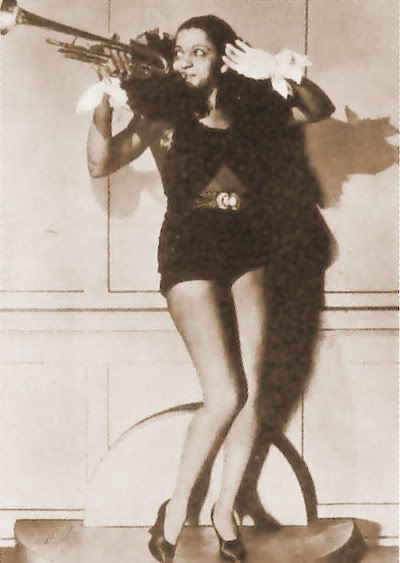
Valaida Snow (1904-1956) was a singer, dancer, and trumpet player (also occasionally playing violin, cello, bass, guitar, accordion, harp, banjo). For short spells, a member of Count Basie and Earl Hines bands, she started touring Europe since late 1920s and recorded many sides in London. In early 1940s, during her stay in Denmark, she was imprisoned by Nazis in Copenhagen and after 18 months of "hard labor" in a camp, she was exchanged with some German prisoners held in the hand of Americans. After returning to US, she resumed her career but didn't have a long life.

There is already one informative mini-documentary about her, available online, so I'm not going to do more musing about her life. The main reason behind remembering her in this post was seeing her performing in a French film from 1939, the last days of peace in Europe. The film is Pièges, directed by German-Jewish emigre Robert Siodmak who later made many classic film noirs in Hollywood (among them Killers, Criss Cross). In this scene from Pièges, Snow performs My sweetheart, accompanied by Freddie Johnson on piano.

But if being a historian from any type - jazz or cinema - carries just one great lesson that justifies a life spent on the things pf the past, that is to be the constructive power of 'doubt' in research. In Valaida Snow's case, let's see what's Jayna Brown perspective in Babylon Girls: Black Women Performers and the Shaping of the Modern.

According to Brown, in December 1940, eight months into the Nazi occupation of Denmark, Snow was not only free, but in no harass, and sipping coffee in the Hotel Sanders in Copenhagen, giving an interview to the provincial newspaper Randers Amtsavis. Brown believes that Valaida Snow "stayed" in Denmark by her own choice, and the story of being a prisoner is absolutely a myth.

When she returned to New York, she claimed in a very well propagandized press coverage, "a story of internment in a Nazi concentration camp, of  starvation, torture, and frequent whippings". According to the Amsterdam News on April 10, 1943, Snow was supposedly "the only colored woman entertainer on record to have been interned a Nazi concentration camp." Brown argues the Amsterdam News article was designed by Snow's manager to garner attention for her come-back show. Nothing more.

Myth or reality, the story of Snow reappeared in popular culture in various forms: two unfruitful film projects (one with Diana Ross) which never came to production; a short story; and recently, a novel by Candace Allen.

When legend becomes the fact, print the legend, said that newspaperman who heard the true story of the man who shot Liberty Valance.

Monday, January 9, 2012

Radio Hawkins#21

RADIO HAWKINS: JAZZ FOR IRAN#21


Shelly Manne
Take the "A" Train
Coleman Hawkins (ts), Hank Jones (p), George Duvivier (b), Shelly Manne (d)
N.Y.C., Februray 1962

Stuff Smith Trio
Hillcrest
Dudley Brooks (p), Stuff Smith (violin), Jess Simpkins (b)
Los Angeles, CA, October 25, 1956

Tubby Hayes Quartet
Tin Tin Deo
Tubby Hayes (tenor sax), Terry Shannon (piano), Jeff Clyne (bass), Phil Seamen (drums)
London?, December, 1959

Jimmy Yancey
How Long Blues
Jimmy Yancey (solo piano)
July 18, 1951

René Thomas Modern Group
A night in Tunisia
Rene Thomas (guitar), Bib Monville (tenor sax), Roland Ronchaud (piano), Benoit Quersin (bass), Jose Bourguignon (drums)
Paris, 1956/3/22

Lambert, Hendricks & Bavan
Yeah, Yeah, Yeah
Clark Terry (t), Coleman Hawkins (ts), Gildo Mahones (p), George Tucker (b), Jimmie Smith (d), Dave Lambert, Jon Hendricks, Yolande Bavan (vocals).
July 5, 1963

Thad Jones Quintet
Billie-Doo
Thad Jones (t), Billy Mitchell (ts), Barry Harris (p), Oercy Heath (b), Max Roach (d)
New Jersey, July 14, 1956

Thad Jones
Something to Remember You By
Thad Jones (t), Kenny Burrell (g)
New Jersey, July 9, 1956

Miles Davis Quintet
Little Melonae
Miles Davis (tp) John Coltrane (ts) Red Garland (p) Paul Chambers (b) Philly Joe Jones (d)
NYC, October 26, 1955

Lester Young-Teddy Wilson Quartet
Louise
Lester Young (ts), Teddy Wilson (p), Gene Ramey (b), Jo Jones (d)
NYC, January 13, 1956

Wynton Kelly Trio & Kenny Burrell
Kelly Roll
Wynton Kelly (p), Kenny Burrell (g), Paul Chambers (b), Jimmy Cobb (d)
NYC?, March, 1964

Monday, January 2, 2012

Rex Stewart in Berlin


Rex was famous for playing trumpet or cornet with valves halfway down and making a very bizarre and funny sound out of the instrument. He could talk with his instrument, well-documented a year before his death in Conversation Piece (Baden, 1966 - here on Spotify). But maybe sometimes he was playing with valves just halfway down, but his heart was always fully up and open.

Barry Ulanov calls Rex Stewart (1907-1967) a "humorist" that could play with the "vigor" and "sweetness", and a "conversationalists" in the real sense of the word. These two qualities links him immediately to two of my all time favorites of that instrument, Louis Armstrong and Cootie Williams. No doubt that Rex took many lessons from the former, and had some influences on the latter. Here I have something special for you to hear: six sides he recorded in post-war Berlin during a visit to the ruined city. 

Rex reminisces that particular trip in his memoir, Boy Meets Horn, with his usual humor and sweetness:

Sunday, January 1, 2012

Radio Hawkins#20: Happy New Year!

راديو هاوكينز: جاز براي ايران
اپيزود بيستم
با آثاري از
ميلت باكنر، بادي تِيت، ژرژ آروانيتا، فيل وودز، احمد جمال، استن گتز، سيدار والتن، كليفورد جردن، بينگ كرازبي و لويي آرمسترانگ، ميلت جكسن و لاكي تامسن

اينجا بشنويد
       
         Download mp3 


Sunday, December 25, 2011

Jazz Is the River: Last Notes from 2011

© Reza Hakimi | Sep 2011
1
This is my last post from the nearly finished year of 2011; a year that was marked by unrest in Middle East, continuance of a crippling recession, and the beginning of a global awakening against the cruelty and injustice of the capitalist system. Jazz had a small role in these affairs. Jazz "occupy", too, since it was and it is the music of social consciousness.

2
In the second half of the year I started my radio programme for Iran. It is obviously a jazz show, broadcasting weekly from an internet-based radio in Atlanta, Georgia. The idea is to bring jazz to a wider audience in Iran, mostly the younger generation who are evidently open to new things. I'm trying to provide an easy to access space that gives them the chance to hear this music, to learn about its history and the people who created it. Some of the shows are my selections of the tunes from different periods and different musicians, and some of them are focused on the lives and career of a particular artist (Billie Holiday, Miles Davis, Bill Evans, etc.). In between, certain themes and concepts in history of this music is explored and explained, among them the theme of "father", or "vibrato in jazz" or as my last programme for the year 2011, "female vocalists of the 1950s." 

Responses, especially from Iran, is heartwarming and despite all the difficulties folks have in Iran to access to the internet, listening to it, or downloading the podcasts, the number of downloads and clicks show it has good number of listeners. I'm really proud of this, and feel that my heavy dues to this music is partially paid by spreading the sound of truth. This activities even were reflected in Canadian CBC radio and they interviewed me about jazz in Iran and my concept of jazz as democracy.

3
Also in the year 2010 some great messengers of jazz left us, among them the departure of George Shearing, Snooky Young, Frank Foster, Ray Bryant and Bob Brookmeyer really broke my heart. The generation of the giants is vanishing and there is nothing we can do about it, except regenerating this music with new talents and new ideas. But even in the second decade of 21th century some of those giants still had extraordinary things to offer. It worth mentioning, among the gigs that attended (mostly at London Jazz Festival) how some of these past masters were as powerful as their 20s and 30s.  I will never forget Cedar Walton Quartet's magical performance at Ronnie Scott's, and Roy Haynes's magnificent combination of jazz and pure theater in Queen Elizabeth Hall, almost a month ago. As Philip Larkin, British poet and jazz critic says "one of the oddest features of the American jazz scene is the way the past refuses to be over." So I would argue there ain't no "past" in jazz. It's all about "now". That aspect of jazz reminds me of great Persian poet Khayyam. Charlie Parker is Khayyam of 20th century. But that's another story!

4
From this so called past, many great recordings shape my thoughts and feelings during the year that witnessed my move from north-eastern Iran, or city of Mashhad to London. Pepper Adams, like any other year, was a major figure, this year with Ephemera. A seminal statement on alto from Mr Phil Woods on Alive And Well in Paris. Thelonious Monk and his London Collection set. Rediscovering John Lewis. Digging Stan Tracey and seeing him in person in Kingstone. Exploring the hard-to-define musical territory of Tony Scott. A moving return to Ted Dunbar. Discovering forgotten masterpieces such as Paul Gonsalves's Humming bird (1970) and Jimmy Hamilton's Can't Help Swingin' (1961). Feeling like going out and shouting the names of Georges Arvanitas or Joe Albany in the open spaces. Getting acquainted to the velvety voice of Kenny Dorham who sings too. Deeply appreciating Charlie Barnet and his 1940s big bands. And finally, thanks to Mosaic and their new Ellington box set spending a golden month just playing those tunes over and over again.

By the way, in my humblest opinion, Teddy Wilson's piano is the best soundtrack for London town. That's enough for now!

5
Many European TVs and news agencies have their own treasure of jazz footage, whether a simple reportage, a proper TV appearance, or recording of a jazz event. Some of these treasures have leaked in the internet and one can find them on Youtube or other assorted websites. Some of them rarely been seen outside their native countries. Jazz archive of French TV, INA.fr, belongs to the latter group. They have many great archival materials that can be accessed on their website.

Unfortunately one have to pay to watch the whole show (and sometimes it's as long as a complete gig), otherwise it suddenly interrupts and leaves you with some regrets of not being able to watch it to the end. A little bit of generosity was needed to at least include one complete tune for free. Anyway, that's French style and segments are still too great to not be missed, including these favorites of mine:

Slide Hampton 1972 Complete 1 2 3 4
Johnny Griffin Trio (Klook & Arvanitas) 1973
and
Duke Ellington solo from 1965. Take the "A" Train is here.

Art Blakey in his INA.fr's interview points out "jazz is like a river, it has to flow." Indeed, it is like a river, and from my point of view, broad enough and deep enough to swim in it, float on it, and occasionally get drowned in it.

6
Some friends and colleagues believe that my appraisal of Nat Hentoff is overstated. This year, reviewing, re-reading and first-reading of his oeuvre showed that it could be anything but overstatement. Still, in my view, he is the best jazz writer we ever had. You can argue that we have better writers in terms of historical accuracy or academic substance, but as a whole, as a Writer, I'll go for Nat. He wrote about me on Wall Street Journal. So maybe 2011 was the most important year of my life, jazzwise!

7
Allow me to bid you a 2011 farewell with Strut that Thing by Clarence Lofton. "Pre-electric recording and dated instrumental technique make the historical sense necessary to enjoy some tracks," says Mr Larkin, "and the gaiety and colour is sometimes tiny and distant, like a miniature." But in this case is as vivid as someone who's playing it "now" and for you. See you next year and don't forget to STRUT THAT THING!


P.S. [28 December]

Duke at the airport, Switzerland, 8/2/1965