It sounds strange and the effect is unfamiliar and archaic. It takes time to get used to one of the most unusual
combos of the swing era -- a sextet with a harpsichord.
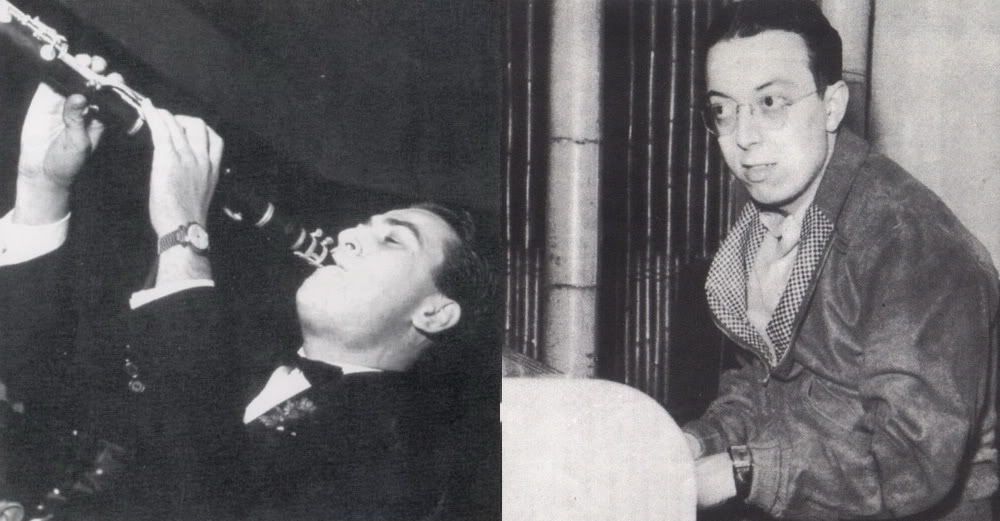
While evidently harpsichord has some capacity for swinging, it also delivers a melancholic feeling as one can hear on the sides recorded in September 3, 1940 in Los Angeles by Artie Shaw and His Gramercy Five. This rather experimental sextet is composed of clarinet, harpsichord, trumpet and the rhythm section.
As far as the history of this Renaissance and Baroque instrument in jazz goes, this session was the first to bring it to jazz. Later, from the same family of instruments, Oscar Peterson recorded with clavichord for Pablo Records.
Johnny Guarnieri, one of the unsung heroes of jazz in swing era, is playing the harpsichord which might explain my repetitious listening of these four sides.
"Guarnieri was all music" wrote Richard Cook about the man who started playing classical piano from the age of ten, but hearing Art Tatum changes his life. Cook also pointed out how Guarnieri could play in almost any style whilst "his basic one was a light, at times frolicsome variation on stride."
On this session, he strides it out with harpsichord.
This would be the final post from the Trumpet Masters' session in Switzerland, a concert whose footage is now fully presented on this blog.
"Handsome, dark chocolate, a ladies magnet," is Clark Terry's description of Harry "Sweets" Edison, the subject of the first video. Terry met Sweets first in the Basie band: "Svelte physique draped in expensive threads, dripping with accents of rich gold and pristine diamonds. The note that floated through his trumpet made you feel his statement of 'Cool Daddy. Laid-back.'"
In today's exclusive video, Squeeze Me, the classic 1925 Fats Waller composition, is reinterpreted by Joe Wilder and Snooky Young. The video continues with Clark Terry and Harry Sweets Edison doing a version of the Moten Swing, originally the Bennie Moten and the Kansas City Orchestra's hit from 1932.
The rhythm section is Hank Jones, Jesper Lundgaard, Clarence Penn, respectively on piano, bass and drums.
Back to the Bern Jazz Festival concerts and the Trumpet Summit session, I have another video to present. This one's from the same session as here and here and here, and features Clark Terry and Harry "Sweets" Edison in a performance of Jive at Five.
CT is very fond of Switzerland. He has played there, especially in Bern, many times over the last 5 decades. Even there is a hotel suite in Bern named after him and I believe he had an operation and treatment in Switzerland at some point, probably related to his cancer.
However, in this concert footage, one can hardly see signs of fatigue or malady. Jive at Five is fun and relaxed, and one of the last documentations of these masters playing and jiving together.
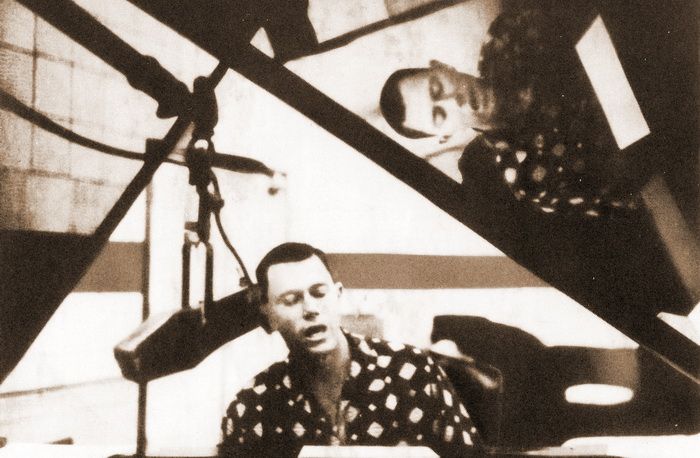
The jazz pianist Paul Smith, also a versatile composer and arranger and a prolific sideman, died at 91. To be honest, I didn't know he was still alive.
The Los Angeles Times reported his passing and added that the man had worked with "such greats as Bing Crosby, Nat 'King' Cole and Dizzy Gillespie...Smith began studying classical piano when he was 8 and joined a professional band in his teens. Over a long career, he recorded more than five dozen albums with his own groups and accompanied many performers, including Sammy Davis Jr., Ella Fitzgerald, Doris Day and the Andrews Sisters. Smith also arranged and performed TV and movie scores as a studio musician. He spent more than 25 years as pianist and music director for The Steve Allen Comedy Hour."
Nearly 60 years ago, Paul Smith who contrasted his size (six-foot-four, over two hundred pounds) with an "extremely deft and delicate touch at the piano," was introduced in the liner notes of one of his early recordings as "a brilliant young pianist who plays classics, 'pop' tunes, and modern jazz with equal facility, and as a result is one most sought after studio musicians in Hollywood. In past years he's been both performer and arranger with leading dance bands and musical groups throughout the country."
Rex was famous for playing trumpet or cornet with valves halfway down and making a very bizarre and funny sound out of the instrument. He could talk with his instrument, well-documented a year before his death in Conversation Piece (Baden, 1966 - here on Spotify). But maybe sometimes he was playing with valves just halfway down, but his heart was always fully up and open.
Barry Ulanov calls Rex Stewart (1907-1967) a "humorist" that could play with the "vigor" and "sweetness", and a "conversationalists" in the real sense of the word. These two qualities links him immediately to two of my all time favorites of that instrument, Louis Armstrong and Cootie Williams. No doubt that Rex took many lessons from the former, and had some influences on the latter. Here I have something special for you to hear: six sides he recorded in post-war Berlin during a visit to the ruined city.
Rex reminisces that particular trip in his memoir, Boy Meets Horn, with his usual humor and sweetness:
The son of George Waldemar and Ethel Irene Nelson, Ozzie Nelson was born in Jersey City, New Jersey. His ancestry was Swedish and English. Nelson was raised in Ridgefield Park. He graduated from Ridgefield Park High School, where he played on the American football team. He graduated from Rutgers University, where he also played football despite his slight build. He entered Rutgers School of Law Newark. As a student he made pocket money playing saxophone in a band and coaching football. During the Depression he turned to music as a full-time career.
Ozzie started his entertainment career as a band leader. He formed and led the Ozzie Nelson Band, and had some initial limited success. He made his own 'big break' in 1930. The New York Daily Mirror ran a poll of its readers to determine their favorite band. He knew that news vendors got credit from the newspaper for unsold copies by returning the front page and discarding the rest of the issue. Gathering hundreds of discarded newspapers, the band filled out ballots in their favor. They edged out Paul Whiteman and were pronounced the winners.
From 1930 through the 1940s Nelson's band recorded prolifically—first on Brunswick (1930-1933), then Vocalion (1933-1934), then back to Brunswick (1934-1936), Bluebird (1937-1941), Victor (1941) and finally back to Bluebird (1941-through the 1940s). Nelson's records were consistently popular and in 1934 Nelson enjoyed success with his hit song, "Over Somebody Else's Shoulder" which he introduced. Nelson was their primary vocalist and (from August 1932) featured in duets with his other star vocalist, Harriet Hilliard. Nelson's calm, easy vocal style was popular on records and radio and quite similar to son Rick's voice and Harriet's perky vocals added to the band's popularity.
In 1935, Ozzie Nelson and His Orchestra had a number one hit with "And Then Some", which was number one for one week on the U.S. pop singles chart. Ozzie Nelson composed several songs, including "Wave the Stick Blues", "Subway", "Jersey Jive", "Swingin' on the Golden Gate", and "Central Avenue Shuffle".
In October 1935 he married the band's vocalist Harriet Hilliard. The couple had two children. David, born in 1936, became an actor and director. Eric "Ricky" born in 1940, became an actor and singer, as we remember him in Rio Bravo with John Wayne.
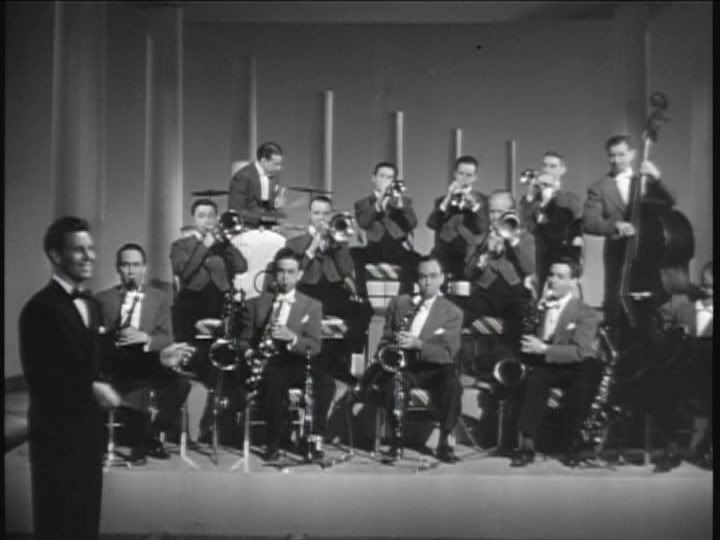
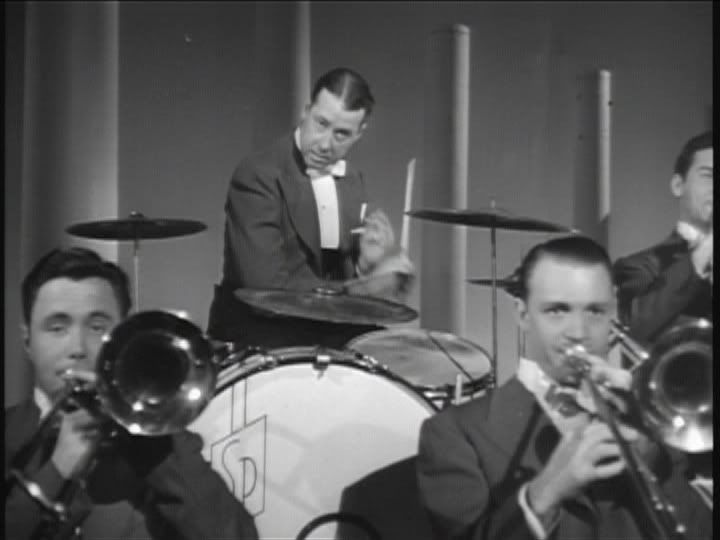
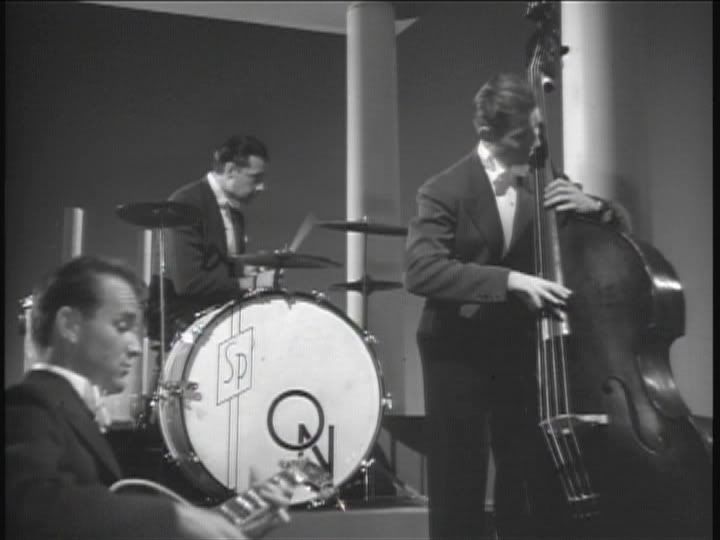
Ozzie Nelson appeared with his band in feature films and short subjects of the 1940s, and often played speaking parts, displaying a tongue-in-cheek sense of humor (as in the 1942 musical Strictly in the Groove). He shrewdly promoted the band by agreeing to appear in Soundies, three-minute musical movies shown in "film jukeboxes" of the 1940s. In 1952, when he and his family were established as radio and TV favorites, they starred in a feature film, Here Come the Nelsons (which actually doubled as a "pilot" for the TV series).
In the 1940s, besides band appearances, he and Harriet had been regulars on Red Skelton's radio show. He developed and produced his own radio series, The Adventures of Ozzie and Harriet. The show went on the air in 1944, with their sons played by actors until 1949, and in 1952 it moved over to television (the radio version continued for another two years).
In 1973, Ozzie Nelson published his autobiography, Ozzie. He suffered from recurring malignant tumors in his later years, died of liver cancer and is interred with his wife and son Ricky in the Forest Lawn - Hollywood Hills Cemetery in Los Angeles, California.
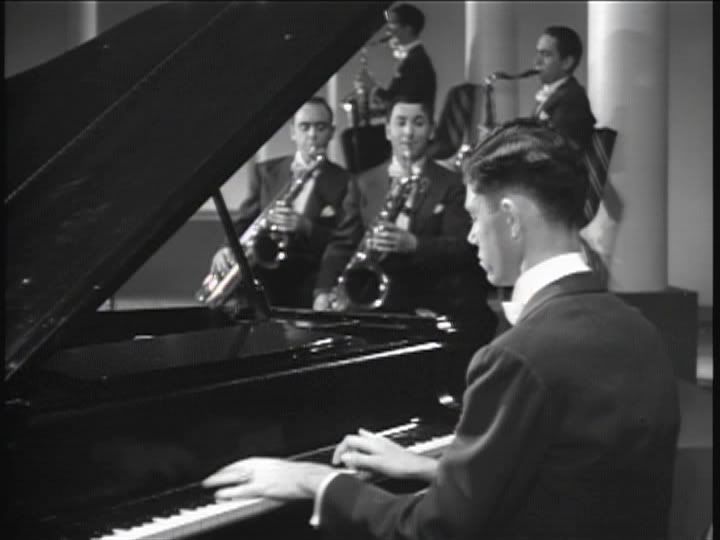
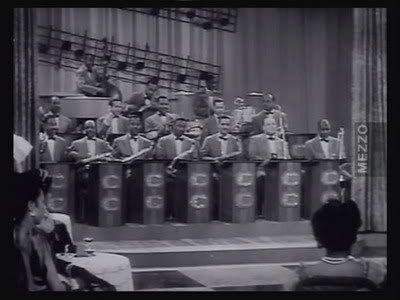
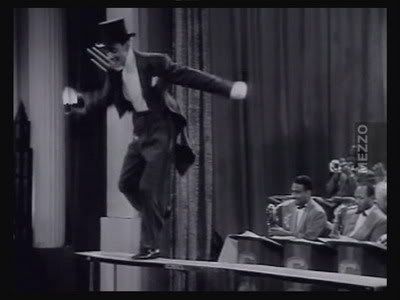
Stills from Jean Negulesco's short film, made in 1943.
Information from Wikipedia.
A new interest, a historical obsession and a sense of discovery, regarding the unsung heroes of jazz has been awakened in me since hearing this Mr. Babe Russin, a prolific tenor sax player with a warm swinging sound, close to what you hear from cats like Flip Phillips.
Irving "Babe" Russin (June 18, 1911 - August 4, 1984) was born in a musical family in Pittsburgh, Pennsylvania. His pianist brother was already playing in Red Nicholas band that Babe began playing professionally with the California Ramblers in 1926, Smith Ballew Orchestra, 1926-27, when he was only 15 years old. Working on and off with Red Nichols, from 1927 to 1933. He toured in Europe in 1928. His relationship with Nichols was interrupted by a run with the Ben Pollock combo. Russin became a staff musician for the CBC network in the '30s, but grew restless for music with some solo space and took an offer to work in the Benny Goodman band. A member of Goodman orchestra in legendary Carnegie Hall concert. Even there is a note of a brief join up with Count Basie Orchestra (any information regarding this Basie affair will be welcomed) Later, he joined the Tommy Dorsey band, then led his own outfit in the early part of the '40s, working out of Florida as well as New York City. His next stop was Glenn Miller's orchestra, where he soloed in the recording the Glenn Miller band made of Jerry Gray's composition, A String of Pearls for Bluebird Records in 1941 - a hit song. With Tommy Dorsey, 1942-43, and with Jimmy Dorsey's band from 1942 to 1944, then played in an armed forces band through the second World War. In the late '40s he patched things up with Goodman.
Babe Russin (middle), Trummy Young (left), Barney Bigard (right)
He appears briefly in the 1953 movie, The Glenn Miller Story. Plays on the soundtrack to the 1954 A Star is Born. He also appears in the The Benny Goodman Story, a 1956 bio-pic jazz film about his old pal. As he got older, he preferred the life of a studio musician in California, although reunions of the Goodman band would often include him in the saxophone section. He has one album, under his name, for DOT records label, To Soothe the Savage (1956), which I have no trace of . He was still in business till 70s, when he was touring in the new nostalgic big bands, playing in European jazz festivals. He was highly influenced by Coleman Hawkins but playing in the most famous swing bands of the 20th century redirect his blowing to a more soft, swinging way.
A quick inquiry at my catalog of jazz recordings, revealed that his name is repeated over a period of 30 years, in numerous records, including with these artists:
Miff Mole, 1929. Red Nichols, late 1920s, early 1930s. Jack Teagarden, late 1920s, early 1930s. Bunny Berigan, 1930s. Lester Young, late 1930s. Roy Eldridge, 1935-40. Lionel Hampton, 1930s to 1940s. Billie Holiday, late 1930s, early 1940s. Benny Carter, mostly 1940s. Louis Armstrong, late 1940s, early 1950s. Jess Stacy, 1954.
His fruitful singers period in the late 1940s and all of the 1950s with: Frank Sinatra Sarah Vaughan Dinah Washington Ella Fitzgerlad Mel Tormé
And now, let's hear him from a V-Disc recording (though it's after war) by Jimmy Mundy, waxed in late March 1946 in Los Angeles, called Hello, Goodbye, Forget It. First sax solo belongs to Babe. Other musicians are: Trumpet section - Clyde Hurley, Ray Linn, Walter Williams, McClure Morris. A superb trombone section - Juan Tizol, Britt Woodman, Henry Cocker, Vemon Brown. Alto sax - Willie Smith, Les Robinson. Baritone Sax - Dick Clark. Piano - Milt Raskin Guitar - Irving Ashby Bass - Art Shapiro Drums - Ray Hagen
Provoked by Ian of the Villes Ville latest post on Dorsey brothers, I came to the conclusion to have my own tribute to brothers by pointing at their only feature film. I have a larger plan to review their released materials from Chronological Classics series which I'm working on.
My introduction to jazz was from movies. Jazz or any kind of western music wasn't - and still is not - available in my country so I dug this music from passages of classic films. And discovering Dorsey brothers happened when me and my two kid sisters were watching a VHS copy of Roy Del Ruth's 1943 musical, Du Barry was a lady. Still remembering the yellow coats and blue one of Tommy and smiling Buddy Rich on drum, I fell in love with the drive of the tune and colorization of the song by each fiery solos of trumpet.
Later on, I did own my first Dorsey CD from Jimmy Dorsey, and strange enough, not Tommy. A couple of years ago, my uncle jazzy, Reza Poodat, gave me a triple disc collection of Jimmy's orchestra, and a note attached to the box:
It should be called Dorsey goes Latin or something to that effect. Dorsey was one of the alto sax and clarinet giants. He could play his ass off whenever it came to twisting and turning that damned instrument. He went as far as to influence our good old Charlie [Parker]. He had a very famous Cherokee part that would knock Bird out. Another thing is the voice of this cat bob Eberle. He has a better voice than many other supposed singer babes. Strong, emotional, wide open, however with a limited range. Bob is a good singer. Dig him!
I took the advise and start digging Jimmy more and more. After a while it was my turn to knock uncle Reza down by delivering him the 1947 film, directed by Alfred E. Green, The Fabulous Dorseys, where Jimmy and Tommy are playing themselves in a mediocre musical melodrama. Both the Jimmy Dorsey Orchestra (with Serge Chaloff on baritone sax) and the Tommy Dorsey Orchestra (with Abe Most and Alvin Stoller, drs) appear, with guests Bob Eberle, Stuart Foster, Mike Pingitore, Helen O'Connell, Henry Busse and Paul Whiteman. Arthur Shields, one of John Ford's favorite Irish actors, is playing the role of Dorsey the father. Film tells the story of Tommy and Jimmy , from their boyhood in Shenandoah, Pennsylvania through their rise, their breakup, and their personal reunion. Typical of many backstage musicals of the 1930s and 1940s. Then, after 5 reels have passed, comes on of the most atmospheric jam session ever captured on big screen. The brothers go to the Art Tatum club, where God is playing his keyboard. Out of nowhere Charlie Barnet (alto sax), Ziggy Elman (trumpet), Sam Herman (guitar), Sid Bloch (bass) and Ray Bauduc (drums) drop in and turn the place upside down. This scene alone worth 10 Technicolor musical.
Thank heavens, the film is a public domain and it's possible to watch it free, here.
More information Music Directed/Conducted by: Louis Forbes Music Arranged by: Bill Finegan Songs: "At sundown" by Walter Donaldson; "I'll never say ‘never again' again" by Harry Woods; "To me" by Allie Wrubel, Don George; "Green eyes" by Nilo Menendez, Adolfo Utrera, E. Rivera, Eddie Woods; "Dorsey concerto" by Leo Shuken, Ray Bauduc; "Art's blues" by Art Tatum; "Everybody's doin' it", "Marie" by Irving Berlin; "The object of my affection" by Pinky Tomlin, Coy Poe, Jimmie Grier; "Runnin' wild" by Joe Grey, Leo Wood, A. Harrington Gibbs; "When you and I were young, Maggie" by James Austin Butterfield, George W. Johnson; "Waitin' at the gate for Katy" by Richard A. Whiting, Gus Kahn.
The tune was Volare. It suddenly appeared while iPod was doing his shuffle thing, jumping from New Orleans in her heydays to a dying super stereo session in New York of the late 1960s. This uninvited Volarewas a part of a heritage inherited to me from my friend/Uncle Ali-Reza. To listen to anything from his treasury, one needs wide open ears and Volareproved it one more time. Volarestarted with a bright swinging vibe introduction by master Lionel Hampton that session was recorded under his leadership as Lionel Hampton and Friends in 1977.
Then came the moment: one of the most floating sounds ever produced of strings. A Swing in full force, but at ease and like the sound of a man who is enjoying every breath he breathes. Life was glowing from every little note he was playing. His vibration was like a heartbeat: gentle, necessary and steadfast. A quick look at my discography book revealed his name: Bucky Pizzarelli. That was the first time I heard him and I won’t never forget that 'First.'
John Paul "Bucky" Pizzarelli (born January 9, 1926) is an American Jazz guitarist that has been a fixture in jazz and the studios since the early '50s. Self-taught, Pizzarelli has long been a master of the seven-string guitar. He toured with Vaughn Monroe before and after a stint in the military. In 1952, he joined the staff of NBC and 12 years later switched to ABC; in addition, he worked with the Three Sounds (1956-1957) and had several tours with Benny Goodman. In the 1970s he was more active in jazz, co-leading a duo with George Barnes and working with Zoot Sims, Bud Freeman, and StéphaneGrappelli, among many others. Pizzarelli acknowledges Django Reinhardt and Freddie Green for their influences on his style and mode of play. He is 84 now, still alive and on.
آلبوم دوشنبه ها، پس از دو هفته:سال فرنگی عوض شد و تقریباً هفت ماه از عمر این وبلاگ گذشت. به شهادت "سایت میتر" که مثل کنتور آب و برق آمار بازدیدکنندگان و ممالکی که از آنها آمده اند را نشان می دهد – و خودتان در پایین ترین قسمت صفحه می توانید وارد آن شوید – بیشتر بازدیدکنندگان این وبلاگ (77 درصد) از کشورهایی غیر از ایران بوده اند و این می تواند نشان دهنده شکست نسبی من در این چندماه باشد. نیت اصلی این وبلاگ معرفی موسیقی جاز به خواننده ایرانی بود، اما به نظر در نزدیک شدن به آن چندان موفق نبوده ام. هنوز مطمئن نیستم که گذاشتن بخش های فارسی معنایی دارد یا می توان آن ها را حذف کرد و به این فرض اکتفاء کرد که آن 23 درصد خواننده فارسی زبانی که به این موسیقی علاقه دارند می توانند به انگلیسی هم گلیم خودشان را از آب بیرون بکشند. اما لذت فارسی نویسی و حرف زدن به زبان مادری درباره چیزی که تمام زندگی ات را وقفش کرده ای – به قول یکی از دوستانم "وقف صدا" ! – مانع از این می شود که در این باره عجولانه تصمیم بگیری. من در سال 2010 میلادی هم به روش سابق خود ادامه می دهم، اما از نوروز و سال نوی خورشیدی این اجازه را به خودم می دهم تا در صورت نرسیدن به نتیجه ای روشن تصمیم تازه ای درباره این وبلاگ بگیرم.
اما آلبوم امروز یکی از شاهکارهایی است که برای خودم هم تازگی دارد و هنوز دو ماه نیست که شروع به شنیدن آن کرده ام. این آلبوم حاصل ملاقات دوک الینگتون (آسمان) با کنت بیسی (زمین) است، ملاقات دوک و کنت مانند ملاقات پادشاهان مملو از جلال و شکوه و زیبایی توأم با تواضع دو غول بزرگ تاریخ موسیقی جاز است. آنها تقریباً یکی درمیان آهنگ های همدیگر را اجرا می کنند؛ اجراهای الینگتونی ازاستانداردهای کنت و اجراهای بیسی وار از بزرگ ترین تصنیفات الینگتون (و بیلی استری هورن)، با اضافه یکی دو قطعه بی نظیر که احتمالاً مخصوص همین دیدار نوشته شده است. چندجای آلبوم گفتگوی دو پیانیست شنونده را میخکوب می کند. آنها با تواضع در کنار هم سویینگی جانانه می کنند و سولوهایی عالی را در اختیار نوازندگان متشخصشان می گذارند. در این CD تازه چند تِرَک اضافه هم وجود دارد که آهنگ های اوتی (اجراهای ناقص یا خارج یا ایراددار) و تمرین هاست. محیط استودیو را بر مبنای این چند قطعه محیطی گرم و دوستانه و برخلاف دیدارهای مشابه میان غول ها که معمولاً مملو از تنش است، در اوج روحیه جمعی دو ارکستر بزرگ می بینیم.
آلبوم را در سه بخش الف، ب و جیم می توانید دانلود کنید و امیدوارم شما هم قدر این نشست ضبط جادویی را بدانید.
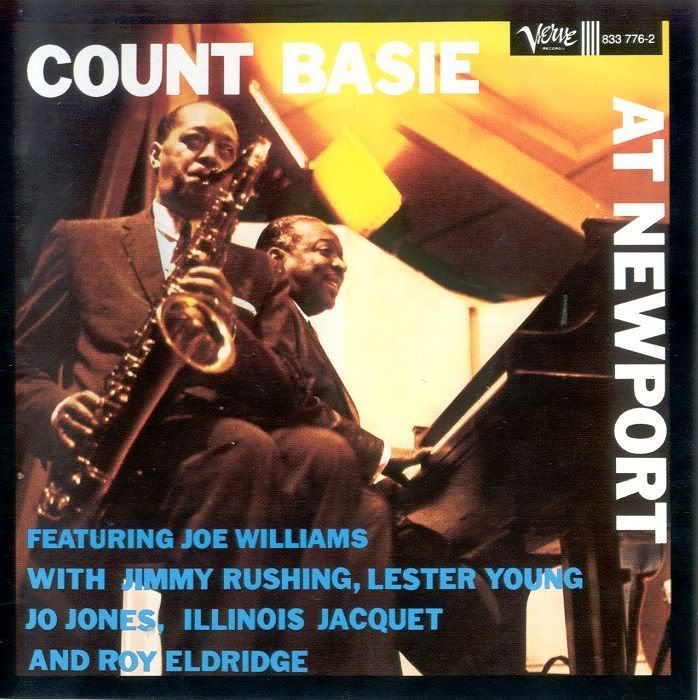
یکی از بهترین آلبوم هایی که در زندگی ام شنیده ام این کار درجه یک کنت بیسی در فستیوال جاز نیوپورت (نیویورک) 1957 است، کنسرتی که رفقای قدیم بیسی - لستر یانگ، ایلی نوی جکت، جو جونز و روی الدریج - با آدم های همیشگیاش مثل جیمی راشینگ، جو ویلیامز، سانی پین و فردی گرین و دیگران را دور هم جمع می کند تا برای یک ساعت برق از سر شنونده فستیوال، و امروز شنونده آلبوم ضبط شده، بپراند. جان هاموند اعضای گروه را معرفی می کند و بین اجراها با شعف از بیسی و مردانش حرف می زند. "سویینگ در نیوپورت" که مخصوص این واقعه نوشته شده آغازگر آلبوم و یکی از بهترین قطعات است. بعد از مدتی که یاران قدیم می آیند آلبوم شتاب و جانی می گیرد که دیگر هیچ چیز نمی تواند متوقفش کند. آلبوم را این جا بشنوید.