Saturday, July 30, 2011

Count Basie Band Plays Frank Foster Compositions

فرانك فاستر (چپ) با ادي لاك جا ديويس

بيشتر به ديوانگي مي‌ماند كه بخواهم دربارۀ فرانك فاستر با خواننده فارسي زبان وارد گفتگو شوم. آمار بازديدهاي اين سايت از ايران آن‌قدر كم بود كه بشود آن را بهانه كرد و براي ماه‌ها فارسي نوشتن را كنار گذاشت. از طرفي هميشه اين احتمال مي‌رود كه روش من، آن‌چه در اين‌جا نوشتم، و نام‌هايي كه از آن‌ها ياد كردم جذابيتي براي خوانندگان فارسي نداشته است. شايد اين طور باشد، اما معنايش اين نيست كه قصدي براي تغيير روش وجود دارد.
فرانك فاستر، متولد 23 سپتامبر 1928 و متوفي در 26 جولاي 2011 نوازندۀ ساكسفون تنور، سوپرانو و فلوت بود. اما تمركز ما در اين‌جا بر روي تخصص ديگر او، نوشتن موسيقي و تنظيم قطعات براي اركسترهاي بزرگ بود. اركستري كه بيشترين خير را از اين استعداد فاستر ديد، اركستر كنت بيسي بود. باقي قضايا را در اين فايل صوتي بشنويد كه از روي نوار آنالوگ پياده شده:

Tuesday, July 26, 2011

A Guide to Best Jazz Scores for Cinema#5

5
Ray Heindorf
Pete Kelly's Blues
1955
Jack Webb


Arranged by: Matty Matlock. Musicians: Teddy Buckner (cornet), Moe Schneider (tr), Matty Matlock (clarinet), Eddie Miller (ts), Ray Sherman (p), George Van Eps (g), Jud de Naut (b), Nick Fatool (d).

Ella Fitzgerald (vocal, also appears as Maggie Jackson), Don Abney (p), Joe Mondragon (b), Larry Bunker (d).
Peggy Lee as Rose Hopkins.

Ella and her trio (as above) perform Hard Hearted Hannah (The Vamp of Savannah)


4
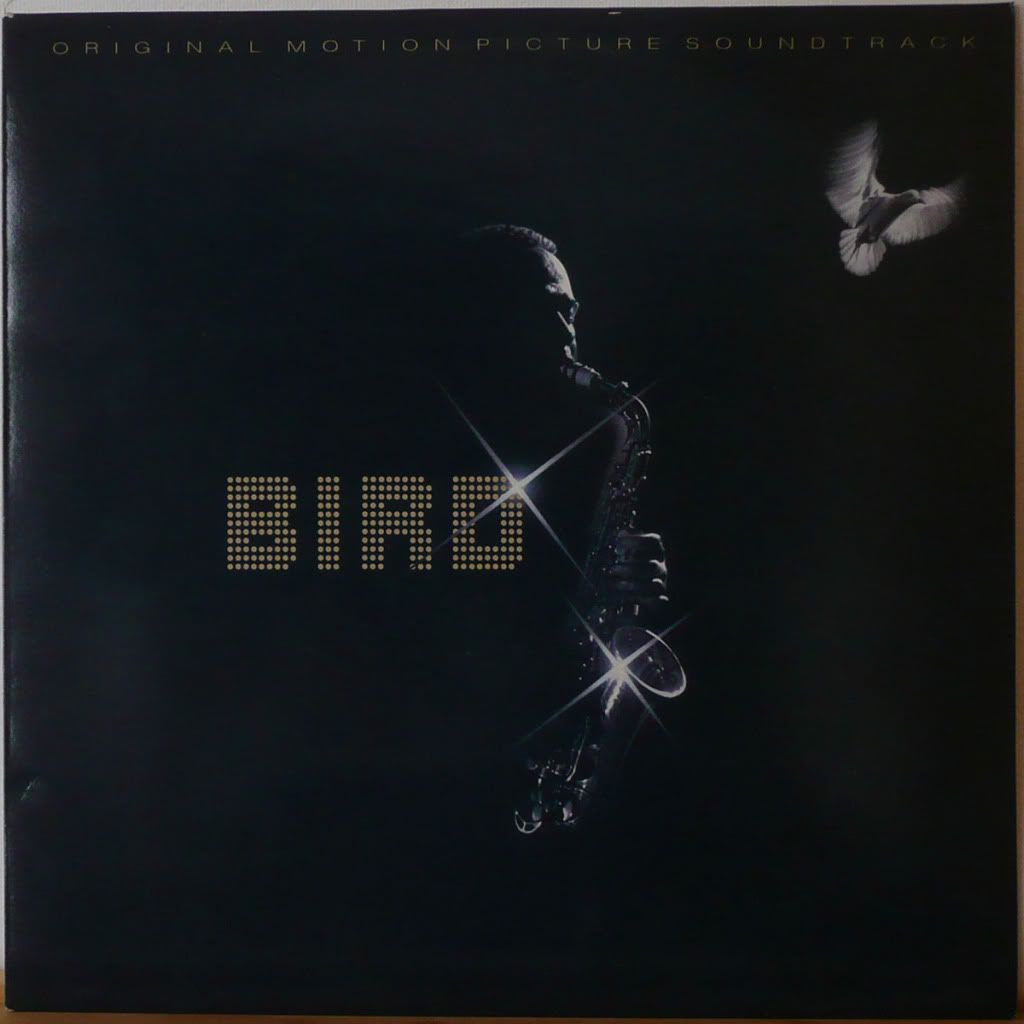
Lennie Niehaus
Bird
1988
Clint Eastwood

Musicians: Charlie Parker (as) [original rec. Alto track only], Lennie Niehaus (as) [filled in a few bars here and there], Pete Jolly (p) [solos], Tommy Tedesco (g), Charlie Shoemake (vib) .
trumpets: Jon Faddis, Red Rodney
alto saxes: James Rivers, Charles McPherson
pianists: Monty Alexander, Barry Harris, Mike Lang, Walter Davis, Jr.
bassists: Ray Brown, Chuck Berghofer, Chuck Domanico, Ron Carter
drummer: John Guerin

According to David Meeker "this movie contains some of the most complex and successful music tracks ever created for the director rightly insisted that original Charlie Parker solos must be used. Lennie Niehaus and his team, particularly recording engineer Bobby Fernandez, therefore cleaned up the original records electronically, isolated Bird's solos and re-recorded them with new backing groups."

Lover Man


3
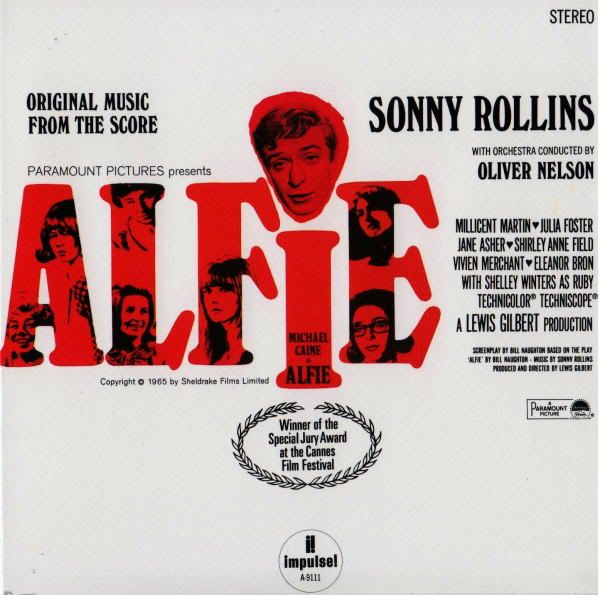
Sonny Rollins
Alfie
1965
Lewis Gilbert


Musicians: Keith Christie (tr), Sonny Rollins, Ronnie Scott, Tubby Hayes (ts), Stan Tracey (p), Dave Goldberg (g), Johnny Hawksworth (b), Phil Seamen (d).
Listen to the Alfie's theme


2
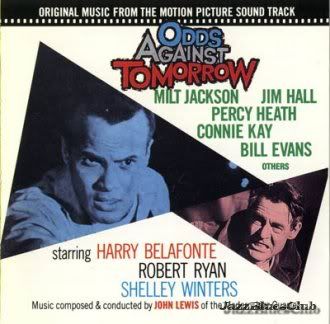
John Lewis
Odds Against Tomorrow
1959
Robert Wise


Musicians: John Lewis/Bill Evans (p), Jim Hall (g), Milt Jackson (vib), Percy Heath (b), Connie Kay (d) + orchestra which included Joe Wilder, fluegel horn.
Listen to main theme (Odds Against Tomorrow)


1
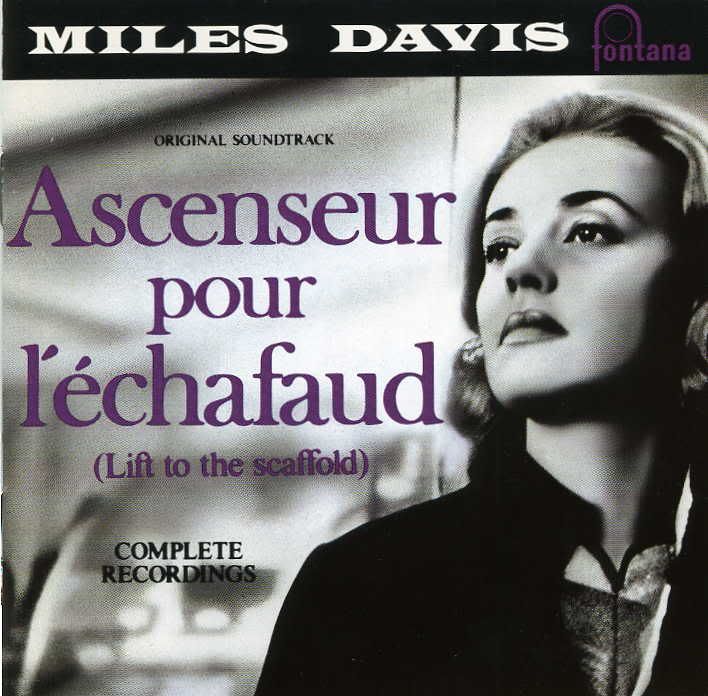
Miles Davis
Ascenseur pour l'échafaud
1957
Louis Malle

Musicians: Miles Davis (t), Barney Wilen (ts), René Urtreger (p), Pierre Michelot (b), Kenny Clarke (d) .

Nuit sur les Champs-Élysées


Return to Part 4

Saturday, July 23, 2011

A Guide to Best Jazz Scores for Cinema#4

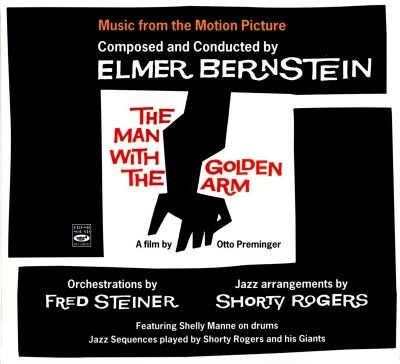
10
Elmer Bernstein
The Man With The Golden Arm
1955
Otto Preminger

Jazz parts arranged by: Shorty Rogers. Musicians: Shorty Rogers/Pete Candoli/Conte Candoli/Bob Fleming (t), Ray Sims/Milt Bernhart/Frank Rosolino (tr), Bill Holman/Jack Montrose/Jimmy Giuffre/Ted Nash/Bud Shank/Bob Cooper (reeds), Martin Ruderman (f), Arnold Koblentz (oboe),  Mitchell Lurie (clar), Joseph Eger (french horn), Anatol Kaminsky (violin), Armand Kaproff (cello), Ray Turner/Lou Levy (p)/Joe Mondragon/Abe Luboff/Ralph Pena (b), Shelly Manne (d).

Drummer Shelly Manne was also credited as ‘personal assistant' to Mr Preminger and as ‘tutor' to Mr Sinatra. 
Clark Street from the soundtrack


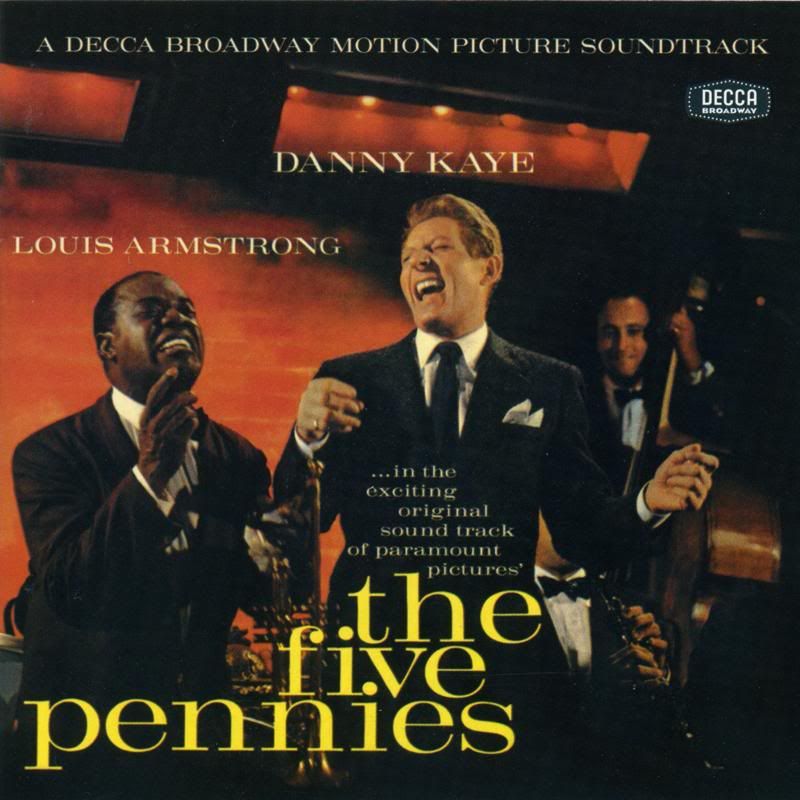
9
Leith Stevens
The Five Pennies
1959
Melville Shavelson

Music Arranged by: Heinie Beau, Benny Carter, Alexander Courage. Musicians: Red Nichols (t), Moe Schneider (tr), Heinie  Beau (clar), Benny Carter (as), Eddie Miller (ts), Wayne Songer (bs), Joe Rushton (bass sax), Gene Plummer (p), Morty Corb (b), Shelly Manne (d), Eileen Wilson (voc).

With appearences by Shelly Manne (as Dave Tough) and Louis Armstrong (t/voc), Trummy Young (tr), Peanuts Hucko (clar), Billy Kyle (p), Mort Herbert (b), Curtis Counce (b), Danny Barcelona (d).


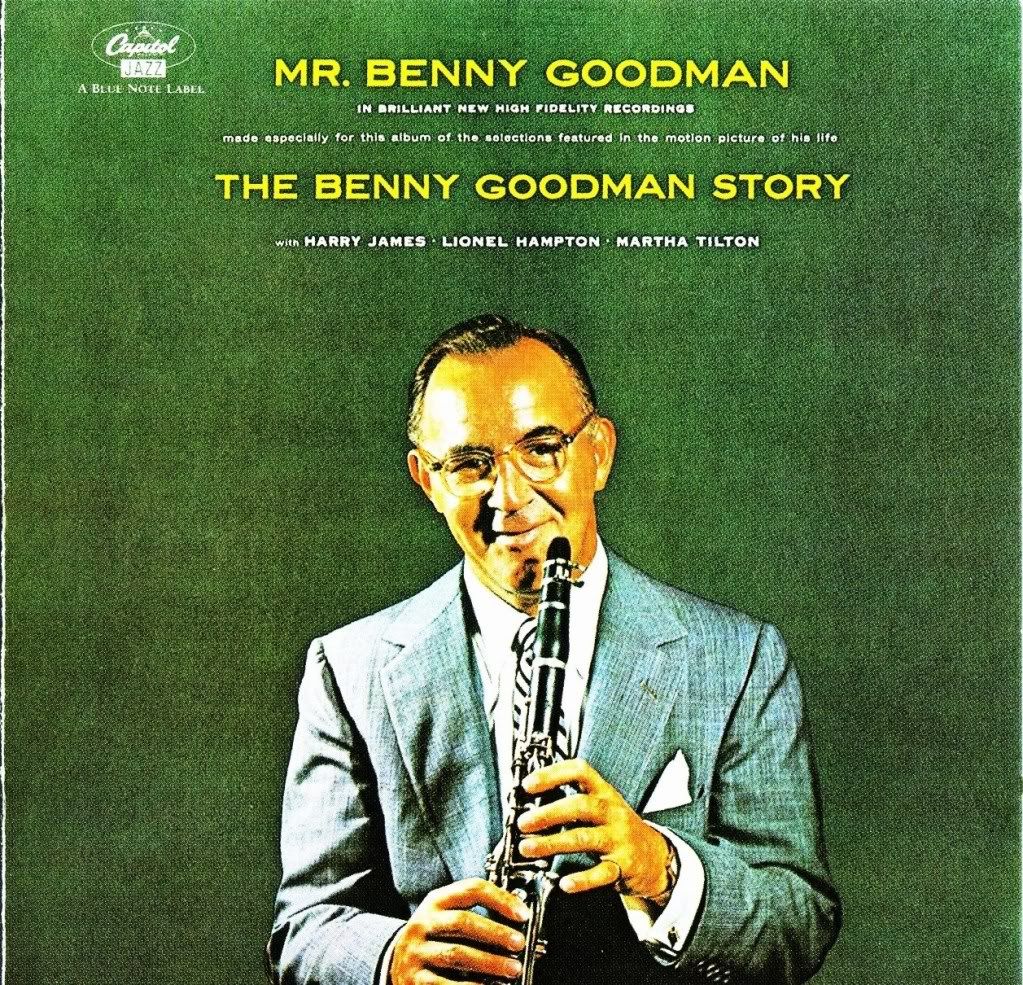
8
Henry Mancini/Benny Goodman
The Benny Goodman Story
1955
Valentine Davies

Musicians:
clarinet: Benny Goodman and Sol Yaged.
saxes: Hymie Schertzer, Blake Reynolds, Stan Getz, Babe Russin.
trumpets: Buck Clayton, Chris Griffin, Conrad Gozzo, Irving Goodman.
trombones: Urbie Green, Murray McEachern, Jimmy Priddy.
Rhythm section: Teddy Wilson (p), Allan Reuss (g), George Duvivier (b), Corky Hale (harp), Gene Krupa (d).

Also with appearances by Lionel Hampton, Teddy Wilson, Gene Krupa, Ben Pollack, Kid Ory, Urbie Green, Buck Clayton, Stan Getz, Harry James, Martha Tilton, Ziggy Elman, Alvin Alcorn.

Sing, Sing, Sing


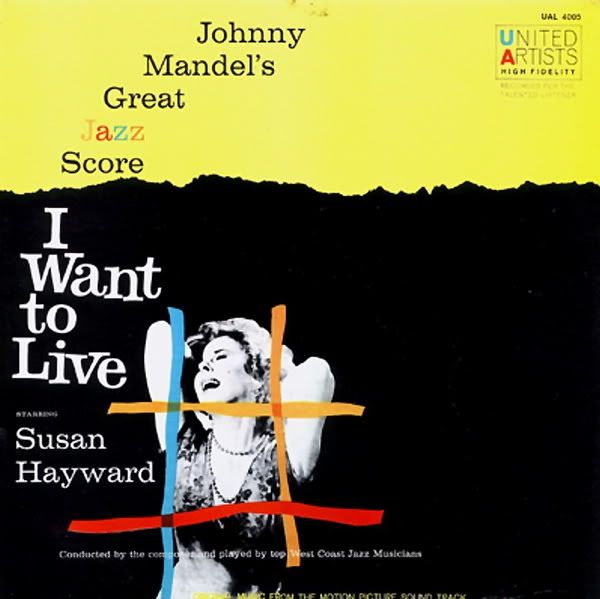
7
Johnny Mandel
I Want to Live!
1958
Robert Wise

Musicians:
trumpets: Jack Sheldon, Al Porcino, Ed Leddy.
trombones:Frank Rosolino, Milt Bernhart, Dave Wells.
French horns: Vince DeRosa, Sinclair Lott, John Cave, Dick Parisi.
piccolo, flutes: Harry Klee.
clarinets: Abe Most, Joe Maini, Bill Holman, Marty Berman.
saxes: Bill Holman, Chuck Gentry.
pianists: Russ Freeman, Pete Jolly.
guitar: Al Hendrickson.
bass: Red Mitchell.
drummers: Shelly Manne, Larry Bunker, Mel Lewis, Milt Holland, Mike Pacheco.

In the opening jazz club sequence, Art Farmer (t), Frank Rosolino (tr), Bud Shank (as),  Gerry Mulligan (bs), Pete Jolly (p), Red Mitchell (b), Shelly Manne (d) appear as themselves.
The title music


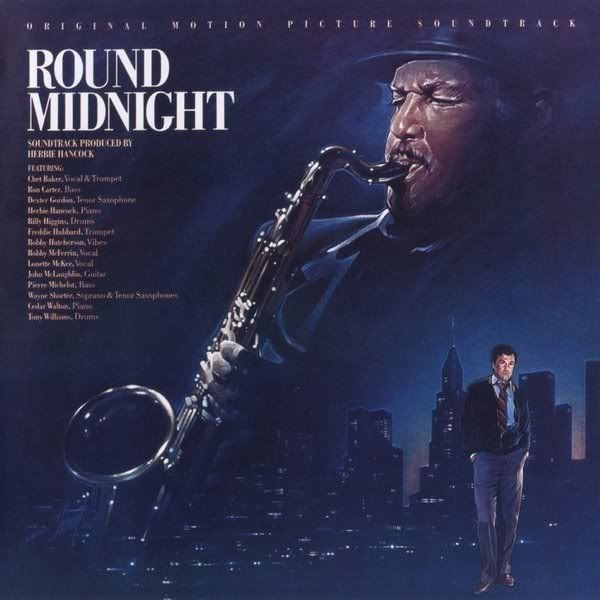
 6
Herbie Hancock
Round Midnight
1986
Bertrand Tavernier

Musicians: It worth mentioning all line-ups in the film
Herbie Hancock (p), Ron Carter (b), Tony Williams (d), Bobby McFerrin (voc)
Dexter Gordon (ts), Herbie Hancock (p), Pierre Michelot (b), Billy Higgins (d)
Herbie Hancock (p), John McLaughlin (g), Pierre Michelot (b), Billy Higgins (d)
Chet Baker (t/voc), Herbie Hancock (p), Pierre Michelot (b), Billy Higgins (d)
Dexter Gordon (ts), Bobby Hutcherson (vib), Herbie Hancock (p), Pierre Michelot (b), Billy Higgins (d)
Wayne Shorter (ts), Herbie Hancock (p), Pierre Michelot (b), Billy Higgins (d)
Dexter Gordon (ts), Herbie Hancock (p), Pierre Michelot (b), Billy Higgins (d), Lonette McKee (voc)
Freddie Hubbard (t), Dexter Gordon (ts), Cedar Walton (p), Ron Carter (b), Tony Williams (d)

Listen to Round Midnight (a Monk composition) performed by Hancock/Carter/Williams/McFerrin


Return to Part 3                                                     Go to Part 5

Tuesday, June 28, 2011

A Guide to Best Jazz Scores for Cinema#3

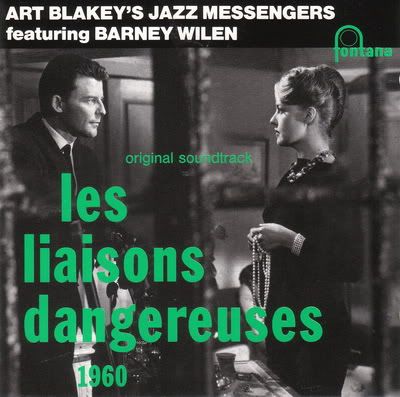
15 
Art Blakey and Barney Wilen
Les Liaisons Dangereuses 1960
1959
Roger Vadim

Musicians: Lee Morgan, trumpet; Barney Wilen, tenor sax, soprano sax; Bobby Timmons, Duke Jordan, piano; Jymie Merritt, bass; Art Blakey, drums; John Rodriguez, bongos; Tommy Lopez, Willie Rodriguez, congas. In party sequence: Charlie Rouse, Barney Wilen, tenor sax; Thelonious Monk, piano; Sam Jones, bass; Art Taylor, drums. Appearing as themselves: Kenny Dorham, trumpet; Barney Wilen, tenor sax; Duke Jordan, piano; Paul Rovere, bass; Kenny Clarke, drums.

Listen to No Problem, composed by Duke Jordan, from the soundtrack:


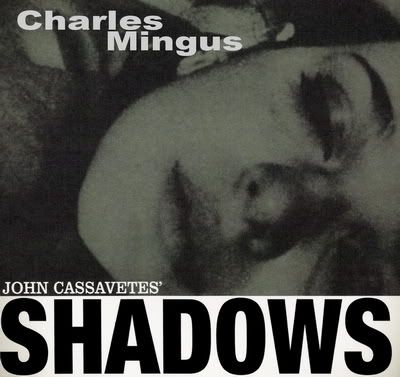
14
Charles Mingus and Shafi Hadi
Shadows
1958
John Cassavetes

Musicians: Shafi Hadi (Curtis Porter), sax solos; (possibly) Anthony Ortega, reeds; Jimmy Knepper, trombone; Phineas Newborn Jr., Horace Parlan, piano; Charles Mingus, bass; Dannie Richmond, drums.


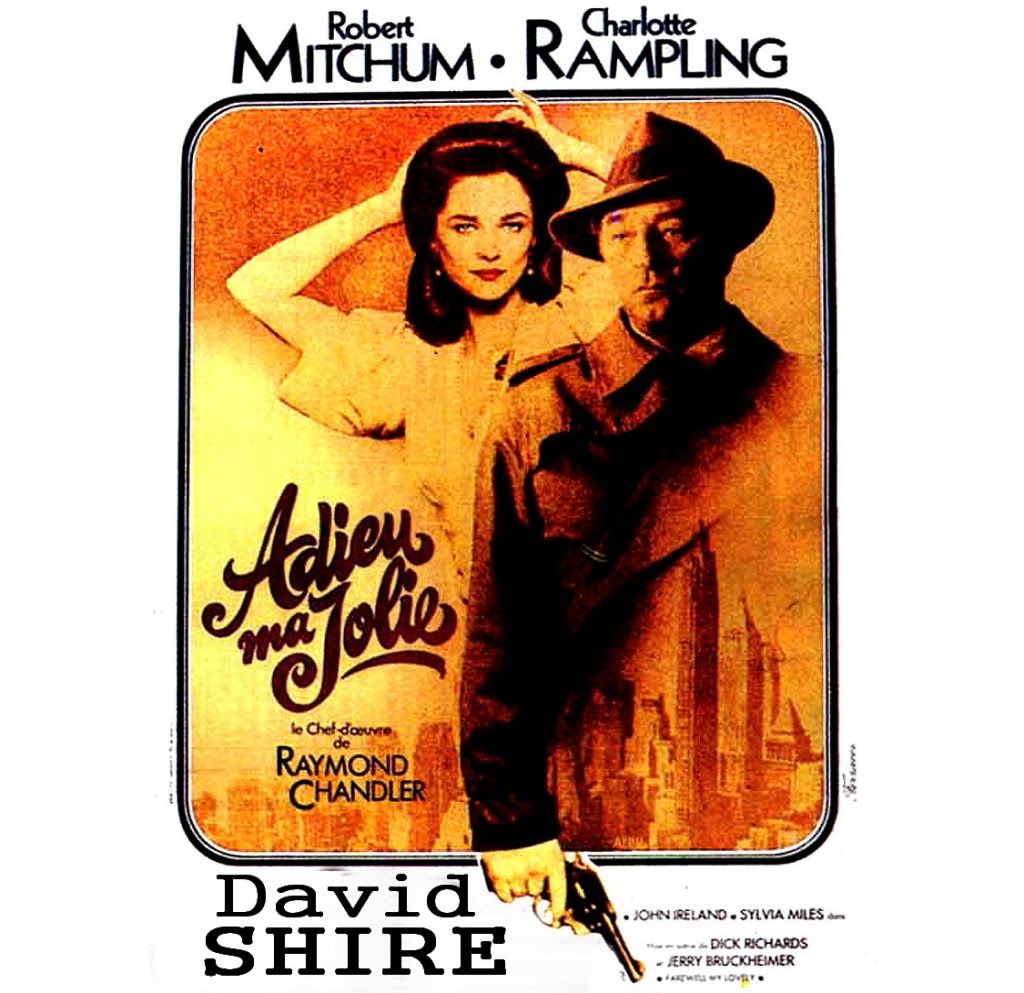
13 
David Shire
Farewell My Lovely
1975
Dick Richards

Musicians:Cappy Lewis, trumpet; Dick Nash, trombone; Ronnie Lang, alto sax; Justin Gordon, clarinet, tenor sax; Don Menza, soprano sax; Artie Kane, piano; Al Hendrickson, Tommy Tedesco, guitar; Chuck Domanico, bass; Larry Bunker, drums; Emil Richards, percussion.

Main title music, aka the Marlow theme:


12
Philip Green
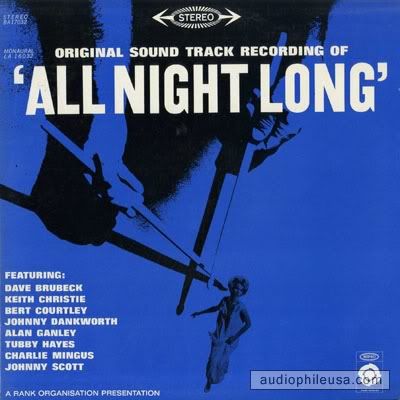
All Night Long
1962
Basil Dearden

Musicians: Bert Courtley, trumpet; Keith Christie, trombone; John Dankworth, alto sax; Johnny Scott, alto sax, clarinet, flute; Tubby Hayes, tenor sax, vibraphone; Colin Purbrook, Dave Brubeck, piano; Ray Dempsey, guitar; Kenny Napper, Charles Mingus, bass; Allan Ganley, drums; Barry Morgan, bongos, timbales.Allan Ganley coached and ghosted drum routines for actor Patrick McGoohan.

From the soundtrack, Brubeck plays It's a Raggy Waltz:

11 
Emil Newman/Hugo Friedhofer
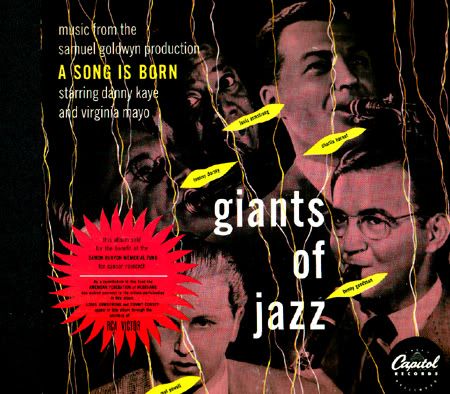
A Song Is Born 
1947
Howard Hawks

Music Orchestrated by Sonny Burke and Neal Hefti. 
Musicians: The Charlie Barnet Orchestra including Jimmy Salko, Jimmy Campbell, Everett McDonald, Chico Alvarez, trumpet; Freddie Zito, Phil Washburn, Herbie Harper, trombone; Charlie Barnet, Bob Dawes, Jack Henerson, George Weidler, Warner Weidler, Frank Pappalardo, reeds; Bob Bain, grt; Don Tosti, bass; Dick Shanahan, drums.
Lionel Hampton and his Orchestra, including Jimmy Nottingham, Kenny Dorham, trumpet; Britt Woodman, trombone; Bobby Plater, Charlie Fowlkes, reeds; Milt Buckner, piano; Billy Mackel, guitar; Joe Comfort, bass; Earl Walker, drums.
Tommy Dorsey Orchestra , including Charlie Shavers, Ziggy Elman, trumpet; Corky Corcoran, Marty Berman, reeds; Tony Rizzi, guitar; Louie Bellson, drums.
Encyclopedia combo including Benny Goodman Benny Goodman, clarinet; Lionel Hampton, vibraphone;
Mel Powell, piano; Al Hendrickson, guitar; Harry Babasin, bass; Louie Bellson, drums. 
Louis Armstrong and Lionel Hampton Band including Vic Dickenson, trombone; Barney Bigard, clarinet; Benny Carter, alto sax; Phil Moore, piano; Lionel Hampton, vibraphone; Laurindo Almeida, guitar; Charlie Drayton, bass; Zutty Singleton, drums.


Return to Part 2                                                      Go to Part 4

Monday, June 6, 2011

Swinging Persia


Jazz in Iran? Yes, and no! Once upon a time, before the 1979 revolution, when oil's money was overflowing, a Queen and some of her advisers had the idea of making the country more sophisticated, more prestigious. Thus, among so many decisions they made, one was inviting the jazz acts to the country. Of course, long before this plan that long before Harry 'Sweets' Edison, Pearl Bailey and Louie Bellson appear in Tehran's biggest amphitheater by that invitation, Duke Ellington and his Orchestra showed up in Isfahan, a place so amazingly beautiful that inspired Duke and Billy Strayhorn to embed all that beauty in one of the most majestic alto solos in history of jazz, Isfahan, as played later by Johnny Hodges.

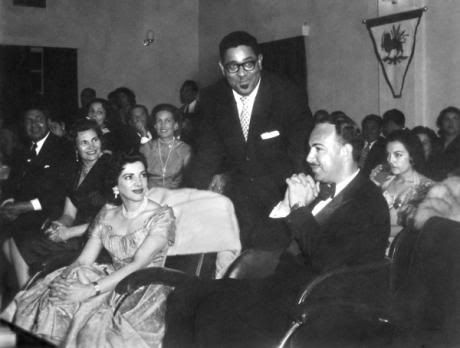
Dizzy Gillespie during the 1956 State Department jazz tour, at a reception with Princess Shams Pahlavi, elder sister of the Shah of Iran, and her husband Mehrdad Pahlbod (Later Minster of Culture and the Arts) at the capital of oil in Iran, Abadan. Also I've seen some very rare photos of Dizz with Shah's generals in a port in southwest of Iran, which a friend discovered in an antique shop in Florida.

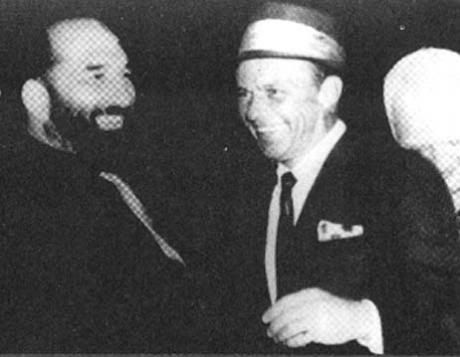
Everybody was coming to Iran, from Frank Sinatra to Karlheinz Stockhausen! Money was flowing and even if Frank Sinatra's concert in Jamshidieh Stadium in Tehran was a flop, it didn't stop musicians from visiting lavish, old, and rich Persia. Falling in love with the country was so easy, as William Wyler's host in Iran told me, "he came for a week long festival, and ended up staying for a month on the shores of Caspian sea and eating best Caviar in the world." Magic carpet was ready to give a free ride to everyone whose name was big enough to give credit to the country that was longing for that.

What Frankie is doing with Shabaan the Brainless? Shabaan the Brainless was a notorious thug who had a direct role in American Coup d'état of 1953 that led to overthrow of Iranian first and last democratic government. According to the CIA's declassified documents and records, some of the most feared mobsters in Tehran were hired by the CIA to stage pro-Shah riots. In 2000, Madeleine Albright, ex-U.S. Secretary of State, confessed that intervention by the U.S. in the internal affairs of Iran was a setback for democratic government, but it was too late.
So Dizzy Gillespie and his big band was visiting oil cities, like a treasury minister, and Willis Conover's voice was in the air, as Hollywood films had their premiere in Tehran cinemas. Sundays, Jack Teagarden in a striped suite played good old jazz in national TV. The country was like a story from 1001 nights, a modern fairy land, where at days you had Peter Brook to perform in Shiraz, enjoying the best grapes in the world, and at nights John Cage was on stage, an artist whose musical ideas was even too much for the Western ears.

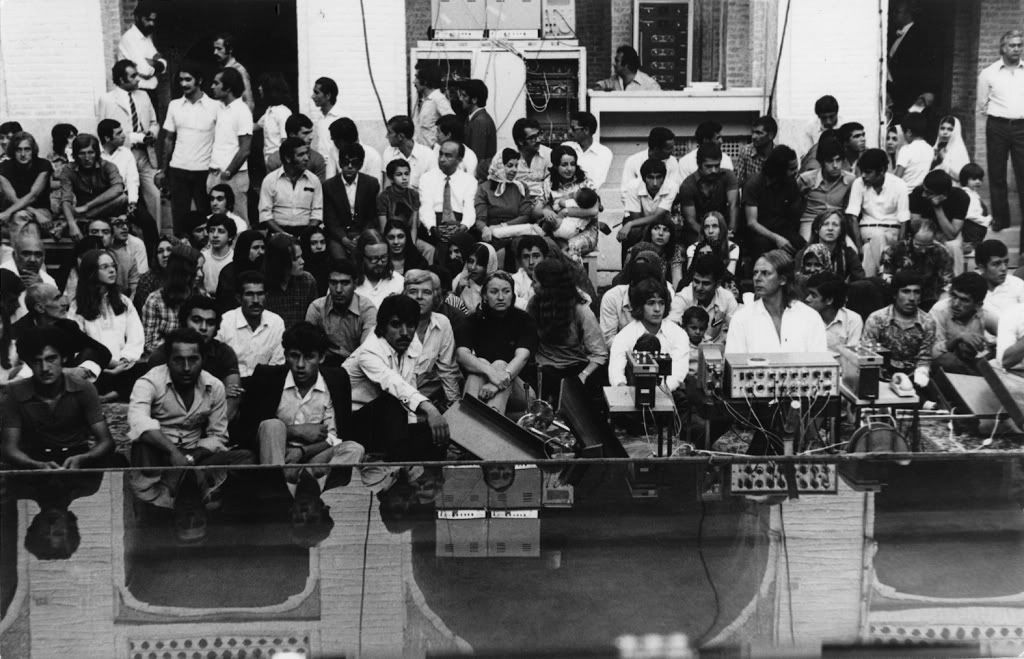
Karlheinz Stockhausen (front right) at the Shiraz Arts Festival, Iran, 2 September 1972. How many of these people understand what's happening, musically?
Aloys and Alfons Kontrarsky, 2.9.1972, Shiraz.

Among those who landed in Iran, there was a young American jazzman who had something else in mind.


...to be continued.

Part 2 here.

Friday, June 3, 2011

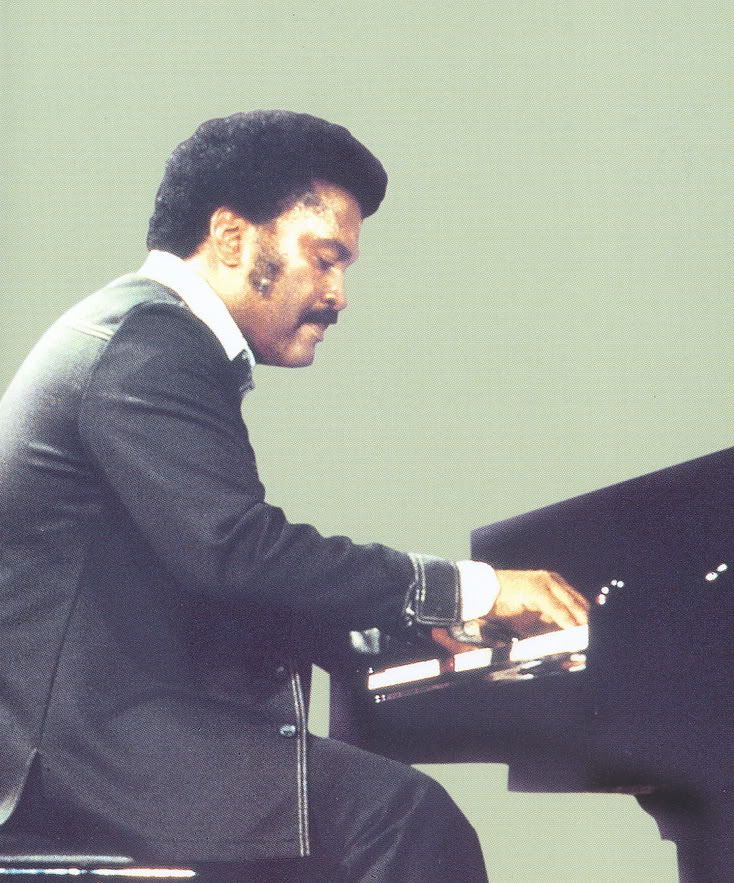
Ray Bryant (1931-2011) R.I.P


Ray Bryant died at 80; the news is always as simple as this. But we all know that behind these numbers that sadly reflect the passing of time, years and years of music, joy of pure humanity and deep belief in art is hidden. The ending is always so sad for me, but let's not forget about the "sound" and the "joy" that always has existed, and is here to stay!

with Ike Isaac (b) Specs Wright (d). April 5, 1957. Prestige  
Blues Changes (composed by Bryant) from the album, Ray Bryant Trio  
 

He was a hard-bopper, in the same category with Sonny Clark, Kenny Drew, Tommy Flanagan, Elmo Hope, Wynton Kelly, or Randy Weston. But he had a delicate touch, like Red Garland and Jimmy Rowles. He was doing magic in small groups (mostly trios - listen to Good Morning Heartache here), and even when he was all alone (dig Alone With The Blues LP!). But also he could accompany the giants in the best way one can imagine. [listen to La Rosita here]

with Charlie Shavers (tp) Coleman Hawkins (ts) Tiny Grimes (g) George Duvivier (b) Osie Johnson (d). April 3, 1959. Prestige.  
La Rosita from Hawk Eyes   
 

Mr Richard Cook summarizes his long career:
Many premier musicians have come out of Philadelphia and Ray Bryant might head the list. He was the regular piano man at the city’s Blue Note club from 1953, where he accompanied all the visiting giants and later in the 50s he performed a similar role at Prestige, taking the piano seat on such sessions as Worktime (Sonny Rollins) and several in the great sequence of discs which Colman Hawkins recorded there. In 1959, though, he settled in New York, establishing his own trio although he never shied away from playing on his own and – unlike such contemporaries as Red Garland – he has set down a distinctive body of solo work on record. He recorded prolifically for Cadet and Colombia in the 60s (although the latter label wasted his time with pop material) and for Pablo in the 70s but he saved many of his finest hours for an outstanding sequence of records for Emarcy in the late 80s and early 90s, which have been too quickly deleted and are too little appreciated. Outgoing and capacious in his style, with a great feel for gospel currents and a gracious touch with blues, Ray is perhaps only fully appreciated in Japan, where he has always had a large and loyal following. His brother Tommy (1930-82) was a bassist.  
with George Duvivier (b), Grady Tate (d). January 10 or 12, 1976. Pablo 
Good Morning Heartache from Here's Ray Bryant


I don't remember any pianist using this much of two hands, and use it so beautifully. R.I.P Ray!
.

Sunday, May 29, 2011

A Guide to Best Jazz Scores for Cinema#2

 20
 Eric Demarsan
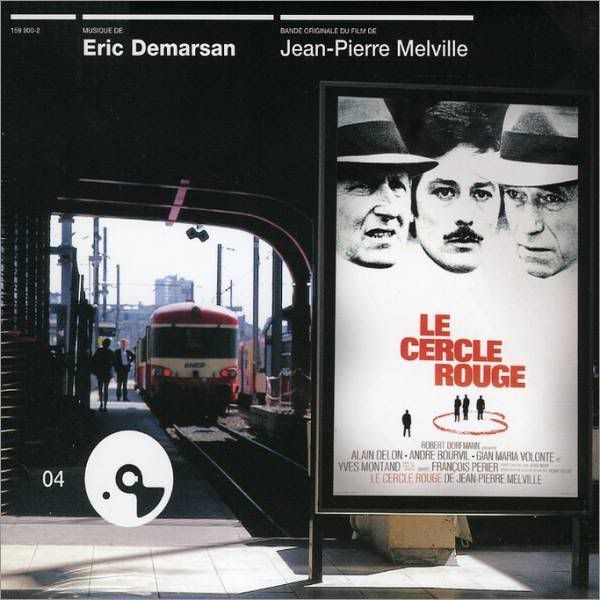
 Le Cercle Rouge
1971
Jean-Pierre Melville

Musicians: Raymond Guiot, flute; Georges Arvanitas, piano; Joss Baselli, accordion; Bernard Lubat, vibraphone; Guy Pedersen, acoustic double bass; Daniel Humair, drums. Recorded at Studio Davout, Paris, October 1970. Score originally started by Michel Legrand who was replaced during production.

listen to the "main theme"


19
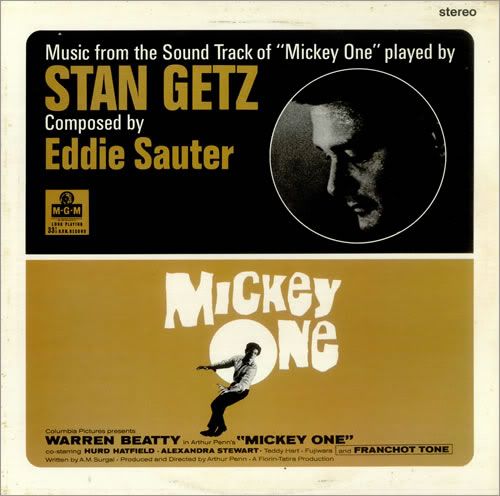
Stan Getz/Eddie Sauter
Mickey One
1965
Arthur Penn

Music by: Eddie Sauter; Music Directed/Conducted by: Jack Shaindlin; Music Supervisor: Jack Shaindlin; Music Arranged by: Eddie Sauter; Improvisations: Stan Getz; Musicians: Bob Abernathy, Ray Alonge, Richard Berg, Jimmy Buffington, Earl Chapin, French horn; Al DeRisi, Ernie DiFalco, Joe Ferrante, Bobby Nichols, trumpet; Clark Terry, trumpet, fluegel horn; Eddie Bert, John Messner, Ephie Resnick, Sonny Russo, trombone; Tommy Mitchell, b trombone; Harvey Phillips, tuba; Harvey Estrin, alto sax, clarinet, flute, alto flute, piccolo; Al Block, tenor sax, clarinet, flute, piccolo; Ray Shiner, tenor sax, clarinet, oboe, cor anglais; Wally Kane, bass sax, clarinet, bassoon; Eli Carmen, bassoon; Don Ashworth, Charlie Russo, reeds; + vlns, violas, celli, harps; Roger Kellaway, piano; Barry Galbraith, guitar; Richard Davis, acoustic double bass; Mel Lewis, drums; + percussion.

Listen to "I Put My Life in Your Hands/A Girl Named Jenny"


18
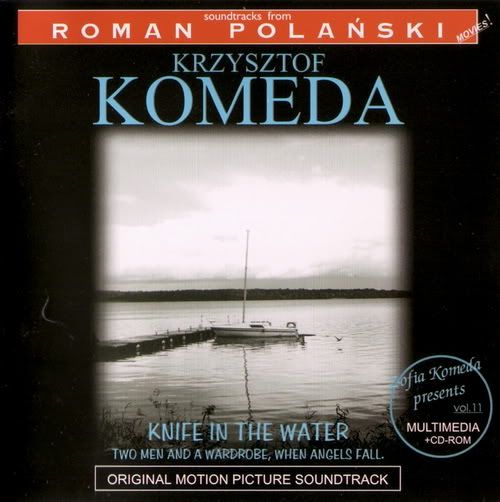
Krzysztof Komeda
Knife in the Water
1962
Roman Polanski

Musicians: Bernt Rosengren, tenor sax; Krzysztof Komeda, piano; Roman Dylag, acoustic double bass; Lech Dudziak, drums.

Listen to a segment of Komeda work for The Knife

17
Martial Solal
À bout de souffle
1959
Jean-Luc Godard

Musicians: Roger Guérin, trumpet; Pierre Gossez, alto sax; Martial Solal, piano; Michel Hausser, vibraphone; Paul Rovère, acoustic double bass; Daniel Humair, drums.

Listen to "L'Amour, la mort"


16
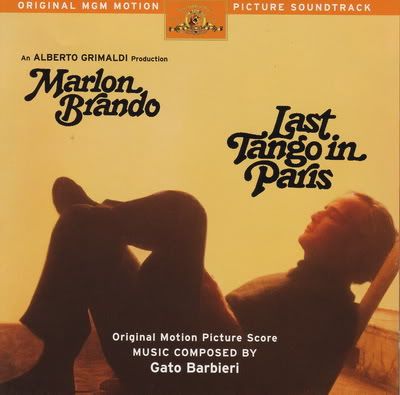
Gato Barbieri
The Last Tango In Paris
1972
Bernardo Bertolucci

Conducted & Arranged by: Oliver Nelson; Musicians: Gato Barbieri and his Orchestra, including Gato Barbieri, tenor sax; Joachim Kühn, piano; Charlie Haden, acoustic double bass; Daniel Humair, drums.


Listen to two parts of Last Tango suite


Return to part 1                                                   Go to part 3

Wednesday, May 11, 2011

Snooky Young (1919-2011)


Snooky Young who passed away today, was a man of the best bands of swing and post-swing era, including orchestras by Jimmie Lunceford, Count Basie, Lionel Hampton and Gerald Wilson. Richard Cook describes him as "an impeccable lead-man for the duration of his long career, able to play the most demanding of parts, and as a result his skilful solos, often given a rascally, high-wire treatment, have been largely undervalued." 

Interestingly, I discover him for the first time, in a live rock album by The Band, called Rock of Ages, and later, watching his magisterial solo on Stella By Starlight (Count Basie Orchestra, Sweden 1963, from Jazz Icons series DVD), entered his name to my personal pantheon of greatest trumpet players of all times.

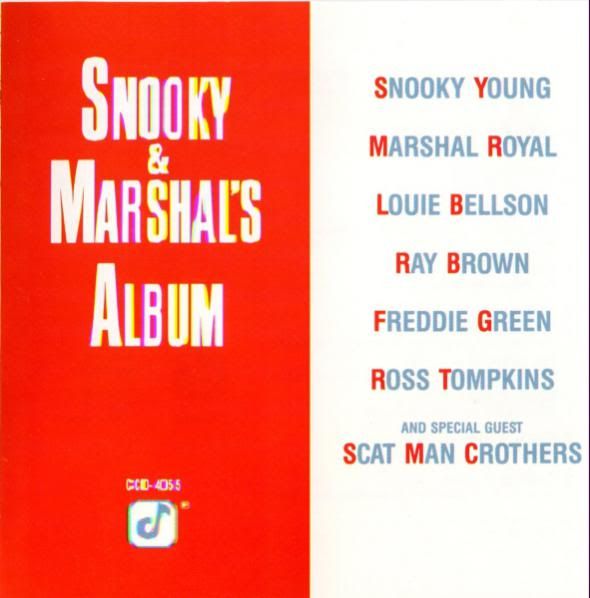
We remember him by listening to his album with Marshal Royal from 1978:


 Snooky & Marshal's Album

This album is Snooky Young's second session as a leader (from three sessions throughout his life), and this one with altoist Marshall Royal. Backed by a great rhythm section and guest vocalist Scatman Crothers who sings his own composition, Mean Dog Blues.

Snooky Young (Flugelhorn, Trumpet), Marshall Royal (alto sax), Ross Tompkins (piano), Freddie Green (guitar), Ray Brown (bass), Louie Bellson (drums), Scatman Crothers (vocals)
Hollywood, CA, 1978, Concord Jazz CJ55 - Total Time 42:28 - Transferred from Vinyl

Side A:
1) I Let a Song Go Out of My Heart (Ellington, Mills, Nemo, Redmond)
2) Mean Dog Blues (Scatman Crothers)
3) Cederay (Ray Brown)
4) Limehouse Blues (Braham, Furber)


Side B:
1) Cherry (Corgan, Gilbert, Mogg, Redman, Way)
2) Medley: You've Changed/I'm Confessin'/Come Sunday (Carey, Fischer/Dougherty, Reynolds, Neiburg/Ellington)
3) Catch a Star (Tom Peterson)
4) Should I? (Brown, Freed)


Tuesday, May 10, 2011

A Guide to Best Jazz Scores for Cinema#1

25
Duke Ellington
Anatomy of a Murder
Otto Preminger
1959
Music Directed/Conducted by: Gerald Wilson - Musicians: Clark Terry, Cat Anderson, Harold Baker, Gerald Wilson, trumpet; Ray Nance, trumpet, violin; Johnny Hodges, alto sax; Russell Procope, clarinet, alto sax; Paul Gonsalves, tenor sax; Harry Carney, clarinet, baritone sax, bass-clar; Jimmy Hamilton, clarinet, tenor sax; Britt Woodman, Quentin Jackson, John Sanders, trombone; Duke Ellington, piano; Billy Strayhorn, celeste; Jimmy Woode, acoustic double bass; James Johnson, drums.

Listen to theme for the main title

 24
Henry Mancini
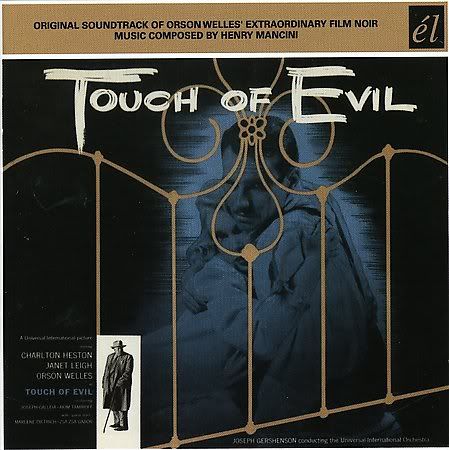
Touch of Evil
Orson Welles
1958

Musicians: Ray Linn, Conrad Gozzo, Pete Candoli, trumpet; Plas Johnson, tenor sax; Dave Pell, baritone sax; Ray Sherman, piano; Barney Kessel, guitar; Red Norvo, vibraphone; Rollie Bundock, acoustic double
bass; Shelly Manne, drums; Jack Costanzo, bongos; Mike Pacheco, congas.

Listen to Reflection from Touch of Evil


23
Quincy Jones
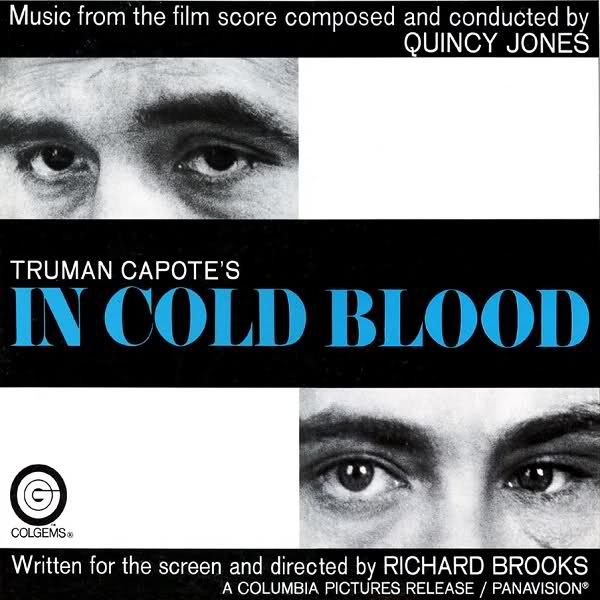
In Cold Blood
Richard Brooks
1967
Musicians: Buddy Childers, trumpet; Frank Rosolino, trombone; Dave Grusin, clavinet; Gene Cipriano, Bud Shank, William Green, woodwinds; Howard Roberts, guitar; Ray Brown, Andy Simpkins, b soloists;
Carol Kaye, acoustic double bass; Shelly Manne, Earl Palmer, drums; Don Elliott, Emil Richards, percussion.

Hanging Paper from the soundtrack


22 
Bernard Herrmann
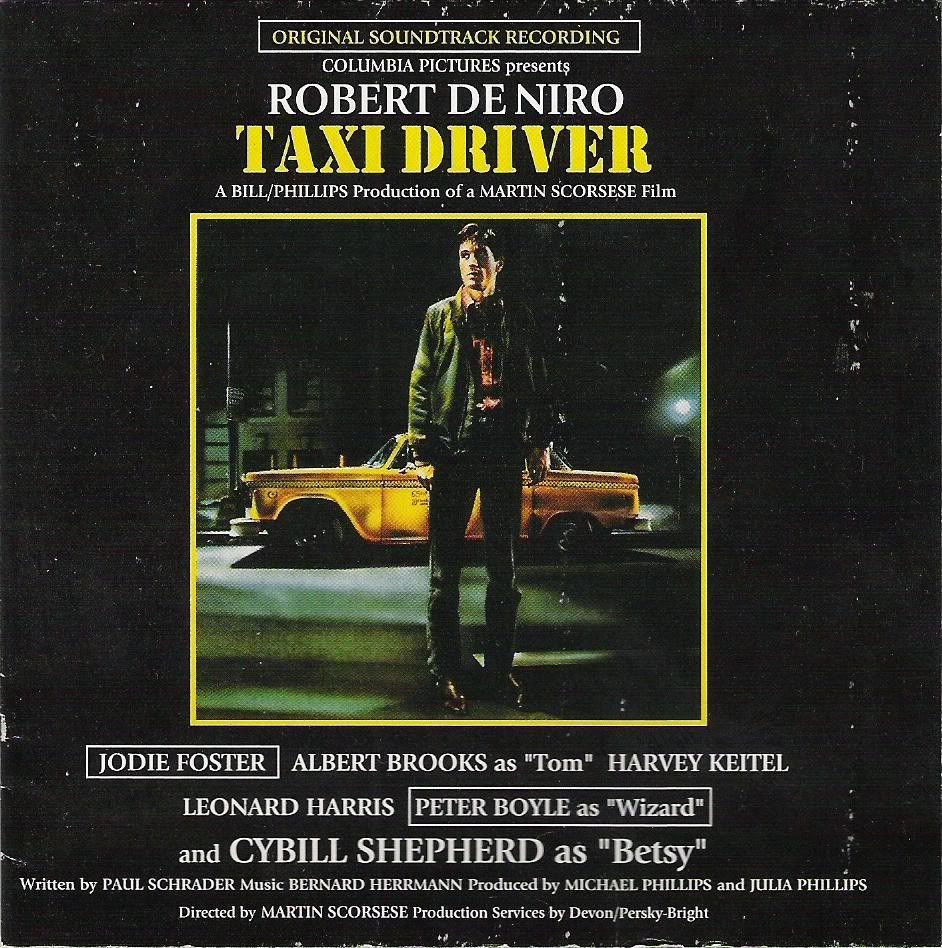
Taxi Driver
Martin Scorsese
1976
Musicians: Malcolm McNab, trumpet; Tommy Johnson, Jim Self, tuba; Ronnie Lang, alto sax solos; Emil Richards, percussion.

Main Title


21
Elmer Bernstein/Chico Hamilton
Sweet Smell of Success
Alexander Mackendrick
1957

Musicians: The Chico Hamilton Quintet (Paul Horn, reeds; John Pisano, guitar; Fred Katz, cello; Carson Smith, acoustic double bass; Chico Hamilton, drums), Pete Candoli, trumpet; Frank Rosolino, trombone; Curtis Counce, acoustic double bass.

Goodbye Baby, from Sweet Smell, by Chico Hamilton

Friday, April 29, 2011

Duke's 112th Birthday: The Sound Is Still Going Somewhere


112 years after his birth, and now physically gone from the face of the earth for 37 years, he is still hard to define. He avoided being categorized intentionally. "Never get caught up in categories,” he told Nat Hentoff. “It’s individuals who make the difference." So his music remained inspiring generations of musicians from different categories and backgrounds and ordinary people from all around the world. He led that "A" train the way like nobody can going to stop it, even in his death bed in Columbia-Presbyterian hospital in New York. And nobody could! Now it has became more the matter of understanding life, art, and beauty than understanding jazz itself. Again it was him who mentioned "I don’t want people listening to how my music is made. I want them to open themselves as they hear it."

Gramophone Record Shop Encyclopedia of Recorded Music (1936) praised Ellington’s "incomparable powers of rhapsodic invention, instinct for tonal nuance, and orchestral ingenuities equal to the most brilliant flights of Rimsky-Korsakov’s or Richard Strauss’ imagination. Ellington’s compositions are uniquely significant for their poly-timbres, their complex textures, the spontaneous and rhapsodic flow of the melodies, the homogeneity of style, and—above all—for their sensitive and poignant revelation of pure feeling in tone." But it doesn’t seem enough to explain the reasons for endless joy while one is listening to him, and endless influence on music when he is heard in countless number of sounds and recordings and styles which emerged after him. Clark Terry, cleverly, pointed that "He wants life and music to be always in a state of becoming. He doesn’t even like definitive song endings to a piece. He’d often ask us to come up with the ideas for closings, but when he’d settled on one of them, he’d keep fooling with it. He always likes to make the end of a song sound as if it’s still going somewhere."

Today, the song is still going somewhere. It’s true that every great musician is always playing himself, or his inner feelings, but Duke was playing Life, as reflected in his gentle, restless soul.

* * *

I choose this tune because I love to remember the one who "loved us all madly," in one of his most intimate moods. All alone, singing for us and playing a lullaby-like melody on celeste: Moon Maiden (from 1969, August 29th, NYC)