Showing posts with label Herbie Hancock. Show all posts

Saturday, July 26, 2014

Herbie Hancock on Flexi Disc


It's as thin as a piece of paper and they call the Flexi Disc, also known as a Phonosheet or Soundsheet. According to Wikipedia it is "a phonograph record made of a thin, flexible vinyl sheet with a molded-in spiral stylus groove, and is designed to be playable on a normal phonograph turntable...It is used as a means to include sound with printed material such as magazines and music instruction books...and [it] was very popular among kids and teenagers and mass-produced by the state publisher in the Soviet government."


Found on the November 8, 1973 issue of Down Beat, Herbie Hancock Demonstrates The Rhodes Piano is a flexi disc (7") featured with the journal. A track from the disc can be heard here:

Saturday, July 23, 2011

A Guide to Best Jazz Scores for Cinema#4

10
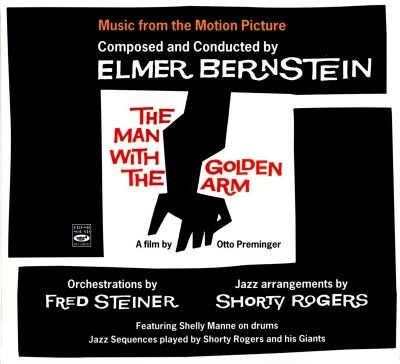
Elmer Bernstein
The Man With The Golden Arm
1955
Otto Preminger

Jazz parts arranged by: Shorty Rogers. Musicians: Shorty Rogers/Pete Candoli/Conte Candoli/Bob Fleming (t), Ray Sims/Milt Bernhart/Frank Rosolino (tr), Bill Holman/Jack Montrose/Jimmy Giuffre/Ted Nash/Bud Shank/Bob Cooper (reeds), Martin Ruderman (f), Arnold Koblentz (oboe),  Mitchell Lurie (clar), Joseph Eger (french horn), Anatol Kaminsky (violin), Armand Kaproff (cello), Ray Turner/Lou Levy (p)/Joe Mondragon/Abe Luboff/Ralph Pena (b), Shelly Manne (d).

Drummer Shelly Manne was also credited as ‘personal assistant' to Mr Preminger and as ‘tutor' to Mr Sinatra. 
Clark Street from the soundtrack


9
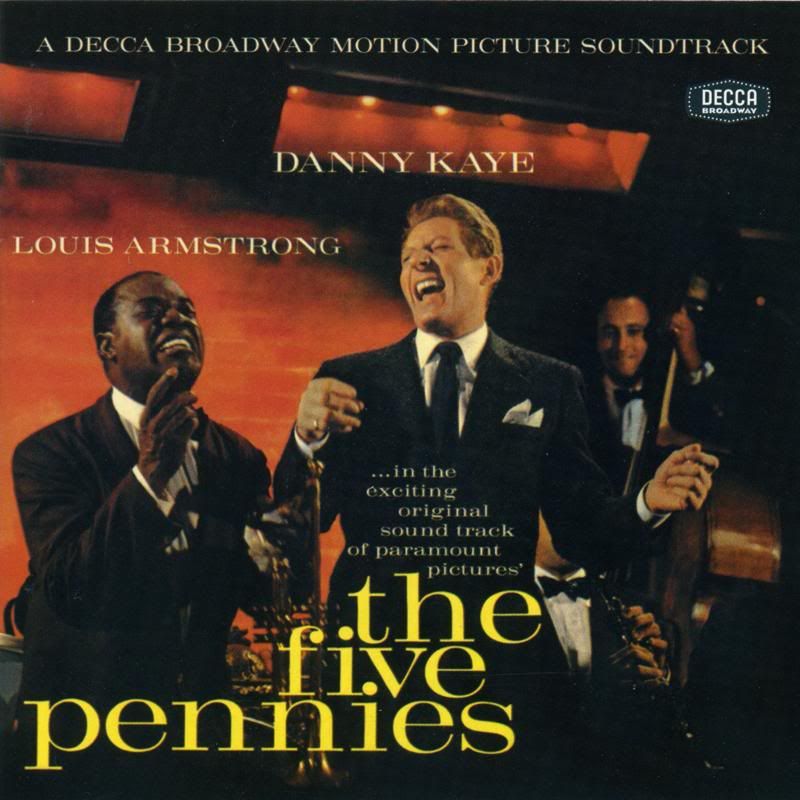
Leith Stevens
The Five Pennies
1959
Melville Shavelson

Music Arranged by: Heinie Beau, Benny Carter, Alexander Courage. Musicians: Red Nichols (t), Moe Schneider (tr), Heinie  Beau (clar), Benny Carter (as), Eddie Miller (ts), Wayne Songer (bs), Joe Rushton (bass sax), Gene Plummer (p), Morty Corb (b), Shelly Manne (d), Eileen Wilson (voc).

With appearences by Shelly Manne (as Dave Tough) and Louis Armstrong (t/voc), Trummy Young (tr), Peanuts Hucko (clar), Billy Kyle (p), Mort Herbert (b), Curtis Counce (b), Danny Barcelona (d).


8
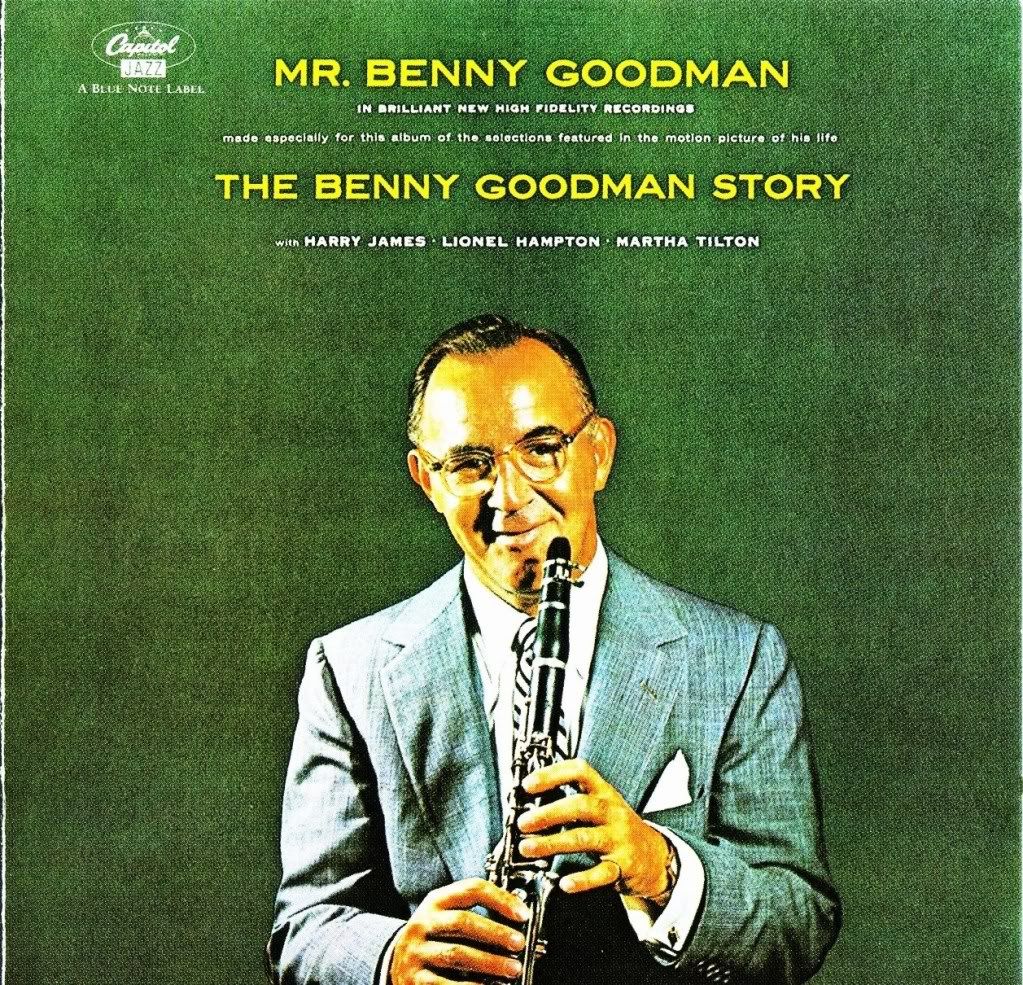
Henry Mancini/Benny Goodman
The Benny Goodman Story
1955
Valentine Davies

Musicians:
clarinet: Benny Goodman and Sol Yaged.
saxes: Hymie Schertzer, Blake Reynolds, Stan Getz, Babe Russin.
trumpets: Buck Clayton, Chris Griffin, Conrad Gozzo, Irving Goodman.
trombones: Urbie Green, Murray McEachern, Jimmy Priddy.
Rhythm section: Teddy Wilson (p), Allan Reuss (g), George Duvivier (b), Corky Hale (harp), Gene Krupa (d).

Also with appearances by Lionel Hampton, Teddy Wilson, Gene Krupa, Ben Pollack, Kid Ory, Urbie Green, Buck Clayton, Stan Getz, Harry James, Martha Tilton, Ziggy Elman, Alvin Alcorn.

Sing, Sing, Sing


7
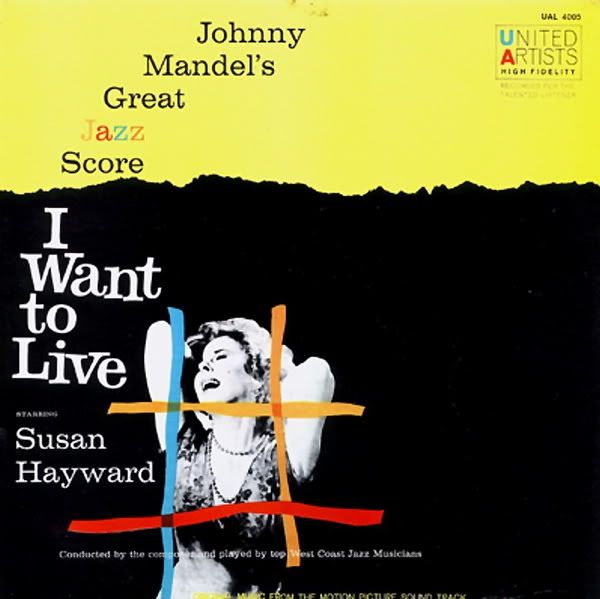
Johnny Mandel
I Want to Live!
1958
Robert Wise

Musicians:
trumpets: Jack Sheldon, Al Porcino, Ed Leddy.
trombones:Frank Rosolino, Milt Bernhart, Dave Wells.
French horns: Vince DeRosa, Sinclair Lott, John Cave, Dick Parisi.
piccolo, flutes: Harry Klee.
clarinets: Abe Most, Joe Maini, Bill Holman, Marty Berman.
saxes: Bill Holman, Chuck Gentry.
pianists: Russ Freeman, Pete Jolly.
guitar: Al Hendrickson.
bass: Red Mitchell.
drummers: Shelly Manne, Larry Bunker, Mel Lewis, Milt Holland, Mike Pacheco.

In the opening jazz club sequence, Art Farmer (t), Frank Rosolino (tr), Bud Shank (as),  Gerry Mulligan (bs), Pete Jolly (p), Red Mitchell (b), Shelly Manne (d) appear as themselves.
The title music


 6
Herbie Hancock
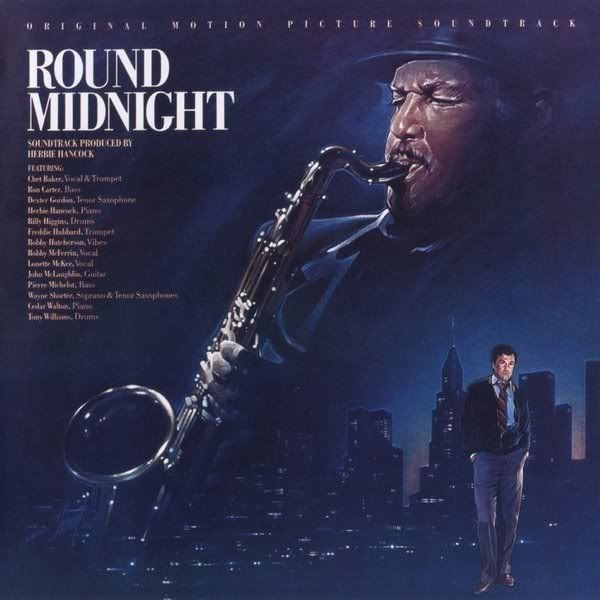
Round Midnight
1986
Bertrand Tavernier

Musicians: It worth mentioning all line-ups in the film
Herbie Hancock (p), Ron Carter (b), Tony Williams (d), Bobby McFerrin (voc)
Dexter Gordon (ts), Herbie Hancock (p), Pierre Michelot (b), Billy Higgins (d)
Herbie Hancock (p), John McLaughlin (g), Pierre Michelot (b), Billy Higgins (d)
Chet Baker (t/voc), Herbie Hancock (p), Pierre Michelot (b), Billy Higgins (d)
Dexter Gordon (ts), Bobby Hutcherson (vib), Herbie Hancock (p), Pierre Michelot (b), Billy Higgins (d)
Wayne Shorter (ts), Herbie Hancock (p), Pierre Michelot (b), Billy Higgins (d)
Dexter Gordon (ts), Herbie Hancock (p), Pierre Michelot (b), Billy Higgins (d), Lonette McKee (voc)
Freddie Hubbard (t), Dexter Gordon (ts), Cedar Walton (p), Ron Carter (b), Tony Williams (d)

Listen to Round Midnight (a Monk composition) performed by Hancock/Carter/Williams/McFerrin


Return to Part 3                                                     Go to Part 5

Thursday, August 13, 2009

Seven Steps to Heaven


By God! Miles is screeching with his motherfuckin’ mute. I never could understand why he did not listen more to Dizzy when he would apply the mute. I just don’t get the idea. You have great guys like Clayton, Edison, Newman, Navarro, Dizzy, and many others, every one of them a master with the mute. I am just surprised why people make so much fuss about Miles. I do not want to name the greats like Williams, Coleman, and Autrey with the mute. It is a shame. The same Miles plays the open horn in “Joshua”; he is so fantastic in tone and attack. The same Miles does a nasty job on "All the things you are" with my most beloved drummer Frank Butler. Such great rhythm section and you play that darned muted trumpet. Just dig Feldman, Carter and Butler’s company. Thanks God Feldman has more space on “basin’ street”. Listen carefully to Butler starting with brushes after Miles has finished with his opening statement; Soft as dream of an unborn flower. Butler is without a doubt one of the most brilliant jazz drummers ever. One of the most underrated as well. The hell with the history and those who make it.
-- By ARP

Line up: Miles Davis – Trumpet/George Coleman - Tenor Saxophone/Victor Feldman - Piano (April session)/Herbie Hancock - Piano (May session)/Ron Carter - Double bass/Frank Butler - drums (April session)/Tony Williams - drums (May session)

"Seven Steps to Heaven is recorded in 1963 by Miles Davis. On the 16th and 17th of April, a quintet comprising Davis, George Coleman, Victor Feldman, Ron Carter and Frank Butler recorded all six tunes plus "Summer Night", for an album to be titled "So Near, So Far". A month later, Davis re-recorded three of the tunes (tracks 2, 4 & 6) with a new quintet, replacing Feldman with Herbie Hancock and Butler with Tony Williams. The new rhythm section of Hancock, Carter and Williams would form the nucleus of Davis's working band for the next five years. This is the last of Davis's studio albums which relies substantially on standard tunes - once Wayne Shorter joined the quintet in 1964, tunes on studio recordings were almost always composed by members of the group."

*

Tuesday, July 21, 2009

Hancock's Inventions & Dimensions


Everybody knows Herbie Hancock, but wait a minute, which Hancock are we talking about? The absolute genius of piano at the age of 11 with the Chicago symphony orchestra or the manufacturer of disco attractions? The sophisticated composer/pianist of milestones like Maiden Voyage, or the shallow pop artist of The River? A master of acoustic improvisation or a techno oriented disc jockey, or even an electric/acid jazz fanatic?

Is it possible all these different visages belong to one person? The answer is yes, but let's not forget that he is one of those adventurous musician that for studying his career, sometimes we must to be cruel and lot of eliminations will be necessary.

The Hancock I want to talk about now, doesn’t belong to any of these extremes categories. It’s an unknown and less publicized part of his career. It’s the Hancock of fantastic Inventions and Dimensions, his third studio effort.


AMG calls it "exploring a Latin-inflected variation of post-bop with a small quartet," and gives it a four stars rating (from five). The only problem is that the ladies and gentlemen in the business who make big money from "directing" the music industry by this rating and evaluation system haven't listen to the album!
First, there isn't any musical sign of Latin influences in this album, except maybe brief moments in track 3 (Jack Rabbit). Maybe the auteur had been a witness to the recording session and the Latin clothing of Herbie at that time has made him to write such a line.
Second, it's not a quartet and it's a trio. Maybe he counts double bass, two times -- or maybe CD details has caused this presumption (by naming four people in the line up) and he has thought that the conga player, Osvaldo Martinez, is a permanent performer of the whole session, which is not.
That was only for reminding you that don't trust this gigantic databases and their weak views, their manipulations, and sometimes (in this case) wrong informations.


Inventions and Dimensions, rhythmically is a very complex album and a very important session to follow Hancock's surprising career. It's easier to understand and appreciate his techniques of improvisation, here more than his quartet and quintets of the same period.
And there is an outstanding statement of piano in trio with "a jump ahead" which its suspending silences and the extraordinary dialogue between piano and drums is an opening for upcoming Ahmad Jamal approaches in trio.

A good album to spend your gloomy times in a waste land with it.

--Ehsan Khoshbakht