Tuesday, January 29, 2013

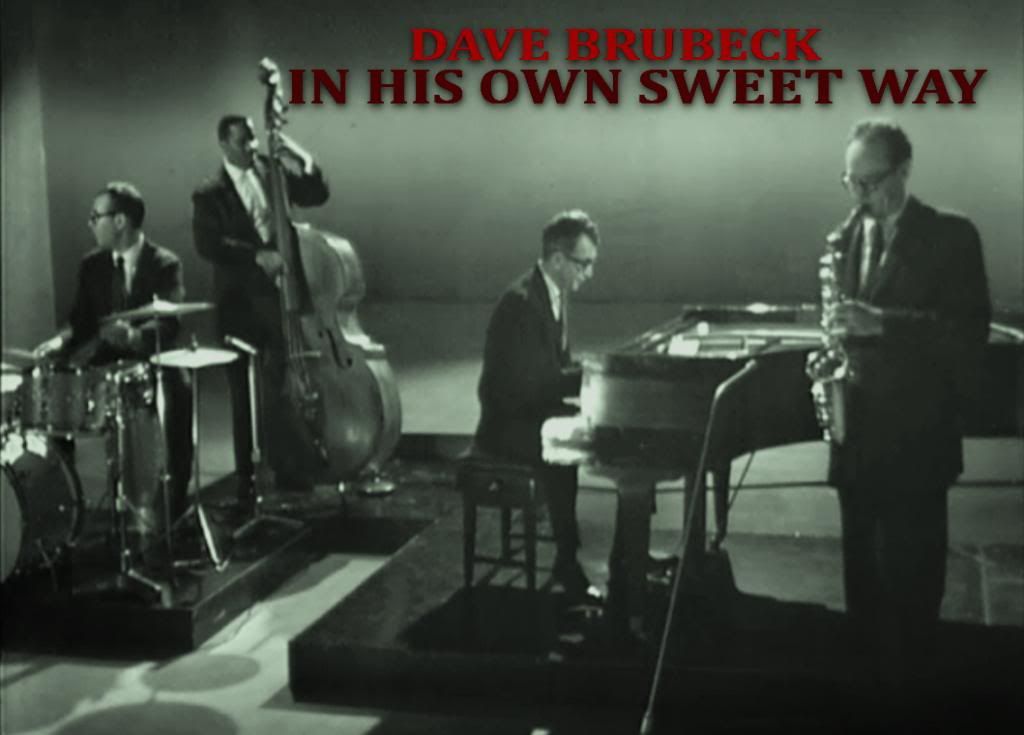
Brubeck: In His Own Sweet Way


Finally I managed to catch up with the long-awaited Dave Brubeck documentary, In His Own Sweet Way, now available on BBC iPlayer (online streaming in the UK). My curiosity wasn't just about Brubeck, whose music has had a part in my life, but also I was eager to see director Bruce Ricker's last film, who made the landmark jazz film The Last of the Blue Devils (1979) about the legendary travelling band of the 1930s, featuring Count Basie, Big Joe Turner and Jo Jones.

Bruce Ricker died in May 2011, two months after Brubeck’s great drummer and collaborator Joe Morello left us. Brubeck passed away recently, after a prosperous and amazingly productive and inspiring life. The only living member of the classic quartet is Eugene Wright whose powerful and subtle rhythmic support is the most overlooked, whenever the subject is Brubeck’s music.

Friday, January 25, 2013

Rollin' Around the Horn: Hawk, Dizz, Getz, Mex


Rollin' Around the Horn
Nat Hentoff's Liner Notes for
Sittin' In (Verve/Clef)

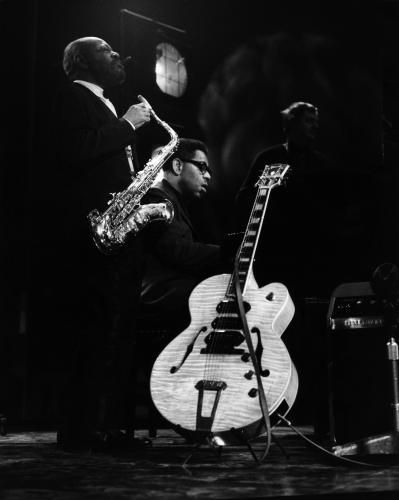
About 6 a.m., a few days before the July 4, 1957 weekend, three tenors, a trumpet and a rhythm section convened in a New York recording studio. They left about five hours later - and this is the result. It marks the first time that Coleman Hawkins, Paul Consalves, and Stan Getz have ever recorded together. It's also a reunion between Dizzy and Hawk. They were responsible for an historic date in 1944 at which sessions titles like Woody n' You and Disorder at the Border were recorded. It was musically an important early modern jazz event but also was a rare graphic indication for that warring time that the “bop" movement was not a break with the jazz tradition; for after all, Coleman Hawkins had Dizzy on his date.

“I never worry about styles noway,” Coleman said recently. “I like to get fellows together that play.” Coleman approves of both his reed colleagues on this session, and adds: “You know Paul’s been playing a long time and deserves a lot more credit than he’s gotten."

“Paul,” Stan Getz commented on the session, “plays a ballad that's just beautiful. His ballad playing on the date gassed us all. I've always loved the way Coleman plays; he’s always had his own style, his own way. His work has lucidity and freedom. He seems to just roll around the horn and his sound is so full.”

Thursday, January 17, 2013

Far of the Middle: Ellington's 1963 State Department Tour


The third State Department tour of the Middle East which sent Duke Ellington and His Orchestra on the bumpy roads of the troubled region became legendary mostly thanks to the Grammy winner Far East Suite, released four years after the journey. First contradiction was the name: with exception of a tune from Japan's tour of 1964 (Ad Lib on Nippon), the rest were songs about and inspired by the Middle East.  

It was a time of social and political discomfort in the States. The racial conflicts had reached a new bloody height and the tension had become explicit and outward. Just three months after global exposition of the image of police dogs attacking Afro-Americans and a cop pinning a black woman to the pavement in Birmingham , Duke was sent overseas by the State Department to spread America's message of democracy and brotherhood to the rest of the world, ironically, through the art of African-Americans.

The Washingtonian Ellington was a natural-born ambassador, and in regard to his flawless sense of management of the orchestra, an adept politician. He was also, in John Edward Hasse's words, "secure, self-confident, optimistic, prideful, aristocrat in demeanor, charming, well-mannered, easy with people from all walks of life, religious, ambitious, clever, didactically oriented, street smart, shrewd in business, restive with categories, stylish dresser, and a growing individualist." Sounds very American indeed. 

Wednesday, January 9, 2013

Ekkehard Wölk Trio Live in Delhi


I'm back in 2013 with another post about one of my favorite contemporary European jazz pianists (which automatically means endorsing the great trio he is leading), Ekkehard Wölk whose classical background, his deep admiration for silent cinema and his rich musical language proves that how cultural diversity can give new, unexpected and utterly exciting faces to good old jazz.

In April 2011, The Ekkehard Wölk Trio performed a concert for 5000 Indian jazz fans in New Delhi. The occasion was used as a platform to introduce newly composed/arranged songs of The Berlin Album which I reviewed here. Thanks to Ekkehard, and the Seher Jazz Festival, you can watch the concert from that hot April evening on my blog.

I asked Ekkehard to share his impressions of India with me and he responded enthusiastically:

Sunday, December 23, 2012

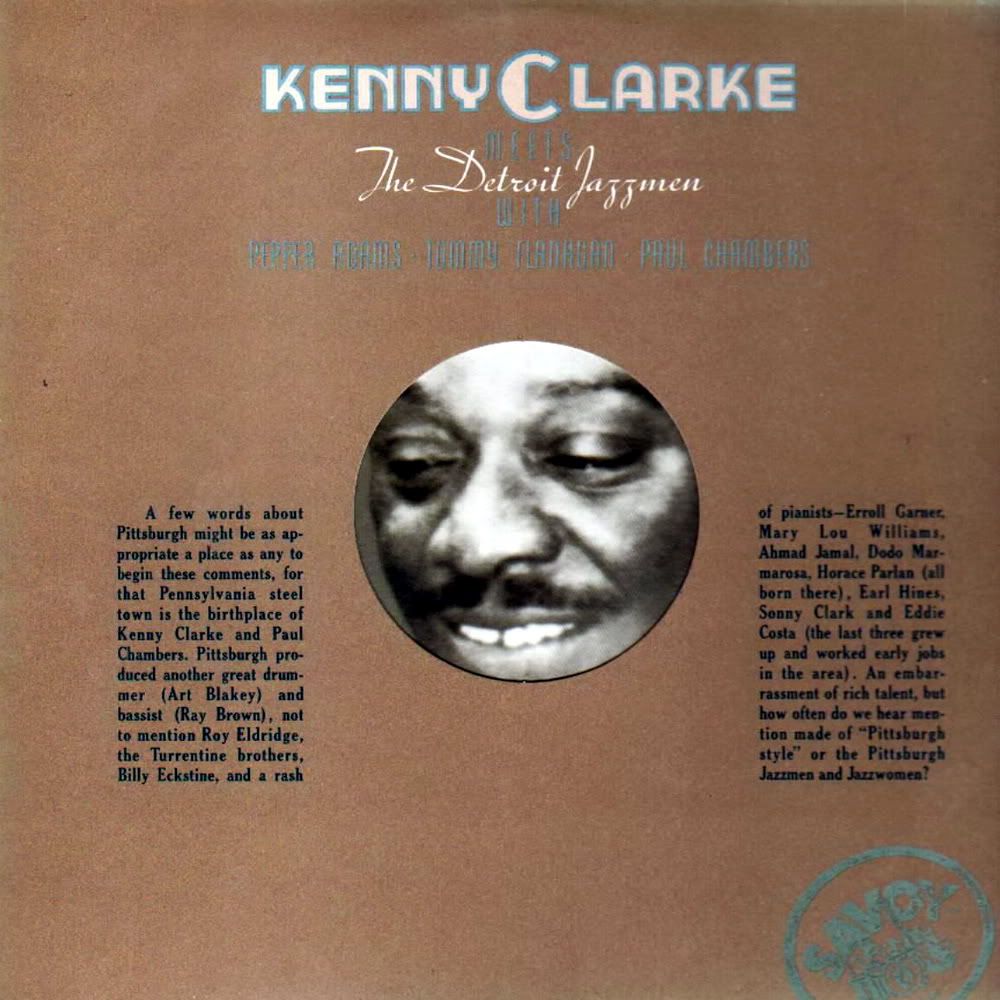
Klook Meets the Detroit Jazzmen


Kenny "Klook" Clarke's job as a drummer was, more or less, "establishing a pulse that both band and listener could feel as well as hear," (Joop Visser) and in the first half of the 1950s that pulse became the driving force of many Savoy recordings. Like that legendary rhythm section of Red Garland/Paul Chambers/Philly Joe Jones, the master drummer of bebop, Kenny Clarke, formed a super unit of the first rate musicians for the Savoy label, mostly consisted of Hank Jones on piano and Wendell Marshall on bass. Aside from their accompanying job, the classic Hank Jones Trio LP was an output of the auspicious collaboration. Other groups benefited from the Savoy rhythmic section were Eddie Bert Quartet, Nat Adderley Quintet, Joe Wilder Quartet and Milt Jackson Quintet; all classics of the post-bop era. Also It happened many times that Jones or Marshall were not available, so Klook teamed up with other rhythm suppliers, some of them as good as the absent gentlemen.

Occasionally, between endless sessions which sometimes lasted for 20 hours per day, Klook found time to record albums under his own name. His leadership materialized the famous LP, Bohemia After Dark and some other Savoy outputs. His last date for Savoy, as leader, was composed of, if in not Detroit-born, but the Detroit-raised musicians of extremely high caliber which was named KC Meets the Detroit Jazzmen.

Saturday, December 15, 2012

Not So Dukish!

"What a mess!" Ellington baffled by his so-called scholars


Ellington Plagiarized

One wintry evening, not long ago, I went down to 82 Marchmont Street where my favorite London bookshop Judd Books is located. I was accompanied by a jazz friend and when we stood in front of the music section of the store, the first Duke Ellington book I ever read in my life caught my eyes on the shelve: Duke Ellington and His World by A. H. Lawrence. Then, reminiscing the profound impact of reading it for the first time in Iran and the pleasure and knowledge it gave me, I started raving about the virtues of the beautifully produced publication, especially after remembering a moving anecdote about Harry Carney, after Duke's passing, when he keeps saying "with Duke gone I have nothing to live for."

My spontaneous speech was convincing enough that my friend picked the book and add it to his already extended collection of Duke materials. After having our pints of bitter Samuel Smith we departed and headed back home. Two or three hours later, an email from that friend set my flat and my naive enthusiasm for that book on fire.

Monday, December 3, 2012

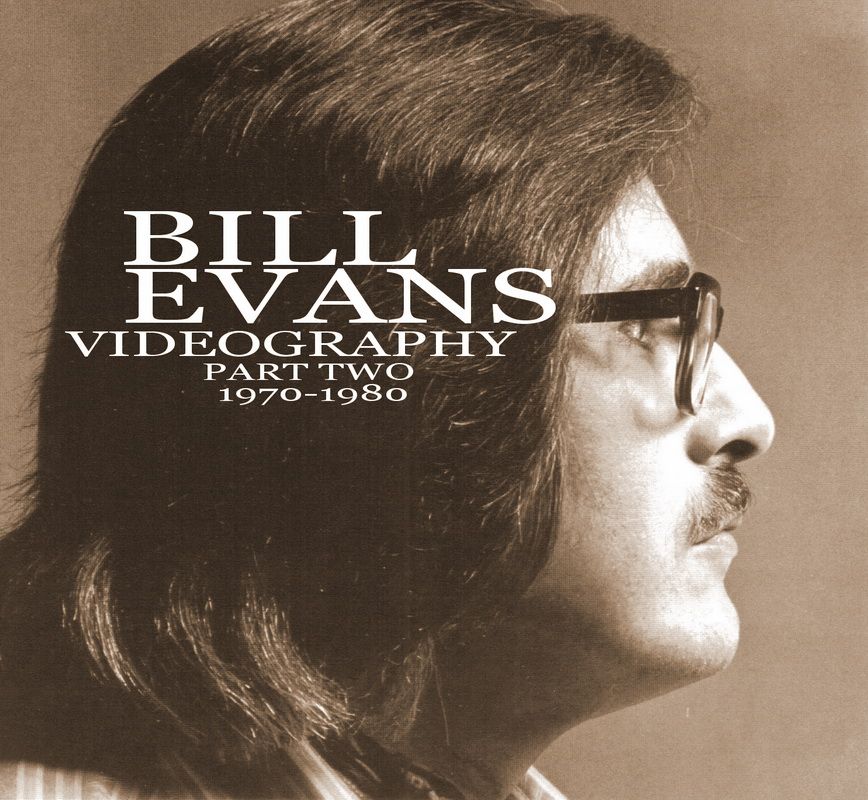
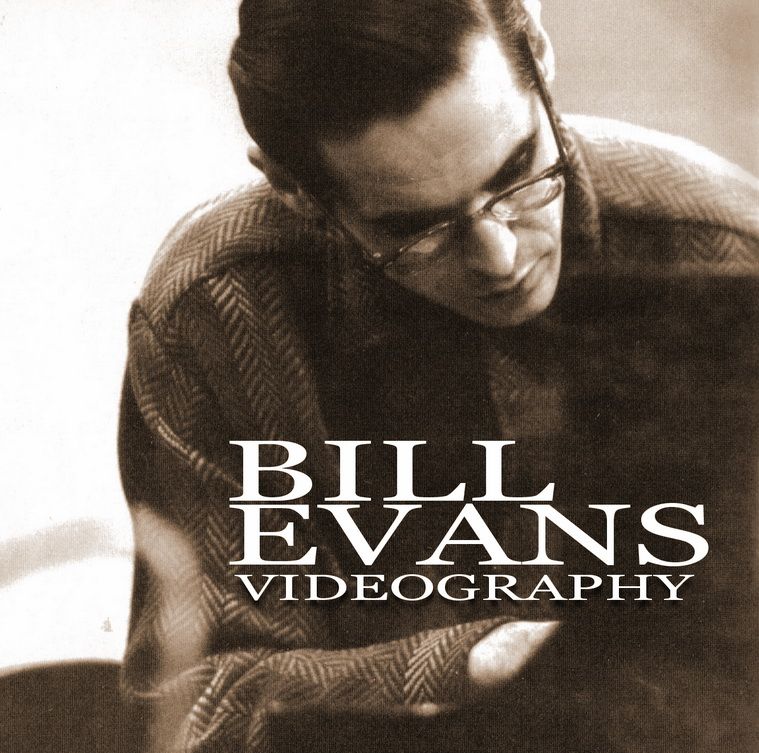
Bill Evans Videography (1970-1980)


BILL EVANS VIDEOGRAPHY: Part Two (1970-1980)
For the first part (1957-1969) go here.


Bill Evans Videography (1957-1969)


BILL EVANS VIDEOGRAPHY: A CHRONOLOGICAL LIST OF THE ARTIST ON VIDEO

This is the second videography of this blog, a listing of the available Bill Evans video materials on the web, after one I did earlier for the Hawk, Coleman Hawkins.

To compile this videography, I have heavily relied on the works of David Meeker (Jazz on Screen), and also the Bill Evans book by Peter Pettinger, beautifully titled How My Heart Sings. Without Jazz Discography Project life would have been more difficult for most of us, though the Bill Evans entry on JDP suffers from mistakes and lack of proper and up-to-date revision. It was then that I learned about so far the most complete discography of Bill Evans by Peter H. Larsen, posted by Italian folks, here.

Speaking of Italians, I must confess that what really inspired me to start this online listing of Bill Evans's performances was reading Enrico Pieranunzi's hugely illuminating 2001 book Bill Evans: Ritratto D'Artista Con Pianoforte which hit me hard. The Pianist as an Artist (which is its English title) is a small and humble book, but never shallow in reaching the spirit of Bill Evans's art. Also from technical standpoint, it is the most analytical since it has been written, or more likely lived, by a pianist, as superb and as Evansian as Pieranunzi.

Back to this videography, each performance is sorted chronologically and by sequence of the songs performed (which doesn't mean is always right). Then details about the session comes, and finally videos of the concert, if they have been available online in December 2012.

Wednesday, November 14, 2012

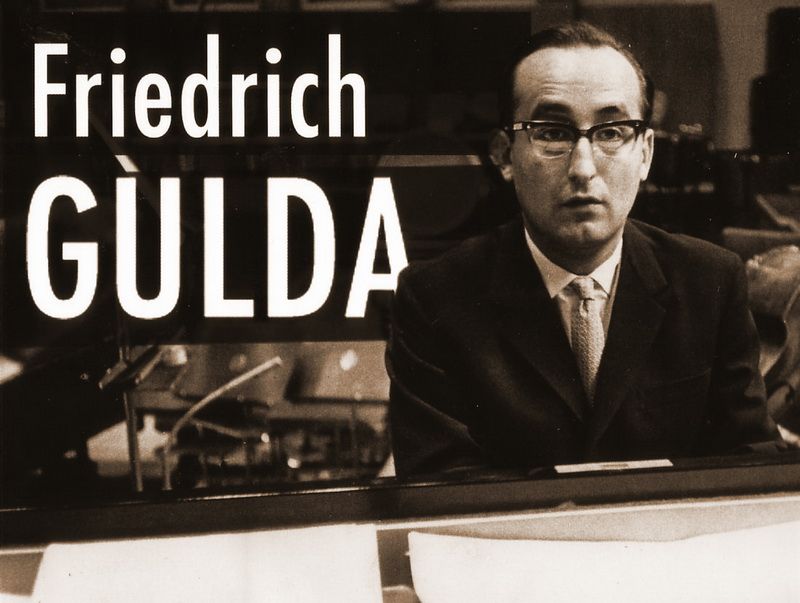
London Jazz Festival: Celebrating Friedrich Gulda


What is the definition of good music? There are thousands of answers to that. Mine, at this moment, is a simple or even primitive one: when you leave the venue, whether a tiny, basement club or a 2000-seat concert hall, you still have the beat, the vibe and the mood. So the actual concert is only the beginning of a longer personal association with that piece of music.

Last night, after the first set with the BBC Concert Orchestra playing Fredrich Gulda was finished, and when an interval of 20 minutes began in anticipation for the next set with Shabaka Hutchings, me, standing on the terrace of Queen Elizabeth Hall and its magisterial view to the Thames, and smoking the life away in hand-rolled cigarettes, felt that music of the first set was still physically present inside my - growing in me. What moved me so profoundly and brought the joy so easily was Fredrich Gulda's cello concerto, conducted by Mark Lockhart and soloed by Benjamin Hughes whose sensitivity as a great player was mixed with authority and preciseness. What could easily get into your system was a joyous "mish mash" (Lockhart's words) of the Viennese swing and marches, flickering sounds of woodwinds on the background which elaborate the tense presence of cello. It was good enough to literally overshadow what was followed in the concert.


Monday, November 12, 2012

London Jazz Festival: Celebrating Gil Evans


Gil Evans' arrangements in jazz are like Michelangelo Antonioni's landscapes and cityscapes in cinema: they are suspending spaces, inhabited and lost, in time. Cold, estranged and wintery, even if it is set in Africa (The Passenger), or in Evans' case, it is an arrangement for a classic like Summertime. Arrangements aside, his writings are even more fascinated with abstractness and low-register sounds of odd instruments (tuba, French horn, many trombones) which depicts the lower, or hidden corner's of its composer's sad soul, a Californian from Irish-Scottish origins whose apartment's door on West 52nd Street was open to revolutionaries of jazz and new sounds of surprise in the 40s and 50s.

Last night's concert at the Queen Elizabeth Hall, a tribute to Evans the writer and Evans the arranger, was a proof of still how vivid and valid is his music, more than half a century after its creation, unlike many of the modern big band and classical-oriented compositions of that period which seems heavy and stuffy today, in another word, dead and gone. Ironically, Gil's orchestration of bleakness has stayed more vivacious than his contemporaries.