Thursday, September 10, 2026

Cinema at 33⅓ RPM: Movie Themes Interpreted by Jazz Musicians

A slightly different edit of a piece originally published in MUBI Notebook in June 2015. Click on each title for the YouTube links. — EK


Jazz has long demonstrated its capacity to borrow from various, sometimes contradictory sources in order to create something that transcends the original elements. Since the earliest days of jazz, it has been inspired by military and funeral marches; has stylishly interpreted popular songs; and even brought the classical intricacies of Wagner and Bartok into the domain of swinging brasses and reeds. This multiculturalism and eclecticism of jazz makes it akin to cinema which, in turn, has transformed pop culture motifs into something close to the sublime and mixed ‘high’ and ‘low’ artistic gestures to remarkable effect.

In the history of jazz, the evolution from ragtime or traditional tunes, to discovering the treasure trove of Broadway songs was fast and smooth. As for American cinema, the emergence of ‘talkies’ meant rediscovering Broadway, its stars and directors, and above all its musicals and their songs. In the 1930s, jazz became cinema's rival in extracting tunes from the American theatre and transforming them into immortal standards. Both film and jazz used popular songs as a structuring framework, around which band leaders, musicians, directors and choreographers could develop more sophisticated and occasionally daring ideas.

Just as the emergence of television began to make itself felt at picture houses across the States, where declining attendance figures reflected a shift in the culture, jazz experienced a similar deadlock which contributed to the decline of the big bands. The effects of the war for returning Americans overseas, and the new possibilities for enjoying entertainment in the home gave rise to very different strategies of survival: The film studios began to produce more sumptuous, glossy and costlier motion pictures to overshadow television, while jazz bands were downsized, becoming more intimate – or “indie”, if you like. Instead of big bands, modest outfits of three to six musicians was jazz’s answer to the times. In this respect, one might find the origins of John Cassavetes and 1960s independent cinema not only in Hollywood, but in the Coleman Hawkins Quartet.

Monday, September 7, 2026

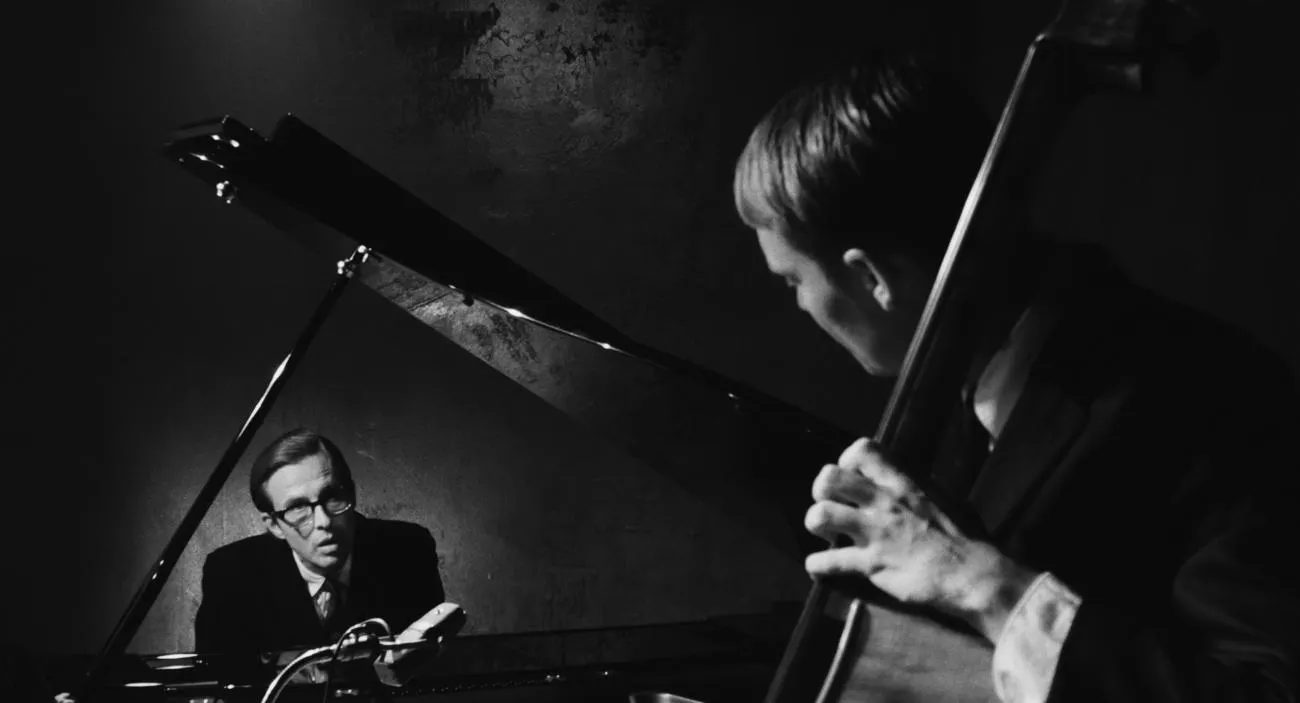
Film review: Everybody Digs Bill Evans


Three Suicides and an Album

By Ehsan Khoshbakht


Synopsis: 

At the height of his fame, tragedy strikes when jazz pianist Bill Evans loses his bassist, Scott LaFaro, in a car accident. Already battered by drug addiction, the devastated Evans seeks refuge with his family, struggling to piece both his life and himself back together.

Monday, August 17, 2026

Remembering Tubby Hayes


Tubby Hayes is the best jazzman I have known from England. His fiery style is a unique combination of John Coltrane (tenor), Yusef Lateef and James Moody (flute), Milt Jackson (vibraphone), and many other American musicians he always admired. But he was able to mix all these different roots and influences into one huge sound, full of complex harmonies and a distinctive melodic approach. Like most of his American idols, he had a troubled life, ruined by alcohol and drugs. Finally, just before he reached the fame he truly deserved, a weak heart stopped him from blowing. Let’s go back and see where all these things got started:

Thursday, October 30, 2025

London Screening of Two Jazz Doc Gems: Jazz In Exile – "Big Ben: Ben Webster in Europe" + "Cecil Taylor à Paris"

Big Ben

Jazz on Screen at the Barbican, Cinema 1, Sun 16 Nov 2025

Jazz In Exile – Big Ben: Ben Webster in Europe & Cecil Taylor à Paris + Intro by Ehsan Khoshbakht

This double bill offers two distinct portraits of ground-breaking American jazz musicians living and working in Europe, each navigating cultural displacement in their own unique way.

Big Ben: Ben Webster in Europe (1967) offers a lyrical, offstage portrait of a legendary saxophonist in Amsterdam. Ben Webster cooks, films his own life and reflects on the blues. In the film, his music and spirit explored through poetic visuals and intimate moments.

Cecil Taylor à Paris (1968) is a fierce, fast-cut portrait of an avant-garde pianist in Paris, rejecting the European canon and rooting his explosive sound in the Black American experience. The filmmaking mirrors the music’s energy, becoming a bold improvisation of its own.

Together, they reveal what it meant to be a Black jazz artist abroad, displaced not just by geography, but by culture, politics and sound.

Jazz on a Summer's Day Blu-ray Review

Review of the Blu-ray release for Sight & Sound, March-April 2023. – EK


Jazz on a Summer's Day (Bert Stern, 1959)

The annual Newport Jazz Festival in Rhode Island received its only movie treatment thanks to Bert Stern, a photographer famous for his portraits of female stars and models – which should explain the film's fascination with fashion and the idea of the "cool". Here the attitude of the performer – the magnificent detachment of Thelonious Monk, the movie-star glamour of Anita O'Day – is as important as the sound. Equally instrumental in the direction (though, to his dismay, uncredited) and responsible for editing the film was Aram Avakian, who constructs the rapport between the performers and the festival audience, both captured at graceful ease.

Monday, September 15, 2025

Symphony in Black: A Rhapsody of Negro Life (Fred Waller, 1935)


Duke Ellington receives a telegram reminding him of his forthcoming concert in two weeks’ time—not a terribly long notice for finishing an extended composition that seemingly hasn’t been touched before, but most probably accurate, since Ellington was one of the greatest procrastinators in jazz, often writing right up until the curtain rose.

Jammin' the Blues (Djon Mili, 1944)


Like Forough Farrokhzad and Jean Genet, the Albanian-born Djon Mili belongs to that small group of artists who, when counted officially (theatrical release of a completed film), might have directed only one short film. Yet that short, entitled Jammin' the Blues (1944), remains a touchstone of jazz on film.

Sunday, July 20, 2025

The Day Shostakovich Went to a Cannonball Adderley Gig — and Didn’t Get the Music | By Ralph J. Gleason


Early this year a group of U.S. longhair composers, including Ulysses Kaye, a nephew of King Oliver, visited Russia as part of a cultural exchange deal.

This, fall, a group of five Russian composers, headed by Dmitri Shostakovich and including Dmitri Kabalevsky, Tikhon Khrennikov, Konstantin Dankevich and Firket Amirov, visited the United States.

They were flown around the country, and included in their itinerary a three-day visit to the San Francisco area.

At their San Francisco press conference, the Russians were asked what they thought of jazz. It was obvious from their answers that they knew nothing of it (despite the fact that Kaye and his companions reported they were constantly asked about jazz by Soviet composers when they were in Russia). Jazz, to the visiting Russians, seemed to mean nothing more than hotel dance music.

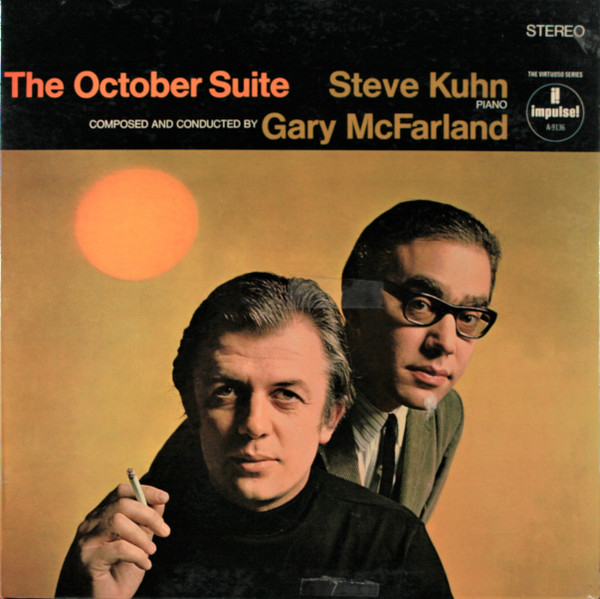
The October Suite (Steve Kuhn & Gary McFarland, 1966) | Original liner notes by Nat Hentoff


So far Steve Kuhn has primarily been heard in two contexts—as a sideman and as leader of a trio. This album, however, focuses on him as solo pianist in settings written specifically for him by Gary McFarland. For Gary the assignment was stimulating because, as he observed, he didn’t have to restrict himself to any particular idiom. Knowing the broad scope of Kuhn’s capacities, Gary felt free to try any approach he wanted in the confidence that Kuhn would respond resourcefully—and with individuality.

Friday, May 23, 2025

Cecil Taylor in Paris (1968)

The brand-new restoration of Cecil Taylor à Paris, courtesy of INA, will be premiered at the 2025 edition of Il Cinema Ritrovato. – EK


“He doesn’t come from my community,” replies avant-garde jazz pianist Cecil Taylor, hidden deep behind dark glasses, when asked by the interviewer about Stockhausen. The same response follows for questions about Bach and John Cage. In a style characteristic of 1968, the African-American musician, filmed for Cecil Taylor à Paris in an old French palace with oversized chimneys, dismisses European traditions in favour of “across the track” culture – the lived experiences of African-Americans.

Friday, April 25, 2025

Bob Dylan and The Band – The 1974 Live Recordings | My Picks

I delved into the 27-CD set between September 2024 and April 2025, and these tracks — roughly amounting to a double LP — are my picks among the 431 tracks. I took the following factors into consideration:

  • Quality of recording (some of the shows had poor sound quality)
  • Newness of the song to Dylan's live repertoire (as in 1974)
  • My love for Planet Waves and my desire to sample some live versions of it — though, as you'll see, not everything made the cut
  • Aiming to highlight tracks that showcase strong features of the Band's accompaniment, particularly Robbie Robertson’s guitar, Rick Danko’s bass, and Garth Hudson’s legendary blanket organ sound
  • Original and daring interpretations of oft-played tunes
  • The energy of the performance, even if it meant picking some tracks that feature the shouting style I know puts some people off
  • Ray Padgett’s remarkably detailed analysis and his sound advice


So, in the order of recording, here is my list:

Date, Venue, Location

Disc number of 27 | Song's name | Duration

Saturday, November 2, 2024

London Jazz Festival: Symphonies in Black – Duke Ellington Shorts


Jazz on Screen: Symphonies in Black: Duke Ellington Shorts

Tue 19 Nov 2024, 18:30, Location: Barbican Cinema 3

Introduction to the screening by Ehsan Khoshbakht


Join us at the Barbican for a special screening event featuring 16 captivating short films that highlight the extraordinary musical legacy of Duke Ellington and his Orchestra. Spanning nearly a quarter of a century (1929-1953), these films showcase Ellington’s performances in a variety of settings, often accompanied by dancers and singers, including the legendary Billie Holiday in Symphony in Black: A Rhapsody of Negro Life. This particular film fluidly transitions between Ellington composing in solitude, leading his band in a tuxedo at a concert, and artistic depictions of African American life, including a moving sequence with Billie Holiday portraying heartbreak similar to Bessie Smith's iconic film appearance six years prior.

Saturday, August 3, 2024

Paris Blues (1961)


Duke Ellington behind the scene of Paris Blues (1961) with Billy Strayhorn (left), director Martin Ritt, Louis Armstrong and production designer Alexandre Trauner.

Down Beat Diaries: Bert Dahlander | Skål (1958)


Bert Dahlander | Skål: Bert Dahlander And His Swedish Jazz—Verve MG V-8253

Tracks: How Do You Do; Johnson’s Wax; When Lights Are Low; Hip Soup; But Not For Me; Room 608; Medley—Everything Happens To Me, Moonlight In Vermont, Flamingo.

Personnel: Bert Dahlander, drums; Howard Roberts, guitar; Curtis Counce, bass; Victor Feldman, vibes.

Rating: ★★★1/2

Wednesday, June 12, 2024

Symphonies in Black: Duke Ellington Shorts

Black & Tan

Symphonies in Black: Duke Ellington Shorts

A programme by Jonathan Rosenbaum and Ehsan Khoshbakht (Il Cinema Ritrovato, Bologna, June 2024)

Introductory note by Jonathan Rosenbaum


In 16 shorts made over a stretch of almost a quarter of a century (1929-1953), Duke Ellington and his Orchestra perform in a variety of settings, often with dancers and singers – including Billie Holiday in Symphony in Black: A Rhapsody of Negro Life. The latter cuts freely between Ellington alone in thoughtful composing mode, Ellington in a tux performing the same extended composition with his band at a concert, arty images of men engaged in heavy labour, a wordless church sermon, a nightclub floorshow, and even a short stretch of story showing Holiday being pushed to the ground by an ungrateful lover before singing there about her misery – a near replica of the musical setup accorded to Bessie Smith in her only film appearance six years earlier.

Indeed, although the pleasures to be found here are chiefly musical, the narrative pretexts for these performances offer a fascinating look at how both jazz and Black musicians were perceived and expected to behave during the first three decades of talkies. At least half of the films are Soundies made for sound-and-image jukeboxes in the 40s, but even these often trade on narrative details such as the adoring women digging the solos by Ray Nance, Rex Stewart, Ben Webster, and others at an “eatery” after hours in Jam Session (1942), or the spectacular dancing by athletic jitterbugging couples in Hot Chocolate (Cottontail) from the same year.

Monday, May 27, 2024

Duke Ellington by Gordon Parks


Duke Ellington (live TV broadcast control room) photo by Gordon Parks, 1960. (c) Gordon Parks Foundation.


"Parks was seventeen when, in 1929, he first met Edward Kennedy “Duke” Ellington in the back of the Orpheum Theatre in Minneapolis. Parks [who] was living on the streets, playing piano in flophouses, hanging around nightclubs and pool halls, and skipping school [was] enthralled by Ellington’s style, grace, and musical genius.

Ellington became a hero for the young man. Decades later, in 1960, Parks was overjoyed by the opportunity to tour with Ellington’s band, calling it “a trip through paradise” (To Smile in Autumn, 1979). In his photographs, Parks revealed his admiration for the musician’s pensive elegance, magnetic personality, and exceptional stage presence." [source]

Monday, April 17, 2023

Nat Hentoff on Ahmad Jamal | RIP Ahmad Jamal (1930-2023)


Nat Hentoff Original Liner Notes: Ahmad Jamal's The Legendary Okeh & Epic Sessions,1951-55

A few years ago Miles Davis, Ahmad Jamal's most influential champion, reacted indignantly to my mumbled opinion that Ahmad Jamal was "mainly a cocktail pianist." Miles who had brought all the records Ahmad had made up to that time, began playing them, pointing out to this skeptical listener those elements of Jamal's playing that so intrigued him and that have since helped make Jamal a major force in the jazz record market and an increasingly powerful lure in personal appearances.

"Listen," Miles said then and later in an interview for The Jazz Review, "to the way Jamal uses space. He lets it go so that you can feel the rhythm section and the rhythm section can feel you. It's not crowded.

Ahmad Jamal Live 1999 | RIP Ahmad Jamal (1930-2023)

Photo © Daniel Sheehan. Source.
Let's start with an enlightening fact: do you know what ahmad jamal means? Obviously it is an Arabic name (long ago, in Pittsburgh, he was Fritz Russell Jones), but not just any name. Ahmad means highly praised "implying one who constantly thanks God" and jamal means beauty; In brief, Highly Praised Beauty. That is indeed the music of brother Ahmad Jamal.

You probably know that the new Ahmad Jamal album, Saturday Morning, is out. It's been described by Ahmad's website as an album "following on from Blue Moon...made up of the kind of ballads to which only he holds the key. Each one is a moment of grace, shining like a star in the sky of American Classical Music...with his light-fingered but rhythmic style, he sends us into a sensuous trance and leads us to a musical climax: a sound, which is pure groove." The album can be purchased here.

For this post, I have a 45 minute long video of an Ahmad Jamal concert to show you.

Friday, August 20, 2021

Duke Ellington in Isfahan

A shot from Duke Ellington in Isfahan

 
Duke Ellington in Isfahan is a short film that the author of this blog (Ehsan Khoshbakht) made in 2018 and slightly reworked in 2021 for festival release. Featuring jazz historian and musician Alyn Shipton, it's an archive-based documentary.


This short documentary by the Iranian filmmaker, writer and archivist Ehsan Khoshbakht tells the story of Duke Ellington's concert tour of the Middle East in 1963 and the development of one of the most beautiful jazz standards.  

The legendary composer and bandleader was seen as the ideal cultural ambassador for the United States at the height of the Cold War, when President Eisenhower's desired perception of the US as a moral force for good in the world was being undermined by an awareness of its treatment of African-Americans. 

Arriving in Iran with his band, Ellington was inspired by the historical city of Isfahan and especially its architectural riches. It would give its name to one of the pianist's most enduring compositions, and the tour as a whole helped to shape a Grammy Award-winning album, Far East Suite, which showed how much Ellington had absorbed from the sounds of his travels. 

Friday, February 12, 2021

Chick Corea Quartet plays That Old Feeling

Chick Corea. Photo source.

RIP Armando Anthony "Chick" Corea (1941-2021)

The July 1992 German tour of Chick Corea and Friends was the concert series of which I've already posted one here. This video, also from the Stuttgart concert, features Bob Berg on tenor saxophone, Eddie Gomez on bass and Steve Gadd on drums, going through That (same) Old Feeling: