Showing posts with label Tubby Hayes. Show all posts

Thursday, December 26, 2013

Image of the Day: Tubby Hayes + Charles Chaplin


Today I spotted the great British tenor saxophone player, Tubby Hayes, in a scene from Charles Chaplin's A King In New York, shot in Shepperton Studios in England, 1957. Other band members seen in this shot are Tony Crombie, playing the drums (while his cymbal is positioned exactly on Chaplin's head) and Jimmy Logan, bass. Does anyone know the trumpet player? [update: the trumpeter is probably Les Condon. See comments.]


Monday, April 2, 2012

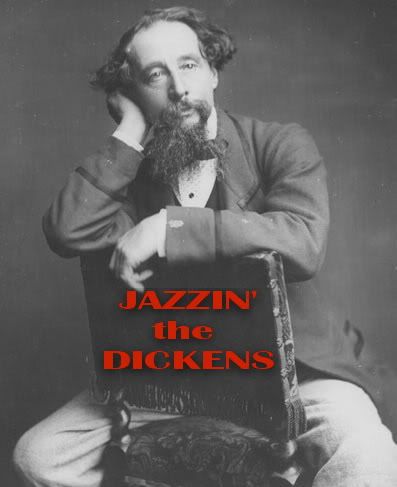
Jazz for Dickens

"Dickens is one of those writers who are well worth stealing. Even the burial of his body in Westminster Abbey was a species of theft, if you come to think of it." [all quotations from George Orwell]

200 years after the birth of Dickens, and more than 100 years after the first recorded jazz, let's celebrate the crossing point which took place 50 years ago in London, when John Dankworth and his orchestra including some of the top-notch jazz musicians in the island recorded a LP of Dickens inspired songs and named it What The Dickens! As its title suggests, it is a suite based on characters and themes associated with Dickens's world, and what a world!

In a sense, jazz musicians of the early days were Dickensian characters: ambitious young men, living in poverty and grimness of the big cities. Most of them were redeemed by characters as colorful and tough as Magwitch. Louis Armstrong was the young Pip and Joe Oliver was Magwitch. The class struggles, chance and accident, mistakes and victories, and the highly moral frame of mind remained the same, though the setting was changed from London to New Orleans.

Tuesday, July 26, 2011

A Guide to Best Jazz Scores for Cinema#5

5
Ray Heindorf
Pete Kelly's Blues
1955
Jack Webb


Arranged by: Matty Matlock. Musicians: Teddy Buckner (cornet), Moe Schneider (tr), Matty Matlock (clarinet), Eddie Miller (ts), Ray Sherman (p), George Van Eps (g), Jud de Naut (b), Nick Fatool (d).

Ella Fitzgerald (vocal, also appears as Maggie Jackson), Don Abney (p), Joe Mondragon (b), Larry Bunker (d).
Peggy Lee as Rose Hopkins.

Ella and her trio (as above) perform Hard Hearted Hannah (The Vamp of Savannah)


4
Lennie Niehaus
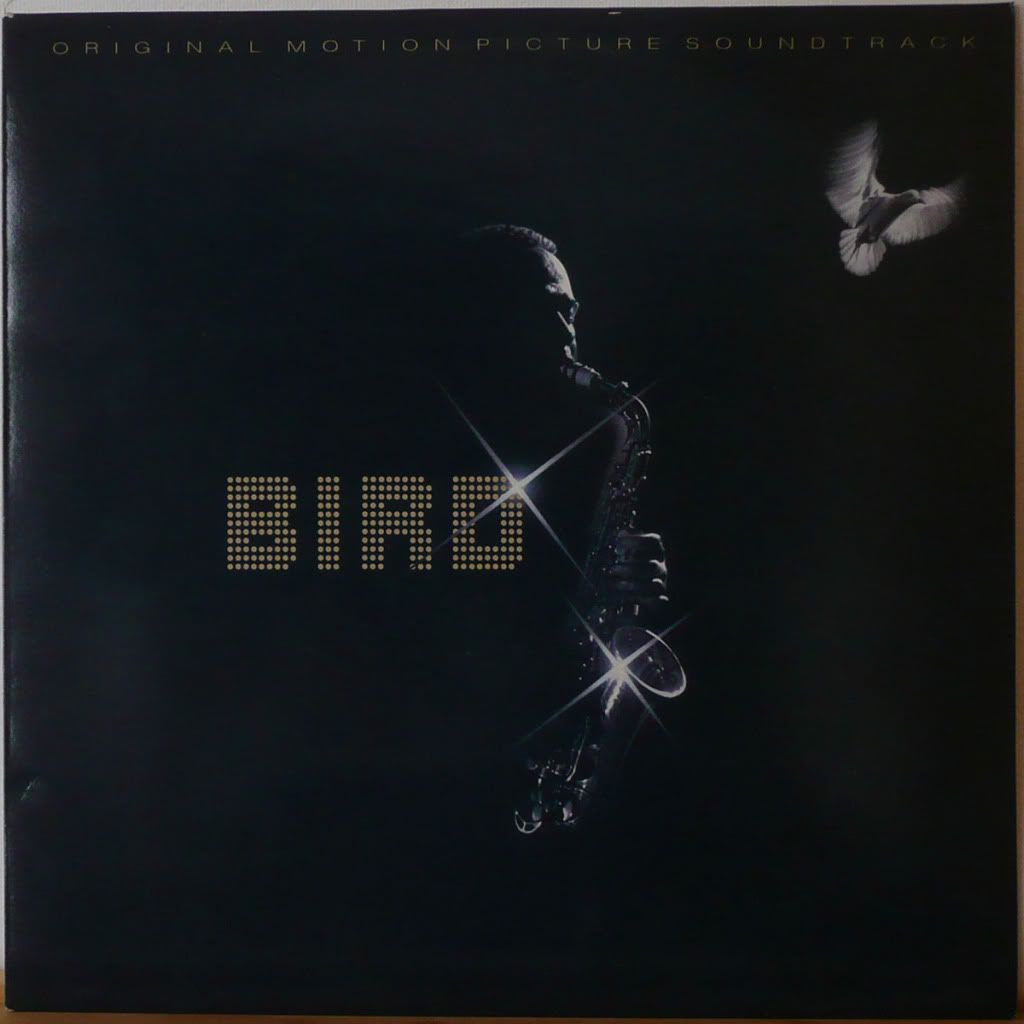
Bird
1988
Clint Eastwood

Musicians: Charlie Parker (as) [original rec. Alto track only], Lennie Niehaus (as) [filled in a few bars here and there], Pete Jolly (p) [solos], Tommy Tedesco (g), Charlie Shoemake (vib) .
trumpets: Jon Faddis, Red Rodney
alto saxes: James Rivers, Charles McPherson
pianists: Monty Alexander, Barry Harris, Mike Lang, Walter Davis, Jr.
bassists: Ray Brown, Chuck Berghofer, Chuck Domanico, Ron Carter
drummer: John Guerin

According to David Meeker "this movie contains some of the most complex and successful music tracks ever created for the director rightly insisted that original Charlie Parker solos must be used. Lennie Niehaus and his team, particularly recording engineer Bobby Fernandez, therefore cleaned up the original records electronically, isolated Bird's solos and re-recorded them with new backing groups."

Lover Man


3
Sonny Rollins
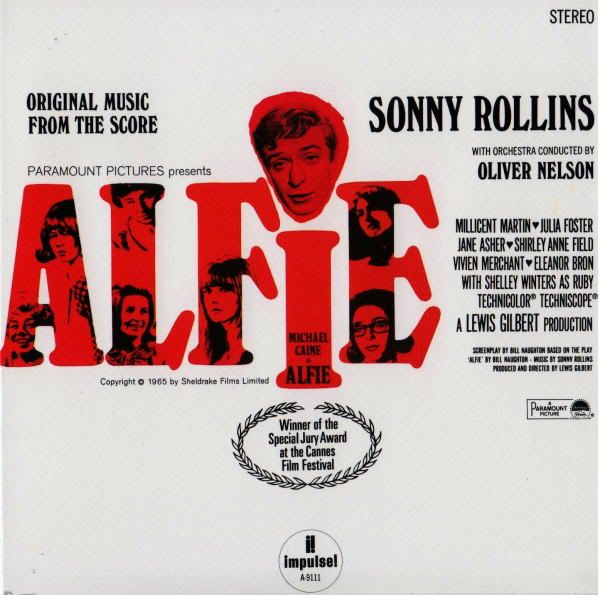
Alfie
1965
Lewis Gilbert


Musicians: Keith Christie (tr), Sonny Rollins, Ronnie Scott, Tubby Hayes (ts), Stan Tracey (p), Dave Goldberg (g), Johnny Hawksworth (b), Phil Seamen (d).
Listen to the Alfie's theme


2
John Lewis
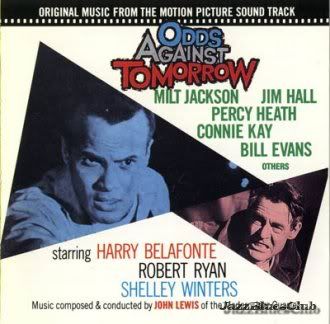
Odds Against Tomorrow
1959
Robert Wise


Musicians: John Lewis/Bill Evans (p), Jim Hall (g), Milt Jackson (vib), Percy Heath (b), Connie Kay (d) + orchestra which included Joe Wilder, fluegel horn.
Listen to main theme (Odds Against Tomorrow)


1
Miles Davis
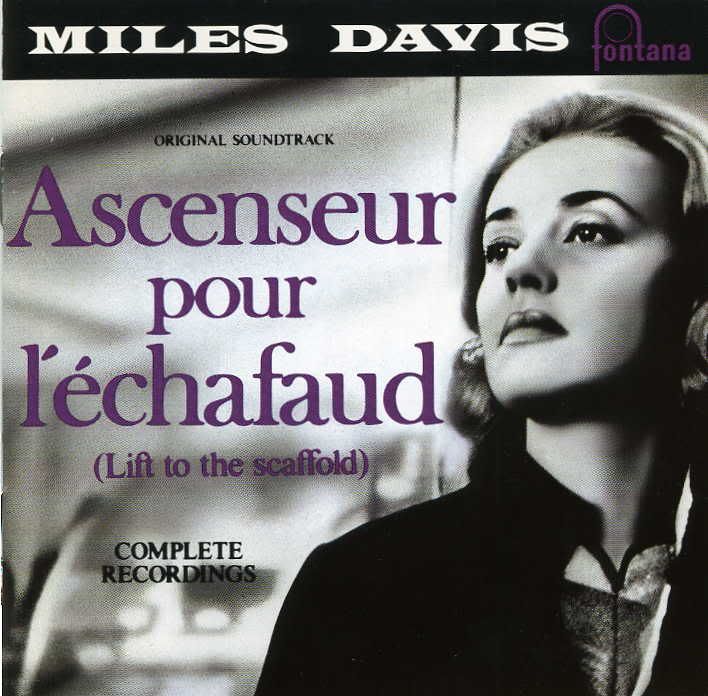
Ascenseur pour l'échafaud
1957
Louis Malle

Musicians: Miles Davis (t), Barney Wilen (ts), René Urtreger (p), Pierre Michelot (b), Kenny Clarke (d) .

Nuit sur les Champs-Élysées


Return to Part 4

Sunday, November 22, 2009

Remembering Tubby Hayes


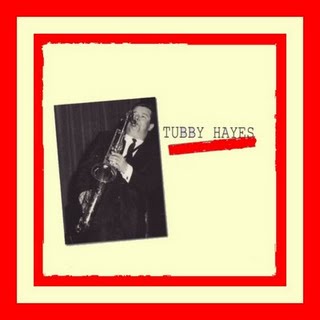
Tubby Hayes is the best jazzman I've known from England. His fiery style is a unique combination of John Coltrane (tenor), Yusef Lateef and James Moody (flute), Milt Jackson (vibe) and many other American musicians he always admired. But he is able to mix all these different roots and influences into a one huge sound that carries lot of complex harmonies and distictive melodic approach. Like most of his American idols he had a troubled life, ruined by alchol and drugs. Finally before he reach the fame he really deserves a weak heart stopped him from blowing. Let's go back and see where all these things get started:

Edward Brian "Tubby" Hayes was born in 30 January 1935, St. Pancras, London. His father was a BBC studio violinist who gave his son violin lessons from an early age.

“As a little boy of five or six I can remember wanting to own a saxophone. I tried to talk my father into buying me one, but he told me: ‘You’ll never be able to blow that—it’s much too big for you.’ So I had a few years on violin and piano—which I don’t regret, because it was a good grounding.”

By the age of ten Hayes was playing the piano, and started on the tenor sax at eleven. And that is when "a little boy came up, not much bigger than his tenor sax", as remembered by Ronnie Scott.

After a period spent playing with various semi-professional bands around London, Hayes left school and started playing professionally at the age of fifteen with the bands of Kenny Baker's sextet, Vic Lewis and Jack Parnell. In 1951, when he was sixteen, joined big-band leaders such as Ambrose, Terry Brown, Tito Burns, Roy Fox and Jack Parnell. His first major feature on record is a live concert recording (by label "Hep") made with the Vic Lewis Orchestra in 1954, a day before his nineteenth birthday. The record contains a remarkable six minute quartet performance featuring Tubby throughout.

He formed his own eight piece group (three saxophones, two trumpets and rhythm section) in 1954 and toured with the group 1955 to 1956 and although a musical success it could not pay its way. The band recorded for the independent "Tempo" label during this time reveal a confident lively band playing many jazz themes of the day such as Peace Pipe, Opus De Funk, Jordu, Straight Life, Room 608 and Man Ray.

Jazz Couriers with Ronnie Scott

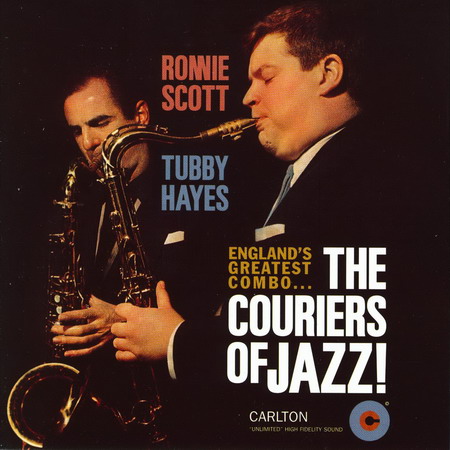
He toured the UK for eighteen months and took up flute during this time. In I956, on the demise of the eight–piece, Tubby began an association with the Downbeat Big Band, that dynamic 12–strong aggregation, to which many of Britain’s best musicians and writers contributed. He co-led the successful Jazz Couriers with Ronnie Scott from 1957 to 1959.

“I’ve always admired Ronnie’s playing a lot, and Ronnie I like very much as a person. We had a very good time. I did practically all the arrangements for that group. But two tenors is a limited sound.”

In 1957 Tubby had taken up the vibes after Vic Feldman had bequeathed his instrument to him before his return to the United States. Less than six months later Tubby was recording on them and sounding for all the world like Milt Jackson (on Reunion from the Jazz Couriers first LP). Subsequently, Hayes reformed his quartet, and toured Germany with Kurt Edelhagen.
In 1961 he was invited to play at the Half Note Club in New York; a new transatlantic Musicians' Union agreement meant that, in exchange, Zoot Sims played at Ronnie Scott's. While in America, Hayes recorded Tubbs in N.Y. with Clark Terry, Eddie Costa, and Horace Parlan. In 1962 he returned for another visit, this time recording Return Visit with James Moody, Roland Kirk, Walter Bishop Jr, Sam Jones, and Louis Hayes. He played at the Half Note again in 1964, and at the Boston Jazz Workshop the same year, He stood in for Paul Gonsalves in February 1964 (with whom he also recorded twice in 1965 (Just Friends and Change of Setting) when the Ellington orchestra played at the Royal Festival Hall.

playing Vibe

Worked with pianist/Vibraphonist Victor Feldman and his trio (Monty Budwig on bass and Colin Bailey on drums) at the Manne’s Hole (Shelly Manne’s private L. A. jazz club) in 1965.

"While I was there I did a couple of television spots, one of which was George Shearing’s own show. Mel Torme and myself were the two guests on the programme. George has got quite a good quintet these days, with Joe Pass on guitar, and people like that. The other thing I did was an hour–long panel discussion on jazz. Leonard Feather was the chairman, and Don Ellis, the avant–garde trumpet player and composer, and a pianist called Jack Wilson also took part."

Hayes made a trip abroad with Ronnie Scott's big band to play the Musica '68 festival in Majorca (June 22nd-27th 1968). This line-up was another star studded affair with Tubby joining Ronnie, Derek Humble, Roy Willox and Ray Warleigh in the saxes. Jimmy Deuchar, Derek Watkins, Benny Bailey and Kenny Wheeler were the trumpet section. Keith Christie, Ake Persson and Nat Peck comprised the trombone line-up. The “all star” rhythm section was John McLaughlin, Gordon Beck, Lennie Bush and Kenny Clare!


He played with the Kenny Clarke/Francy Boland big band in Venice 1969. Number of excellent albums in the late 60s that starts with Mexican Green and preceded by several other albums all recorded for the Fontana label.
In 1969 he formed a new quartet with guitarist Louis Stewart and drummer Spike Wells. He had a new interest in free jazz and rock music and dabbled with the format working from time to time with Georgie Fame as well as his now settled quartet format including the Mike Pyne and Ron Matthewson rhythm team. An excellent Live 1969 CD, captures one of Tubby's final gigs with this quartet.


But by early 1970 health problems resurfaced when doctors discovered he had a faulty heart valve. He underwent an operation a year later and was out of action for the whole of 1971. When Tubby made his comeback in early 1972, the jazz scene had changed. The avant-garde was on full-force and jazz rock had ravaged the music. Tubby's rejected the changes and his reaction was to go out and do straight-ahead gigs with his reformed quartet, playing much the same repertoire as he had done a decade earlier. He began his comeback with an overseas tour, making a successful trip to Scandinavia in February 1972. This tour is commemorated on the Storyville CD, Quartet in Scandinavia. Although now in poor health he worked on until another collapse before what transpired to be his final public appearance in Brighton in May 1973. Doctors confirmed that the replacement heart valve was failing and that a second operation was necessary. He died from complications undergoing surgery on June 8th, 1973, at the aged just thirty- eight. He was cremated and interred at the Golders Green Crematorium.


Hayes appeared in a number of films, including All Night Long (1961) with Charles Mingus and Dave Brubeck, and (with his quintet) in The Beauty Jungle (1964) and excellent Dr Terror's House of Horrors (1965). He also played at a wide range of jazz festivals, including Reading, Windsor, Antibes, Lugano, Vienna, and Berlin.

-- Ehsan Khoshbakht


See Also:

Tuesday, October 20, 2009

Mexican Green (Tubby Hayes, 1967)


Last week’s great discovery was a top-notch record from the British jazz scene – still an unknown territory to most of jazz fans – that reminds me of how beauty can be found when and where you’re not expecting it.

The artist is Tubby Hayes and the record, Mexican Green from 1968 (Recorded in February and March 1967 and released in the following year), a post-Coltrane hard blowing session with an endless energy from the British master of the tenor sax (and other instruments as well), released by Fontana label.

Tubby Hayes was a multi-istrumentalist and probably Britain’s most important figure in modern jazz history. Looking back at the Melody Maker’s poll for best musicians of the year (British version of the Down Beat’s poll) you may find Hayes name at the top rank of every field. In Melody Maker Jazz Poll from 23 January, 1960, he was chosen as the 6th top musician of the year, 7th greatest small combo leader of the year, best tenor player of the year, second best flute player and among top ten composers of the British jazz scene.

In next year’s poll he jumped to the first rank as the best combo leader, best tenor player, and also as the best musician of the year, next to Johnny Dankworth. He also entered to the top ten list of the best alto, baritone and vibe player and big band leader and even arranger of the year.
Until 1969 he held his position as the best British musician of the year and from then his poor health forced him to work less and finally an early death, in June 1973, brought to a close the most remarkable chapter in the history of British jazz.

It’s a pity that among those great jazzmen of the isles, a real cat like Tubby never was invited aboard to the all-star sessions by major American labels. While in the late 1960 – and maybe on behalf of British rock music – such average guys like Dave Holland or a bragging guitarist like John McLaughlin became stars of the day, Tubby made only one New York recording.

“I never dreamed that I would fulfill a few ambitions, the biggest being to work in the States. Right from the start, when I was inspired by American jazz musicians, I never thought I’d get the opportunity of actually working in their company.” said Tubby in an interview from 1969. He also shared the demons of his idols by drinking hard, and later addiction to drugs.

But during his short lifetime he had a chance to play with giants like Roland Kirk, Clark Terry, James Moody, Charles Mingus, Benny Golson, Paul Gonsalves, Eddie Costa, Walter Bishop, Jr., Sam Jones, Louis Hayes, Victor Feldman, Cedar Walton, George Shearing, Kenny Clarke and Francy Boland and thank heavens that some of these dates are waxed as the great documents from the musical life of a fierce player.

***

The Mexican Green came out in early 1968, when Hayes' personal life was in tatters. Already a sick man, he ignored warnings to slow down and ravaged by drugs and drink, and disgusted with his playing, he turned reclusive and spoke to no one for nearly three months. He was sorting himself out when he was arrested and charged with narcotics offences.

In Melody Maker jazz poll of March 1969, Mexican Green was voted only second place in the LP of the year category, behind the ten year old reissue of Stan‘s Little Klunk. And being on the Fontana label means his records has been issued in the States, too.

He was always in agony of not having good rhythm section musician in England, especially after constant trips to U. S. and working with some of the fine drummers and bassists of the day. But in Mexican Green one can here a rhythm section as good as prestige or Blue note rhythm masters of the 60s, consist of Mike Pyne (piano), Ron Matthewson (bass) and Tony Levin on drums. While the influence of Coltrane quartet, especially on pianist Mike Pyne, is apparent.

All songs are composed by Hayes. “Whether I’m writing for the quintet, or for strings, or for a big band, I would rather arrange standards or my own themes than copy things off records or take down, shall we say, American compositions and adapt them,” says Hayes about his conceptions in writing music.

One of my recent exhilarating jazz experiences was with Hand to hand, a LP made by George Adams and Danny Richmond (ex-Mingusian cats) and their theme song on that record, The Cloocker. For more than a month I was listening to this terrific, fast tempo piece and when last week I heard Dear Johnny B. , the opening track from Mexican Green, I understood where it was coming from. Yes, is an ancestor to Cloocker and one of the most original pieces from European musicians with adequate amount of attack and intensity. “There are times when I will not use those fast runs and things—and there are times when I will. Sometimes I do it out of sheer exuberance—and get carried away with myself and get things going.” It’s a good explanation for the existence of tracks like Dear Johnny B, that you’ll hear many of them in Hayes’ records. By the way this song is dedicated to Hayes’ late drummer Johnny Butts who tragically died in a car accident in his twenties.

“It is not just a question of the speed at which this track is performed nor even the dexterity of Hayes’ performance but it is as though on this number at least, Hayes appears to take the tenor through the sound barrier normally restricting that instrument. He pushes the tenor so far and in such a fluid way that the timbre of the sax melts so that it begins to sound like another instrument entirely. Hayes transforms his saxophone into something approaching the sound of an accordion played at very high speed. His lightning bravura playing never waivers for a second and is always on the button.” Says Roger Farbey in his review of the album [All about jazz]

My other favorite tunes in the album are:
Off the Wagon, is a joyous hard bop piece that could belong to Sonny Rollins’ repertoire.
Trenton Place that starts with a relaxing introduction by rhythm section and then Hayes shows his mastery in flute. It’s like My favorite things that McCoy Tyner stole the set from master John Coltrane in his mid-section piano solo.
Suddenly mood changes and we back to an unstoppable high speed tune that is named second city stomper.
The title track, Mexican Green, appears at the end of the album with a mournful sax introduction and enough disquietness from the rhythm section.

Among all those giants of tenor saxophones and heavy weights of the instruments, story of this little fat boy from Britain is something you’ll never forget. And if only one record could have such a clear and present impact on the listener, that would be Mexican Green.

--Ehsan Khoshbakht

Tubby Hayes Discography


Tubby Hayes Discography
Albums


Year/Album Title/Label/Release Date (if it hasn't release at its time - when recording date and release date isn't the same)/Session Dates (if it includes more than one date in two or more different years - mainly for compilations)

1955 The Swinging Giant Volume 1 Jasmine

1955-69 Blue Hayes, The Tempo Anthology Jasmine 2004

1956 The Yellow Rose Session BBC

1956 After Lights Out Jasmine

1956 Changing the Jazz at Buckingham Palace Savoy

1956 Little Giant of Jazz Imperial 1954-56

1956-57 Opus de Funk with Jimmy Deuchar Jasmine

1957 Tubby Hayes and the Jazz Couriers Jasmine

1958 The Swinging Giant Volume 2 Jasmine 1956-58

1958 All the Winners Pye Nixa

1958 The Jazz Couriers In Concert Music For Plesure 1967

1958-72 England's Late Jazz Great IAJRC 1987

1959 The Eighth Wonder Jasmine 1958

1959 The Last Word [the Jazz Couriers] Jasmine

1959 Tubby's Groove Jasmine

1959 London Jazz Quartet Ember

1961 Couriers of Jazz: England's Greatest Combo Fresh Sounds

1961 Equation in Rythm Fontana

1961 Introducing Tubbs Epic

1961 New York Sessions fontana

1961 Palladium Jazz Date with Cleo Laine Wing

1961 Portrait Ember 2000 1958-1961

1961 Tubbs Fontana

1961 Tubbs In N. Y. Wing 1967


1961 Tubby the Tenor Classic/Epic

1962 Down in the Village Fontana

1962 Late Spot at Scott's Universal

1962 Return Visit Fontana

1962 Tubby's Back in Town Smash [reissue of Return Visit]

1963 A Tribute: Tubbs Spotlite

1963 Tubbs - Live At The Dancing Slipper Spotlite

1963 At the Akadamie der kunste, Berlin ?

1964 Change Of Setting World Record Club

1964 Inventivity Candid

1964 Live in London, Vol. 2 Harkit 2005 1963-1964

1964 Tubbs Tours fontana

1965 Commonwealth Blues Art of Life 2005

1965 Intensity Tentoten

1965 Just Friends - with Paul Gonsalves Columbia

1965 Live at the Hopbine Harkit 2005

1965 Live in London Harkit 2004 1964-65

1965 Voodoo Session [soundtrack] Trunk

1966 100% Proof Fontana

1966 Addictive Tendencies Rare Music

1966 Jazz Tête à Tête Harkit 2004

1966 Night and Day Jazz House 1963-1966

1967 Lament Savage Solweig

1967 For Members Only Miles


1967 Mexican Green Fontana 1968

1969 200 % Proof ?

1969 Live 1969 Harlequin

1971 The Orchestra Fontana

1972 Quartet in Scandinavia Storyville 1998

1972 This Is Jazz - 100% Proof Philips

1972 Tubby Hayes IAJRC 1957-72

1972 Split the Difference with Splinters Reel


Last update December 18, 2010.