Wednesday, February 27, 2013

Jonathan Rosenbaum @ 70


"As someone steeped in modern jazz, I tried to improvise my writing over factual backdrops the way a jazz musician solos over fixed chord changes." - Jonathan Rosenbaum

The needs-no-introduction film critic Jonathan Rosenbaum turned seventy today.

My rather personal ties with the Chicago-based critic, and the reason of featuring him in Take the "A" Train comes from our mutual love of jazz, which, aside from its ecstatic pleasures (that sometimes surpasses cinema’s), can assists writers in the ways they approach any other art form. Rosenbaum’s articles about jazz offer a wealth of insights in additional to being historically important and offering insight into the use of the jazz idiom in film literature. For the former I can point to his invaluable documentation and criticism of rare jazz films for Monthly Film Bulletin in the 1970s (I recently discovered his pioneering Black and Tan piece in the aforementioned publication has been the subject of ruthless plagiarism in a prestigious Duke Ellington biography) and as for the latter, I draw your attention to his first autobiographical and improvised book, Moving Places (Second Ed., University of California Press, 1995).

a scene from an experimental film

Celebrating Jonathan's 70 birthday (while now he is busy teaching a course on film criticism in Mexico City) I  have three pieces to offer, or rather Jonathan has provided me with three invaluable pieces to share with my readers:

INTERVIEW WITH JONATHAN ROSENBAUM ABOUT JAZZ AND CINEMA


AN INDEX OF JONATHAN ROSENBAUM'S ARTICLES ABOUT JAZZ AND FILM

JONATHAN AS YOUR JAZZ DJ, WITH A PLAYLIST OF HIS FAVORITE JAZZ TRACKS


...and happy birthday JR!


Jonathan Rosenbaum Takes the "A" Train

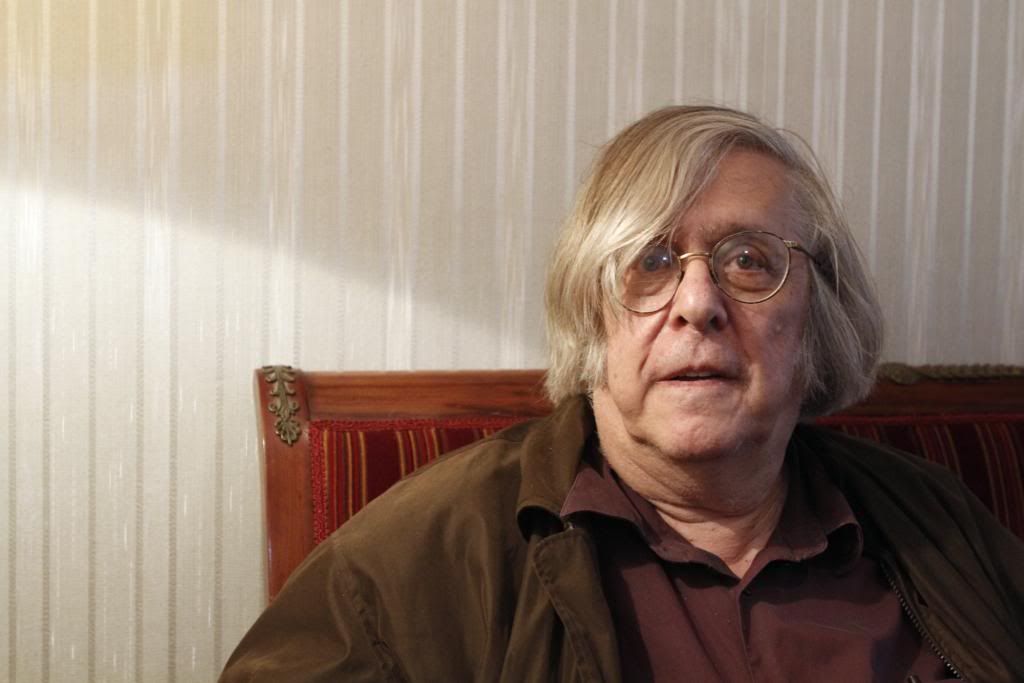
Jonathan Rosenbaum [image courtesy of San Sebastián Film Festival]

As a part of Jonathan Rosenbaum's 70th birthday posts on my jazz and film blogs, I asked him to compile a playlist of his favorite jazz tunes and he kindly provided me with the music that has inspired him, moved him and has stayed with him through the years. (the slideshow includes the cover of the albums used in the playlist) He shares details of his jazz life with us in the interview published on Keyframe. And if you want to catch up with some of his writings on jazz and film, or jazz in general, please visit this index that I posted yesterday.


The discographical information is given below the player. If this particular player isn't compatible with your system, there a simpler one, if you just scroll down the page, where, alternatively, you can download it and listen to it offline.


Even on his birthday, it is Jonathan who gives us presents.

Monday, February 25, 2013

Jonathan Rosenbaum: An Index

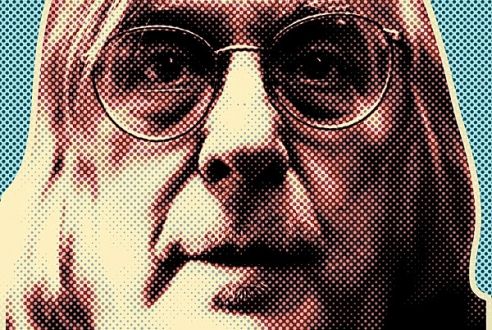
Jonathan Rosenbaum (image courtesy of TimeOut)

This post indexes those articles by Jonathan Rosenbaum that are related to jazz, whether in form of "film and jazz," or few cases of pure jazz writing.

Last update: July 22, 2014

Saturday, February 23, 2013

Remembering Paul Weeden

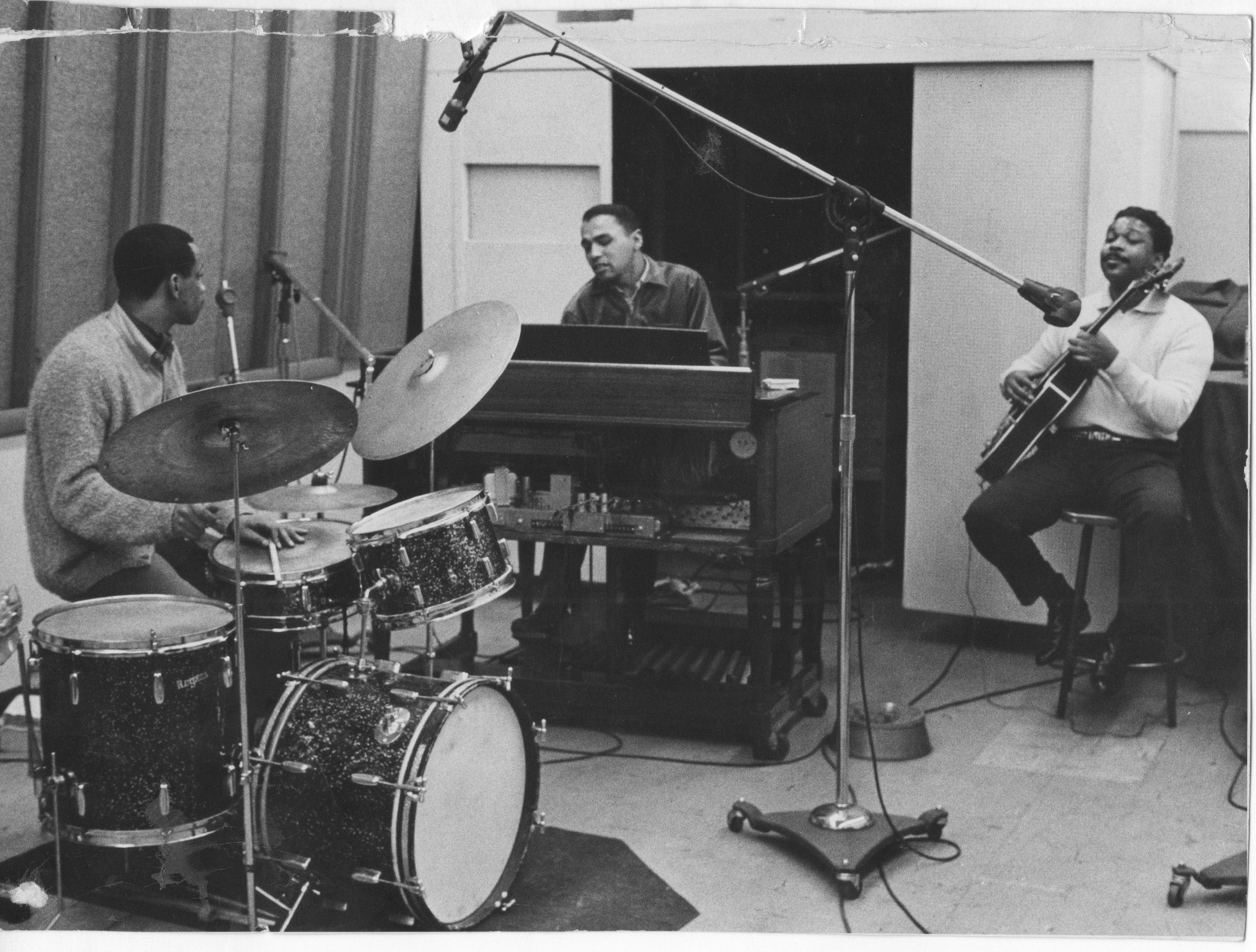
From right: Paul Weeden, Don Patterson, Billy James [source]

Last week I had lengthy sessions with the music of Don Patterson, one of the post-Jimmy Smith Hammond B3 players who, more or less, followed the pattern of early Smith trios with guitar and drums. Nevertheless, he is more of a funky/groovy player for whom Smith was only an starting point from which he saw the possibilities of the organ, as a swinging (and also good-selling) instrument in jazz. So naturally, compared to early recordings of Smith (which in my opinion are among his most powerful), Patterson lacks that rich bebop vocabulary. However, Patterson, like many jazz musicians who pursued a career somewhere between the center to the margins of jazz world, has his own special merits, quite sufficient to enable the listener to stay with his music for a period of time, in my case, as long as a weekend.

Of course, one can argue that his output with Sonny Stitt are his classics, which I neither accept or dismiss. But you might have heard of a certain Paul Weeden who played guitar in Don Patterson Verve recordings of the early 1960s. If not, in a nutshell, his was a Tiny-Grimes sounding, bluesy guitarist which deserves more attention.

Tuesday, February 12, 2013

Ad-Lib#3: Prima Bara Dubla


1
The only official recording of Gerry Mulligan with Duke Ellington that I can think of is that of Newport 1958 in which the mind-blowing late-night call-and-response between two baritones, Mulligan and Harry Carney, in Prima Bara Dubla, repeats the memory Newport '56 in its own right. Unlike the revolution of 1956 and Paul Gonsalves' restless solo that ended all solos in his and other people's career in Ellington company, Prima Bara Dubla is a dark, reserved and unhurried conversation. If Gonsalves," by injecting a new aggressive blood to the veins of the orchestra, "made history, this one is "about history" and a commentary on that through juxtaposition of two sounds, two styles and two eras while each comment on the other: Big Band Swing reflecting Cool, and vice versa.

The liner notes of the 1958 Newport recording says: "Duke, who had been complimented so effectively all evening, paid his own compliment to Gerry Mulligan by writing a duet for Mulligan and Harry Carney, the two premier baritone saxophonists of jazz. Gerry, who made several appearances at this year's festival, including one with Marian McPartland paying tribute to Ellington earlier in the evening, came back on stage in his red jacket at this point in the programme and he and Harry took their places at the front of the stage to play Prima bara dubla, which is probably limp Spanish for a couple of first-class baritone sax men. It became a highlight of the concert and an honour both to Gerry and to Duke."

Tuesday, February 5, 2013

Jazz In High Heels

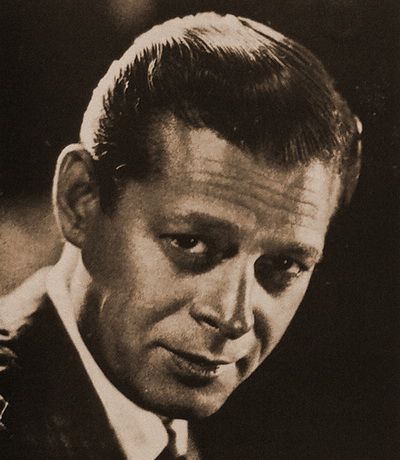
Mundell Lowe
In 1962 once again jazz returned to its notorious roots of accompanying strippers and burlesque queens, this time far from New Orleans and somewhere on the big silver screen. Mundell Lowe, a country music guitarist who converted to jazz and filled the chair in the big bands of Benny Goodman or small groups of Charlie Parker and Billie Holiday, was the one who composed music for the sexploitation film, Satan In High Heels, starring Meg Myles and Sabrina.

Looking for an opportunity to show his talent in composing and arranging, Lowe invited some of the best jazz musicians in New York City to his November-December recording sessions at RCA studios, among them Clark Terry, Eddie Costa, Phil Woods, Oliver Nelson, Buster Cooper, Joe Newman and George Duvivier.

The result, unlike the cheaply produced nudie flick, is an important and overlooked soundtrack in history of motion pictures.

(with images of the film and selected tracks from the soundtrack)

Tuesday, January 29, 2013

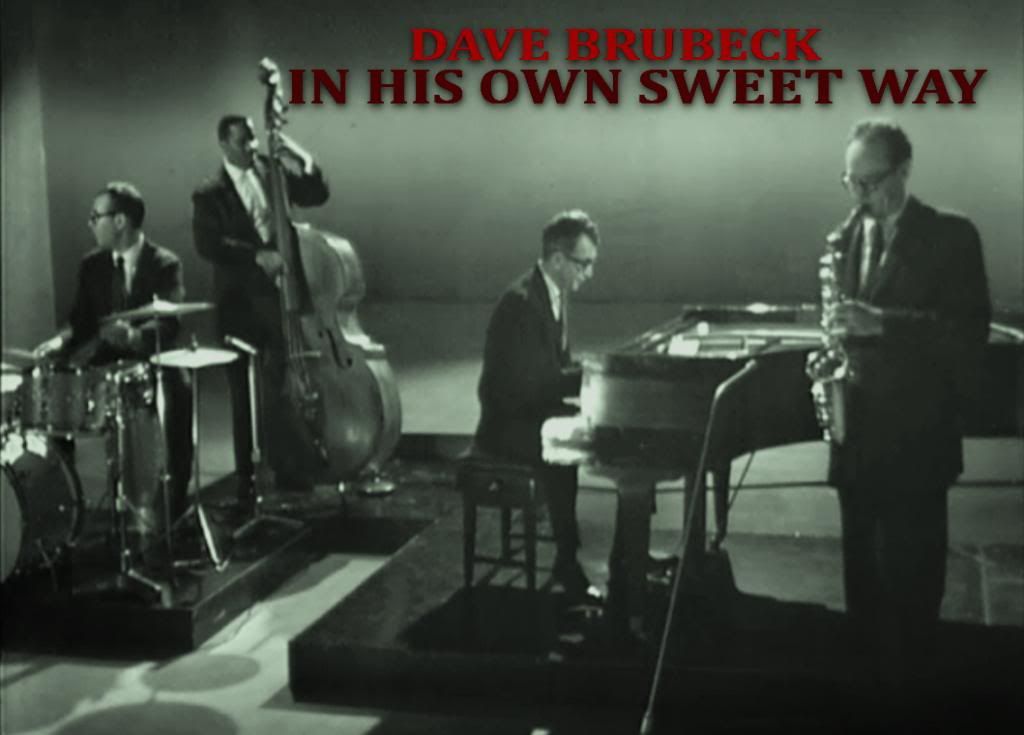
Brubeck: In His Own Sweet Way


Finally I managed to catch up with the long-awaited Dave Brubeck documentary, In His Own Sweet Way, now available on BBC iPlayer (online streaming in the UK). My curiosity wasn't just about Brubeck, whose music has had a part in my life, but also I was eager to see director Bruce Ricker's last film, who made the landmark jazz film The Last of the Blue Devils (1979) about the legendary travelling band of the 1930s, featuring Count Basie, Big Joe Turner and Jo Jones.

Bruce Ricker died in May 2011, two months after Brubeck’s great drummer and collaborator Joe Morello left us. Brubeck passed away recently, after a prosperous and amazingly productive and inspiring life. The only living member of the classic quartet is Eugene Wright whose powerful and subtle rhythmic support is the most overlooked, whenever the subject is Brubeck’s music.

Friday, January 25, 2013

Rollin' Around the Horn: Hawk, Dizz, Getz, Mex


Rollin' Around the Horn
Nat Hentoff's Liner Notes for
Sittin' In (Verve/Clef)

About 6 a.m., a few days before the July 4, 1957 weekend, three tenors, a trumpet and a rhythm section convened in a New York recording studio. They left about five hours later - and this is the result. It marks the first time that Coleman Hawkins, Paul Consalves, and Stan Getz have ever recorded together. It's also a reunion between Dizzy and Hawk. They were responsible for an historic date in 1944 at which sessions titles like Woody n' You and Disorder at the Border were recorded. It was musically an important early modern jazz event but also was a rare graphic indication for that warring time that the “bop" movement was not a break with the jazz tradition; for after all, Coleman Hawkins had Dizzy on his date.

“I never worry about styles noway,” Coleman said recently. “I like to get fellows together that play.” Coleman approves of both his reed colleagues on this session, and adds: “You know Paul’s been playing a long time and deserves a lot more credit than he’s gotten."

“Paul,” Stan Getz commented on the session, “plays a ballad that's just beautiful. His ballad playing on the date gassed us all. I've always loved the way Coleman plays; he’s always had his own style, his own way. His work has lucidity and freedom. He seems to just roll around the horn and his sound is so full.”

Thursday, January 17, 2013

Far of the Middle: Ellington's 1963 State Department Tour


The third State Department tour of the Middle East which sent Duke Ellington and His Orchestra on the bumpy roads of the troubled region became legendary mostly thanks to the Grammy winner Far East Suite, released four years after the journey. First contradiction was the name: with exception of a tune from Japan's tour of 1964 (Ad Lib on Nippon), the rest were songs about and inspired by the Middle East.  

It was a time of social and political discomfort in the States. The racial conflicts had reached a new bloody height and the tension had become explicit and outward. Just three months after global exposition of the image of police dogs attacking Afro-Americans and a cop pinning a black woman to the pavement in Birmingham , Duke was sent overseas by the State Department to spread America's message of democracy and brotherhood to the rest of the world, ironically, through the art of African-Americans.

The Washingtonian Ellington was a natural-born ambassador, and in regard to his flawless sense of management of the orchestra, an adept politician. He was also, in John Edward Hasse's words, "secure, self-confident, optimistic, prideful, aristocrat in demeanor, charming, well-mannered, easy with people from all walks of life, religious, ambitious, clever, didactically oriented, street smart, shrewd in business, restive with categories, stylish dresser, and a growing individualist." Sounds very American indeed. 

Wednesday, January 9, 2013

Ekkehard Wölk Trio Live in Delhi


I'm back in 2013 with another post about one of my favorite contemporary European jazz pianists (which automatically means endorsing the great trio he is leading), Ekkehard Wölk whose classical background, his deep admiration for silent cinema and his rich musical language proves that how cultural diversity can give new, unexpected and utterly exciting faces to good old jazz.

In April 2011, The Ekkehard Wölk Trio performed a concert for 5000 Indian jazz fans in New Delhi. The occasion was used as a platform to introduce newly composed/arranged songs of The Berlin Album which I reviewed here. Thanks to Ekkehard, and the Seher Jazz Festival, you can watch the concert from that hot April evening on my blog.

I asked Ekkehard to share his impressions of India with me and he responded enthusiastically: