I delved into the 27-CD set between September 2024 and April 2025, and these tracks — roughly amounting to a double LP — are my picks among the 431 tracks. I took the following factors into consideration:
Quality of recording (some of the shows had poor sound quality)
Newness of the song to Dylan's live repertoire (as in 1974)
My love for Planet Waves and my desire to sample some live versions of it — though, as you'll see, not everything made the cut
Aiming to highlight tracks that showcase strong features of the Band's accompaniment, particularly Robbie Robertson’s guitar, Rick Danko’s bass, and Garth Hudson’s legendary blanket organ sound
Original and daring interpretations of oft-played tunes
The energy of the performance, even if it meant picking some tracks that feature the shouting style I know puts some people off
The great Rock 'n' Roll photographer Elliott Landy is putting together a book of his massive collection of The Band photos, many of which have not seen by anyone except the photographer himself. In order to raise the money for publication of the book, he has started a Kickstarter campaign here. I'm glad to say that the project has already raised twice as much the amount of the pledge. However, if you still want to be part of it, the deadline is January 28, 2014.
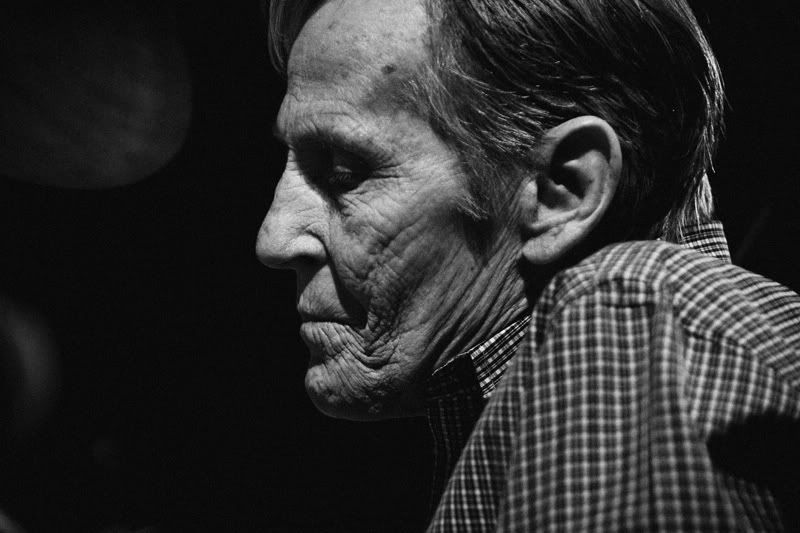
"Levon Helm passed peacefully this afternoon. He was surrounded by family, friends and band mates and will be remembered by all he touched as a brilliant musician and a beautiful soul."
Bad news travels fast. Yesterday Levon Helm's family broke the news I was afraid to hear in a while:
Dear Friends, Levon is in the final stages of his battle with cancer. Please send your prayers and love to him as he makes his way through this part of his journey.
Thank you fans and music lovers who have made his life so filled with joy and celebration... he has loved nothing more than to play, to fill the room up with music, lay down the back beat, and make the people dance! He did it every time he took the stage...
We appreciate all the love and support and concern.
From his daughter Amy, and wife Sandy
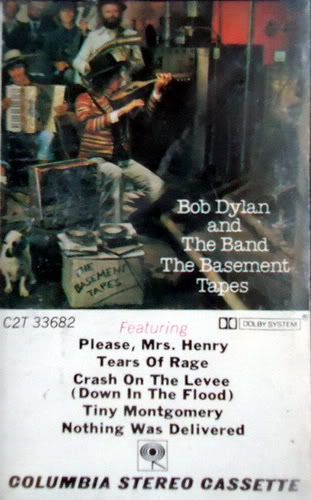
A friend, half-jokingly, called me a polytheist last night, in response to me saying "Joe Albany [another forgotten master/poet of jazz piano] is God!" Well, I can see myself more as an atheist polytheist, and in that case one of the non-jazz guiding sounds of my early teens was Bob Dylan and The Band's The Basement Tapes (released 1975). The cassette that was bought by an Iranian friend in San Francisco, circa 1975-76 was inherited to me in 2000, and I wasn't the same person after that.
I'm not going to talk about the album, but about a surrealist song of that set, among other surrealist takes, called Open the Door, Homer. The problem I had, because of the lack of confidence, knowledge or whatever you call it, I couldn't understand why Homer in English sounded like Richard. It took some times to understand, yes, he is singing Richard, and not Homer. That was the beginning of a rather long story about the song which originally should have been titled Open the Door, Richard!
Dylan is famous for using other people's songs, changing the words, and making it something of his own. In this respect he reminds me of French painter Marcel Duchamp and his idea of "ready-made" objects in art. During The Basement Tapes sessions in Big Pink and other club-houses of Woodstock, New York, he and The Band performed many of other people's songs, and sometimes the choices were really odd.
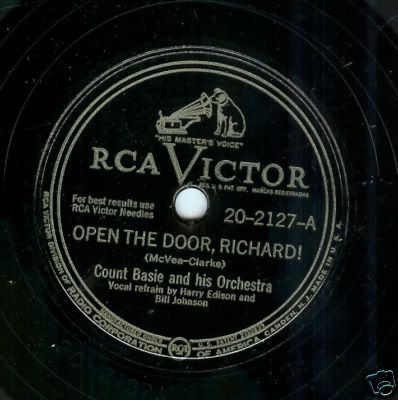
Open the Door, Richard started out in 1919 as a Harlem black vaudeville routine by John Mason. It was first recorded in 1947 on the Black & White Records label by saxophonist Jack McVea and became the number one song on Billboard. The same year Count Basie recorded the song with his orchestra (Lewis, Newman, Berry, Young, Edison, Robinson, Johnson, Matthews, Donnelly, Love, Rutherford, Gonsalves, Tate, Washington, Green, Page, Wilson) and humorous vocal part was done by Harry 'Sweets' Edison and Bill Johnson. It was released by RCA Victor Records and reached the Billboard magazine Best Seller chart on February 7, 1947 and lasted four weeks on the chart, peaking at number one.
After these successful singles, it became a safe bet for many artists through the years, including Louis Jordan. According to Wikipedia, "the phrase 'Open the Door, Richard' passed into African American Vernacular English and became associated with the Civil Rights Movement. When college students marched in 1947 to the state capitol demanding the resignation of segregationist governor Herman Talmadge, some of their banners read 'Open the Door Herman'. The Los Angeles Sentinel used 'Open the Door Richard' as the title of an editorial demanding black representation in city government and a Detroit minister used the title for a sermon on open housing."
Now flash-forward to an unknown day between April to early/mid-May 1967 in Big Pink, when Dylan pays his tribute to Count Basie, the world of vaudeville, drunk songs, André Breton, and Jesus Christ by playing Open the Door Richard, in a slightly different way. Sid Griffin, in his study of the Basement Tapes recordings says "it is a nonsense song based on a nonsense song." Here Dylan plays acoustic 12-string guitar. Rick Danko on bass backs Dylan's vocal, so does Richard Manuel who also plays Piano. Hudson is on organ and Robbie Robertson produces his signature rattling sound on electric guitar. Not many listeners notice that the famous Basement Tapes recordings (especially all the materials from Big Pink) are drum-less and no Levon Helm is ready to kick yet.
And concerning Homer sang Richard, Rick Danko explains that Dylan changed the name of the title to Homer so folks would not think it is reference to Richard Manuel. Obviously one can notice that Richard has changed to Homer, and not John for instance. The vaudevillesque nonsense context of the song has changed to a religious nonsense which I find moving and poetic.
In The Basement Tapes many references to the Old and New Testament are present. And when Dylan sings “Take care of all your memories/Said my friend, Mick/For you cannot relive them/And remember when you’re out there/Tryin’ to heal the sick/That you must always/First forgive them” Sid Griffin argues that Dylan must have been reading the book of Matthew, chapters four and five which "deals with such deeds as a sign of powerful prophecy and a sign of God's love." (Griffin, P. 212)
Listen to this audio file which starts with Basie, switches to Dylan and The Band, and again returns to Basie for the finale. Also some classic interpretations of the song is complied in this playlist from Spotify.
While joyously reading the detailed analysis of Bob Dylan and The Band's Basement Tapes, from the pen of Sid Griffin (Million Dollar Bash, Jawbone press), I found this histrorically important video of Dylan/Band, from their Isle of Wight appearence, on Sunday, August 31, 1969.
According to Google video's note, this amazing footage is all that we have of Dylan’s performance that day, and features the following tracks: The Weight (only The Band), I Threw It All Away, Highway 61 Revisited, One Too Many Mornings, I Pity The Poor Immigrant, Minstrel Boy (only the beginning of the song. Complete take on Self Portrait, 1970). Rumor has it that this black and white footage was shot by a friend of John Lennon’s who sat between him and Yoko at the foot of the stage. Later, Lennon damned with faint praise when asked by the press to defend Dylan’s brief performance (an hour was brief granted that the audience, though not of course John Lennon, had been sitting in the mud for three days to await it). Lennon allegedly told the Daily Express: "He gave a reasonable, albeit slightly flat, performance, but everyone was expecting Godot, a Jesus, to appear."
The video rounds off with remarkable footage of The Band live at the Syria Mosque in Pittsburgh in November 1970, shot in color, bur very amateurishly, for Dutch television. Songs including: Time To Kill, The Weight, This Wheel’s On Fire and Up On Cripple Creek.
By the way, recently, Neil Young under the direction of Garth Hudson made an excellent recording of This Wheel’s On Fire which can be found in the album Canadian Celebration of the Band. This Neil Young interpretation significantly came out just a week after a fire destroyed his garage and he lost many of his beloved things and archival materials.
[December 21 UPDATE]
I noticed that Neil Young's new album, Le Noise is among Rolling Stone's 30 best records of the 2010. Though I didn't really like it, it's a good news. Le Noise is composed of eight new songs and no band. Neil is, accompanying himself on guitars with maximum fuzz and electronics, manipulated by producer Daniel Lanois. Rolling Stone writer, David Fricke, gives this four stars (out of five) and writes:
"The most personal thing about Le Noise is the sense of a restless master caught in the pursuit of ideas, shaping their expression. In Love and War, Young — his creaky whisper and acoustic guitar buoyed by Lanois' watery treatments — confesses an uncertainty hard to believe in one of rock's most driven stars: "When I sing about love and war/I don't really know what I'm saying." But then the conviction comes back. He only has that one way forward, through the music: "I sang in anger, hit another bad chord/But I still try to sing about love and war." Le Noise is, ultimately, an extreme simplicity: the sound of a man who won't give up."
[Second UPDATE, same day] A funny video. Neil Young reveals that the fashion world never really understood him.
لیوان هلم (Levon Helm) نوازندۀ درام و یکی از سه صدای اصلی گروه The Band، دومین آلبومش در طول دو سال اخیر را منتشر کرد.
این در حالی است که در انتخاب سال گذشته مجلۀ رولینگ استون برای صد خوانندۀ تمام دوران ها، نام او جایی محکم در فهرست داشت (و از بقیۀ خوانندگان The Band در آن جا خبری نبود!) او که در 69 سالگی از مبارزه ای طولانی و دشوار با سرطان حنجره خلاص شده با صدایی خش دار و گرفته به قول مجلۀ نیویورکر، "گویی ندای مرد فرزانه ای" را به گوش ما می رساند.
اسم آلبوم Electric Dirt است و می توان آن را ادامۀ آلبوم قبلی هلم، Dirt Farmer دانست. هر دو روایت هایی ساده از زندگی کشاورزان فقیر و فروپاشی نوعی از زندگی است که از زمان پیشگامان قارۀ جدید وجود داشته است. از این نظر این آلبوم ها را می توان در امتداد قطعاتی دانست که توسط The Bandدر ستایش فولکلور آمریکایی و با زبان موسیقی کانتری اجرا می شدند اما تصور هلم از این مضامین سنتی تر و ریشه دار در کودکی او در مزارع آرکانزاس است. هر چه باشد این درامر بزرگ The Band تنها غیر کانادایی بزرگ ترین گروه راک اندرول تاریخ بود و همیشه جنوبی ترین و کانتری ترین اجراها به او سپرده می شد.
آلبوم با اجرایی نیواورلئانی (درست مثل افیلیا) از شاهکار جری گارسیا و رابرت هانتر "تنسی جِد" آغاز می شود؛ تفسیری درخشان که راهی که هلم در پیش گرفته را تا به انتها روشن می کند. ده قطعۀ دیگر به دنبال آن می آیند که مشخصۀ دست پخت همیشگی هلم را دارند: brassy، کهنه و اصیل، پر از سادگی روستایی، رندی کانتری و زبانی تراژیک که از زمان The night they drove old Dixie down فراموش نشده است.
I don’t remember anyone as close as late Richard Manuel to the spirit and music of Ray Charles in The Band’s last two neglected studio sessions. Is that something? Let me tell you brother that in context of American 20th century music, it could be everything and it is. Ray musically was a huge junction between long dusty roads of jazz, blues, soul, R&B and most important of them all, country and the rich and eternal music of Hank Williams.
The Band also was a big combo of all kind of American music plus new sensation, Rock ‘n’ Roll. You can hear everything, from sound of the swamps of Louisiana to elite urban voice of Tin Pan Alley cats in their rich structured musical journey. Maybe that’s the reason why the band always seems so archaic and so contemporary at the same time. They could ignore boundaries of time masterfully in the albums like Music from Big Pink, and it’s hard to connect these songs to a certain period of history. They elusive quality, more that surrealistic poetry of Robbie Robertson, came from the combination of the most old and the most recent. And Manuel, this Fallen angel (a song that Robertson wrote for Richard Manuel after his suicide for his first self titled solo LP), could recollect some of the most precious styles of American music. Hismournful, ragged sound and his brief moments of consolation make you feel that you’re hearing Hank and Ray in one sound. He seems very tired and lonesome in these last records and even in The Last Waltz you could feel his outness from the whole scene, like he is somewhere else and certainly not in this glorious farewell party. When Martin Scorsese’s camera, accidentally misses him in his last vocal part of The Last Waltz (I shall be released), it seems like fate has condemned him to his permanent solitude. You could hear:
“I see my light come shining/From the west unto the east./Any day now, any day now,/I shall be released.”
but you couldn’t see the man himself and he was behind a long line of music stars, too tired and down to be seen.
Vocals of magnificent Northern Light-Southern Cross (1975) is divided between Richard Manuel’s after-hour picturesque songs and Levon Helm’s New Orleanian ramblings that is accompanied with a great horn section. And of course Rick Danko has his unforgettable moments of grief in It makes no difference (In Last Waltz it created a moving climax in terms of Danko’s vocal and interaction between Robertson’s guitar solo and Garth Hudson’s response with Alto Sax.
Manuel has three unforgettable vocal pieces in this album. The first one is Hobo Jungle, the second Jupiter Hollow (only partially) and the set closes with the Rags and Bones, a musical description of a daily urban scene with lots of great vocal characterizations. It gathers all the best things in Manuel’s voice, the movement and the feeling of switching from one image to another, from one rich tableau to the second one, all as fast as a steam locomotive and without any tediousness or slackness.
The Band’s last album, Islands (1977), that actually was recorded after The Last Waltz due to an unfinished contract with Capitol (so The Last Waltz is not actually the end of The Band!), is a neglected classic. There are some of the brightest and cleanest rock recordings (in both Musical and engineering terms) of all times in this comely pack of songs. I must confess the connection between urban songs, sagas , love song and straight rock ‘n’ roll cuts in this particular album is somehow weak , but each song stands its own ground. Beside Rick Danko’s ennoble narration of Jesus birth in Christmas Must be Tonight (in my view it’s the best rock Christmas song ever), it’s Manuel that steal the whole set. I don’t know why this gentleman, Michael Gray in his Bob Dylan encyclopedia accuses Robertson of confining Manuel’s talent in The Band’s latter albums. Nowadays we are used to this kind of inaccurate commentary and I’m sure this statements result from simple reasons like “not listening to the albums” and only playing with words to win a irrelevant argument, for whom or why, I don’t know.
I can’t remember any opening track as easy going and comforting as Island’s Right as rain, and truly it is as "right" as rain! In Let the Night Falls Manuel reaches its Ray Charlsian peak with his yearning voice and when he begins to sing Georgia on my mind, it’s Ray himself.
Island ends with Knocking Lost John, the most unrecognizable The Band track in vocal parts, but as far as music in concerned a splendid example of songwriting and performance. At the end, Richard Manuel is a genius lost in drugs and alcohol. A fallen angel who reached the end too soon. He was one of the best vocalists of 20th century in the same class with giants like Ray Charles and Hank Williams and a hell of a musician on keyboards, drums and guitar. I can still hear his voice:
“If you find me in a gloom, or catch me in a dream
Inside my lonely room, there is no in between
Whispering pines, rising of the tide
If only one star shines
Thats just enough to get inside”