Showing posts with label Clark Terry. Show all posts

Sunday, May 31, 2015

RIP Peter Schmidlin (1947-2015)

Image courtesy of Dragan Tasic
Swiss jazz drummer Peter Schmidlin, who had played and recorded with Dexter Gordon, Lee Konitz, Dizzy Reece, Slide Hampton, and Don Byas, passed away last Monday, May 25, 2015. He was 68.

Known for his adaptability, perfect sense of timing, and a tasteful touch of swing, Schmidlin was one of the finest European drummers, as well as a producer responsible for issuing on record some of the best American jazz in Switzerland. It's a shame, though not entirely unpredictable, that his death remained unnoticed outside his homeland country.

"Peter Schmidlin was very popular with the US jazz musicians as a swinging drummer," writes Urs Blindenbacher in his obituary of this legend of Swiss Jazz. Blindenbacher also praises Schmildin for his role in connecting the separated worlds of French speaking Swiss jazz with that of the German speaking one.

Peter Schmidlin was born in 1947 in Riehen. He picked up the instrument at 14 and taught himself playing and mastering it. Only two years later, he was named as the best drummer at the Zürich Jazz Festival.

Young Peter with Buck Clayton and Sir Charles Thompson at Casa Bar Zürich
His professional career took off in 1965 and soon he found himself accompanying visiting American musicians, as well as jazz expats and exiles residing in western and northern Europe, a task which continued to the last months of his life.

In later years, he was a permanent member of three major jazz trios, respectively led by Tele Montoliu, Horace Parlan, and Jimmy Woode.

Sunday, February 22, 2015

In Memoriam: Clark Terry (1920-2015)

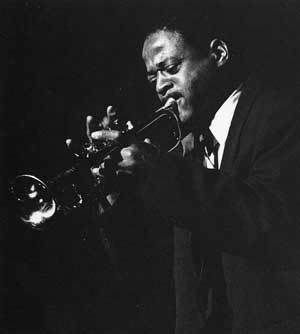
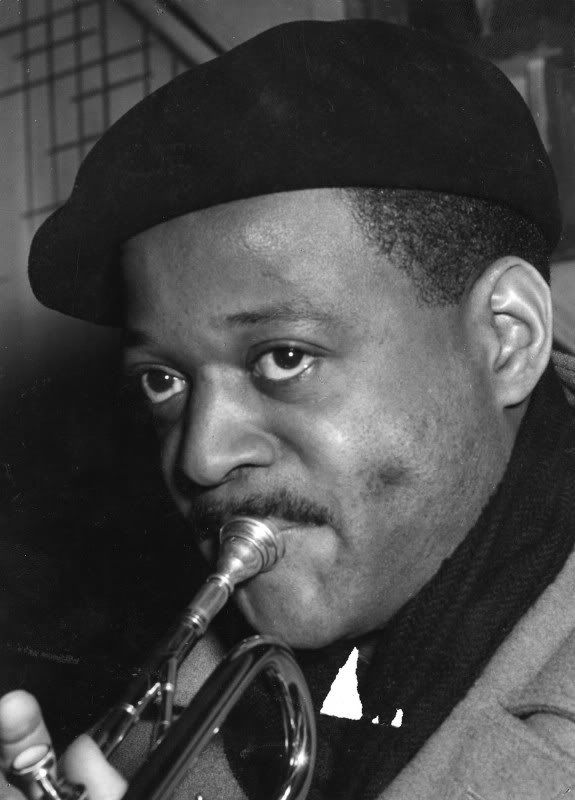
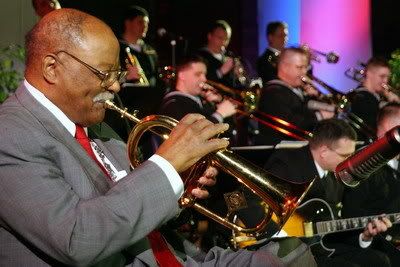
"The only way I knew how to keep going was to keep going", said Clark Terry (aka Mr. CT) about his career, one of the most illustrious ones in history of jazz and also one of the most inspiring ones which outlived major changes and trends in this music, in spite of numerous health issues. Since the 1940s, nothing but death itself could stop Terry from creating one of the most distinctive trumpet (and later flugelhorn) sounds in jazz, composing, and teaching.

Clark Terry died yesterday, February 21. He was 95. Anyone who has seen the emotional, beautifully narrated documentary Keep on Keepin' on about Clark's last years and his friendship with a young, emerging pianist, will confirm that he kept keepin' on until the very end, even after losing his eyesight and the amputation of both legs due to diabetes.

Throughout the short life of this blog (at least comparing to nearly eight decades in Clark Terry's career), I have published notes, information and music about and from this wonderful musician.

Today, as a tribute to Clark Terry, I put together a list of these various posts, which can make a day of CT's music, videos and interviews for anyone interested in pure, straight ahead jazz played by a witty genius.

I can't stop imagining that the death has had a difficult time understanding Mr. CT's mumbles. Probably that's why, in spite of grave illness, it took him so long to give up. He jived the death out.

MUSIC


VIDEOS


Wednesday, October 22, 2014

Clark Terry: Further Years at the University of Ellingtonia (1955-56)


"Never think you are too hip, because two hips make an ass." — Clark Terry

Here is my second post on Clark Terry at the University of Ellingtonia, complemented by David W. Niven's audio archive and his selection of Terry's solos played and recorded over the course of two years.

This collection is particularly interesting because of introducing more flugelhorn solos into the Ellington repertoire.

I also quote passages from Clark Terry's autobiography, where he is giving astute descriptions of other members of Ellingtonia. The book, which aside from its invaluable insight into CT's life is a great piece of literature, can be purchased here.

This is how Mr Mumbles introduces his colleagues:

"Harold "Shorty" Baker got his nickname because of his height. Sometimes we'd call him "Shorty Boo," just to mess with him...He had a gorgeous sound on his trumpet and played beautiful and interesting solos."

"We called Ray Nance 'Little Dipper' in honor of Louis Armstrong, whose nickname was 'Big Dipper'. He was the sweetest cat in the world. Never harmed anyone. He smiled most of the time, and there was always a pleasant atmosphere around him. He played elegant trumpet solos and was an accomplished violinist, tap dance, and vocalist as well."

"Willie Cook came over from Dizzy's band. He was playing 'à la Birks,'...Very small but a powerful player with interesting solos. Dark-skinned with nice features—almost like a Native American. He wore a conk all the time."

"We called Johnny Hodges 'Rabbit' because with his long ears and small eyes, that’s what his face resembled. He was a marvelous lead alto player with a very mellow sound. Quiet and unassuming, but he could play his ass off."

"Russell Procope played alto. He was short and more portly than Rabbit. Kinda intellectually talkative at times. He was from the old John Kirby band. He was a dependable reader and had a beautiful sound."

"Jimmy Hamilton was a tenor player who was featured more on the clarinet. His old nickname was “Joe Trump” because he had played trumpet in Philadelphia years before. Everybody loved his playing. He was a little shorter than me, of average complexion and with a little moustache. Sort of slow of speech."

"Harry Carney had been with Duke for a long time—ever since he was seventeen. Ended up staying with Duke for forty-five years. An incredible musician. First cat in the band I saw doing circular breathing...Harry played clarinet, bass clarinet, and baritoneax. He was a big guy with intelligent conversations, and he was Duke’s favorite riding buddy. They rode together often in Harry’s Chrysler while we rode on the bus."

"Juan Tizol played valve trombone beautifully. A Cuban who spoke broken English. Olive complexion, and he wore glasses. He was a hell of a composer, too."

"Britt Woodman was a studio man who played slide trombone. Phenomenal chops, beautiful tone. And he could sight-read like nobody’s business. Such a delightful person to be around. Kinda short, with a light complexion. He was also sedentary, and would go to sleep on you in a New York minute."

"Quentin 'Butter' Jackson was a master with the slide trombone and the plunger. He filled a great void with his incredible plunger techniques after Tricky Sam left the band years before."

Sunday, October 5, 2014

Clark Terry: The Ellington Years And Beyond (1952-60)

Clark Terry. Photo courtesy of Riverside

"Nobody ever says a bad word about Clark Terry." -- Richard Cook

I just saw the documentary Keep On Keepin' On (2014), about Clark Terry and his messianic belief in jazz education, thus I'm in the mood for nothing but CT. (Hopefully, soon I will be writing a note on the film for this blog.) Here, what I've got to offer is a compilation of various solos CT played during his decade-long stint with Duke Ellington and His Orchestra.

"Duke was endowed with a supernatural magic," remembers Clark Terry, "he could cuss you out and rarely use a cuss word. He'd chastise you from the piano by hitting a discord and everybody knew what was going on. A frequent utterance of his was simply 'Aaaaaahhhhh!' It might mean something like, 'You're not paying attention! You're not listening!' Or it might mean that what you played was beautiful to him."

With exception of one track, everything you'll hear is recorded live in concert, mostly with non-professional tools and less than skillful engineers. As Clark Terry would say, these tracks are surveying a life on the road: "East coast to west coast and all in between - clubs, ballrooms, and theaters. The Beehive,  Blackhawk, Blue Note, DeLisa, Regal, Apollo, Trianon, Savoy, and many others."

There are various takes on How High the Moon which was Terry's solo feature throughout a good part of the 1950s. And then there is a surprisingly bop-ish arrangement of that tune from a Birdland session in November, 1952.

Perdido is another tune with which Terry was featured in Ellington's band. They are by far the most exciting takes of this old tune on Ellington's recorded catalog. It's like "magic" to see how Ellington manages to bring a new musical angle to the same song played over the course of the years. For that matter, one only has to go back, or forward, to compare other interpretation of the same song and see how the master tailor is re-fitting the old suit to Clark Terry's sound and musical (or even personal) character.

The voice heard on this tape is of course of Mr David W. Niven's, giving some useful information about Terry. He is responsible for this compilation. However, be aware that not all the dates and facts given are accurate. For a more reliable discography of the sessions see below.

All sessions are under Duke Ellington's leadership unless noted.

Monday, March 17, 2014

Last of the Trumpet Masters


This would be the final post from the Trumpet Masters' session in Switzerland, a concert whose footage is now fully presented on this blog.

"Handsome, dark chocolate, a ladies magnet," is Clark Terry's description of Harry "Sweets" Edison, the subject of the first video. Terry met Sweets first in the Basie band: "Svelte physique draped in expensive threads, dripping with accents of rich gold and pristine diamonds. The note that floated through his trumpet made you feel his statement of 'Cool Daddy. Laid-back.'"

Friday, March 7, 2014

Squeeze the Moten Swing


In today's exclusive video, Squeeze Me, the classic 1925 Fats Waller composition, is reinterpreted  by Joe Wilder and Snooky Young. The video continues with Clark Terry and Harry Sweets Edison doing a version of  the Moten Swing, originally the Bennie Moten and the Kansas City Orchestra's hit from 1932.

The rhythm section is Hank Jones, Jesper Lundgaard, Clarence Penn, respectively on piano, bass and drums.

Thursday, February 20, 2014

Strays On

 "I referred to him like a lot of the cats did, as 'Strays,'" says Clark Terry of Billy Strayhorn in his autobiography, Clark, which has a lot to say about Ellington years and the people of that tribe.

In a short chapter of the book, dedicated to "Strays," there is nothing but admiration and deep respect for the man and his music both as a composer/arranger and piano player. "Strays was like a breath of fresh air," says Mr Terry, "he had an almost spiritual touch in his writing. Deep undertones that would draw emotion and dig into the psyche." So true.

There are some stories in Clark about the relationship between Duke and Strays, whether artistically, emotionally ("he had a way of calming Duke") or even financially for which CT remembers:

"Strays was a man who lived the most unique life style of anybody. He had no bills: no hotel bills, no apartment bills, no food bills, no clothes or tax bills. No nothing. He didn't have a salary, either. He just signed a tab. Duke paid for everything."

Wednesday, February 19, 2014

Clark Terry Jives at 5 with Sweets


Back to the Bern Jazz Festival concerts and the Trumpet Summit session, I have another video to present. This one's from the same session as here and here and here, and features Clark Terry and Harry "Sweets" Edison in a performance of Jive at Five.

CT is very fond of Switzerland. He has played there, especially in Bern, many times over the last 5 decades. Even there is a hotel suite in Bern named after him and I believe he had an operation and treatment in Switzerland at some point, probably related to his cancer.

However, in this concert footage, one can hardly see signs of fatigue or malady. Jive at Five is fun and relaxed, and one of the last documentations of these masters playing and jiving together.

Tuesday, February 4, 2014

A Certain Finesse: Chattin' With Trumpet Masters

From left: Harry Edison, Joe Wilder, Clark Terry
They feel slightly old. They know who's the boss. The music they play is not too bizarre or too personal or too difficult. Of course, it is difficult to deliver with such precision and groove, but never difficult to enjoy. That's more or less how an informal assembly of three trumpet legends feel.

Watch a Swiss TV interview with Clark Terry, Harry "Sweets" Edison and Joe Wilder from 1997.

Wednesday, November 27, 2013

The Illinois Jacquet Big Band feat. Clark Terry


This post features the third and last part of the Illinois Jacquet Big Band in Bern, Switzerland. The first two parts can be accessed here and here.

For the final number, One O'Clock Jump, Clark Terry joins the stage whose asociation with Jacquet goes back to the late 1940s. Later, in various occasions, they were also both hired by Norman Granz for the legendary jam session concerts. On record, they both play in Newport in New York 1972, and then two decades later as members of George Wein And The Newport All Stars. Finally, in 2004, when Jacquet passed away, CT paid his last tribute to the old time collaborator by playing in his memorial service.

Now the music:

One O'Clock Jump (soloists: Richard Wyands, Clark Terry, Wyands, Jacquet, trombone?, Arthur Daniels, Terry, Fred Hunter, Winston Byrd)

Thursday, October 17, 2013

Four Trumpet Masters


I'm knee-deep into London Film Festival and an overdose in film has kept me away from this venue and blogging on jazz. For the sake of reassurance, and promsing that I would return to jazz life soon, I'm posting a recent VHS transfer of a fabulous trumpet summit in which the cream of Ellington and Basie trumpet alumni are on stage together: Joe Wilder, Snooky Young, Harry "Sweets" Edison and Clark Terry!

The event was originally presented as the Legendary Trumpet Masters at the Jazzfestival Bern '97 (May 1) in Switzerland. In addition to the trumpets, our favorite Hank Jones is on piano, Jesper Lundgard on bass and Clarence Penn on drums. The whole concert (also featuring Doc Cheatham), including its nine songs, intro and interviews was broadcast on Swiss and German TVs in 1997.

Friday, June 8, 2012

Clark Terry '69


Backstage of Montreux Jazz Festival 1969 with Clark Terry and Norman Granz.

Friday, March 26, 2010

On Clark Terry


دربارۀ كـلارك تـِري
كلارك تري در14 دسامبر 1920 در سنت‌لویی ِ میزوری به‌دنيا آمد. برادران او نوازندگان آماتور طبل و توبا بودند. تری از گروه‌هایی که در منطقه میزوری قرار داشتند شروع کرد و تکنیک نواختنش را در روزهای خدمت نظام تکمیل کرد. او در آن روزها با یک دفترچه نت مخصوص کلارینت تمرین ترومپت می‌کرد چون به گفته خودش «صدایی سیال‌تر» از این ساز می‌خواست. پس از گذراندن دوران سربازي، مدت کوتاهی به اركستر لیونل همپتون و سپس چارلی بارنت پیوست و کمی بعد ترومپت نواز ارکسترهاي بزرگ کنت بیسی (49-1948) و گروه‌های کوچک (51-1950) او شد. در 1951 به دوک الینگتون پیوست و 8 سال در کنار او ماند. 1959 به کوئینسی جونز ملحق شد. در پایان دهه 1950 تمام توانش را به كار در استودیوهای نیویورکی گذاشت و در جلسات ضبط زیادی زیر نام خودش یا دیگران ظاهر شد. در برنامه تلویزیونی جانی کارسون نوازنده ترومپت بود. در مجموعه کارهای تری چند قطعه آوازی که در آن اسکت‌هایی (scat) به شیوه آرمسترانگ اجرا شده ، وجود دارند. من جمله قطعه‌ای به نام Mumbles که بعد از تور 1964 ژاپن (با جی جی جانسون) با همراهی تریوی اسکار پيترسون ضبط شد و فروش فراوانی کرد. در 1965 با پيترسون و الا فیتزجرالد به توری در اروپا رفت. يك کوئینتت [گروه پنج‌نفره] با باب بروک‌مِیر رهبری کرد. او در دهه 1970 ارکستر بزرگ خودش را با همکاری بعضی از بهترین نوازندگان نیویورکی به راه انداخت.


در طول آن سال‌ها بیشتر فلوگل‌هورن fluegelhorn را به جای ترومپت می‌زد و تقریباً تا به امروز این ساز را کنار نگذاشته است و یکی از معدود نوازندگان چیره دست این ساز کم طرفدار است. در طول سال‌های 1970 تا 1990 با کنسرت‌ها و فستیوال‌ها و برنامه‌های تلویزیونی متعدد سر کلارک تری شلوغ تر از هر زمانی بود. او در اجراهایی که با ارکستربزرگش داشت خاطرات درخشان دوران سویینگ را زنده می‌کرد و با نواختن در گروه‌های کوچک‌تری که هدایت می‌کرد یادآور بهترین روزهای بی باپ بود.

کمال تکنیکی که تری در طول سال‌ها به آن دست پیدا کرده هرگز باعث نشده تا شور و احساس در دمیدن او به ساز فراموش شود. و نه تکنیک اعلای او و نه احساس بی همتایش در نواختن طنزی که جزیی از شخصیت موسیقیایی اوست را پس نزده و همواره یک اجرای کلارک تری را به معرکه‌ای از توانایی های تکنیکی، احساسات ناب و سرزندگی و شوقی امیدوارکننده به دنیا بدل کرده است. در میان نوازندگان ترومپت تاثیر پذیری او از چارلی شیورز، روی الدریج، رکس استیوارت و دیزی گیلسپی بیشتر از بقیه احساس می شود. خود او از آرمسترانگ، الینگتون، بیسی و پيترسن به عنوان موزیسین‌های مورد علاقه اش یاد می‌کند.