Showing posts with label Al Cohn. Show all posts

Saturday, December 17, 2011

Radio Hawkins#18

عكس زمينه از رضا حكيمي

اپيزود هجدهم
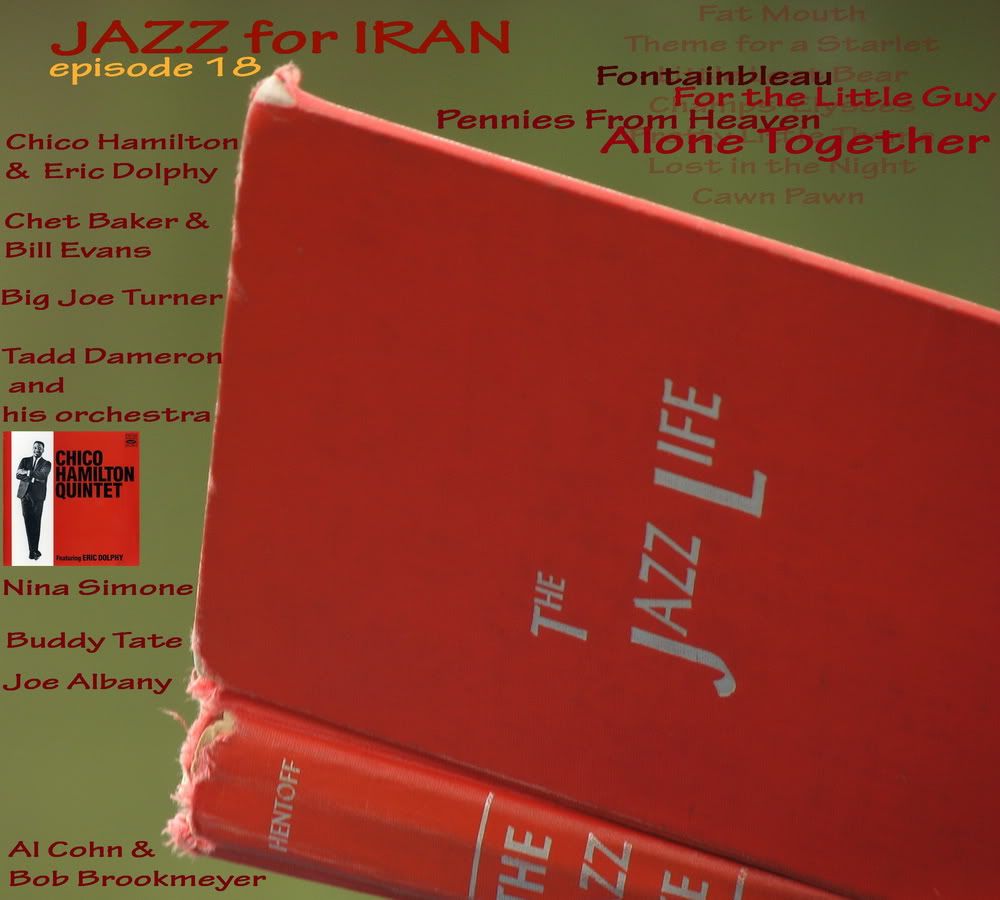
راديو هاوكينز: جاز براي ايران
برنامه اين هفته به پخش آلبومي كامل ار چيكو هميلتن كوينتت (با اريك دالفي) از سال 1959 اختصاص دارد و سپس آثاري از
بيگ جو ترنر، جو آلباني، نينا سيمونه، بادي تيت، تد دامرن، ال كان و باب بروك ماير، بيل اونز و چت بيكر

به برنامه در اين جا گوش كنيد


برنامه را در اين جا دانلود كنيد

فهرست قطعات و موزيسين هاي برنامه هجدهم به ترتيب پخش

Fat Mouth
Theme for a Starlet
Little Lost Bear
Champs-Elysées
Pretty Little Theme
Lost in the Night
Cawn Pawn
Lullaby for Dreamers
Opening
Lady E
Truth

Chico Hamilton Quintet
Eric Dolphy (reeds), Dennis Budimir(guitar), Nathan Gershman (cello), Wyatt Ruther or Ralph Peña (bass), Chico Hamilton (drums)
19 & 20/5/1959  Chico Hamilton Quintet feat. Eric Dolphy

Pennies From Heaven
Big Joe Turner
Bob Smith (alto sax), J.D. Nicholson (piano), Herman Bennett (guitar), Pee Wee Crayton (guitar), Winston McGregor (bass), Charles Randall (drums), Big Joe Turner (vocal)
10/3/1976 In the Evening

For the Little Guy
Joe Albany
Joe Albany (piano), Al Gafa (guitar), George Duvivier (bass), Charlie Persip (drums)
1982 Portrait of an Artist

Fontainbleau
Tadd Dameron and his orchestra
Henry Coker (trombone), Kenny Dorham (trumpet), Cecil Payne (baritone sax), Joe Alaxander (tenor sax), Sahib Shihab (alto sax), Tadd Dameron (piano), John Simmons (bass), Shadow Wilson (drums)
9/3/1956 Fontainbleau

Alone Together
Chet Baker
Chet Baker (trumpet), Herbie Mann (flute), Pepper Adams (baritone sax), Bill Evans (piano), Paul Chambers (bass), Connie Kay or Philly Joe Jones (drums)
30/12/1958 Complete Legendary Sessions

Goduka Mfundi (Going Home)
Buddy Tate
Buddy Tate (tenor sax), Cecil McBee (bass), Roy Brooks (drums)
25/8/1977 Buddy Tate Meets Abdullah Ibrahim

Don't Smoke in Bed
Nina Simone
Nina Simone (piano, vocal)
12/1957 Little Girl Blue


Winter
Al Cohn Quintet
Bob Brookmeyer (trombone), Al Cohn (tenor sax), Mose Allison (piano), Teddy Kotick (bass), Nick Stabulas (drums).
4/12/1956 Al Cohn Quintet feat. Bob Brookmeyer

Summertime
Big Joe Turner
Bob Smith (alto sax), J.D. Nicholson (piano), Herman Bennett (guitar), Pee Wee Crayton (guitar), Winston McGregor (bass), Charles Randall (drums), Big Joe Turner (vocal)
10/3/1976 In the Evening
Tuesday, November 16, 2010

Jazz and Haiku


Last April I did a post of Jack Kerouac and his love for jazz. The main attraction was Sam Charters long lecture on his friend, Kerouac, and tracing the influence of jazz improvisation on his poetry. Now, let's roam around his haikus and see how they are bound to the world of jazz.

Kerouac developed a new definition for American haiku in his journal Some of the Dharma which are short three-line confessional poems that served to enlighten. Kerouac explains the difference between Japanese Haiku and American Haiku, as quoted by Nervous Musings, this way:
"The Japanese Haiku is strictly disciplined to seventeen syllables but since the language structure is different I don’t think American Haikus should worry about syllables because American speech is something again…bursting to pop. Above all, a Haiku must be very simple and free of all poetic trickery and make a little picture and yet be as airy and graceful as a Vivaldi Pastorella."

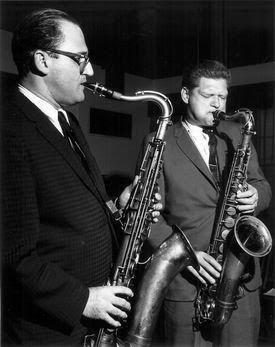
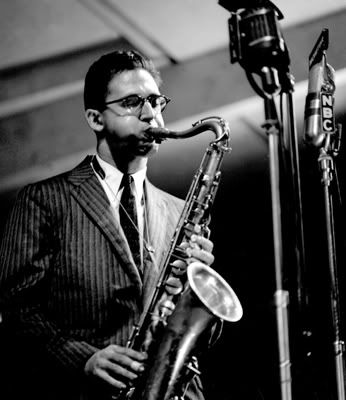
In 1958 Kerouac wound up in a recording studio with two of his jazz idols, Al Cohn and Zoot Sims. The trio laid down American Haikus and then another five tune/poetry for an album called Blues and Haikus (Hanover, 1959). Next year,it followed by Poetry of the Beat Generation (Hanover, 1959), largely consisted of Kerouac reading novel extracts over a jazz backing, "this record attempted to connect the words directly with the music; Jack riffing quick bursts of bop-prose followed by skirmishing from Cohn and Sims," says Sid Smith.


It's a great case of painting with sound, and poetry of jazz (not "poetry and jazz" - I mean listen to the musical words of Al & Zoot). And see how musician can overtake the poet, how advance looking these musicians were and how they are historically ignored as far as a pure art form is concerned. For instance, how many people, or even how many jazz people, today remember the swing brothers, Al Cohn and Zoot Sims?

Here is Zoot with his natural sense of swing, and shimmering, mellow warmth on tenor, and Al with his more darkened sound, his top-notch rhythmic pattern and his unique structure of musical ideas. These two cats can turn any Haiku into a ballad.

American Haikus, 1958, Jack Kerouac, with Al Cohn (tenor sax ) and Zoot Sims (tenor sax), produced by Bob Theile


In my medicine cabinet,
the winter fly
has died of old age.


Well here I am
2 pm.
what day is it?


The tree
looks like a dog,
barking at heaven.


Prayer beads
on the holy book,
my knees are cold.


In the morning frost
the cats step,
slowly.


No telegram today,
only more leaves
fell.


The castle of the Gandharvas,
is full of
aging young couples.


Early morning yellow flowers,
thinking about
the drunkards of Mexico.


The national scene,
late afternoon sun
in those trees.


Nightfall.
boy smashing dandelions
with a stick.


Holding up my purring cat
to the moon,
I sighed.


August moon.
Oh!
I got a boil on my thigh.


Drunk as a hoot owl,
writing letters
by thunderstorm.


All day long,
wearing a hat
that wasn’t on my head.


Beautiful young girls
running up the library stairs,
with their shorts on.


Crossing the football field,
coming home from work,
the lonely businessman.


Useless! useless!
heavy rain,
driving into the sea.


After the shower,
among the drenched leaves,
the bird thrashing in the bath.


The little worm,
lowers itself from the roof,
by a self shat thread.


Snap your finger.
stop the world.
rain falls harder.


Nightfall.
too dark to read the page,
too cold.


In my medicine cabinet,
the winter fly
has died of old age.


Following each other
my cats stop,
when it thunders.


Spring evening,
the two
eighteen year old sisters.


The postman is late.
the toilet window
is shining.


Wash,
hung out by moonlight,
friday night in may.


Empty baseball field,
a robin,
hops along the bench.


Black bird.
no! blue bird!
branch still jumping.


My rumpled couch,
the lady’s voice
next door.


The bottom of my shoes
are clean,
from walking in the rain.


Bee!
why are you staring at me
I am not a flower.


The barn,
swimming in a sea
of windblown leaves.


Glow-worm
sleeping on the flower,
your lights’ on.


Spring night.
the leaf
falling from the chimney.

 transcribed by Miray Nair

Friday, December 25, 2009

Al Cohn


ال كان متولد 24 نوامبر 1925 در نیویورک و مرگ در 15 فوریه 1988 . از شش سالگی پیانو می زد و از 12 سالگی کلارینت. در نوجوانی خودش به تنهایی به سراغ تنور ساکسفون رفت و کمی بعد با جو مارسالا و جرجی آلد توانایی هایش را به کمال رساند و حتی کمی بعد برای آنها دست به تنظیم آهنگ زد. در تابستان 1947 با ارکستر بادی ریچ نامی برای خود به هم زد. از نیمه دهه 1940 بیشتر انرژی خود را صرف نواختن در ارکسترهای بزرگ کرد که ارکستر مشهور وودی هرمان با نام چهار برادر یکی از آنها بود. علاقه او به کار با ارکسترهای بزرگ به خصوص تنظیم آهنگ ها و نوشتن برای آنها در دهه 1950 با ارکسترهای آرتی شاو و الیوت لارنس ادامه پیدا کرد. در 1957 با زوت سیمز ، که از زمان چهاربرادر وودی هرمان او را می شناخت، به استودیو رفت، دوستی و ضبط های مشترکی که تا دهه 1980 و مرگ او ادامه پیدا کرد. در این دوره کان به گروههای کوچکتر علاقه پیدا کرد و بعضی از بهترین کارهایی که او در استودیو انجام داده را در این روزها و کوارتت ها و کوئینتتهای او می توان جستجو کرد.

ال كان با زوت سيمز


نفس گرم و ملودیک کان در ساکسفون همواره یادآور لستر یانگ بود اما بسیاری از نشانه‌های منحصر بفردی که کان با خود به این موسیقی آورد باعث ایجاد تمایزی بی بروبرگرد میان او و ساکسفونیست های هم نسلش می شد. هوش و استعداد منحصربفردش در این موسیقی او را میان بقیه موزیسین های جاز به شخصیتی محبوب تبدیل کرده بود. او مدتی همسر مریلین مونرو، ستاره سینما، بود.
كان همواره از شیوه نواختن زوت سیمز، چارلی پارکر و سانی استیت با ستایش فراوان یاد می کرد. براي اين كه يك نمونه از كارهاي ال را بشنويد به اين‌جا برويد. اين آلبوم از كارهاي متأخر او با جيمي راولز (پيانيست) است.


Sunday, December 13, 2009

On 52nd Street, Part I


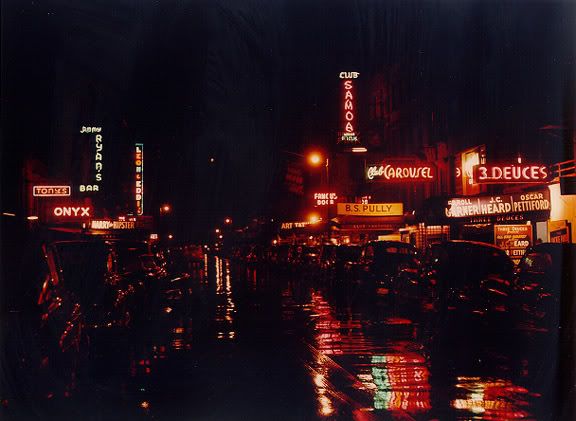
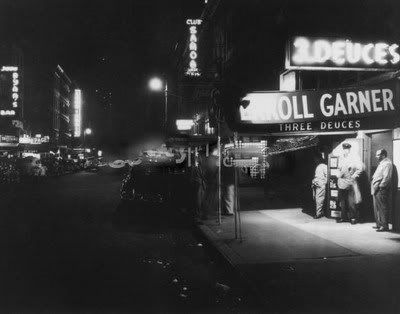
In September 1943 Dizzy Gillespie left Earl Hines. Oscar Pettiford, who had been with Charlie Barnet from January, left that band in May. Gillespie played with Coleman Hawkins; and, for three weeks in October, with Duke Ellington at the Capitol theater on Broadway. Pettiford worked with Thelonious Monk at Minton's for four months before moving down to 52nd street's Onyx Club with Roy Eldridge. Then Gillespie and Pettiford got together as co-leaders of what is generally acknowledged to be the first group to formally present bebop to the general public. Shortly after the debut of the Gillespie-Pettiford unit, a recording was put together on February 16, 1944, that was the first formal statement of the new music on record. The leader and featured soloist of the date was Coleman Hawkins. Budd Johnson and Clyde Hart co-authored "Bu-Dee-Daht," the piece that later made Daniel Bloom rave to us in front of Columbia Grammar School, and "Disorder at the Border"; and Dizzy contributed a milestone with his composition "Woody'n You" (hee named it for Woody Herman because Herman had liked and encouraged his writing. Herman never recorded it. ) That was the begging of a new era.

***

"To hear the guys on the Street was another thing, and when I finally arrived on the Street, I guess it was the last few years. It was the few years before that that I didn't know too much about. When I got there, that's when Dizzy had the band with Oscar Pettiford, Don Byas. And then Budd Johnson was on there for a while. Then there was a band with Don and Coleman Hawkins, Benny Harris and Monk. As a matter of fact I played in the only square club on the Street for a while which was called the 51 Club. It was opposite from the Three Deuces— the same side of the street as the Onyx Club. And they just had a little trio. Bob Baron was the leader, and piano players, there was revolving piano players in and out, and tenor. We played for a couple of singers. I don't know what that club was doing there. But it was straight . . . just a corny club. I played there a few months. And one of the piano players was Al Haig. Before he got to play with Dizzy and Bird. He was still in the Coast Guard, I believe. Apple cheeks. Clean-cut young fellow. I guess he sounded like Teddy Wilson. We didn't get a chance to play a lot down there. We just played the shows, 'cause they had dancing. But it was great 'cause I was right on the scene there, and between sets I could go to hear all these guys. I got to hang out on the Street a little more after that. Got to know some of the guys. I was young enough to be flexible. It wasn't the thing that it hit me over the head because it was something new. It was something new but it wasn't a dramatic thing like it was for older guys that couldn't bend with it." -- AL COHN

**


"When I did come to New York to settle down in 1942, I joined Diz, Oscar Pettiford, Max Roach, and all those men at the Onyx Club. We really started to get into it, getting down arrangements, head arrangements, and recordings and all of that. So that's what I did. That's when it started. The Street made everybody aware of this new music. Dizzy was the theoretician to this music to my way of thinking and my knowledge, and he was really. It was lots and lots of fun. But some guys it didn't really influence too much—a lot of guys like Don Byas and Lucky Thompson and all of 'em. They stayed more in the Hawk thing, but they got the swiftness and the changes but they didn't necessarily sound in the exact style.
Dizzy tried to hum everything; he had to hum everything to everybody to get them to see what he was still talkin' about. It would be hard to explain it. It could be notated, but it was very hard to read, because cats weren't used to reading and actually, that's how I think it got its name, bebop. Because he would be humming this music, and he'd say, "Ooop bop ta oop a la doo bop doo ba." So people said, "Play some more of that bebop" because he would be saying, "Bebop." And the cats would say, "Sing some more of that bebop," and actually, I think that's how it got its name, because that's the way he would have to sing it to make you get the feeling that he wanted you to play with. I put down a lot of things for Oscar Pettiford. Actually, what they call "One Bass Hit" that was Oscar's tune. He called it "For Bass Faces Only." It's absolutely his tune, and he was the first one to play it. Oscar Pettiford contributed much to this music. Most all of those tunes that we played on sand Street when I worked with Diz, damned near half of them were Oscar's tunes. He was writing tunes every day. "Hey, Budd. Put this down. Put this down. Put this down." 'Cause he couldn't notate it on paper, so a lot of that happened that way. A lot of that happened with Monk. I used to put down things for Monk. That was back in the 52nd Street days. In fact, me and Monk used to hang out. We'd get a bottle of wine. I'd go over to his mother's house where he was livin' over on the West Side. I would put down things for him. Sometime he would come to my house. I was livin' on 152nd Street then. Oh, he was beautiful. He was a little bitter, because everybody was sorta getting credit, and actually I really heard Monk doin' this stuff before anybody. I don't think anybody else had the tunes. I really would put Monk before Diz from my knowledge. Of course, I wasn't in New York."--BUDD JOHNSON

**

"When I came out of the Army, I was very hurt because Charlie Parker had become famous, Dizzy had become famous, Max had become famous, and I said to myself, "What happened to Monk?" because we were playing a lot of Monk's tunes. We used to go to an after-hours place; this was an apartment. After Monroe's would close down we would all go to this guy's apartment called Mat Maddox. This would be about nine or ten in the morning. And we'd be there until twelve or one in the afternoon playing in a little room that had a piano in it, and there was Monk, myself, and—who else now—well, Victor Coulson and George Treadwell were always there. It has been said that Monk wrote "Round Midnight" about 1939. And a lot of the tunes that he recorded much later were written in the early '40s, but nobody heard them on record." -- ALLEN TINNEY

*