Saturday, June 29, 2013
Tuesday, June 18, 2013
5 Favorite Jazz Films, Illustrated
| Jazz on a Summer's Day |
Sunday, June 16, 2013
Jazz Mirrors Iran#4: An American in Tehran
| photo by Reza Hakimi |
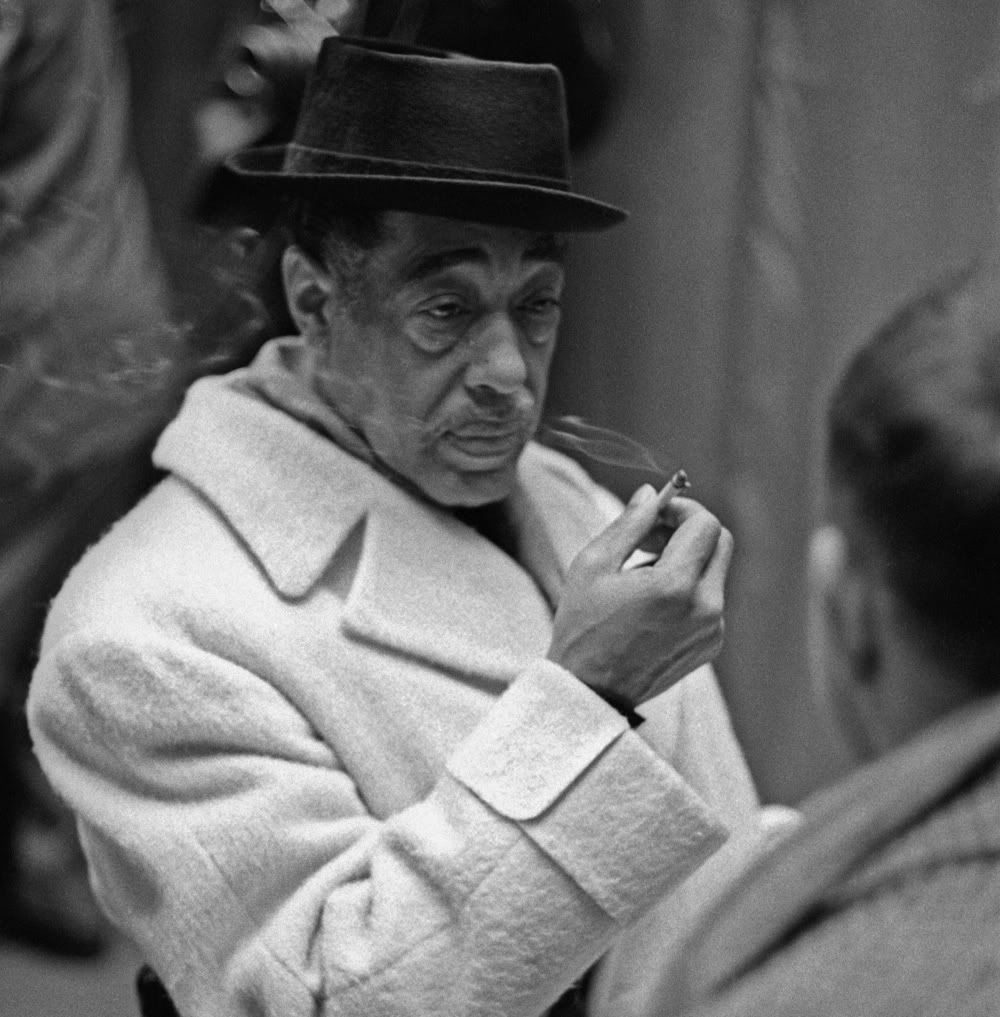
Lloyd Miller is no typical fan boy. If there’s one thing to know about him, it’s that he doesn’t like mainstream music, likely most of the stuff on your iPod. Groupie he is not, calling most of today’s new hits “jumpy ugly obnoxious rock junk that has permeated the whole world like leprosy destroying everyone’s musical tastes and minds.” You could write him off as an aging music snob, but then you’d be missing out on one of the edgiest pioneers in building the musical bridge between East and West.
Segah – Lloyd Miller
If there’s a more important thing to know about Lloyd Miller, it’s his love of Persian music. Born in 1938 to a ballet dancer and a professional clarinetist, he began learning piano at the age of three. By his early teens, he taught himself banjo, clarinet and cornet. There is scarcely a single instrument today that he hasn’t mastered or at least experimented. In 1957 his father, now a professor at the University of Southern California, was invited to Iran in order to oversee the creation of University of Tehran’s business school. Nineteen-year-old Lloyd, already a staple in the American jazz scene, came along, mostly so that his parents could keep him away from a drug culture that permeated into many music circles. Miller himself looked at the trip as a spiritual quest, searching for a new musical language that he found partially in traditional jazz and the more modern Bop, but still felt incomplete.
Friday, June 14, 2013
Tuesday, June 4, 2013
Monday, June 3, 2013
Jazz Mirrors Iran#3: Iranic
![]() |
| Vank Cathedral in Iran [photo by Reza Hakiminejad] |
Two weeks ago I began a ten-week series (that now I might extend it to 12!) exploring jazz that reflects a part of Iran, both as an actual place on the map and as a pure creation of art. This is Iran according to American and European jazz musicians of the 20th century. In the third installment, I look at the "ironies" shared between a culture and a musical form.
From the Shahs of Sunset to the Mullahs of Qom, Iran stands a Catch-22 waddling to find its way between Bravo and Basij, Marxist and Muslim, youth and establishment, sincerity and tar’ruf. Sound confusing? Welcome to Irani irony, a culture where expectations are implied but never stated, perhaps the only one where you’ll find yourself politely chastised. To navigate in it is an improvisational act of its own, an interplay where actions depend on relational anticipation. This is the game of Persian life.
. Iranic by Jimmy Giuffre .
The emergence of free-form jazz in the 1950s, pioneered amongst others by composer and multi-instrumentalist Jimmy Giuffre, was no less a paradox than the musical form's emergence itself, challenging the limitations of established bebop, hard bop and modal, breaking down standards that characterized traditional jazz. Where bebop treated musicians as interpreters, free jazz placed them at the forefront as the tune's dominant voice. Framework from jazz charts gave way to improvisation. Professionals, in their experimentation came off to the naked ear as amateurish, as if they were students doing their best to sound good. Not so confident to play constantly and seamlessly, they pause, wait, look at each other, and think deeply for what they should play for the next chorus.

Monday, May 27, 2013
Jazz Mirrors Iran#2: Persian Rug
Last week, I began a ten-week series exploring jazz that reflects a part of Iran, both as an actual place on the map and as a pure creation of art. This is Iran according to American and European artists of the 20th century. It is also the same country that makes daily headlines in the news, yet it is music that brings it a far greater truth than any pundit on a TV screen. In the second installment of this ten-week series exploring Iran through the world of jazz, let's gaze our eyes down to the magnificent floor coverings that inspired the classic jazz standard tune.
Iran as a country has long been a contested commodity in the modern era, its politics so pervasive, hardly a piece of artwork makes it abroad without some sort of oppositional branding -- the mere fact that it comes from Iran automatically makes it a piece of creative dissidence. The one medium that manages to evade any type of political baggage is not the artwork we hang on our walls, but the adorned canvas we lay out on our floors --Persia’s rugs. Like Iran’s version of Wall Street, these carpets, often called an Iranian’s stock or share, are more than a hypnosis of vivid colors and mesmerizing patterns: they’re a woven record of a country and civilization dating back over 2,500 years, and for most Iranians, a first encounter with the visual blueprints that we come to associate as art.
Three versions of Persian Rug which I'm going to discuss later
Monday, May 20, 2013
Jazz Mirrors Iran#1: Tehran
| photo by Reza Hakiminejad |
Imagine this: A tenor saxophone and bass mimic in sound the pace of rush hour walkers. A trumpet, sounding like a car horn, pops in and out, pulsating along with the beat of the drummer, whose brushes on the snare create an interplay that brings to life the image of a bustling urban city.
No cobblestone streets or the smell of Parisian bread; no green leaves overhanging narrow passageways or the sound of French in the background. This is not Europe. It’s Iran that is being depicted in cool jazz tones.
Each Monday for the next ten weeks I will feature a jazz tune that reflects a part of Iran, both as an actual place on the map and as a pure creation of art. This is Iran according to American (or non-American) artists in the 20th century. It is the same country that makes daily news headlines, but thanks to the masters of misinformation in the media, the more that is heard, the less that is learned.
Teheran- Friedrich Gulda
Tehran, sometimes spelled in French or German as Teheran, is a metropolis of 8.5 million people and the capital city of Iran. Witnessing many changes in the past 150 years, it was, and still is, a gigantic mechanism dealing with endless urban issues. Tehranis, sharp and open, and culturally closer to the people of those capital cities of the Eastern Europe, have two simultaneous battles to fight: one, to find a way out of the maddening traffic of the highways and streets of Tehran, and then, to find ways of expressing their social and political dissatisfaction in some creative and subversive ways.
Monday, April 29, 2013
Duke Ellington: Jazz Entre Amigos (1985)
Continuing with our Duke Ellington's 114th birthday celebration, here you can watch probably the most ambitious TV programme ever made about Ellington. Interestingly, this unmissable compilation of many great films of Duke is coming from Spain. (But the Spanish voice-over is not too loquacious to lessen the viewing pleasure, except when they dub Duke!)
This two-part portrait of Duke during six decades of non-stop genuine creativity is from Jazz Entre Amigos, a weekly TV programme on Spanish national television, presented by Juan Claudio Cifuentes (known to his friends as Cifu) which ran between 1984 to 1991. The Ellington entry is particularly ambitious because it's 130-minute long, and features many well-known clips (Black & Tan and other Hollywood appearances), as well as more rare and hard to find footage and backstage films from the 1960s.
Enjoy the last hours of this 114th birth day with the images of his highness in action:
Saturday, April 20, 2013
Ad-Lib#4: Hepcats, Slums, Moon Maidens
1
"New Orleans jazz may be considered 'mouldy fig' by the diggers of bop, but when it comes to setting a joint jumping, Dixie is still king," reads this funny piece of journalism from the 1950s, furnished with pictures of Willie "The Lion" Smith and Henry "Red" Allen. [source]
2
Ignore the silly cartoons, inserted into the footage and enjoy this highly energetic performance of a Slums and Wheels [aka Slums on Wheels] written by Volker Kriegel and featuring Dave Pike on vibraphone. Resurfaced from German archives (NDR studios), this 1969 TV appearance features Volker Kriegel (g) Dave Pike (vibe), Ingfried Hoffmann (organ), Hans Rettenbacher (bass) and Peter Baumeister (drums).
Subscribe to:
Posts (Atom)