Sunday, April 1, 2012

Wednesday, March 21, 2012
Chess Artists in Pictures
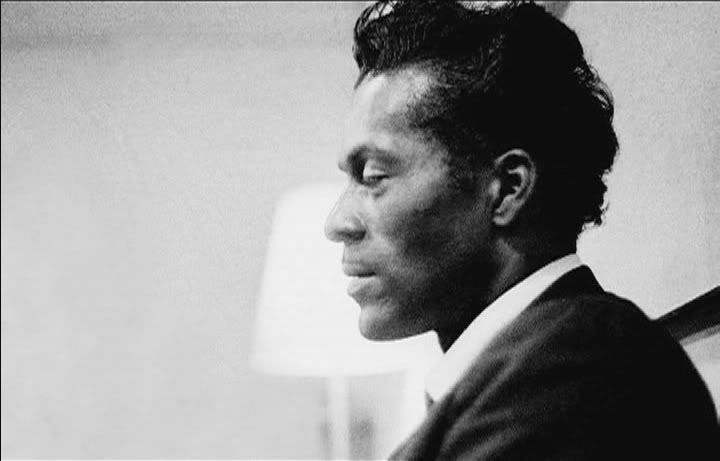 |
| Chuck Berry |
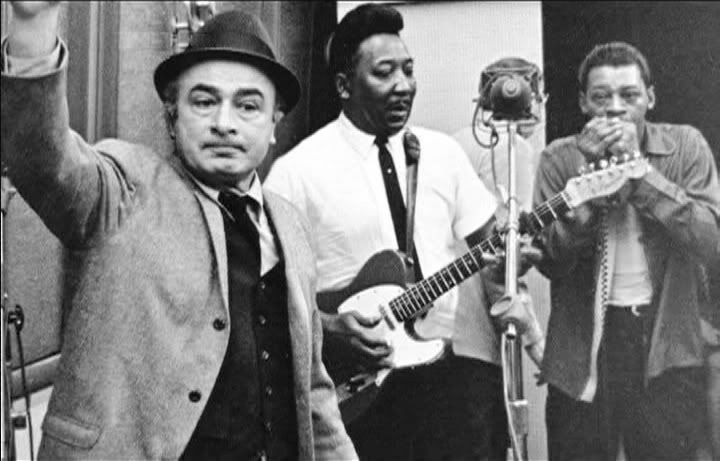 |
| From left: Phil Chess, Muddy Waters, Little Walter |
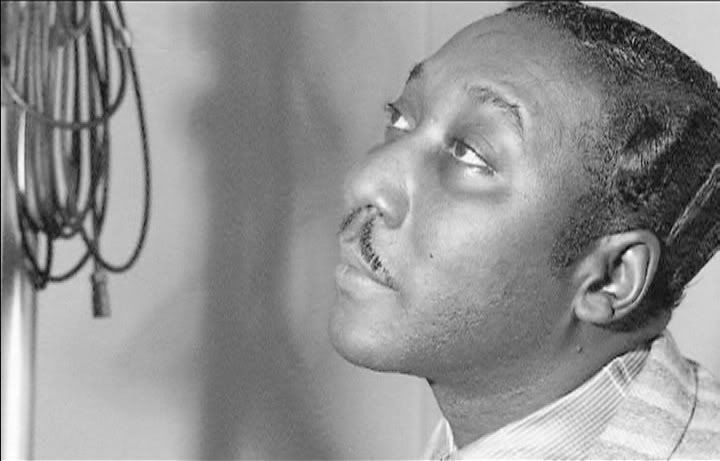 |
| Muddy Waters |
Tuesday, March 20, 2012
Jazz Mirrors Iran
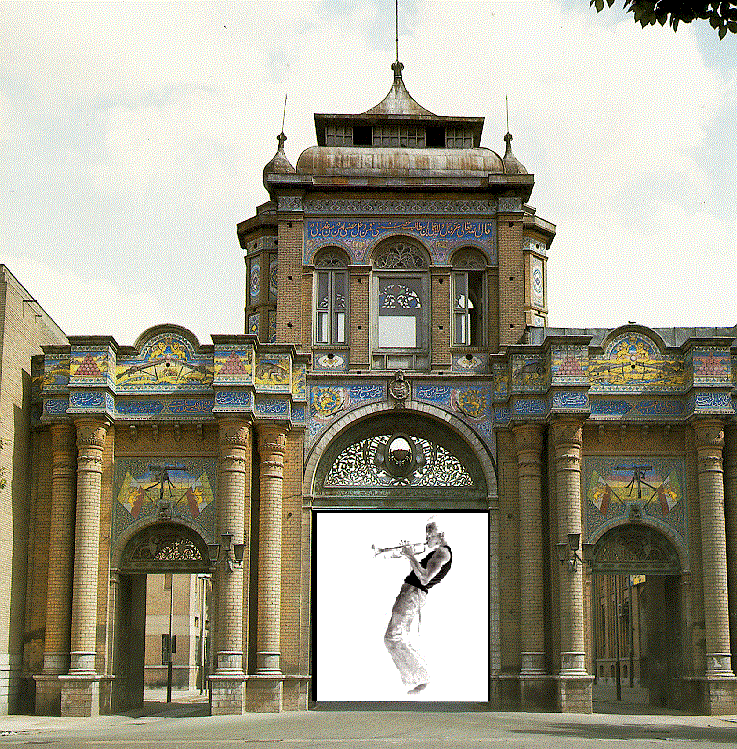
Happy Nowruz to Iranian Readers! Peace to you!
Iran-- sometimes known as Persia, with an echo of 1001 Nights and dreamy cities of wine and poetry. As a name, a real place or an imaginary land from Shakespeare’s Twelfth Night, to the media propaganda of the recent months about nuclear developments, sanctions and military action, it remains a country held victim to misrepresentation and lazy awareness.
It is very much the same ignorance that for centuries silenced African-American artists and communities, who developed jazz as the art form to revise the human condition and to remove the barriers between “us” and “them” in a democratic language that knew no boundaries. Jazz, as the art that fights against various types of segregation, could be a myth itself. But the myth of jazz as something for all human beings, regardless of race, nationality, gender and age is so strong that it can still feed our desire to explore and to change.
In the coming weeks, I'll write about ten pieces of jazz music (specially designed to welcome the arrival of spring and Nowruz, Iranian New Year), presented on Aslan Media, about or influenced by Iran.
It is very much the same ignorance that for centuries silenced African-American artists and communities, who developed jazz as the art form to revise the human condition and to remove the barriers between “us” and “them” in a democratic language that knew no boundaries. Jazz, as the art that fights against various types of segregation, could be a myth itself. But the myth of jazz as something for all human beings, regardless of race, nationality, gender and age is so strong that it can still feed our desire to explore and to change.
In the coming weeks, I'll write about ten pieces of jazz music (specially designed to welcome the arrival of spring and Nowruz, Iranian New Year), presented on Aslan Media, about or influenced by Iran.
Thursday, March 15, 2012
Miles Davis Septet at Berliner Jazztage

As far as I know, this Miles Davis' Berlin concert from 1983 has never been released in any format and prior to this post, it didn't exist in the online world. I just remember sharing it with a Miles Davis collector at some point, but now the whole recording is here on this blog. 90 minutes of some exciting music.
I don't know exactly where this set is coming from, maybe recorded off a radio or TV broadcast but if you wonder how I got hold of it, I owe owning and listening this rare gem to one of my Berliner friends and this is not the only great stuff he generously shared with me.
The source was on a 90-minute audio cassette, and the music was recorded on both sides. I present it here exactly the same. The audio file remains untouched.
The source was on a 90-minute audio cassette, and the music was recorded on both sides. I present it here exactly the same. The audio file remains untouched.
10/29/1983
Miles Davis (tp, syn) Bill Evans (ss, ts, fl) Robert Irving (syn) John Scofield (g) Darryl Jones (el-b) Al Foster (d) Mino Cinelu (per).
Friday, February 24, 2012
Sonny Rollins: Discovery!

Last week BBC for the very first time, presented an astonishing Sonny Rollins filmed gig, from 7th July 1974 at Ronnie Scott's. Recently discovered and restored, this show is a great example of the artistry of Rollins in the middle of the 1970s, when his studio output - with many unnecessary overdubs - didn't show the exuberance of his live gigs, as documented here.
Here Sonny can be seen and heard, accompanied by Rufus Harley on soprano sax, wearing and playing bagpipes (I don't remember any other jazz session with this Scottish instrument), Yoshiaki Masuo on guitar, always loyal Bob Cranshow on bass, and David Lee on drums (though we never see him in the footage).
They play Alfie, Swing Low Sweet Chariot, East Broadway Rundown, Don't Stop the Carnival, A House Is Not a Home (most impressive, in my view) and some other tunes during a gig which lasts more than 50 minutes.
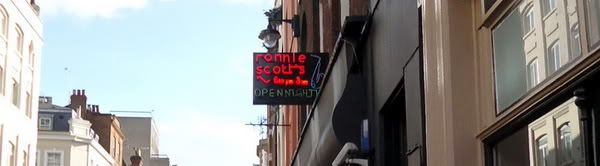
I found the use of bagpipe very likable, though not always in total command of the player. The only recorded album with bagpipe in Rollins's catalog that I remember is The Cutting Edge (Original Jazz Classics, 468) that was recorded in the same month as this London appearance.
It was filmed by 16 mm cameras, and a quarter inch sound tape of the gig exists to help the restoration process.
Depending on the camera, some of the footage is in black and white (mostly close ups of Sonny from the camera positioned near the stage) and some in color (back camera for the long shots of the club). The sound is reasonably good, and there is enough exhilaration in listening to it to ignore some temporary drops of sound, especially on guitar.
 |
| Sonny Rollins with Rufus Harley on bagpipes |
I couldn't stop thinking that Ronnie's at that time, when it was personally managed by late Ronnie Scott, was less than a tourist attraction and luxury restaurant than what it is now. In the footage Ronnie looks like what should it be: a jazz club.
I wonder how many of these historical treasures, and stunning archival footage are hidden in the basements and attics of people who have forgotten them. Thanks to BBC Arena for this great surprise.
Meanwhile, check out this post of jazz photos by Teenie Harris that along with Sonny Rollins was the best thing to keep my spirit up during the week.
Sunday, February 12, 2012
Radio Hawkins#25: Lloyd Miller

Last night, my final broadcast of the Jazz for Iran radio programme was dedicated to the music and life of Dr. Lloyd Miller whom I introduced in a couple of posts back. If you've missed his amazing life story and his incredible achievements in exploring new sounds in jazz, by creating a mesmerizing fusion of this music with Persian and Middle Eastern instruments, you can still read it here. The audio file presented here is my selection of the songs, recorded from 1961 in Paris to late 1960s in Utah, and finally Lloyd's latest musical output in London, 2010.
My commentary and intros are obviously in Farsi, but I promise to keep it minimum and let the music speaks for itself.
جاز براي ايران
اپيزود بيست و پنجم
اين اپيزود پايان سري اول راديو هاوكينز خواهد بود و تا چند هفته بعد از اين، برنامۀ تازه اي پخش نخواهد شد. برنامه هاي قديمي هم چنان در اين سايت و در سايت جزنات قابل دسترسي هستند
موضوع اين برنامه: موسيقي دكتر لويد ميلر
بيوگرافي او را در اين جا بخوانيد
Thursday, February 9, 2012
Remembering Jef Gilson (1926-2012)

February 11, update: Dr Lloyd Miller generously has just furnished me with a few better quality photos of himself with the late Jef Gilson. Lloyd wrote today: "Had to choak back the tears when I read about his passing. But after realizing that he was in a better place with cooler jams, I felt peaceful." Jef was a huge fan of jams! Rest in piece brother!
Jef Gilson, the French jazz musician died four days ago. He was "a visionary pioneer who still has not achieved the status he deserves," (Francis Gooding), and listening to his recordings from 1960s and 1970s reveal what a great innovator he was.
Gilson started playing clarinet in 1941, and later switched to the piano. Under the influence of Dizzy Gillespie he envisioned himself as a composer, arranger and band leader, and soon he became one. Writer Francis Gooding examines Gilson's Monk-Coltrane oriented recordings as pieces of work "with tempo changes, bitonal layers and chromatic threads."
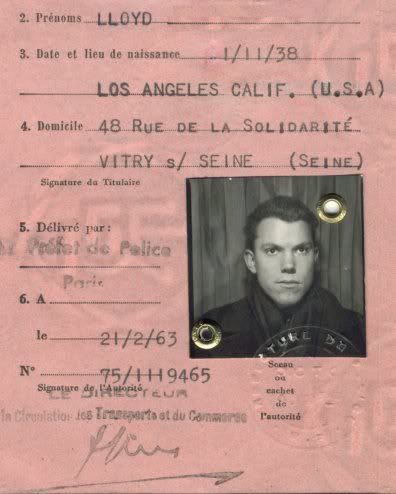
Last week I wrote about Lloyd Miller and briefly mentioned his association with Parisian avant-garde jazz scene of the 1960s. Lloyd was Jef Gilson's right hand in his early recordings. They both were "hip" innovators and fearless musicians with sky as their musical limit.
In the following text you'll get a picture of these two men's musical journey form their accidental encounter to conquering the Parisian jazz scene for a short period, and finally the eventual break up of their band. The information, presented in the from oLloyd Miller's biography book, Sufi, Saint and Swinger.
Lloyd felt it was time to make an LP of his piano solos; but he was not sure how to do such a thing. One  day he was wandering up Rue Dauphene past Saint André where Dauphene becomes Rue Grégoire-de-Tours. He walked a ways then noticed on the right a shop at no. 7 called Kiosque d’Orphée, a recording studio. A feeling of excitement came over him as he timidly entered the shop to be greeted by a man named Jef Gilson who seemed to be predestined as a colleague and friend. Lloyd felt he knew this person and was predetermined to work with him musically. As they chatted about music and Lloyd’s plan for cutting an LP of his piano solos, they both felt that their lives and careers would merge. They both liked some of the same jazzmen and both had a desire to bring something new to jazz. Lloyd’s dedication to Eastern music was understood by Jef who was interested in learning more about Persian, Indian and Far Eastern concepts. They set up a time for the recordings; but Lloyd was hesitant about it because of the potential costs. Jef assured him that this was a project he was invested in and promised Lloyd that it would go forth at whatever fee Lloyd could afford. Jef also offered assistance in Lloyd’s wild project of recording some pieces in which he would play piano, bass and drums by re-recording. Jef noted that as, well as a nice grand piano, he had a bass and drum set in the studio and it would be easy to do.
 day he was wandering up Rue Dauphene past Saint André where Dauphene becomes Rue Grégoire-de-Tours. He walked a ways then noticed on the right a shop at no. 7 called Kiosque d’Orphée, a recording studio. A feeling of excitement came over him as he timidly entered the shop to be greeted by a man named Jef Gilson who seemed to be predestined as a colleague and friend. Lloyd felt he knew this person and was predetermined to work with him musically. As they chatted about music and Lloyd’s plan for cutting an LP of his piano solos, they both felt that their lives and careers would merge. They both liked some of the same jazzmen and both had a desire to bring something new to jazz. Lloyd’s dedication to Eastern music was understood by Jef who was interested in learning more about Persian, Indian and Far Eastern concepts. They set up a time for the recordings; but Lloyd was hesitant about it because of the potential costs. Jef assured him that this was a project he was invested in and promised Lloyd that it would go forth at whatever fee Lloyd could afford. Jef also offered assistance in Lloyd’s wild project of recording some pieces in which he would play piano, bass and drums by re-recording. Jef noted that as, well as a nice grand piano, he had a bass and drum set in the studio and it would be easy to do.
Lloyd accepted Jef as a type of advisor while he also became a guru for Jef when it came to Eastern music. During the following days, Lloyd visited Jef’s studio to practice bass and drums for the upcoming recording session while he continued working at the Rue Monge piano store to keep up his piano virtuosity.

Jef picked Lloyd up at the hotel in his rattley funny looking little Deux Chevaux and they cheerfully chatted all the way up to Jef’s place. There Lloyd met his new band buddies: quiet shy tenorman Pierre Caron, tall thin and playful electric bassist Alain Melet and a drummer.
A time was set for the first rehearsal and Jef once again asked Lloyd if he was ready for the commitment. About the potential band he stated “le bateau part si vous voulez être là d’dans.” Lloyd, sipping on a fancy liqueur and picking at a creamy cake, hesitantly agreed “d’accord, on va voir; mais savez, de temps en temps j’ai du boulot ‘ci’ là.” Jef promised that Lloyd would be free to play around town on his own at the Mars Club or the Caméléon or wherever, adding that there wouldn’t be any money playing in his band “il aura pas du fric, savez.” Lloyd muttered “fais rien, suis pas là pour le fric.”
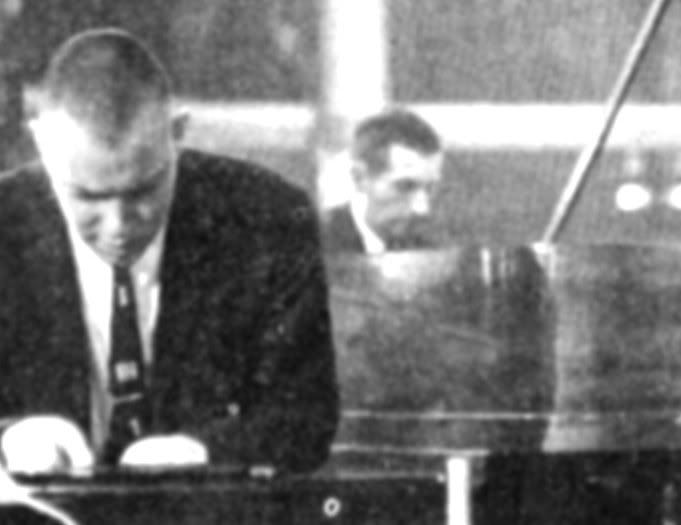 |
| Lloyd with Jef in the background |
So during the next weeks, there were rehearsals sometimes twice a week or more where Jef would tediously teach everyone in the band what he was looking for, note by note. Jef found a funny little electric piano that was more like an accordion in tone and gave it to Lloyd to play it in the band. Then he sent Lloyd to check out and approve an African balaphone at an antique store in the Quarter near the hotel. Lloyd was to play solos on those odd instruments on certain pieces which he could easily do but was going crazy sitting through the long and lugubrious rehearsals.
Finally, Jef found a baritone horn to add to Lloyd’s solo instruments.On the balaphone, Lloyd found a way to get more than just the notes provided by the dozen long thin wooden bars with long thin resonance gourds under them. He would hold one mallet on the bar at a certain point where it would raise the pitch a half step providing notes that weren’t on the instrument.
.
Jef Gilson, Lloyd Miller, Hal singer playing Mother Africa
On the micro organ, he would try to find ways to fit in to the unusual arrangements about half of which were weird and crazy Monk type creations. Lloyd began to understand what Jef meant by French jazz. Some of his compositions had the flavor of old chansons that one would affiliate with accordion music
in small colorful bistros in Montmartre including charming French type waltzes.
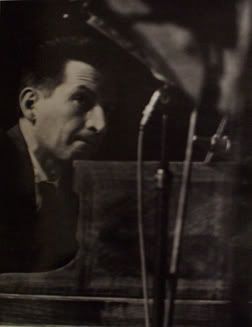 The Gilson band began to play concerts around Paris and was attracting the attention of jazz writers and the R.T.F. (Radio Télévision Français). One of the favorite tunes in the Gilson repertoire was called Le Grand Bidou. It was a one-chord piece with a bluesy bass line and a great opportunity for modal improvisation. Lloyd immediately saw an opportunity to insert the East Indian tonic drone using a low note on the micro-organ, which he kept humming, by using a folded up piece of manuscript paper wedged in front of the key to keep it down. Then, since the instrument sounded like the ancestral Lao khen or bundle of bamboo pipes with free reeds in them, for his solo he couldn’t resist rendering the khene music he had been listening to from the UNESCO series of LP records of world music.
Jef had been working on public relations in the jazz scene and had added three instrumentalists who were more technically skilled. One was dark curly-headed North African soprano saxist Alain Tabar-nouval, short upright bassist Henri Texier and serious drummer Pierre-Alain Dahan.
The band played at youth clubs and in concerts almost nightly until they were ready for the big time. Jef continued with his exacting intensive rehearsals which included a retreat at a country cottage that he had access to in Vallais, a one store town about 220 kilometers outside of Paris on a country road.
Suite Pour San Remo Ouverture
One day when Lloyd walked into the door of the Saint André, Claude informed him that Jef had called and said that he was to join Jef and the band at the cottage and left directions. Claude handed Lloyd the car keys and wished him luck finding the place. Lloyd took off and got lost a couple of times before finding the ‘town’ and the cottage. When he arrived, all Jef’s friends and musicians were there, including the three new members. It was a wild weekend rehearsing, jamming and partying with a liberal supply of all types of alcoholic beverages and wonderful tasty food not to mention a few joints of pot.
Le Grand Bidou
One of the evenings, Jef decided to invite the whole village, maybe a dozen or so people, to join in a huge Swiss fondue party. Jef’s wife melted up a monstrous batch of cheese and everyone stuck pieces of bread on forks into the hot cheese until the bread was sort of toasted and saturated with cheese. Then Jef and the band played their full repertoire that they had been rehearsing for the locals who strangely liked it all. They all joined in for the goofy “un bidou et un bidou égalent . . .” bit working up to 6 replaced by ‘shoobidoo’ as Lloyd and all the villagers chanted along.

For the February 22 landmark concert at École Normale de Musique, Jef added the soloists from the Chamber Orchestra of Monaco including flute, oboe, 2 clarinets, etc. and members of the Robert Seto Orchestra including trumpet and bary sax. The large ensemble performed Jef’s same tunes which had become popular around Paris but with a much bigger sound.
After the huge success at Jef’s high-profile debut at the École Normale, his next prominent concert was at the famed Téâtre de l’Étoile, reported Combat on Monday March 5 by one of Jef’s strong supporters in the media, Jean Tronchot.
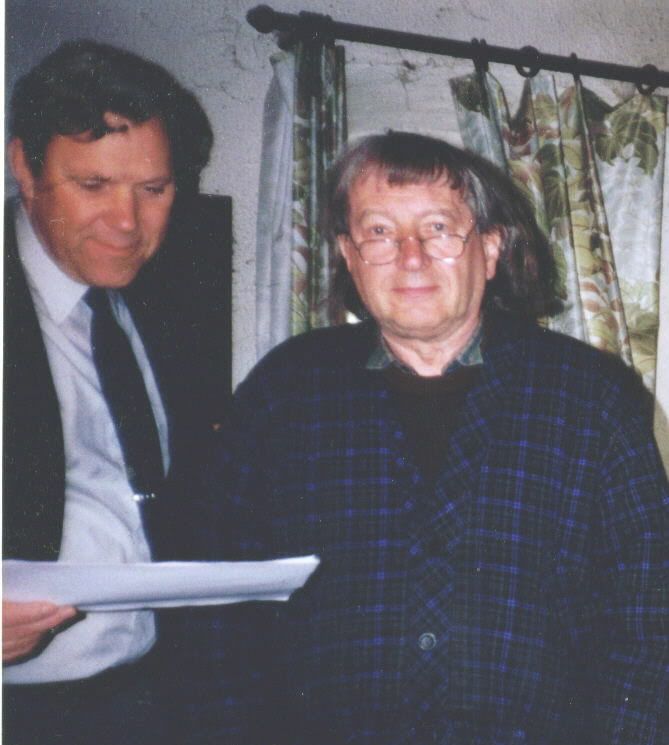 |
| Jef (right) and Lloyd. © Lloyd Miller |
It was about the time of the big debut at the École Normale that the famous Gilson 10 LP took Paris by storm. The recordings had been done at Jef’s Kiosque d-Orphée studio on Rue Grégoire-de Tours and featured some of the top hits of the Gilson band: Le Grand Bidou, Fable de Gutenburg and Bizz-are. Unfortunately, the LP didn’t have room for a few of the interesting later recordings of pieces like Chant Inca where Lloyd did a nice balaphone solo borrowing the initial notes of La Marseillaise, or Anamorphose where he wailed out a crazy micro-organ solo or St. Louis Blues with Lloyd’s amazing and honkin’ piano playing which included an esoteric intro then ending with a whole tone run on major seventh chord before rabidly ripping into a rolicky barreling blues. The other side of the 10-inch featured some of Jef’s earlier compositions performed by jazz names like Bobby Jaspar, Walter Davis Junior, Doug Watkins and Art Taylor. All the jazz media went wild over the LP which was soon selling like mad.
Fable of Gutenberg
But the fame gained by the Gilson band was not to last forever. Somehow a disagreement broke out between Jef and the three musicians who had most recently joined the band. They quit or were let go by Jef. After the breakup of the band, gigs became sparser and Lloyd was back to mostly working clubs.
Gilson went to Madagascar in 1968 and stayed away from French jazz scene for three years. Lloyd left Paris, too, and almost at the same time that Gilson headed for Africa, Lloyd returned to Iran for his longest stay in a foreign land - 7 years!
Wednesday, February 8, 2012
Big Band In The Backyard: John Altman in Leytonstone
 |
| © John Altman |
It was like Lionel Hampton playing in your backyard, when I heard John Altman Big Band is going to play in my neighborhood in Northeast London. I had no idea that how "big" this band is going to be, so when in an icy night of 7th of February I headed for East Side Jazz Club, positioned in the back room of the Lord Roockwood pub, and faced the 18-piece band of Mr Altman in a modest and soulful place, I understood the business is more than serious.
The club was tight and intimate, and packed with people. Remembering what Frank Foster said about Birdland that "If the fellow next to you laugh at you, the people at ringside would know what he's laughing at," and that "every mistake can be heard" sounded true about this joint. John was there before anybody else, checking the charts and chatting to the old friends. Every tune in his book had a number, so now Dr Altman, like a severe math teacher, for instance would read out load "number 37!" and the band would take care of his original from Shall We Dance film or a standard of American songbook.
Standing up at the rear of the room for nearly three hours, I never stopped tapping my foot, swinging my head, and nodding to sidemen who were bursting into beautiful solos. John Altman formed this big band in 1985 and some of the musicians in the bandstand of East Side Jazz Club were the original members of the first line up, and some of them, probably were not born by then.
John presented a vivid history of big bands from Machito and Basie up to more modern sounds of later big bands, and always charged with the elements of swing. Composers from Cole Porter and Harry Warren to Dizzy Gillespie and Wayne Shorter where in his repertoire, and arrangements for these pieces had something new, some joyous excitement that was trademark of Altman's pen. During two one-hour long sets Altman and his Big Band played more than 12 tunes.
It all started with Basie-esque Count me Out, written by John himself in which Ralph Salmins did some fireworks in the tradition of Sonny Payne.
We had an homage to West Coast jazz, especially Gerry Mulligan and Chet Baker in West Coast Chatter with a nice solo by the young lady in charge of baritone sax, Claire McInerney. The performance was splendidly sublime since eighteen instruments were creating some rich textures, and at the same time they sounded as they are a pianoless quartet!
Though John is always busy with managing and conducting the band - and exemplary successful in such task - but we don't have to forget what a great solos he can execute as I heard in his treatment of Our Love Is Here to Stay.
Mambo Inn, composed by Bobby Woodlen that later became popular by George Shearing in his 1950s quintet recordings was a good excuse for some Latin flavors in the club, and adding a new color to John Altman's pallet of orchestral colors.
From Gigi Gryce catalog, John played Minority, a tune written in 1961 for quintet which ended the first set. How striking the accompanists are - most memorable Tony Fisher on trumpet (who filled the trumpet chair in Frank Sinatra band during the early 1990s) and Bob Sydor on tenor sax.
Nice parts written for John Etheridge's guitar, including one in Dizzy Gillespie's Manteca when his swinging guitar solo was backed by a powerful rhythmic support from miss McInerney.
Lester Left Town, often played by Art Blakey and the Jazz Messengers, turned out to be not only a raising the hat for the one and only, Lester Young, but also for one of the mentors of John, master Benny Carter whose middle name is Lester too! Bob Sydor on tenor saxophone soloed skillfully on this one.
Joan Viskant, entered the scene to sing a couple of standards and complete the party. She reminded me of a British singer, Annie Ross, though Joan is a Chicagoan.
The gig was finished ten minuted past eleven, in a nastily cold winter night of Leytonstone area, and I had never heard a band in London, whoop in the last ride-out as this one. John Altman supplied a kind of precise excitement that is very rare in today's live jazz scene. Every solo was written with immediate vitality and his all-star band were articulate in giving the utmost pleasure to ears.
It was an auspicious evening, since it was coincided with the 200th anniversary of Charles Dickens who was doing almost the same thing: make your mind move and swing with the power of the pen!
Walking back home on the frozen and icy sidewalks is another story, but if John Altman's playing, it worth every slip and stumble!
Sunday, February 5, 2012
Master Pianists Sing!
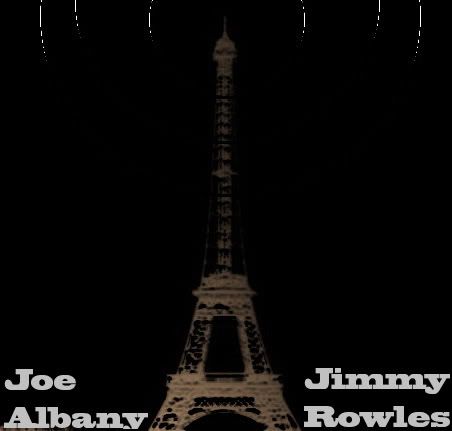
Fresh from the third, and the last radio broadcast under the title, Americans in Paris (an internet-based programme for Iran which I foolishly do from my own pocket) that was a survey of lives and recordings of American jazz musicians in the city of equality and liberty, I'm going to share with you two remarkable recordings that I played in the show.
Firstly, the tunes are recorded by two of my favorites jazz pianist, Joe Albany and Jimmy Rowles, and secondly, they both sing in these recordings, though they are not singers in the common sense of the word (and from this "amateur" group comes my preferred jazz singers - pianists, trumpetists and reed men who sings!)
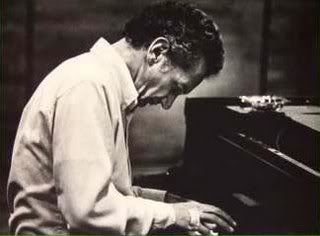
Joe Albany, having a particular empathy for ballads and Billy Strayhorn, in 1977 Paris recorded a moving interpretation of Lush Life, in which he manages to balance the sense of sadness in the song with rich, colorful textures added by his romantic and vulnerable mind. Albany says: "With a great melody you're going to get a great composition, with great chords. Then, logically, the tune will be a pleasure for jazz musicians to improvise on and interpret in their own way. And of course most of these songs also happen to have great lyrics, which can be kept in mind to lend emphasis even to an instrumental version."
Here is Joe playing and singing Lush Life with his polite earthiness:
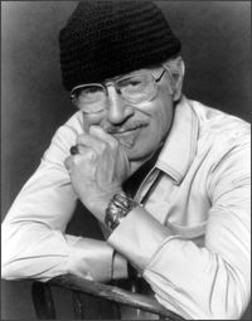
"Musicians have a way of using words in a sense totally different from their everyday usage," says drummer Shelly Manne, "one of these words is Beautiful." And Shelly explains it further by stating that where most people use the word to describe an outward appearance that is pleasing to the eye, the musician uses it to describe the inner person. "I know of no person who deserves this description more than JIMMY ROWLES," says Shelly.
This beautiful musician was passing through the city of Paris, around the same time Mr Albany was living his "lush life." During his Parisian affair, Rowles became so popular in French recording studios that in a single day in 1978, he recorded four complete albums for three different labels.
Here, on May 30th or 31th , 1980, Rowles played and sang a Ben Webster tune called S. H. Blackula:
Here, on May 30th or 31th , 1980, Rowles played and sang a Ben Webster tune called S. H. Blackula:
Radio Hawkins#24: Americans in Paris III
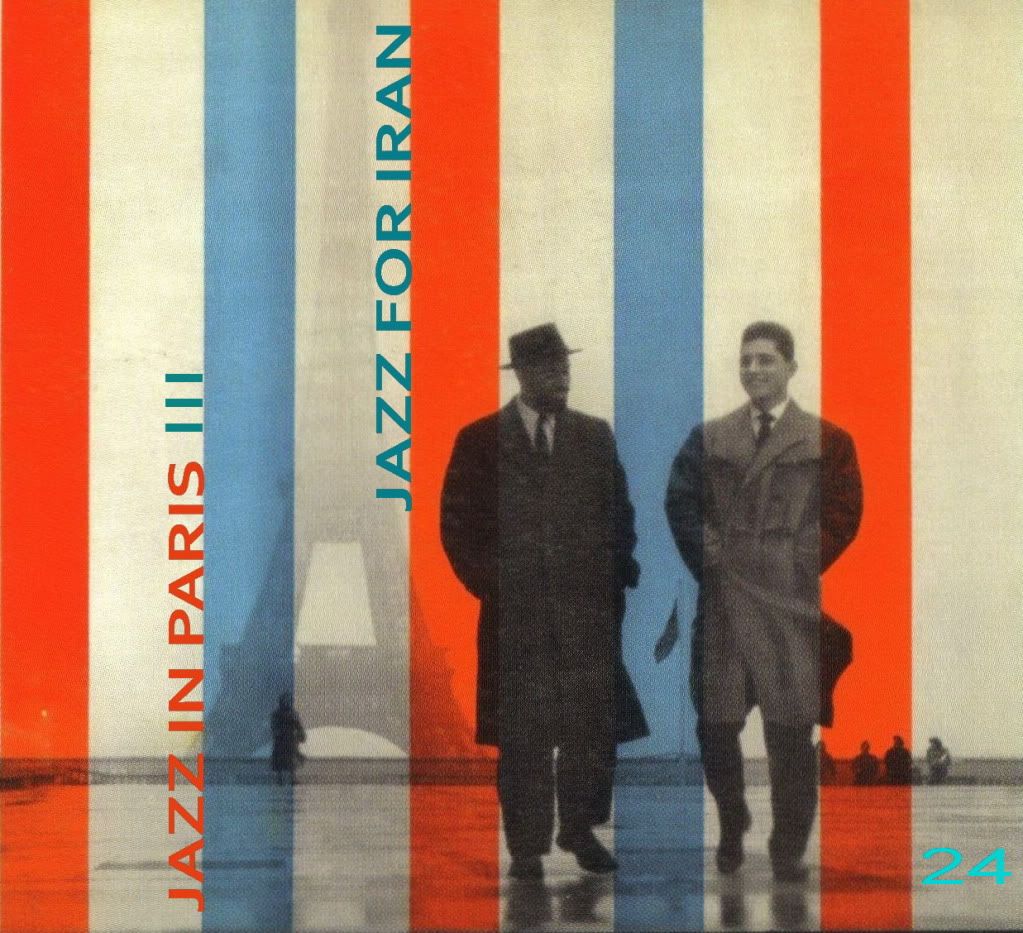
راديو هاوكينز: جاز براي ايران
اپيزود 24
آمريكايي ها در پاريس
بخش سوم
اين جا بشنويد
فهرست قطعات
Zoot Sims-Henri Renaud Quintet
Evening in Paris
Jon Eardley (tp) Zoot Sims (ts) Henri Renaud (p) Benoit Quersin (b) Charles Saudrais (d)
16 March 1956
John Lewis & Sacha Distel
Afternoon in Paris
John Lewis (p), Sacha Distel (g), Pierre Michelot (b), Connie Kay (d)
4 December 1956
Art Blakey And The Jazz Messengers
The Midget
Lee Morgan (tp) Barney Wilen (as) Wayne Shorter (ts) Bud Powell (p) Jymie Merritt (b) Art Blakey (d)
18 December 1959
Willie "The Lion" Smith
Music on My Mind
Willie "The Lion" Smith (solo p, voc)
November 1965
Don Byas & His Orchestra
Where or When
Don Byas (ts), Maurice Vander (p), Jean-Pierre Sasson (g), Popof Medvedko (b), Benny Bennett (d)
19 April 1951
Thelonious Monk Quartet
Well, You Needn't
Charlie Rouse (ts) Thelonious Monk (p) Larry Gales (b) Ben Riley (d)
23 May 1965
Ronnell Bright Trio
Johnnie Pate's Blues
Ronnell Bright (p), Richard Davis (b), Art Morgan (d)
1958
Gerry Mulligan Quartet
Love Me or Leave Me
Bob Brookmeyer (vtb), Gerry Mulligan (bars), Red Mitchell (b), Frank Isola (d)
1 June 1954
Earl Hines Trio
There Is No Greater Love
Earl Hines (p), Larry Richardson (b), Richie Goldberg (d)
December 1970
Slide Hampton
Chop Suey
Slide Hampton (tb), Martial Solal (p), Henri Texier (b), Daniel Humair (d)
6 January 1969
Jimmy Rowles
S.H. Blackula
Jimmy Rowles (solo p, voc)
30 or 31 May 1980
Duke Ellington & His Orchestra
Cop Out
Ray Nance (c), Cat Anderson, Roy Burrowes, Cootie Williams (t), Lawrence Brown, Buster Cooper, Chuck Connors (tb), Jimmy Hamilton (cl, ts), Johnny Hodges (as), Russell Procope (as, cl), Paul Gonsalves (ts), Harry Carney (bars), Duke Ellington (p), Ernie Shepard (b), Sam Woodyard (d).
1 February 1963
Subscribe to:
Posts (Atom)