Thursday, October 28, 2010

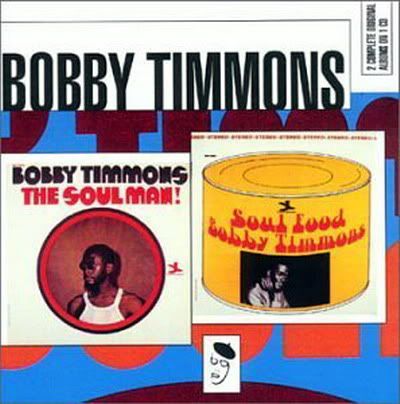
Soul Food (Bobby Timmons, 1966)


Bobby Timmons is one of my favorite gospelly jazz pianists. A master of rhythmic innovations and superb interpreter of standards, especially in live dates. As far as the funky piano style is concerned, among all pianists from Horace Silver and Junior Mance to Les McCann, Timmons is is the one that I really have the utmost groove with.He was Art Blakey's Jazz Messenger's pianist and the one who wrote Moanin', a Blakey anthem tune for many years and one of the most played items in the whole history of jazz.

Here, Soul Food is a rare Prestige recording in trio format from 1966, which is usually paired with another LP, Soul Man! in reissues. It is not a great example of Timmon's artistry or his harmonic sophistication - in that case I recommend This Here Is Bobby Timmons, 1960, or In Person, 1961, both from Prestige catalog - but it's a good demonstration of his sheer energy when he really wants to groove.

He is accompanied with Lee Otis on bass and Billy Higgins on drums. First four tracks (Giblets, Turkey Wings, Angel Eyes, Cracklin' Bread) are from a September 30 date and others (Stolen Sweets, Make Someone Happy, Sauce Meat) from October 14, 1966. Now eat your Soul Food!

.

Tuesday, October 26, 2010

Dylan: Witmark Demos 1962-64


Two falls have been passed since the release of Bob Dylan's last Bootleg Series(Volume Eight). Now, bootlegs are back with the 47-track Vol. 9, which will feature studio recordings from 1962-64 known to old bootleggers as the Witmark Demos and Leeds Demos, named after the New York studios where Dylan recorded. Dylan will also reissue his first eight albums (from his 1962 self-titled debut through 1967's John Wesley Harding) in mono format, which have never been issued on CD before. The reissues — reportedly mastered using "first issue copies of the mono LPs" in order to recreate the sound of the original LPs.

The Witmark Demos features 47 Bob Dylan songs recorded by the artist accompanied only by his acoustic guitar, harmonica and occasionally piano on 2 CD or 4 LP 180-gram vinyl. All of these songs were written—and their subsequent demos recorded—before Bob Dylan turned 24 years old. 

Among the many gems are 15 Bob Dylan songs that were recorded by the artist only for these sessions, and which have never been officially released to the public until now. These include the plaintive Ballad For A Friend, the civil rights era-inspired Long Ago, Far Away and The Death Of Emmett Till, and the poignant Guess I'm Doing Fine.

For those who have been busy with hunting Dylan's real bootlegs, many of materials in these CDs are familiar, but certainly not with this clean sound and perfect quality.


Leeds Music Demos/New York City, New York /February 1962

1. Hard Times In New York Town
2. Poor Boy Blues
3. Ballad For A Friend
4. Rambling, Gambling Willie
5. Man On The Street
6. Talking Bear Mountain Picnic Massacre Blues
7. Standing On The Highway

Witmark & Sons Demos/ New York City, New York /December 1962

1. A Hard Rain's A-Gonna Fall
2. Tomorrow Is A Long Time
3.The Death Of Emmett Till
4.Let Me Die In My Footsteps
5. Ballad Of Hollis Brown
6.Quit Your Low Down Ways
7.Baby, I'm In The Mood For You

Witmark Studio/ New York City, New York /Winter 1963

1. Bound To Lose, Bound To Win
2. All Over You
3. I'd Hate To Be You On That Dreadful Day
4. Talking John Birch Paranoid Blues

Witmark Studio/ New York City, New York/ March 1963

1. Long Time Gone
2. Masters Of War
3. Farewell
4. Oxford Town
5. Don't Think Twice, It's All Right
6. Walkin' Down The Line

Witmark Studio /New York City, New York/ April 1963

1. I Shall Be Free
2.Bob Dylan's Blues
3.Bob Dylan's Dream
4. Boots Of Spanish Leather

Witmark Studio /New York City, New York/ May 1963

1. Girl From The North Country
2.Seven Curses
3.Hero Blues

Witmark Studio/ New York City, New York /August 1963

1. Whatcha Gonna Do
2. Gypsy Lou
3. Ain't Gonna Grieve
4.John Brown
5.Only A Hobo
6.When The Ship Comes In

Witmark Studio /New York City, New York /October 1963

1. The Times They Are A-Changin'

Witmark Studio /New York City, New York /December 1963

1. Paths Of Victory

Witmark Studio/ New York City, New York /January 1964

1. Guess I'm Doing Fine
2.Baby Let Me Follow You Down (Eric von Schmidt)

Unidentified Recording Studio/ New York City, New York /Mid to late June 1964

1. Mr. Tambourine Man
2.Mama, You Been On My Mind
3. I'll Keep It With Mine


.

Monday, October 25, 2010

Ben Webster: Stomping Love


Nat Hentoff Original Liner Notes: Ben Webster's Soulville,1957


Johnny Griffin, one of the more venturesome of the "modern" tenors, was talking recently with Don Gold of Down Beat concerning those nonpareil jazz players who never become dated. On his list were Coleman Hawkins and Ben Webster. “Ben is phenomenal. These guys can come and play with the young cats and still fit in. These guys — like Hawk and Ben - are living legends.”

There is, however, a rather wraith-like connotation in some minds to the word “legend” so that Griffin's comment might be the amplified to underline the fact that Ben’s playing has been more hugely and yet tenderly alive than it is now. It was Ben who was a vital, contagions force in shaping the Sound of Jazz TV show in 1957, fusing the Basie reed section and helping to back Billie Holiday with exactness of taste and a rhythmic flow that might even have helped Jaye P. Morgan.

Ben later eared on one of the NBC-TV educational series, The Subject is Jazz, and as Whitney Barnett noted in The New Yorker: “Perhaps the best moment in the show, as well as the series to date, came during the signoff, when Webster could be heard in a singing, impassioned solo that explained, in a matter of seconds, exactly what jazz is.”

A couple of weeks later, Ben played on an engagement at the Village Vaungaurd in New York, and many musicians came down and returned again to absorb the warmth and invention of Ben. Playing with him was Dave Baily, Gerry Mulligan's drummer, and after a particularly moving set, Dave came off the stand, grinning. "There's a lot of a loving going on up there,” he said to a friend.


There usually is, wherever Ben is playing – not only lyric love, but booming, celebrating love and even some stomping love. It helps the playing and loving, of course when Ben has accompaniment he enjoys and with which he can relax. Ben is very fond of Oscar Peterson trio. “For one thing,” he begins, “there are some piano players that get in your way, but Oscar never does and so you have nothing to worry about. One of things that dig about him is that the guy can play a lot as a soloist, but when it comes time for you to solo, he plays for you. What more can I say about Ray Brown that everybody hasn't said? I'll tell you one thing - he's done a lot of listening and it comes out in his playing. And Herb Ellis fits right in. They make so good an accompanying group besides because they've been together, really together,so long. When you get there, the table's already set for you. And it was a pleasure to hear Stan Levey there; he's improved a whole lot since I heard him on the street years ago. It's take time to learn to play the instrument to the poist that everyone, including you, is relaxed, Stan's gotten to the point."

Ben, almost everyone agrees, is a superior animator of ballads (C.f. Time on my hands, Where Are You?, and Ill Wind here)."I like the pretty things," he declares. "I think they say more; the important thing is to be able to feel them." Unlike Lester Young, who makes a point of knowing the lyrics of the ballads he plays, Ben admits "I don't even know the lyrics to Stardust. But I do sometimes get ideas about approaching a song from hearing singers. I heard Sinatra do Where Are You?, for example, and I thought the way he treated it and the background beautiful. I've gotten an idea from Dick Haymes on a song, and from Al Hibbler sometimes.

Where Are You?
Ben Webster (tenor sax), Oscar Peterson (piano), Ray Brown (bass), Stan Levey (drums) October 1957, Hollywood, produced by Norman Granz


An identifying characteristic of Ben is his large, vibrant sound. "I've been working toward that all my playing time, and most of the guys I like - Hawk, Benny Carter, Hodges, Carney - play with a full sound. Playing in the Ellington reed section helped, because in order to blend with Harry Carney, you have to sound big. Actually, I'd say that in all respects, I got my college degree in music from working with Fletcher Henderson and my Ph.D. from Duke. Just being around Duke meant I learned a lot of things, and not only music."

Young trumpeter Ruby Braff said recently: "Jazz is not exclusively a young man's music. It's in the first twenty-five years that you learn how to play your horn, and even after you've learned, there's no guarantee you'll know what to play." "Well," says Ben, "it may be that the older some players get, the better they are. At least I hope so. You keep hearing different guys and learning different things, and that helps. That's the reason I go around and listen to different players all the time. That's a must."

The growth of a jazzman of whatever age comes back to what Duke Ellington has said: "the most important thing is listening. That's the first important step in becoming a musician. If and when they stop listening — to themselves or to somebody else — they're no longer with music."

-- Nat Hentoff, 1957

Tuesday, October 19, 2010

Otchi-Tchor-Ni-Ya


A friend was driving me home, usual for a fellow like me who is afraid to drive himself, in a country that monkey driving is a habit. A CD was playing in his obsessively cleaned Peugeot. It was a ragbag of oldies, most of them boring covers of originally boring songs. Rubbish was playing one after another as a sonic foreground for a gray landscape of a decaying city, where I used to live. Suddenly somewhere between a third rate hippie ballad and an Roy Orbison cover of mini-skirt nostalgia something happened. Something that first froze me for a second, then thrilled me for 5 minutes and finally when I repeated that five minutes for more than 6 times I knew that a key song has been added to my uncalled changes of life: Otchi-Tchor-Ni-Ya by Louis Armstrong!

Wait! Don't say that it's a an ordinary Armstrong CD-filler or a common stuff because of its public domain status to be included in European oldies compilations. Probably even a great Armstrong biographer like James Lincoln Collier felt the same way, since there is no trace of this song in his 400-page book on Satchmo. But despite all these preconceptions and misconceptions about latter days of Armstrong (which myself as a 'purist' had the same problem for a long time), it's an absolute musical miracle, a perfect masterpiece that summarize half of a century of jazz in five and a half minutes.

Otchi-Tchor-Ni-Ya means Dark Eyes. It's a Russian song. The lyrics of the song were written by a Ukrainian poet and writer Yevhen Hrebinka, in 1843. Armstrong's version sounded like "Oh Cha Chunya". and the words are quite different from the proper translation of the song from Russian to English. But words doesn't matter because Satchmo has turned it to a jam song. A chronology of things that would happen to you is as follow:

00:01 Billy Kyle's first piano line can pierce any stone, just with that very first note.

00:07 Armstrong comes in - Gabriel plays the horn!

00:10 Clarinet of Barney Bigard, like a beautiful butterfly chasing after another one (here, Satchmo's trumpet).

00:30 There is a indescribable urgency in this music. Saying all the things, all necessary things, all the things that should be said for the last time.

01:13 Satchmo sings. Words are utterly unimportant. It's just jiving.

01:45 Kyle returns. He sound like father of Bud Powell in a slower tempo. Space! Space!

02:14 Band takes off. New Orleans appears before our eyes. It's a manifestation of humanity.

02:38 Clarinet solo. Unbelievable.

02:55 Bud Freeman from Chicago plays his warm tenor sound on saxophone. So goddamn lyrical!

03:14 A suspending moment with Arvell's Shaw bass before...

03:27 ...before Trummy Young's trombone roars with a freedom unheard in the history of the instrument. His first attack is maddening!

03:44 The Socrates of jazz returns with his endless drama of sound and vision.

04:16 Kenny John takes a solo on his drums. Lifting up - lifting up.

04:48 Swing. Extacy. Joy. Cry. This damn thing will never stop.

05:25 Five seconds of silence begins. It's like 5 minutes.

The song is recorded in New York City, March 19, 1954 by Decca Records. Matrix number is 86062. LP number DL5532. Dig yourself:


Bashir, thanks for driving me home, and thanks for Otchi-Tchor-Ni-Ya.
Friday, October 15, 2010

Nat Hentoff, Miles and Cannonball on Ahmad Jamal

Nat Hentoff Original Liner Notes: Ahmad Jamal's The Legendary Okeh & Epic Sessions,1951-55

A few years ago Miles Davis, Ahmad Jamal's most influential chammpion, reacted indignantly to my mumbled opinion that Ahmad Jamal was "mainly a cocktail pianist." Miles who had brought all the records Ahmad had made up to that time, began playing them, pointing out to this skeptical listener those elements of Jamal's playing that so intrigued him and that have since helped make Jamal a major force in the jazz record market and an increasingly powerful lure in personal appearances.

"Listen," Miles said then and later in an interview for The Jazz Review, "to the way Jamal uses space. He lets it go so that you can feel the rhythm section and the rhythm section can feel you. It's not crowded.

Like Miles on his instrument, Jamal sees no point in just running changes (constructing a solo by tobogganing through the chords) or in reveling in technique for its own sake. He plays with spare, resilient command of dynamics and with incisive knowledge of how important a part of music silence can be if you make it work for you.

One of the more coherent appreciations of Jamal was given by Julian "Cannonball" Adderley, a former sideman of Miles, in a record commentary in The Jazz Review. "The whole thing just flows . . .I don't think it's accurate to call Jamal a 'cocktail' pianist because I have to listen to Ahmad. He commands attention. One quality of his work that impresses me - a quality that Miles brought to my attention- is that he uses and creates very interesting interludes . .. It is true that Ahmad had influenced Miles Davis. Miles, for example, depends more on the rhythm section than he used to . . . Miles has also become fonder of tags and transitory passages since listening to Ahmad."

Cannonball returned to Jamal himself: ". . . He has a potful of technique, but he has learned restraint... Ahmad 's left hand is unobtrusive, but he established the groove with that left hand. Moreover, he doesn't allow a groove to become stagnant. First of all, he doesn't play many long things. After maybe a chorus, he'll go into an interlude that changes the mood, and then he'll go
out of the interlude into a different groove that's even more swinging than the first was...He also always gives the impression of having something strong in reserve. He doesn't try to put everything into each number ... 'Don't shoot everything in one tune, and play fifty choruses, it'll all sound the same,' he's told me...Ahmad also allows the tune to be the tune. He does what he does within the context of each particular song. He's not like the average jazz musician who uses pop tunes as a vehicle. Ahmad approaches each one as a composition in itself and tries to work out something particular for each tune that will fit it..."

Ahmad Jamal - A gal in Calico


Another aspect of Jamal's work is his penchant for aselect repertory that he keeps exploring for a long time. The reason , he explained in a recent conversation, is that he finds it possible to find new ways of expressing himself through some songs even after playing them hundreds of times. "It's true," he added, "that after a while I usually work out a particular approach to each tune, but within that framework I never play it exactly the same."

Ahmad's biography has been frequently outlined. Briefly, he was born in Pittsburgh, in 1930. He Worked with George Hudson's orchestra, and later formed his own unit. It was first called the Three Strings, and had a long engagement at the Blue Note in Chicago.: He came to New York in 1952 to play the Embers, and although he acquired a strong-and still ardent-campaigner in John Hammond, his initial success in New York was hardly epochal. He eventually replaced the guitar with drums in his trio, and for the past two years has suddenly found himself in lucrative demand throughout the country, including New York.

The change in status has had little overt effect on Jamal. A serious convert to Islam, he is little ruffled-or so it seems-by criticism or by the uncertainties of the music business. As Cannonball puts it, "he seems to be always at peace . . . He still doesn't do anything he doesn't
want to do, and he doesn't follow trends."

In conversation, Jamal projects the same serenity-with more than a touch of wit- that he communicates from the stand. He also clearly has a strength of will that has made it possible - in fact, necessary -for him to find and go his own way through the years, no matter what the critics wrote and no matter how apathetic some of the earlier audiences were. There is also the feeling of latent power in the man himself. At the Embers one night several years ago, annoyed beyond endurance by the perpetual artillery barrage of conversation in the room-no matter who was on the stand-Ahmad walked off in the middle of a set, and returned to Chicago. Now they listen.

Ahmad Jamal - Moonlight in Vermont


There remains sharp critical controversy about Jamal, and even though more musicians than critics are beguiled by him, there is extensive debate about his place and value in jazz among the non-civilians as well. Most of even his harshest judges, however, would agree with one of them, bassist Bill Crow, who wrote that "his general conception has an undeniable charm." It is that almost ingenuous, airy, relaxed , floating charm that serves to identify Jamal instantly, and that has been the major factor in his large-scale acceptance among the jazz public. It is true that Jamal does not slash into the marrow of existence as do some pianists, but it is also true that in a time of general emulation, Jamal has created a whole, consistent musical personality that does not, as Cannonball underlined, follow fashion and that does cogently and lyrically express exactly what Jamal as a whole person wants to say.

In fact, the most attractive aspect of Jamal's playing to this listener is that there is no trace in it of a conscious posturing to be "hip," to be "aucourant." Jamal is himself when he plays, and that, after all, is what jazz is supposed to be all about.

In essence, to return to the protagonist of this program, Ahmad Jamal's "piano scene" is simply an extension of his "scene" wherever he is and whatever he's doing. He's a relatively uncomplicated person, who has found in religion and family life a calmness of spirit that is reflected in his music. It is not, however, a passive calm. He also remains - somewhat paradoxically-highly self-critical and constantly determined to make his points more clearly. He doesn't pay any attention to negative reviews, he once said, because he knows all too well that the worst reviews he ever gets are from Ahmad Jamal.

-- Nat Hentoff, 1956

Friday, October 8, 2010

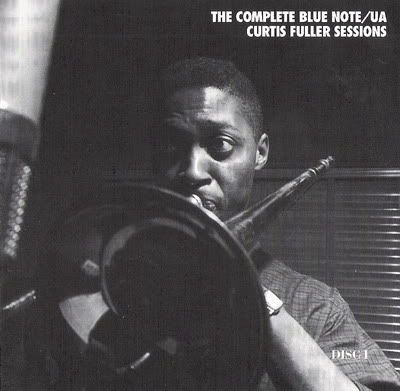
A Fuller Affair: Diggin' Curtis Fuller Trombone


In August 1959 Ralph Gleason wrote to Ira Giltler that how he was impressed by 25-year-old trombonist Curtis Fuller: "Benny Golson was here in San Fransisco and the group was a gas. Fuller had the hardest trombone job in the world. He followed J. J. Johnson (I assume the Johnson quintet had just left SF) but he made it and knocked me out." Only two years before this "knocking-out" Fuller made his mark on one of the most memorable intros in modern jazz, the opening bars of John Coltrane's Blue Train.

Detroit-born Fuller "owes much to Kai Winding's modernization of trombone technique and to J. J. Johnson's demonstration of the instrument's solo potential. However, it was the harmonic language of John Coltrane and Miles Davis that marked him most profoundly," writes Brian Cook about the master of modern trombone.

Sunday, October 3, 2010

History of Jazz: Third Stream

تاريخ موسيقي جاز
بخش هفتم – تِرد استريم

در 1961 گونتر شولر موسيقي Third Stream را موسيقي ناميد كه جايي در ميانۀ موسيقي جاز و موسيقي كلاسيك قرار گرفته است. او بيست بعد از اين تاريخ، در حالي‌كه هنوز تكليف موسيقي‌دانان و مورخان چندان با آن روشن نبود، فهرستي را طرح كرد از چيزهايي كه « Third Streamنيست» در واقع هدف او زدودن تصورات اشتباه از ماهيت اين موسيقي در ذهن شنوندگان بود:
الف – اين موسيقي جاز با سازهاي زهي نيست!
ب – اين موسيقي جازي نيست كه با سازهاي مخصوص موسيقي كلاسيك زده شود!
ج – اين موسيقي كلاسيكي نيست كه جازيست‌ها آن را بنوازند!
د – قضيه اين نيست كه عده‌اي كمي راول و شوئنبرگ قاطي آكوردهاي عجيب بي‌باپ بكنند يا برعكس!
ر – جاز در فرم يك «فوگ» نيست!
***
در طول بيشتر سال‌هاي دهه پنجاه ميلادي معدودي از آهنگسازان موسيقي جاز شروع به آميختن تكنيك‌هاي موسيقي كلاسيك غربي با موسيقي جاز نمودند گر چه در موسيقي «كول» قبلاً اتفاق‌هاي مشابهي افتاده بود كه نمونه آن ‌را در كارهاي دِيو بروبِك، نوازنده پيانو، مي‌توان مشاهده كرد. البته در اوايل قرن آهنگسازان ديگري مانند جورج گرشوين در rhapsody in blue و داروس ميلو در the creation of the word نيز اين تلفيق موسيقي جاز را با موسيقي كلاسيك تجربه كرده بودند.
در دهه‌هاي 1920 و 1930 نيز اصطلاح «جاز سمفونيك» بر سر زبان‌ها افتاد. دوك الينگون در سال 1935 آغاز به تصنيف آثار متعدد خود از جمله reminiscing , diminuendo in blue , crescendo in blue كرد كه همه آثاري اركسترال محسوب مي‌شوند. آهنگساز كلاسيك ايگور استراوينسكي نيز كنسرتوئي به‌نام Ebony concerto براي وودي هرمان نوازنده كلارينت تصنيف كرد. 
به crescendo in blue الينگتون، 1937، گوش كنيد:
نمونه‌هاي ديگري از كاوش‌ها تلفيق موسيقي كلاسيك و جاز را مي‌توان در اواخر دهه 1940 در آلبوم birth of cool مايلز ديويس ملاحظه كرد و هم‌چنين در صفحات كلود تورن‌هيل كه به‌وسيلۀ گيل اونز تنظيم شده بود.
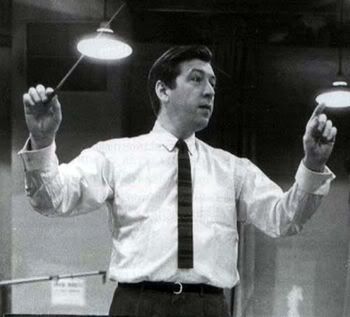
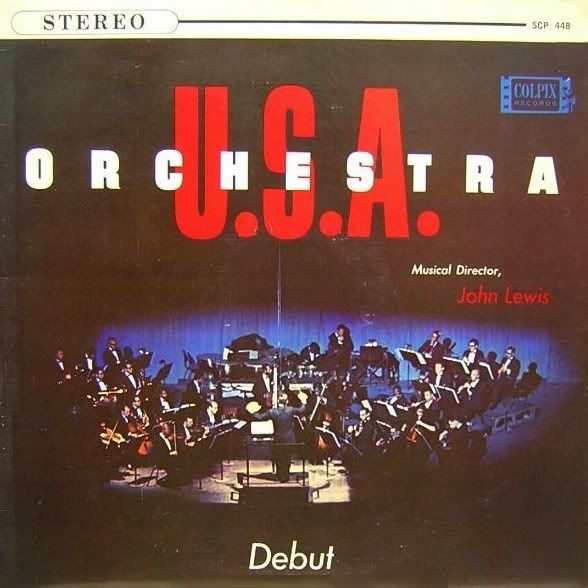
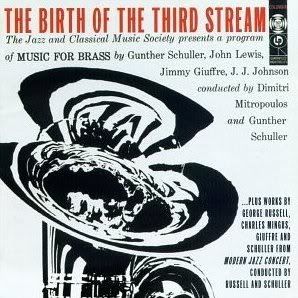
در سال 1955 جان لوييس، پيانيست و آهنگساز بزرگ‌وار گروه «مدرن جز كوارتت»، تشكيلاتي را سازمان دادند كه «انجمن موسيقي جاز و كلاسيك» نام گرفت و آن‌ها توانستند موسيقي‌هائي را به اجرا درآورند كه تا آن‌زمان تقريباً هرگز شنيده نشده بود. آهنگسازان جاز و كلاسيك دور هم گرد آمدند و از هم آموختند و آثاري به اين ترتيب ساخته، اجرا و ضبط شد؛ از هنرمنداني مانند چارلز مينگوس، جورج راسل، جي جي جانسون و گونتر شولر.
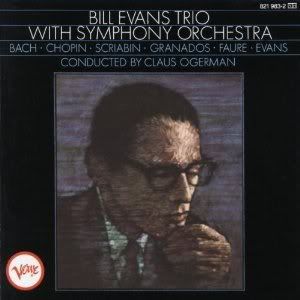
رويكردهاي ديگري به سبك Third Stream به‌وسيله افرادي مانند بيل اونز رخ داد كه اركستر سازهاي زهي و استفاده از آثار كلاسيك باخ، فوره و شوپن را جزو آثار اجرايي‌شان در چارچوب بداهه‌نوازي‌هاي جاز قرار دادند. همين‌طور استن گِتز در صفحه معروف خود به‌نامِFOCUS بداهه نوازي‌هاي خود را با اركستري كه به وسيله ادي ساوتر تنظيم شده بود اجرا كرد.
به قطعه «پن» از آلبوم «فوكوس» استن گتز گوش كنيد:
بعضي «پيوريست‌ها» از اين تلفيق‌ها ناراضي‌اند و معتقند اين كار باعث از دست رفتن جوهره اصلي موسيقي جاز، بداهه‌نوازي، مي‌شود. اما هيچ‌كس نمي‌تواند منكر شود كه مجموعه‌اي درخشان از اين سبك، در صفحه‌هايي از دهه 1950 و اوايل دهه 1960 به يادگار مانده كه هيچ جازدوستي نمي‌تواند خود را از شنيدن آن‌ها محروم كند.